Plot Explained Spoilers guaranteed!
Plot Explained

Browse by genre

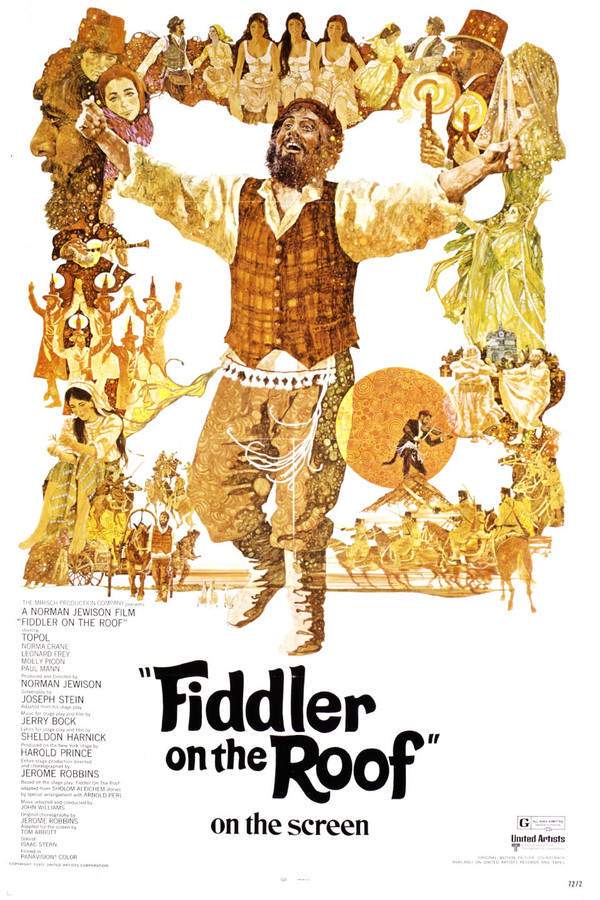
Fiddler on the Roof (1971) movie poster

Plot Summary

Fiddler on the Roof (1971) Plot Summary Explained

Release, runtime and language
1971 · 181 min · English
Loading streaming availability…
Directed by
Norman Jewison
Starring
Michele Marsh, Neva Small, Leonard Frey, Molly Picon, Norma Crane, Paul Mann

Set in a small Jewish village in Tsarist Russia, this musical drama follows Tevye, a milkman struggling to balance tradition with changing times. As his daughters challenge his arranged marriages, he grapples with his faith and the increasing anti-Jewish sentiment that threatens his community and forces them to confront difficult choices about their future.

On this page (6)
  1. 1 Where to watch
  2. 2 What happens: full plot
  3. 3 Plot questions answered
  4. 4 Movie threads
  5. 5 Movies like Fiddler on the Roof
  6. 6 Every angle
Loading streaming availability…

Full plot summary · contains spoilers

What Happens in Fiddler on the Roof: Full Plot Summary

The whole story of Fiddler on the Roof (1971) explained, from the opening scene to the final frame: every key event, every twist and what it all adds up to. Read it as a quick recap before the sequel, to check a scene you missed, or to finally understand what really happened.

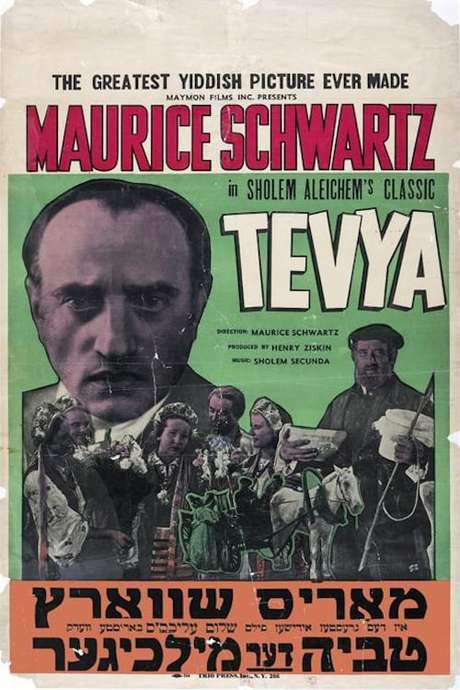
The story unfolds around Tevye, a Jewish milkman living in the quaint village of Anatevka during the oppressive reign of Tsarist Russia. Throughout the film, Tevye engages in heartfelt conversations with the audience and the heavens, sharing his thoughts and struggles. Despite his relentless labor, Tevye remains impoverished, much like the rest of the Jewish community in Anatevka, and he grapples with the daunting task of providing dowries for his five daughters.

Life in Anatevka is marked by adversity, and Tevye articulates not only the stark realities of poverty but also the pervasive dread the Jewish population experiences under the watchful eye of their non-Jewish neighbors. He eloquently conveys that Jewish existence in Russia is as fragile as a fiddler on a roof, striving to maintain a sweet melody while delicately balancing the threat of disaster. The fiddler serves as a poignant symbol throughout the film, epitomizing the constant fears and dangers facing the Jewish community.

During a visit to town, Tevye encounters Perchik, a progressive student filled with modern ideas. Tevye invites him to stay with his family in exchange for tutoring his daughters. Through Yente, the matchmaker, Tevye attempts to arrange a marriage between his eldest daughter, Tzeitel, and the wealthy butcher Lazar Wolf. However, Tzeitel's heart belongs to Motel, the tailor, leading her to plead with Tevye to reconsider. In a sympathetic turn, Tevye swallows his pride and allows Tzeitel and Motel to wed, especially after spinning a fantastical tale about a prophetic dream warning against the marriage to Lazar.

At the wedding, spirited debates erupt among the guests regarding a woman's right to choose her partner. In a bold move, Perchik captivates the crowd by asserting that marriage should be a choice left to the couple. His actions, including inviting Tevye’s daughter Hodel to dance, challenge societal norms, and the festivities continue with bliss until a violent mob arrives, launching a brutal pogrom against the Jewish residents.

As circumstances evolve, Perchik prepares to depart Anatevka in pursuit of revolutionary opportunities, confessing his love for Hodel and proposing marriage. Initially enraged by their decision to wed without his consent, Tevye ultimately gives in, recognizing their love. Tragically, Perchik’s fate is sealed when he is arrested in Kiev and sent to Siberia, prompting Hodel to follow him.

Meanwhile, tension rises as Tevye's third daughter, Chava, falls for Fyedka, a young Russian. Summoning her courage, she approaches Tevye to request permission to marry him. Yet, Tevye’s adherence to tradition leads him to reject Chava's choice, believing she would renounce her faith in marrying outside their community. Heartbroken, Chava and Fyedka elope, tying the knot in a Russian Orthodox Church, which results in Tevye disowning her when she seeks forgiveness.

In a harrowing culmination, the Jewish community is informed that the government has decreed their expulsion from Anatevka, offering only three days to vacate. Tevye, alongside his family and friends, gathers their belongings, setting sights on unfamiliar destinations like New York, Chicago, and Jerusalem. As the film draws to a close, Tevye catches sight of the fiddler once more and gestures for him to join, symbolically inviting the lingering traditions to accompany them on their uncertain journey ahead.

Last updated: November 09, 2024 at 11:34

Was this helpful?

Plot questions answered

Fiddler on the Roof Plot Explained: Your Questions Answered

The questions people ask most about Fiddler on the Roof (1971): what happens in the confusing scenes, why the characters do what they do, the twists, hidden details and what the ending means. Each answer contains spoilers.

Q1

Why did Tevye allow Tzeitel to marry Motel instead of Lazar Wolf?

Tevye allowed his daughter Tzeitel to marry Motel the tailor because she confessed her love for him, which moved Tevye deeply. To overcome his initial agreement with Lazar Wolf, Tevye spun a tale about a prophetic dream warning him against the marriage to the butcher, using this fictional vision to gracefully back out of the arranged match without causing outright conflict.

Foreshadowing: Earlier, Tevye speaks of balancing on the roof like a fiddler, hinting at the precarious nature of maintaining traditions while navigating personal desires.

  • tevye
  • tzeitel
  • motel
  • lazar wolf
  • marriage
  • arranged marriage
Q2

What triggered the pogrom during the wedding?

The pogrom erupted suddenly during Tzeitel and Motel's wedding celebration without warning. A violent mob arrived at the festivities and launched a brutal attack against the Jewish community, turning the joyous occasion into chaos and marking a dark turning point in the film.

Foreshadowing: Tevye had earlier expressed the constant fear and dread the Jewish population experiences under their non-Jewish neighbors, setting the tone for this violent event.

  • pogrom
  • wedding
  • mob
  • violence
  • attack
  • anatevka
Q3

Why was Perchik arrested and sent to Siberia?

Perchik was arrested in Kiev for his revolutionary activities against the Tsarist government. As a progressive student who had been spreading modern ideas in Anatevka and participating in political activism, he was captured and sentenced to Siberia, separating him from Hodel.

Foreshadowing: Perchik had previously announced his plans to leave Anatevka to join revolutionary work, directlySetting up his later arrest.

  • perchik
  • arrest
  • siberia
  • revolution
  • kiev
  • revolutionary
Q4

Why did Hodel follow Perchik to Siberia?

Hodel chose to follow Perchik to Siberia because she loved him deeply and refused to abandon him in his time of suffering. After Perchik was arrested and exiled, Hodel made the painful decision to leave her family and homeland to be with the man she loved, showing her commitment over traditional expectations.

Foreshadowing: Perchik had earlier proposed marriage to Hodel before his departure, and they had confessed their love for each other.

  • hodel
  • perchik
  • siberia
  • love
  • exile
  • marriage
Q5

Why did Tevye disown Chava after she eloped?

Tevye disowned Chava because she married Fyedka, a Russian non-Jew, in an Orthodox Church, which he saw as a betrayal of their faith and traditions. When Chava returned seeking forgiveness after converting to Christianity to be with her husband, Tevye refused to accept her, stating she had chosen her path and was no longer his daughter.

Foreshadowing: Tevye had earlier rejected Chava's request to marry Fyedka, citing tradition and fear of her renouncing her faith, establishing his firm stance.

  • chava
  • fyedka
  • disown
  • marriage
  • faith
  • tradition
  • conversion
Q6

Why were the Jewish residents forced to leave Anatevka?

The Russian government decreed that the Jewish community must be expelled from Anatevka, giving them only three days to vacate their homes. This expulsion represents the increasing anti-Jewish sentiment and persecution that Tevye had warned about throughout the film, forcing the entire community to scatter to new destinations like New York, Chicago, and Jerusalem.

Foreshadowing: Tevye had repeatedly spoken about the fragile existence of Jews in Russia, comparing it to a fiddler on a roof trying to maintain melody while balancing disaster.

  • expulsion
  • anatevka
  • decree
  • persecution
  • russia
  • exile
  • community
Q7

What does the fiddler symbolize at the end of the film?

The fiddler symbolizes the fragile yet resilient nature of Jewish tradition and survival. As Tevye notices him on the roof one final time and gestures for him to join the departing family, it represents Tevye's desire to carry his traditions and heritage with him into the uncertain future, refusing to let them be left behind despite the displacement.

Foreshadowing: The fiddler appears throughout the film as a recurring symbol of the precarious balance between maintaining tradition and surviving external threats.

  • fiddler
  • symbol
  • tradition
  • roof
  • heritage
  • survival
  • music
Q8

Why did Tevye eventually accept his daughters' choices in marriage?

Tevye gradually accepted his daughters' marriage choices because he recognized the power of love and saw his daughters' determination. When Tzeitel pleaded for Motel and later when Perchik and Hodel confessed their love, Tevye chose family over tradition, understanding that love was a force he could not oppose, though this evolution cost him pain with Chava.

Foreshadowing: At the wedding debate, Perchik's assertion that marriage should be a choice resonated with the changing times Tevye was experiencing.

  • tevye
  • tradition
  • marriage
  • love
  • daughters
  • acceptance
  • change
Q9

Why did Chava and Fyedka elope instead of waiting for Tevye's approval?

Chava and Fyedka eloped because Tevye had firmly refused to give his permission for their marriage, insisting that marrying outside the Jewish faith would mean Chava renouncing her religion. Unable to change Tevye's mind and unwilling to give up their love, they made the desperate choice to marry in a Russian Orthodox Church, which ultimately broke Tevye's heart.

Foreshadowing: Chava had previously approached Tevye courageously to request permission, only to be rejected outright based on his traditional beliefs.

  • chava
  • fyedka
  • elope
  • marriage
  • church
  • tradition
  • faith
Q10

Why did Tevye tell Lazar Wolf about the dream predicting misfortune?

Tevye invented the prophetic dream about marrying Lazar Wolf as a strategic way to break the engagement without insulting the wealthy butcher or causing confrontation. By framing his refusal as divine warning rather than personal preference, Tevye protected his dignity and social standing while following his heart in allowing Tzeitel to marry Motel.

Foreshadowing: Tevye had expressed concern about the financial burden of the dowry and the difficulty of saying no to Lazar Wolf earlier in his conversations.

  • tevye
  • dream
  • lazar wolf
  • prophet
  • engagement
  • excuse

Movie threads

More Movies Like Fiddler on the Roof, by Mood & Story

Curated lists built around what makes Fiddler on the Roof tick: the same mood, the same kind of story or the same emotional payoff. Each list explains why these movies belong together.

Musical dramas of resilience like Fiddler on the Roof

Stories where music provides solace and strength in the face of hardship. Find more movies like Fiddler on the Roof that blend powerful musical numbers with serious dramatic themes. These stories use music to explore resilience, cultural identity, and hope amidst hardship, creating a uniquely bittersweet and emotionally heavy viewing experience.

  • heartfelt
  • uplifting
  • resilient
  • melancholic
  • nostalgic
  • oppressive
  • Tone: bittersweet, heartfelt
  • Pacing: steady, episodic
Why these movies?

The story pattern: Narratives in this thread typically follow a community or individual clinging to their culture and spirit through artistic expression, even as external forces threaten their way of life. The plot structure often alternates between expansive, joyful musical sequences and somber, plot-driven drama, leading to a conclusion that acknowledges loss but celebrates enduring spirit.

Why they belong together: Movies are grouped here by their unique tonal combination of heavy drama and uplifting musicality. They share a focus on cultural perseverance, use music as a narrative device for both joy and sorrow, and deliver an emotionally complex, bittersweet journey.

Stories about tradition and family like Fiddler on the Roof

Personal stories of family love strained by shifting cultural norms. If you liked the father-daughter dynamic in Fiddler on the Roof, explore these movies about generational conflict and cultural change. These dramas delve into the personal cost of progress and the bittersweet nature of watching children forge their own paths.

  • heartfelt
  • reflective
  • nostalgic
  • resilient
  • melancholic
  • oppressive
  • Tone: bittersweet, reflective
  • Pacing: steady, character driven
Why these movies?

The story pattern: The narrative pattern typically follows a linear, steady progression where each child's life choice represents a greater challenge to the parent's worldview. The central conflict is internal and relational, pitting heartfelt love against rigid principles, often against a backdrop of broader societal pressures that mirror the family's struggle.

Why they belong together: These movies share a strong focus on the thematic clash between tradition and individual desire, explored through intimate family dynamics. They feature a steady, character-driven pace, a bittersweet emotional tone, and narratives that weigh heavy, heartfelt decisions about love and identity.

If you liked this

Movies Like Fiddler on the Roof

Similar movies to Fiddler on the Roof: the same genre, themes or kind of story. Each one comes with its own plot summary, timeline and ending explained.

Browse all movie summaries

Every angle

Fiddler on the Roof (1971) Explained: Plot, Timeline & Characters

Everything about Fiddler on the Roof in one place: what happens in the plot summary, the timeline in chronological order, the characters and meaning and a spoiler-free summary. What's After the Movie adds the cast, box office and post-credit scenes.

Coming soon on iOS and Android

The Plot Explained Movie Summary App

Plot summaries, endings explained and timelines on your phone. Catch up on any movie in minutes, save your favorites and never miss a twist again.

Be the first to know when we launch. Your email stays private, always.

Learn more about the app