Hadestown: The Musical

Hadestown: The Musical

Year: 2026

Runtime: 2 h 21 m

Language: english

Director: Brett Sullivan

Echo Score: 87

Budget: $5M

MusicMusical

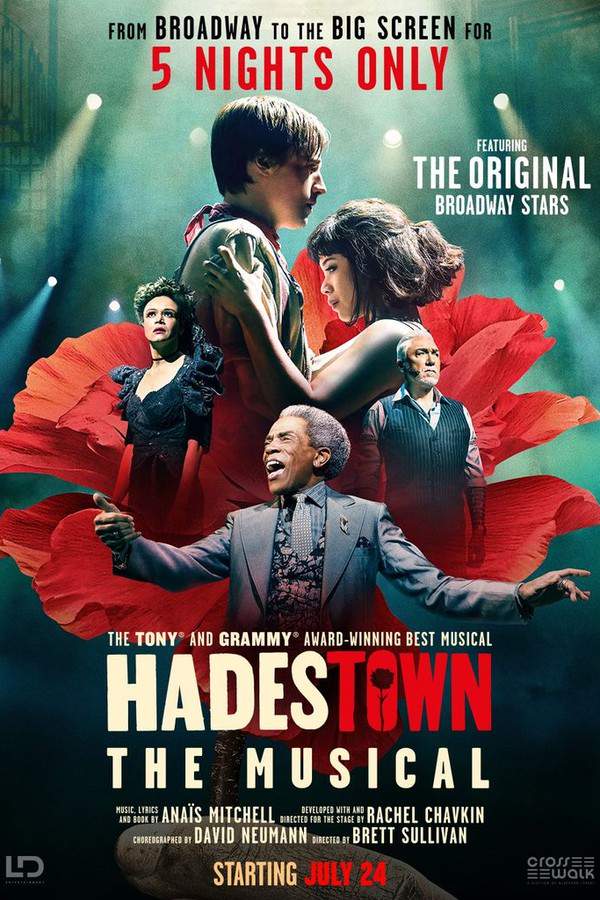
This live recording captures the acclaimed Broadway musical Hadestown, which swept the 2019 Tonys with eight wins—including Best Musical—and won the 2020 Grammy for Best Musical Theater Album. It stars the five original Broadway principals and blends modern American folk with New Orleans‑style jazz to reimagine a sweeping, genre‑defying story.

Where to Watch Hadestown: The Musical?

Find where to stream, rent, or buy Hadestown: The Musical (2026) in the US with current JustWatch availability, up-to-date pricing, and platform listings for subscription, rental, and digital purchase options.

Warning: spoilers below!

Haven’t seen Hadestown: The Musical yet? This summary contains major spoilers. Bookmark the page, watch the movie, and come back for the full breakdown. If you're ready, scroll on and relive the story!

Hadestown: The Musical (2026) – Full Plot Summary & Ending Explained

Read the complete plot breakdown of Hadestown: The Musical (2026), including all key story events, major twists, and the ending explained in detail. Discover what really happened, and what it all means.

Hadestown unfolds with the whole company gathered on a bare stage, the band in full view, and the set hinting at both a railway and a mythic underworld. Hermes, André De Shields stepping forward, convinces the musicians to start the throbbing beat of the song Road to Hell and dances as he sings, weaving a storyteller’s thread through an ancient tale that feels newly urgent. He introduces the three women who loom at the back of the mind—the Fates [Bella Brown], [Allie Daniel], and [Madeline Charlemagne]—who dress alike and keep a quiet watch over every twist of fate.

From the underworld’s gloom emerges Persephone, [Amber Gray], returning from a bright break in the above world and eager for the warmth that fleeting freedom brings. Hermes reminds the audience that this is Orpheus and Eurydice’s story, a tale many know to be sad, yet the singers lean into it anyway with a listening heart and bright, stubborn resolve. Eurydice, a penniless young woman, makes a first, aching entrance, singing Any Way the Wind Blows, her voice a plea for connection amid the hardship of hunger and isolation. It’s in this moment that Orpheus, [Reeve Carney], spots her and fashions a newspaper into a makeshift bouquet, declaring in song that he will “Come Home With Me,” a vow that feels both reckless and radiant.

Orpheus is a gifted lyre-player who believes his music can turn a harsh, gray world into something luminous. Eurydice answers this vow with a wary tenderness, and the scene shifts to their budding love as she wonders, in the tender ache of Wedding Song, how they can make a life together when money is scarce and the future seems so fragile. Orpheus promises that his song will provide everything they need, whispering of blossoms blooming despite the grime and of wedding bands forged from the same hopeful melody.

Hermes returns with a sly note of familiarity, hinting that he’s heard this melody before. Orpheus confirms he knows the old tale well, and the story of Hades and Persephone unfolds through the visionary number Epic I: Hades, king of the underworld, falls for Persephone, a bright soul from above who gathers flowers in a sunlit field. When Persephone returns to the upper world, the balance of seasons changes as the cycles of life resume, and the stage fills with the sense of a world that depends on two forces in constant negotiation. Persephone, delighted by the return to light, sings Livin’ It Up on Top, relishing time above ground and the chance to celebrate. The townspeople toast her homecoming as Orpheus raises a glass to the couple, a moment of shared optimism.

Eurydice and Orpheus draw closer as they sing a duet that grows into a kiss, a moment of pure, reckless hope. Eurydice confesses that she has known only survival until now, and the two find shelter in each other’s arms as they sing All I’ve Ever Known. Yet the Fates arrive with a sobering reminder that Persephone’s time above ground is finite. Hermes guides us toward Hadestown’s shadowed railroad, and the narrative barrels toward a darker turn as Hades, [Patrick Page], descends to claim Persephone and to impose his own brutal order. The underground world is cast in cold metallic light as Way Down Hadestown is performed, tracing a factory-like chain of wages and toil that binds the workers to a harsh rhythm of labor and fear.

With Persephone back in Hadestown, Eurydice’s fear grows into the stark choice that defines the second act. She confronts the brutal reality of A Gathering Storm as the cold begins to bite and Orpheus’s hopeful song, Epic II, struggles against a cruel system. The couple’s world tightens around Eurydice’s decision to accept Hades’s offer, a moment written in the stark, bleak music of “Hey Little Songbird” as Eurydice contemplates a life where care is guaranteed, even if it means surrendering her freedom. The Fates weigh in with When the Chips Are Down, pressing her to protect herself, and Eurydice, driven by hunger, surrenders to the only option that seems to sustain life.

Orpheus, now alone, searches for Eurydice while Hermes offers a possible path through a long, arduous journey instead of a quick, doomed ride with the train. He sings Wait for Me, pouring everything he has into following the not-yet-cemented path to rescue her. In Hadestown, the city’s heartbeat—guided by Hades and Persephone—keeps a steady tempo as the workers’ chorus embraces the system’s decree in Chant. Eurydice arrives at the office, signing her contract to become a Hadestown worker, and the curtain falls on Act One with a sense of chained possibility.

Act Two opens with Persephone’s secret speakeasy, a hidden beacon beneath the surface of the factory’s grim reality, where she tends to the exhausted souls of Hadestown and sings Our Lady of Underground. Eurydice’s life among the workers deepens, and the reprise of Way Down Hadestown (Reprise) makes it clear she’s not free, despite the comfort some promises offer. She admits, in the bleakly beautiful Flowers, that the memory of real flowers—of a world beyond this place—will haunt her forever. Then Orpheus returns, tears and hope warring in his voice as he pleads, in Come Home With Me (Reprise), for Eurydice to come home and marry him.

But the Fates reveal the price of Orpheus’s request: Eurydice belongs to Hadestown now, bound by a contract. The court-like tension rises as Hades, confident in his control, declares in Papers that Eurydice’s fate rests in his hands. The workers tighten their grip, and Orpheus is dragged from the scene, blasted by a sense of injustice in a brutal, physical sense—“If it’s true,” he sings in despair, wondering if any change is possible. Persephone’s mercy prompts a bold intervention in How Long?, as she pleads with Hades to release Eurydice, to let them try the road of love again.

Back in the underworld’s heart, Orpheus’s hope is renewed for a moment as he is persuaded to try the exit route, and the chorus lifts with Wait for Me (Reprise). The long road out becomes a shared trial for the lovers, with the Fates whispering doubt as the couple advances. As they near the surface, Orpheus teeters on the verge of looking back, a fatal mistake that shatters their chance at triumph. Eurydice slips away, lowered back to Hadestown, and Orpheus is left in ruin, his heartbreak vocalized in a final, aching cry.

The world returns to its opening posture—Hermes, the band, and the entire company gradually resettle into their original positions, and the story folds back into its opening cadence, suggesting the tale’s ritual repetition rather than a neat resolution. Yet the evening closes with Persephone leading one last, hopeful chorus, We Raise Our Cups, a toast to Orpheus and to the enduring power of song to carry his memory, even when the world breaks apart.

Last updated: August 22, 2026 at 09:00

Was this helpful?

Hadestown: The Musical (2026) Plot Questions Answered – Summary FAQ

Explore frequently asked questions about Hadestown: The Musical (2026) with spoiler-rich answers covering the full plot summary, major story beats, character motivations, hidden details, and ending meaning. This movie summary FAQ helps explain confusing scenes, plot twists, and narrative decisions in clear, searchable detail.

Q1

Why does Eurydice go to Hadestown?

A.

Eurydice goes to Hadestown because winter arrives and she can no longer survive above ground. Hungry and freezing, she is lured by Hades's offer of guaranteed food and shelter in exchange for labor, and the Fates press her to protect herself rather than cling to Orpheus's uncertain promises. In Hadestown, she signs a contract that binds her to the underworld's factory system, trading her freedom for security.

Early in the musical, Eurydice sings 'Any Way the Wind Blows' about being at the mercy of forces beyond her control, hinting at how easily she can be swept toward Hadestown.

eurydicehadestowncontracthungerwintersigning away freedom
Q2

How does Orpheus reach Hadestown without taking the train?

A.

Orpheus cannot take Hades's train because the train only goes one way, down, and it binds passengers to the underworld economy. Instead, Hermes reveals a longer, harder path on foot, warning that it is more difficult but the only way to return. Orpheus commits to this arduous journey in 'Wait for Me,' pouring his entire being into following the unfinished road to rescue Eurydice.

Hermes mentions the road and the train as two very different paths early in Act I, setting up the choice Orpheus will eventually face.

orpheushadestowntrainhermeswait for mejourney
Q3

What does Eurydice's contract in Hadestown actually do?

A.

The contract is a legal and symbolic trap that transfers Eurydice from a free mortal into a bound worker of Hades's underworld. Once signed, it gives Hades total authority over her, which is why he can refuse to release her even when Orpheus comes for her. The Fates later weaponize the document in the song 'Papers,' making it clear that the couple cannot simply walk out of Hadestown together.

Hades introduces the idea of a contract during 'Hey Little Songbird,' before Eurydice ever signs, framing the deal as both an offer and a trap.

eurydicecontracthadespapershadestownfreedom
Q4

Why does Orpheus look back and lose Eurydice?

A.

Orpheus looks back because his doubt overwhelms him, he cannot hear Eurydice's footsteps behind him and fears she is no longer there. The Fates have been whispering doubt into his ear throughout the ascent, and his love for Eurydice makes the silence unbearable. The moment he turns, the deal is broken, and Eurydice is pulled back into Hadestown forever.

The Fates sing 'When the Chips Are Down' and plant seeds of fear in both Orpheus and Eurydice long before the walk out, foreshadowing the doubt that will undo them.

orpheuseurydicelook backfatesdoubtending
Q5

What role do the three Fates play in Hadestown?

A.

The three Fates function as both narrators and agents of inevitability, pushing the story toward its tragic conclusion. They watch from the edges of the stage, remind characters of their predetermined paths, and physically intervene at key moments to press Eurydice toward signing and Orpheus toward doubt. They embody the idea that the system is rigged and that individual choices are constrained by larger forces.

Hermes introduces the Fates at the very top of the show, immediately signaling that they are pulling strings behind every scene.

fateshadestowndeterminismnarrationwhen the chips are down
Q6

Why does the story of Hadestown end by looping back to the beginning?

A.

The story loops back to the beginning because the myth is presented as a ritual that repeats across generations, not a single event with a permanent ending. After Orpheus's ruin, the company physically returns to their opening positions, suggesting the tale will be told again with new Orpheuses and Eurydices. The final song, 'We Raise Our Cups,' then offers a small note of defiance within that cycle, memory and song survive even when the lovers do not.

Hermes's opening narration frames the tale as something the audience already half-knows, hinting that it is a story told and retold rather than a one-time event.

hadestownendingloopritualwe raise our cupsmyth
Q7

How does Persephone help Orpheus and Eurydice escape?

A.

Persephone helps from two directions, first by running a hidden speakeasy called Our Lady of Underground that sustains the workers' spirits, and later by directly confronting Hades in the song 'How Long?' to argue for Eurydice's release. Her intervention gives Hades a reason to allow the conditional escape attempt, even though his terms are designed to fail. Without her, the lovers would never even be given the chance to walk out.

Persephone's warmth in 'Livin' It Up on Top' shows she still cares about the world above, foreshadowing her later willingness to act against Hades on behalf of the lovers.

persephonehadeshow longour lady of undergroundescape
Q8

What does Hadestown symbolize in the musical?

A.

Hadestown symbolizes an exploitative economic system that offers security at the cost of freedom, dressed up in the imagery of a Depression-era factory. Hades's underground city runs on labor, contracts, and the grinding rhythm of 'Way Down Hadestown,' turning workers into cogs in a machine they cannot leave. Eurydice's journey there mirrors what happens when survival pressures push people into accepting oppressive terms they would otherwise reject.

The 'Way Down Hadestown' number introduces the industrial sound and imagery of the underworld before Eurydice ever arrives, preparing the audience to read it as a metaphor.

hadestownsymbolismfactoryexploitationhadescapitalism
Q9

Why can't Orpheus simply leave with Eurydice when he finds her?

A.

Orpheus cannot simply leave with Eurydice because she has signed a contract that legally ties her to Hades, and the underworld's workers enforce that order. Hades makes the document's power explicit in the song 'Papers,' and the Fates remind Orpheus that 'nothing changes' in Hadestown. The only path out is the dangerous, conditional walk that Hades grudgingly permits, essentially a trap designed to fail.

The Fates warn early on that 'when the chips are down' even love cannot override the rules of Hadestown, hinting that simple rescue is impossible.

orpheuseurydicecontractpapersescapehades
Q10

What is the deal between Hades and Persephone?

A.

Hades and Persephone have a deal in which she spends part of the year in the underworld as his queen and the rest of the year above ground. Her time above is what brings spring and summer, while her return to Hadestown brings winter. This seasonal balance is the engine of the natural world in the show, and Persephone's enforced absence from the sun is also the source of the cold that ultimately drives Eurydice into Hades's arms.

Orpheus's 'Epic I' explains the myth of Hades and Persephone before Eurydice's hunger ever sets in, foreshadowing the literal winter her absence will bring.

hadespersephoneseasonsepic imythdeal
Q11

Why is Hermes the narrator of Hadestown?

A.

Hermes narrates Hadestown because, in the myth, he is the messenger god who guides souls between worlds, including Orpheus on his journey to the underworld. As narrator, he sets the rules, introduces the Fates, and frames the story as one the audience already half-knows. His sly, knowing presence also gives the show permission to be retold: he is the voice that says this story has happened before and will happen again.

Hermes opens the show by telling the audience 'it's a sad tale, but we sing it anyway,' immediately establishing the cyclical, retold nature of the myth.

hermesnarratormessengerhadestownstory
Q12

What causes the cold and hunger that pushes Eurydice into Hades's trap?

A.

The cold and hunger are triggered by Persephone's forced return to the underworld at the end of her time above ground, which ends the warm season. As the world above grows cold, Eurydice and Orpheus lose the means to survive, and Hades uses that pressure to recruit her. In this way, the seasonal mechanics of the myth become the economic mechanism that ultimately separates the lovers.

The Fates warn Persephone that her time above is limited just as Eurydice and Orpheus are falling in love, hinting that their happiness is on a timer.

persephoneseasonswinterhungereurydicehadestown
Q13

Why is Hadestown designed as a factory rather than a traditional underworld?

A.

Hadestown is built like a factory because the show reimagines Hades's realm as a system of labor and exploitation, drawing on Depression-era and industrial imagery. Workers in Hadestown don't simply suffer in the afterlife, they toil for Hades in a chain of wages and fear, mirroring the wage traps of the real world. The factory design visually reinforces that Eurydice hasn't just gone to hell; she's entered a system designed to keep her working.

The number 'Way Down Hadestown' introduces the sound of grinding labor and metallic chains before Eurydice ever sets foot in the underworld, framing it as a workplace from the start.

hadestownfactoryworkershadesway down hadestownlabor
Q14

What does 'We Raise Our Cups' mean at the end of Hadestown?

A.

'We Raise Our Cups' is a final toast that acknowledges Orpheus's loss while affirming the survival of song, memory, and love through retelling. Persephone leads the company in lifting their cups to Orpheus, turning the tragedy into a ritual of remembrance. The song suggests that even though Orpheus failed to rescue Eurydice, his music and his story endure, precisely because the audience is still singing it.

The motif of toasting appears early when the townspeople raise a glass to Persephone's return, foreshadowing the closing toast as the show's true emotional climax.

we raise our cupspersephoneendingtoastmemoryorpheus
Mobile App Preview

Coming soon on iOS and Android

The Plot Explained Mobile App

From blockbusters to hidden gems - dive into movie stories anytime, anywhere. Save your favorites, discover plots faster, and never miss a twist again.

Sign up to be the first to know when we launch. Your email stays private, always.

Explore Movie Threads

Discover curated groups of movies connected by mood, themes, and story style. Browse collections built around emotion, atmosphere, and narrative focus to easily find films that match what you feel like watching right now.

Modern myth retellings like Hadestown: The Musical

Ancient legends reborn with contemporary fire, fresh music, and urgent meaning. Discover movies like Hadestown: The Musical that reimagine ancient Greek myths, legends, and folklore through modern music, settings, and themes. These mythic retellings blend timeless stories with contemporary fire, perfect for fans of folk and jazz-infused Greek mythology adaptations. If you loved Hadestown's blend of Orpheus and Depression-era industry, these similar films will resonate deeply.

mythicritualisticatmosphericfolk-infusedcyclicalgenre-defyinglegendary

Narrative Summary

Modern mythic retellings typically take a familiar ancient story—Orpheus, Persephone, Odysseus, Tristan—and transplant it into a recognizable modern or stylized world. The narrative often preserves the tragic arc of the source material while layering in contemporary concerns like class struggle, environmental collapse, or political oppression. Characters carry the weight of archetypes but speak and feel like people we know, and the journey usually ends with a sense of cyclical inevitability rather than clean resolution.

Why These Movies?

These films share a ritualistic, atmospheric quality and a willingness to use myth as a lens on modern anxieties. They tend to feature folk, jazz, or genre-defying music, stylized production design, and a heavy emotional register. Many blend romance with loss, often with bittersweet or tragic endings, and treat fate or destiny as a tangible force shaping ordinary people.

Doomed love stories like Hadestown: The Musical

Two hearts collide with a system, a fate, or a wall they cannot break. Find movies like Hadestown: The Musical where love is tested against poverty, industry, fate, and impossible odds. These bittersweet, emotionally heavy romances feature lovers fighting systems and cruel destinies, with devastating or open-ended conclusions. If you were moved by Orpheus and Eurydice's tragic separation, these similar doomed romance films and musicals will leave you just as wrecked.

romantictragicdoomedbittersweetsweepingfatedemotional

Narrative Summary

In these stories, two people meet and fall into a love that feels destined, but the world around them refuses to let it breathe. One or both lovers are drawn into a larger system—a factory, a war, a contract, a social order—that demands their separation, labor, or death. The narrative builds toward a moment of hope, a last chance, or a desperate act that almost works, before fate, the machine, or human weakness pulls them apart. The ending is rarely happy, but often cathartic.

Why These Movies?

These films and musicals share a heavy emotional weight, bittersweet or tragic endings, and a central romance where external forces—not the lovers themselves—are the true antagonists. They feature sweeping music, strong romantic leads, and a thematic concern with power, control, and the limits of free will. The pacing tends to vary between tender intimacy and sweeping spectacle, and the tone rarely lifts fully into uncomplicated joy.

Unlock the Full Story of Hadestown: The Musical

Don't stop at just watching - explore Hadestown: The Musical in full detail. From the complete plot summary and scene-by-scene timeline to character breakdowns, thematic analysis, and a deep dive into the ending - every page helps you truly understand what Hadestown: The Musical is all about. Plus, discover what's next after the movie.

Hadestown: The Musical Timeline

Track the full timeline of Hadestown: The Musical with every major event arranged chronologically. Perfect for decoding non-linear storytelling, flashbacks, or parallel narratives with a clear scene-by-scene breakdown.

Hadestown: The Musical Timeline

Characters, Settings & Themes in Hadestown: The Musical

Discover the characters, locations, and core themes that shape Hadestown: The Musical. Get insights into symbolic elements, setting significance, and deeper narrative meaning - ideal for thematic analysis and movie breakdowns.

Characters, Settings & Themes in Hadestown: The Musical

Hadestown: The Musical Spoiler-Free Summary

Get a quick, spoiler-free overview of Hadestown: The Musical that covers the main plot points and key details without revealing any major twists or spoilers. Perfect for those who want to know what to expect before diving in.

Hadestown: The Musical Spoiler-Free Summary

More About Hadestown: The Musical

Visit What's After the Movie to explore more about Hadestown: The Musical: box office results, cast and crew info, production details, post-credit scenes, and external links - all in one place for movie fans and researchers.

More About Hadestown: The Musical