Plot Explained Spoilers guaranteed!
Plot Explained

Browse by genre

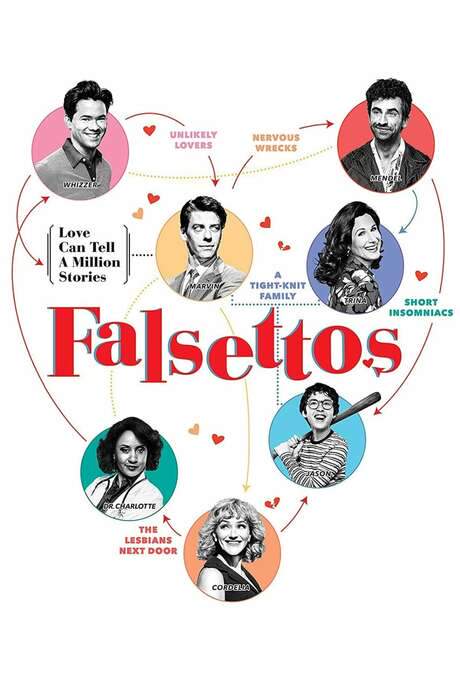
Falsettos (2017) movie poster

Plot Summary

Falsettos (2017) Plot Summary Explained

Release, runtime and language
2017 · 143 mins · English
Loading streaming availability…
Directed by
Matthew Diamond, James Lapine
Starring
Andrew Rannells, Tracie Thoms, Stephanie J. Block, Christian Borle, Anthony Rosenthal, Brandon Uranowitz

This 2016 Broadway revival explores William Finn’s acclaimed musical about Marvin, a man who abandons his family to pursue a relationship with another man during the AIDS crisis in 1980s New York City. The story follows his journey of love, loss, and acceptance as he navigates complex relationships with his wife, son, and new partner, offering a poignant look at a challenging era.

On this page (6)
  1. 1 Where to watch
  2. 2 What happens: full plot
  3. 3 Plot questions answered
  4. 4 Movie threads
  5. 5 Movies like Falsettos
  6. 6 Every angle
Loading streaming availability…

Full plot summary · contains spoilers

What Happens in Falsettos: Full Plot Summary

The whole story of Falsettos (2017) explained, from the opening scene to the final frame: every key event, every twist and what it all adds up to. Read it as a quick recap before the sequel, to check a scene you missed, or to finally understand what really happened.

Set in New York City in 1979, the story follows Marvin ([Christian Borle]), a man who has left his wife, Trina ([Stephanie J. Block]), for his lover, Whizzer ([Andrew Rannells]). The family struggles to navigate this unconventional dynamic, leading Marvin to seek the help of his psychiatrist, Mendel ([Brandon Uranowitz]). As the characters deal with their emotional turmoil, Mendel finds himself unexpectedly attracted to Trina, while Marvin's ten-year-old son, Jason ([Anthony Rosenthal]), worries about his own identity and struggles to connect with his father.

The tension peaks as Marvin attempts to force Whizzer into a traditional domestic role, leading to a bitter breakup. Meanwhile, Trina and Mendel begin a romantic relationship of their own. After a period of conflict and a volatile outburst where Marvin strikes Trina, the group reaches a point of raw honesty, accepting the pain that accompanies love. Marvin eventually reconciles with Jason, promising to support him regardless of who he becomes.

Two years later, in 1981, the group has found a precarious balance. Marvin is neighbors with a lesbian couple, Dr. Charlotte ([Tracie Thoms]) and Cordelia ([Betsy Wolfe]). As the family prepares for Jason's bar mitzvah, Whizzer unexpectedly returns to Marvin's life. However, the reunion is cut short when Whizzer collapses and is diagnosed with a mysterious, terminal illness—an early reference to the AIDS crisis.

As Whizzer's health rapidly declines, the community gathers to support him. In a poignant gesture, Jason decides to hold his bar mitzvah ceremony right in Whizzer's hospital room. Following Whizzer's passing, Marvin is left to grieve, ultimately concluding that the love they shared was worth the heartbreak. The story closes on a solemn note as the family stands together to face their loss.

Last updated: October 20, 2026 at 01:17

Was this helpful?

Plot questions answered

Falsettos Plot Explained: Your Questions Answered

The questions people ask most about Falsettos (2017): what happens in the confusing scenes, why the characters do what they do, the twists, hidden details and what the ending means. Each answer contains spoilers.

Q1

Why did Marvin leave his wife Trina for Whizzer?

Marvin leaves Trina because he is intensely attracted to Whizzer and chooses to act on that desire, even though it means abandoning his marriage and disrupting his son Jason's life. Falsettos opens with this choice already made, as Marvin tries to integrate Whizzer into the family while Trina, Jason, and his psychiatrist Mendel all struggle to adjust. The decision sets up the central conflict of the musical, framing Marvin as a man whose hunger for connection repeatedly overrides his responsibilities.

Foreshadowing: The tension is established in the very first number "Four Jews in a Room Bitching," where the fragmented family signals that Marvin's choice has already ruptured the household.

  • marvin
  • trina
  • whizzer
  • leaving family
  • motivation
  • opening
Q2

What illness does Whizzer get?

Whizzer falls ill with the mysterious disease that would later be known as AIDS, which began devastating New York's gay community in the early 1980s. Dr. Charlotte, an internist and Marvin's neighbor, is the first character to notice that young gay men are arriving at the hospital sick with an illness no one yet understands. Whizzer collapses suddenly during a racquetball game and deteriorates rapidly, with Dr. Charlotte later implying that Marvin may also be at risk.

Foreshadowing: Dr. Charlotte's observation in "Something Bad Is Happening" comes well before Whizzer's collapse, planting the warning that the illness is already spreading through the community.

  • aids
  • illness
  • whizzer
  • dr. charlotte
  • mysterious disease
  • 1981
Q3

What does "This is where we take a stand" mean at the end?

Mendel's closing line, "This is where we take a stand," reframes Falsettos as a declaration that love, chosen family, and visibility are acts of resistance against the losses of the AIDS crisis. The phrasing deliberately echoes the tone of the opening number, transforming what was once neurotic bickering into collective defiance and solidarity. By ending on that line, the musical insists that grief does not erase the bonds Marvin, Trina, Mendel, Jason, Charlotte, and Cordelia have built.

Foreshadowing: The closing song "Falsettoland - Reprise" mirrors the opening march, telling the audience that the same characters who bickered at the start have now chosen each other in the face of loss.

  • take a stand
  • ending
  • mendel
  • aids
  • family
  • resistance
  • closing line
Q4

Why does Jason hold his bar mitzvah in Whizzer's hospital room?

Jason decides to hold the ceremony in Whizzer's hospital room after realizing that Whizzer will never leave the hospital alive, choosing to share this religious milestone with the man his father loves rather than postpone it. The decision transforms the bar mitzvah into a final act of love and chosen family, gathering everyone around Whizzer one last time. Halfway through Jason's recitation, Whizzer collapses and is taken from the room, turning the celebration into a bittersweet farewell.

Foreshadowing: Jason had earlier offered to "get bar mitzvah-ed" in exchange for Whizzer's recovery in "Another Miracle of Judaism," foreshadowing his determination to keep the ceremony tied to Whizzer.

  • jason
  • bar mitzvah
  • hospital room
  • whizzer
  • ceremony
  • chosen family
Q5

Why does Marvin hit Trina?

Marvin strikes Trina in a blind rage after receiving the announcement that she and Mendel are getting married, which forces him to confront the fact that he has lost both his lover Whizzer and his wife in the same week. The slap shocks Marvin himself, and it triggers the song "I Never Wanted to Love You," in which the entire group confesses they never meant to feel so deeply for the people in their lives. The moment marks Marvin's lowest point and motivates the self-examination he undertakes in Act Two's "About Time."

Foreshadowing: Marvin's jealousy has been simmering since Mendel first became attracted to Trina in "Love Is Blind," making the marriage announcement the final trigger.

  • marvin hits trina
  • violence
  • jealousy
  • breakdown
  • marriage announcement
Q6

Why do Marvin and Whizzer break up?

Marvin and Whizzer split during a chess lesson that escalates into bitter fighting, exposing two incompatible views of their relationship. Whizzer resents Marvin's attempt to force him into a domestic "housewife" role, while Marvin cannot accept Whizzer's refusal to commit to monogamy. As Whizzer packs his things, he sings "The Games I Play," reflecting that he has been used by men his whole life and finally decides he does not want to live that way anymore.

Foreshadowing: The tension had already surfaced in "This Had Better Come to a Stop," where Whizzer openly disdains Marvin's expectations about their relationship.

  • marvin
  • whizzer
  • chess game
  • breakup
  • monogamy
  • the games i play
Q7

Why does Whizzer come back into Marvin's life in 1981?

Two years after their breakup, Jason invites Whizzer to his Little League baseball game, which is where the two men see each other again. As Whizzer watches Jason hit the ball, Marvin cautiously asks him on a date, beginning a tentative reconciliation that rekindles their romance. The reunion is brief but emotionally charged, and it leads directly to their rekindled love and ultimately to Whizzer's collapse during a game of racquetball.

Foreshadowing: Marvin sings "About Time," admitting he has spent two years unable to get over Whizzer, which shows why he is ready the moment Whizzer walks back onto the field.

  • whizzer returns
  • baseball game
  • reconciliation
  • jason
  • 1981
  • marvin
Q8

What does the chess piece on Whizzer's casket symbolize?

At the end of Falsettos, Jason places Whizzer's king chess piece on his casket, referencing the chess game that ended Marvin and Whizzer's relationship in Act One. The piece captures both the bond Marvin and Whizzer shared and the conflict that once tore them apart, now transformed into a final tribute. It signals that even painful love leaves behind something meaningful, and that the games people play with each other can leave a lasting mark on those who remain.

Foreshadowing: Whizzer's farewell duet "What Would I Do?" begins with Marvin still looking at the chessboard, connecting the chess piece directly to their final reckoning.

  • chess piece
  • casket
  • symbolism
  • marvin
  • whizzer
  • jason
  • funeral
Q9

Why is Jason's bar mitzvah cancelled?

Jason originally wants to delay the bar mitzvah until Whizzer gets well, so Mendel and Trina explain to him that Whizzer's condition is terminal and unlikely to improve. The cancellation devastates Jason, who then offers to be bar mitzvah-ed immediately in exchange for Whizzer's recovery in "Another Miracle of Judaism." The conversation forces the family to confront the fact that Whizzer will not survive, pushing Jason to repurpose his long-planned ceremony as a goodbye rather than a celebration.

Foreshadowing: Mendel earlier tells Jason that "hating his parents is normal at his age, but everyone eventually matures," setting up Jason's growth into the young man who makes this final, mature decision.

  • bar mitzvah cancelled
  • whizzer
  • terminal
  • jason
  • trina
  • mendel
Q10

Why does Trina agree to marry Mendel?

Trina accepts Mendel's clumsy proposal because he has become a steady, supportive presence in her life through in-home therapy sessions with Jason. After Marvin's departure and her mental breakdown in "I'm Breaking Down," she craves the kind of emotional presence Mendel offers, and marrying him allows her to formalize the family she has already been building. The decision also stings Marvin, who realizes he has lost both his lover and his wife in quick succession.

Foreshadowing: Mendel confesses his attraction to Trina early in "Love Is Blind," planting the seed for the romance that will later upend Marvin's sense of himself.

  • trina
  • mendel
  • marriage proposal
  • in-home therapy
  • jealously
Q11

Why was Jason worried he would turn out to be gay?

Jason's anxiety is rooted in watching his father leave his mother for a man, which makes him fear that he will be forced into an identity he did not choose. He sings about this directly in "My Father's a Homo," expressing that he does not want his father's choices to define his own future. His later relief at discovering he is attracted to girls in Act One marks a key step in his growing up, freeing him from the fear he carried into therapy.

Foreshadowing: Jason's refusal to hear his parents out before Whizzer recommends therapy shows that the anxiety predates the breakup's emotional fallout.

  • jason
  • gay
  • father's a homo
  • anxiety
  • identity
  • sexuality
Q12

Why does Jason want to see a psychiatrist?

Jason agrees to therapy with Mendel because he is having mood swings and is anxious about his identity in the wake of his father's breakup with Trina. He refuses his parents' suggestion at first but changes his mind once Whizzer also recommends it, showing how much Jason values Whizzer's opinion. The sessions with Mendel eventually help Jason work through his fear of becoming gay and allow him to open up about his own feelings for girls.

Foreshadowing: Whizzer's quiet influence on Jason is set up earlier, when Jason only listens once Whizzer echoes what his parents have been pushing for.

  • jason
  • therapy
  • mendel
  • mood swings
  • whizzer
  • psychiatrist

Movie threads

More Movies Like Falsettos, by Mood & Story

Curated lists built around what makes Falsettos tick: the same mood, the same kind of story or the same emotional payoff. Each list explains why these movies belong together.

Bittersweet musicals like Falsettos where love survives loss

Musicals that sing through heartbreak and still leave you hopeful. If you loved Falsettos, explore musicals that blend sharp wit with devastating emotional weight and end on a note of bittersweet hope. These song-driven stories balance humor and heartbreak, often touching on illness, family fracture, or grief while celebrating chosen bonds. Perfect for viewers searching for musicals like Falsettos, where music lifts heavy themes and love persists through loss.

  • bittersweet
  • musically driven
  • cathartic
  • wry
  • tender
  • heartbreaking
  • Tone: bittersweet, hopeful, melancholic
  • Pacing: variable, song-driven rhythm
Why these movies?

The story pattern: Stories in this thread typically open with fractured relationships, awkward family dynamics, or looming illness, then use musical numbers to expose raw emotion in ways dialogue alone cannot. Characters cycle through denial, anger, humor, and tenderness before arriving at acceptance. A central figure is usually lost, but the surviving family or partners find closure through ritual, song, and physical togetherness, leaving audiences grieving but consoled.

Why they belong together: These films share a tonal tightrope: they keep the audience laughing with clever lyrics and sprightly staging, then pull the emotional floor out from under them. The musicals often stage death or terminal decline without ever surrendering to bleakness, instead leaning on ensemble numbers and reunion imagery to affirm love as a counterweight to loss.


Blended family and queer identity dramas like Falsettos

Unconventional families learning to hold each other through impossible moments. If Falsettos moved you, dive into dramas with similarly complex blended families, queer relationships, and high emotional stakes. These films explore father-son bonds, ex-lovers parenting together, and chosen families facing terminal illness or social pressure. Great for fans seeking movies like Falsettos with multilayered relationships, sharp dialogue, and themes of acceptance amid grief and identity.

  • intimate
  • emotionally complex
  • family drama
  • queer
  • witty
  • reflective
  • Tone: bittersweet, warm, reflective
  • Pacing: variable, intimate dialogue and set pieces
Why these movies?

The story pattern: These narratives braid together several points of view across a tight ensemble: a father learning to parent after leaving, a son caught between loyalties, a partner navigating terminal decline, and friends or lovers holding the structure together. Time often jumps to mark shifts in the crisis, and the climax usually gathers the full family — biological and chosen — into a single room, where reconciliation is partial but real.

Why they belong together: The films are united by their willingness to show messy, overlapping relationships without resolving them neatly. They mix domestic humor with terminal diagnoses, often against the backdrop of a specific historical or social moment, and treat queer identity and family reinvention as intertwined rather than separate arcs.

If you liked this

Movies Like Falsettos

Similar movies to Falsettos: the same genre, themes or kind of story. Each one comes with its own plot summary, timeline and ending explained.

Browse all movie summaries

Every angle

Falsettos (2017) Explained: Plot, Timeline & Characters

Everything about Falsettos in one place: what happens in the plot summary, the timeline in chronological order, the characters and meaning and a spoiler-free summary. What's After the Movie adds the cast, box office and post-credit scenes.

Coming soon on iOS and Android

The Plot Explained Movie Summary App

Plot summaries, endings explained and timelines on your phone. Catch up on any movie in minutes, save your favorites and never miss a twist again.

Be the first to know when we launch. Your email stays private, always.

Learn more about the app