





Plot Explained Spoilers guaranteed!
Plot Explained

Browse by genre

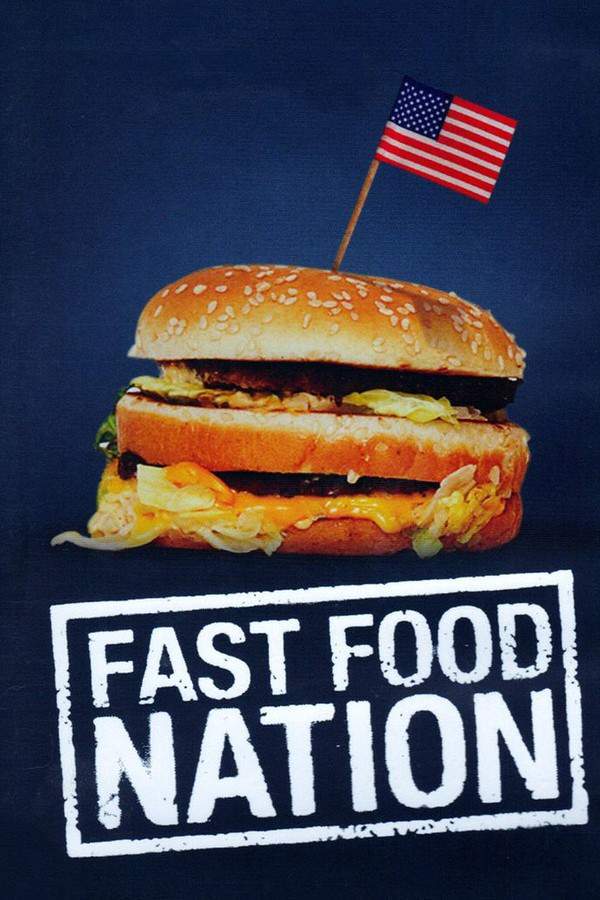
Fast Food Nation (2006) movie poster

Timeline

Fast Food Nation (2006) Timeline Explained – Every Event in Order

Release, runtime and language
2006 · 116 min · English
Directed by
Richard Linklater
Starring
Catalina Sandino Moreno, Greg Kinnear

A marketing executive for a major fast-food chain begins to investigate the company’s meat supply and uncovers unsettling truths about the origins of their popular burgers. His search leads him to a grim and exploitative system, revealing the harsh realities behind the industry's practices and the journey from farm to table. He's forced to confront the consequences of prioritizing profit over ethical sourcing and the impact on those involved.

On this page (6)
  1. 1 Where to watch
  2. 2 Events in order (15)
  3. 3 Timeline questions answered
  4. 4 Movie threads
  5. 5 Movies like Fast Food Nation
  6. 6 Every angle

Where to watch

Where to Watch Fast Food Nation (2006)

Where can you watch Fast Food Nation? Stream, rent or buy it in the US, including on Amazon Video, Apple TV Store and Fandango At Home: current JustWatch availability with up-to-date prices.

Streaming availability powered by JustWatch

15 events in order · contains spoilers

Fast Food Nation Timeline: Events in Chronological Order

Every key event of Fast Food Nation (2006) in order, scene by scene, with when and where it takes place. Use it to untangle flashbacks, time jumps and parallel storylines, to refresh your memory before the sequel or to find the exact scene you are thinking of.

  1. Delivery to Cheyenne Mountain

    The film opens with an ironic delivery of a pizza to the secretive Cheyenne Mountain military base in Colorado. This event sets the tone for the exploration of American culture through the juxtaposition of fast-food wrappers and military artifacts.

    Where
    Cheyenne Mountain, Colorado
  2. Rise of Fast Food Industry

    Schlosser traces the evolution of fast food, noting its parallel rise alongside the automobile industry. He illustrates the drastic shift from independent eateries to the dominance of homogenous franchises, reshaping the culinary landscape across America.

  3. Marketing Strategies Targeting Kids

    The documentary reveals McDonald's kid-centric marketing strategies inspired by The Walt Disney Company. Ronald McDonald's creation aimed to captivate children while also engaging their families, thereby establishing a lifelong brand loyalty.

  4. Exploitation in Schools

    Schlosser criticizes the corporate sponsorship of schools, where 80% of the sponsored materials reflect the sponsors’ biases. He highlights the concerning number of high schools offering fast food options in their cafeterias, demonstrating a troubling trend in educational settings.

  5. Working Conditions in Meatpacking

    The exploration of the meatpacking industry reveals the harsh realities faced by vulnerable immigrant workers. These workers endure high injury rates and are often subjected to hazardous practices that compromise their safety and health.

  6. Hazardous Meatpacking Practices

    Schlosser divulges alarming practices within companies like IBP, Inc., including rendering dead livestock and mixing chicken manure into cattle feed. These procedures contribute to significant health concerns, including the risk of BSE and dangerous bacteria.

  7. Globalization and Health Issues

    The film examines how globalization has affected obesity rates in countries like China and Japan. Schlosser links these rising health concerns with the increasing presence of fast-food chains, raising questions about global dietary shifts.

  8. Political Implications of BSE Fear

    Schlosser discusses how the fear of BSE has influenced U.S. government policies regarding cattle farming. He suggests that many of the documented problems in the meat industry could be addressed with stronger political commitment to safety and regulation.

  9. Discovery of Contamination

    Don Anderson, the marketing director for Mickey's, learns about concerning research regarding fecal matter in their meat supply. This knowledge prompts him to visit the Uni-Globe meatpacking plant in Cody, Colorado, to investigate further.

    Where
    Cody, Colorado
  10. Inspection at Uni-Globe

    During his visit to Uni-Globe, Don Anderson only sees sanitized workspaces, but he becomes increasingly skeptical due to warnings from rancher Rudy Martin. This interaction raises concerns about the hidden dangers linked to meat production.

    Where
    Uni-Globe meatpacking plant
  11. Amber's Aspirations

    Amber, a dedicated employee at Mickey's, dreams of college but feels trapped in her mundane job. Her determination highlights the struggles of those wishing to escape the confines of a low-wage, unsatisfying work environment.

  12. Activism for Animal Liberation

    Amber encounters a group of young idealists working to liberate cattle from Uni-Globe. Their mission unveils deeper revelations about the realities faced by livestock and the complexities of animal captivity.

  13. Undocumented Immigrants' Struggles

    Raul and his companions, Sylvia and Coco, navigate life as undocumented immigrants in Colorado. Their pursuit of better opportunities reveals the harsh challenges they face, including exploitation and personal struggles.

    Where
    Colorado
  14. Accident at Work

    After Raul suffers a workplace accident, he grapples with feelings of helplessness. This incident leads Sylvia to compromise her values in a desperate attempt to secure employment at Uni-Globe, highlighting the tough choices faced by immigrant workers.

    Where
    Uni-Globe
  15. Tragic Work Environment

    The struggles culminate in Sylvia ending up on the perilous 'kill floor' of Uni-Globe. This dark turn illustrates the grim realities of the fast-food supply chain and the human costs of cheap meat production.

    Where
    Uni-Globe

Last updated: November 03, 2024 at 22:58

Was this helpful?

Timeline questions answered

Fast Food Nation Timeline Explained: Your Questions Answered

When does it happen, and why in that order? The questions people ask about the chronology of Fast Food Nation (2006): time jumps, flashbacks, cause and effect between scenes and the correct order of events, each answered with spoilers.

Q1

Why does Don Anderson visit the Uni-Globe plant in Cody, Colorado?

Don Anderson, the marketing director for Mickey's burger chain, travels to Cody, Colorado after receiving research findings that reveal a significant contamination problem, specifically, the presence of fecal matter in their meat supply. This discovery threatens the launch of his new product, the 'Big One,' forcing him to investigate the source of the problem at the Uni-Globe meatpacking plant that supplies Mickey's.

  • don anderson
  • cody colorado
  • uni-globe plant
  • contamination
  • meat supply
Q2

Why does rancher Rudy Martin warn Don Anderson about safety regulations?

Rudy Martin warns Don about overlooked safety regulations because he understands the intense production demands placed on meatpacking plants like Uni-Globe. Despite being shown only sanitized workspaces during Don's tour, Martin knows that the pressure to meet high output quotas consistently leads to compromised safety standards and shortcuts that put workers at risk.

  • rudy martin
  • safety regulations
  • production demands
  • uni-globe
  • warning
Q3

Why does Sylvia end up working on the kill floor at Uni-Globe?

Sylvia is forced onto the kill floor after her partner Raul suffers a workplace accident, leaving him injured and unable to work. Desperate to secure employment and support their family, Sylvia compromises her values and takes a job at Uni-Globe, ending up in the most dangerous area of the plant where she becomes part of the grim production line.

  • sylvia
  • kill floor
  • uni-globe
  • Raul accident
  • immigrant workers
Q4

Why are the cattle at Uni-Globe unwilling to escape when given the chance?

When activists attempt to free the cattle from Uni-Globe, the animals surprisingly do not try to escape. This revelation highlights the physical and psychological toll of industrial farming, the cattle have been so thoroughly conditioned to captivity that they no longer recognize freedom as an option, serving as a metaphor for how the system traps not just the workers but the animals themselves.

  • cattle
  • animal liberation
  • uni-globe
  • captivity
  • escape
Q5

Why is there fecal matter found in the fast-food meat supply?

Fecal contamination occurs due to the high-speed industrial processing methods at large meatpacking plants. The relentless pace of production lines, combined with inadequate inspection and cost-cutting measures, leads to situations where intestinal contents can mix with meat during slaughter. This problem is exacerbated by the pressure to maximize output while minimizing labor costs.

  • fecal matter
  • contamination
  • meatpacking
  • food safety
  • processing
Q6

Why does the film open with a pizza delivery to Cheyenne Mountain military base?

The opening scene delivers a pizza to Cheyenne Mountain, a secretive military base, as a satirical framing device. The film suggests that future anthropologists might uncover both military artifacts and fast-food wrappers from the ruins, implying that fast food has become as defining of American culture as military power. This ironic juxtaposition sets up the documentary's exploration of fast food's cultural significance.

Foreshadowing: The opening foreshadows the film's argument about fast food as a cultural artifact.

  • cheyenne mountain
  • pizza delivery
  • opening scene
  • cultural significance
  • satire
Q7

Why do immigrant workers face such dangerous conditions in meatpacking plants?

Meatpacking companies actively recruit vulnerable immigrant workers because they are less likely to report injuries, less aware of their legal rights, and can be paid lower wages. These workers often lack documentation, making them afraid to complain about unsafe conditions. The film shows how companies exploit this vulnerability, resulting in some of the highest injury rates of any American industry.

  • immigrant workers
  • exploitation
  • meatpacking
  • dangerous conditions
  • workplace injuries
Q8

What is the 'Big One' that Don Anderson is developing?

The 'Big One' is the new flagship hamburger product that Don Anderson, Mickey's marketing director, is tasked with creating. The name becomes bitterly ironic once Don discovers the contamination issues in their meat supply, as the product he needs to promote is linked to the very problems he's uncovered at Uni-Globe.

  • big one
  • hamburger product
  • marketing
  • don anderson
  • mickey's
Q9

Why does the film connect fast food expansion to rising obesity rates in other countries?

The film examines how American fast food chains have exported their model worldwide, bringing standardized, high-calorie food to countries like China and Japan. This globalization has been directly linked to rising obesity rates in these nations, as traditional diets are replaced by processed fast food. The documentary argues this represents a troubling spread of American dietary problems.

  • globalization
  • obesity
  • china
  • japan
  • fast food expansion
  • health
Q10

Why does the film tell multiple storylines instead of focusing on one?

The interwoven narratives, Don's corporate investigation, Amber's personal struggles, and the immigrant workers' hardships, are designed to show how the fast food system connects all these people. Don represents the corporate side seeking profit, Amber represents the low-wage worker trapped in the system, and the immigrants represent the exploited labor force. Together, they illustrate how fast food impacts everyone in the chain from executive to worker.

  • storylines
  • multiple narratives
  • corporate
  • workers
  • immigrants
  • system
Q11

Why does fear of BSE influence U.S. government cattle farming policy?

BSE (Bovine Spongiform Encephalopathy), commonly known as mad cow disease, represents a serious public health threat. The film explains how outbreaks of BSE have led to significant government regulations on cattle farming, including restrictions on feed and processing methods. However, the documentary argues that many safety issues could be addressed if there was stronger political will and commitment to enforcement.

  • BSE
  • mad cow disease
  • government policy
  • cattle farming
  • food safety regulations

Movie threads

More Movies Like Fast Food Nation, by Mood & Story

Curated lists built around what makes Fast Food Nation tick: the same mood, the same kind of story or the same emotional payoff. Each list explains why these movies belong together.

Movies about corporate investigations like Fast Food Nation

Stories of individuals uncovering the dark truths hidden within powerful systems. For viewers who appreciated the investigative drive of Fast Food Nation, this section gathers movies about uncovering corporate conspiracies and ethical compromises. These similar dramas focus on individuals confronting powerful systems, exposing truths that challenge the status quo.

  • conspiratorial
  • urgent
  • anxious
  • sobering
  • unsettling
  • grim
  • Tone: dark, cynical, tense
  • Pacing: steady, methodical
Why these movies?

The story pattern: Narratives in this thread typically follow a procedural arc where a character, often an insider, begins to question the ethics of their organization. Their search for answers leads them through a web of deception, forcing them to confront the human cost of profit and power.

Why they belong together: These films are grouped by their shared focus on the investigative thriller structure within a corporate or institutional setting, a dark and cynical tone, and the heavy emotional weight of discovering systemic injustice.
Grim industrial exposé movies similar to Fast Food Nation

Unflinching looks at the human toll within exploitative industries. If you liked Fast Food Nation's stark look at the food industry, this section features other movies that expose the grim realities of industrial systems. These similar dramas share a heavy emotional weight, dark tone, and focus on the struggles of workers within exploitative environments.

  • grim
  • oppressive
  • sobering
  • cynical
  • anxious
  • urgent
  • Tone: dark, grim, oppressive
  • Pacing: steady, deliberate
Why these movies?

The story pattern: Stories in this thread often use multiple character perspectives to build a comprehensive picture of an industry, from the executives to the laborers. The plot is less about a single resolution and more about illustrating the inescapable nature of a corrupt system and its impact on human lives.

Why they belong together: Movies are grouped here based on their shared setting within a specific industry, their dark and oppressive tone, their heavy emotional weight stemming from themes of exploitation, and their sobering, often ambiguous conclusions.

If you liked this

Movies Like Fast Food Nation

Similar movies to Fast Food Nation: the same genre, themes or kind of story. Each one comes with its own plot summary, timeline and ending explained.

Browse all movie summaries

Every angle

Fast Food Nation (2006) Explained: Plot, Timeline & Characters

Everything about Fast Food Nation in one place: what happens in the plot summary, the timeline in chronological order, the characters and meaning and a spoiler-free summary. What's After the Movie adds the cast, box office and post-credit scenes.

Coming soon on iOS and Android

The Plot Explained Movie Summary App

Plot summaries, endings explained and timelines on your phone. Catch up on any movie in minutes, save your favorites and never miss a twist again.

Be the first to know when we launch. Your email stays private, always.

Learn more about the app