















Plot Explained Spoilers guaranteed!
Plot Explained

Browse by genre

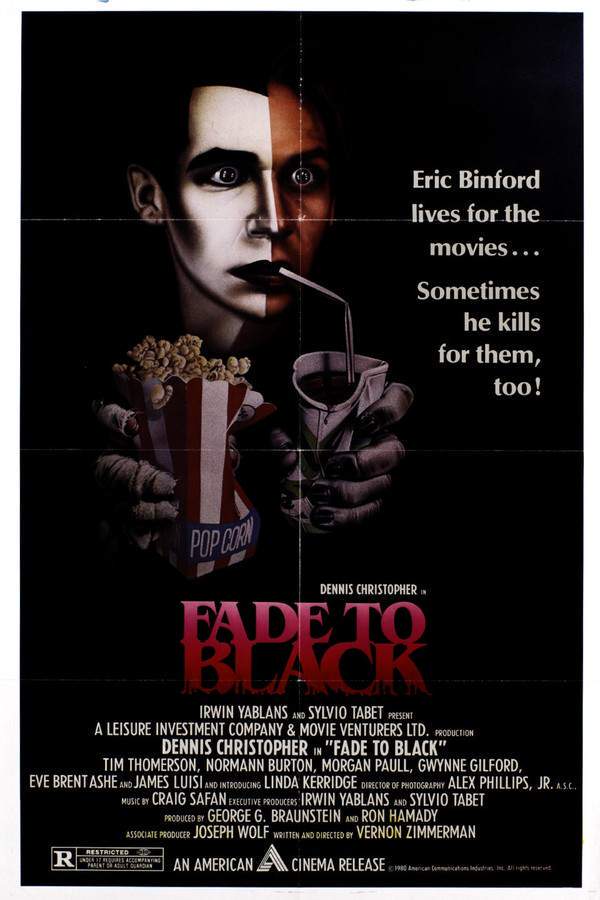
Fade to Black (1980) movie poster

Characters & Themes

Fade to Black (1980) Characters, Setting & Themes Explained

Release, runtime and language
1980 · 102 min · English
JustWatch #16,648
Directed by
Vernon Zimmerman
Starring
John Steadman, Tim Thomerson, Norman Burton, Dennis Christopher, Morgan Paull, Eve Brent

A socially awkward film fanatic becomes dangerously fixated on a woman resembling Marilyn Monroe. His obsession spirals into a darkly comedic and violent quest for revenge against those he believes have wronged him. As he enacts his plans, the lines between reality and fantasy blur, leading to a gruesome and unpredictable game of cat and mouse with increasingly dire consequences.

On this page (8)
  1. 1 Where to watch
  2. 2 Characters explained (4)
  3. 3 Where & when it takes place
  4. 4 Themes & meaning (3)
  5. 5 Character & meaning questions
  6. 6 Movie threads
  7. 7 Movies like Fade to Black
  8. 8 Every angle

Where to watch

Where to Watch Fade to Black (1980)

Where can you watch Fade to Black? Stream, rent or buy it in the US, including on Night Flight Plus, Philo and Fawesome: current JustWatch availability with up-to-date prices.

Streaming availability powered by JustWatch

4 main characters · contains spoilers

Fade to Black Characters Explained: Who Is Who

The main characters of Fade to Black (1980), heroes and villains: what drives them, how they change over the course of the story and what each of them reveals about the film's bigger ideas.

  • Eric Binford (Dennis Christopher)

    Eric is a troubled young man consumed by his love for classic films, which often blurs the line between fantasy and reality. His initial charm and humor mask a deeper turmoil stemming from his past losses, leading him down a dark path culminating in tragic violence. Eric embodies the archetype of a film fanatic whose inability to separate fiction from life results in devastating consequences.

    • 🎬 Film Buff
    • 🕵️ Obsessed
    • 😔 Tragic
  • Aunt Stella Binford (Eve Brent)

    Stella is a complex character marked by her regrets and past as a dancer. Her attempts to steer Eric towards a healthier life often come off as harsh, revealing her own frustrations and unfulfilled dreams. The loss of her career due to an accident haunts her, and her relationship with Eric highlights the struggles of letting go and facing the consequences of past choices.

    • 👵 Guardian
    • 💔 Regretful
    • 🩰 Former Dancer
  • Captain M.L. Gallagher (James Luisi)

    Gallagher serves as a skeptical authority figure within the narrative, representing law and order amidst chaos. His interactions with psychiatric professionals reflect the challenges of understanding and rehabilitating troubled individuals like Eric. Through Gallagher, the film critiques the limitations of systemic approaches to mental health issues.

    • 👮‍♂️ Authority
    • 🧩 Skeptical
    • 🚔 Law
  • Marilyn O'Connor (Linda Kerridge)

    Marilyn is an aspiring model who captures Eric's heart, representing the unattainable ideal in his cinematic fantasies. Her presence in the film symbolizes both inspiration and despair, as Eric’s obsession with her underscores his struggles to forge genuine connections. Despite her initial allure, Marilyn is drawn into a web of chaos that Eric creates.

    • 👠 Aspiring Model
    • 💔 Love Interest
    • 🌟 Dreamlike

Last updated: October 22, 2024 at 21:12

Was this helpful?

Setting

Where and When Does Fade to Black Take Place?

The setting of Fade to Black (1980): the year and time period, the places and locations, and how they shape the characters, the mood and the tension of the story.

Time period

The film does not specify an exact time period but depicts a contemporary setting where classic films influence the characters’ lives. It reflects the 1980s film culture, characterized by an obsession with nostalgic movie references and a growing disconnect between reality and fantasy.

Location

Los Angeles, Hollywood

Set primarily in Los Angeles, the film captures the vibrant yet chaotic atmosphere of the city known for its rich film industry. Hollywood, a neighborhood within Los Angeles, is emblematic of classic cinema, featuring iconic landmarks like the Chinese Theater where cinematic dreams often collide with harsh realities.

  • 🎬 Film
  • 🏙️ City
  • 🎭 Theaters

Last updated: October 22, 2024 at 21:12

Was this helpful?

3 major themes

Fade to Black Meaning: Themes & Message Explained

What is Fade to Black (1980) really about? The emotional, social and philosophical themes the film keeps returning to, its symbolism and the message beneath the surface.

  • Identity Crisis

    The movie explores the theme of identity as Eric Binford struggles to establish who he is amidst his obsession with films. This obsession leads him to reenact iconic movie scenes, showcasing how cinema can distort one's sense of reality. Ultimately, this crisis culminates in tragic consequences as he becomes lost in his cinematic fantasies.

  • Loss and Grief

    Loss serves as a driving force in Eric’s descent into madness following the death of his aunt. His grief leads him to reject the life he knew and to embrace violent fantasies that echo his favorite films. The film poignantly illustrates how unresolved grief can manifest in destructive ways, drawing parallels between personal loss and cinematic escapism.

  • Violence

    Violence permeates the narrative as Eric's obsession with film characters spirals into real-life consequences. The transition from playful mimicry to dangerous aggression illustrates the fine line between entertainment and reality. The film ultimately critiques how media can influence behavior, and how living in a fantasy can lead to catastrophic outcomes.

Last updated: October 22, 2024 at 21:12

Was this helpful?

Character & theme questions

Fade to Black Characters & Meaning: Your Questions Answered

The questions people ask about Fade to Black (1980): who the characters really are, their relationships, what the symbols mean, where it takes place and what the movie is really about. Each answer contains spoilers.

Q1

Where is Fade to Black set?

The film is set primarily in Los Angeles, with significant scenes taking place in Hollywood. The setting captures the city's vibrant yet chaotic atmosphere, with iconic landmarks like the Chinese Theater representing where cinematic dreams collide with harsh realities.

Foreshadowing: The choice of Hollywood as a primary setting foreshadows Eric's obsession with classic films and his fantasy of becoming a movie star.

  • los angeles
  • hollywood
  • setting
  • chinese theater
  • film industry
Q2

What time period does Fade to Black take place in?

The film is set in the 1980s, depicting a contemporary era where classic films influence characters' lives. It reflects 1980s film culture characterized by an obsession with nostalgic movie references and a growing disconnect between reality and fantasy.

Foreshadowing: The 1980s setting reinforces the era's film culture that shapes Eric's identity and his inability to distinguish between cinematic fantasy and real life.

  • 1980s
  • time period
  • decade
  • contemporary
  • film culture
  • nostalgia
Q3

What is the main theme of Fade to Black?

The movie's primary themes are identity crisis, loss and grief, and violence. It explores how Eric Binford's obsession with classic films distorts his sense of reality, ultimately leading to tragic consequences as he becomes lost in cinematic fantasies.

Foreshadowing: The thematic foundation is laid early through Eric's film obsession, which gradually blurs the lines between his fantasy world and reality.

  • identity crisis
  • loss
  • grief
  • violence
  • theme
  • obsession
  • film
Q4

How does Fade to Black explore identity?

The film delves deeply into identity crisis through Eric Binford, a film fanatic who struggles to establish who he is amidst his obsession with movies. His reenactment of iconic film scenes showcases how cinema can distort one's sense of reality, culminating in tragic consequences as he becomes indistinguishable from his cinematic personas.

Foreshadowing: Eric's initial charm and humor mask deeper turmoil, hinting at his fragile identity that will eventually collapse under his film-inspired delusions.

  • identity
  • eric binford
  • self
  • reality
  • fantasy
  • cinema
  • persona
Q5

Who is Eric Binford?

Eric Binford is the troubled protagonist of Fade to Black, portrayed by Dennis Christopher. He is a film fanatic whose love for classic films blurs the line between fantasy and reality. His charm and humor mask deeper turmoil stemming from past losses, ultimately leading him down a dark path of tragic violence as he cannot separate fiction from real life.

Foreshadowing: Eric's obsessive nature and his aunt's death set the stage for his descent into madness and violent fantasy.

  • eric binford
  • protagonist
  • film fanatic
  • classic films
  • obsession
Q6

Who is Aunt Stella in Fade to Black?

Aunt Stella Binford is Eric's guardian, played by Eve Brent. She is a complex character marked by regrets and her past as a dancer whose career ended due to an accident. Her attempts to steer Eric toward a healthier life often come across as harsh, revealing her own frustrations and unfulfilled dreams. Her relationship with Eric highlights the struggles of letting go and facing consequences of past choices.

Foreshadowing: Stella's own unfulfilled dreams and harsh approach to Eric hint at the cyclical nature of loss and failed aspirations that define their relationship.

  • aunt stella
  • binford
  • guardian
  • dancer
  • caregiver
  • regret
Q7

Who is Marilyn O'Connor?

Marilyn O'Connor is an aspiring model played by Linda Kerridge who captures Eric's heart. She represents the unattainable ideal in his cinematic fantasies, symbolizing both inspiration and despair. Eric's obsession with her underscores his struggles to forge genuine connections, and despite her initial allure, she becomes drawn into the web of chaos Eric creates.

Foreshadowing: Marilyn's resemblance to Marilyn Monroe sets her up as an object of Eric's film-fueled fantasy from the moment she appears.

  • marilyn o'connor
  • model
  • love interest
  • obsession
  • fantasy
  • ideal
Q8

Who is Captain Gallagher?

Captain M.L. Gallagher, played by James Luisi, serves as a skeptical authority figure representing law and order. He interacts with psychiatric professionals to address the challenges of understanding and rehabilitating troubled individuals like Eric. Through Gallagher, the film critiques the limitations of systemic approaches to mental health issues.

Foreshadowing: Gallagher's skepticism toward Eric's mental state establishes the tension between authority and understanding that defines the film's cat-and-mouse elements.

  • captain gallagher
  • police
  • authority
  • law
  • mental health
  • detective
Q9

How does Fade to Black address loss and grief?

Loss and grief drive Eric's descent into madness following his aunt's death. His grief leads him to reject his previous life and embrace violent fantasies echoing his favorite films. The film illustrates how unresolved grief can manifest destructively, drawing parallels between personal loss and cinematic escapism.

Foreshadowing: Stella's death early in the film triggers Eric's complete transformation from harmless film enthusiast to dangerous fantasy-actor.

  • loss
  • grief
  • death
  • aunt
  • mourning
  • escapism
  • unresolved
Q10

What does Fade to Black say about violence?

Violence permeates the narrative as Eric's obsession with film characters spirals into real-life consequences. The transition from playful mimicry to dangerous aggression illustrates the fine line between entertainment and reality. The film critiques how media can influence behavior and how living in fantasy can lead to catastrophic outcomes.

Foreshadowing: Eric's early film reenactments appear harmless but gradually escalate, foreshadowing the violent conclusion where he dies during a movie scene reenactment.

  • violence
  • aggression
  • media influence
  • fantasy
  • reality
  • consequences
  • critique

Movie threads

More Movies Like Fade to Black, by Mood & Story

Curated lists built around what makes Fade to Black tick: the same mood, the same kind of story or the same emotional payoff. Each list explains why these movies belong together.

Movies about obsessive descent like Fade to Black

Unraveling psyches where a single fixation consumes reality. Explore movies like Fade to Black where a character's dangerous obsession leads to psychological collapse. These films share a dark tone, heavy emotional weight, and often a bleak ending, focusing on stories of stalking, delusion, and the blurring line between fantasy and violent reality for fans of disturbing character studies.

  • obsessive
  • unsettling
  • tragic
  • claustrophobic
  • psychological
  • anxious
  • Tone: dark, unsettling
  • Pacing: steady, deliberate
Why these movies?

The story pattern: Narratives in this thread typically follow a linear but psychologically complex arc, where a socially isolated or alienated individual becomes consumed by a singular obsession. Their delusions progressively warp their perception, leading to escalating confrontations with the world they perceive as hostile, and culminating in a destructive, often tragic, conclusion.

Why they belong together: Movies are grouped here for their shared focus on a protagonist's psychological unraveling driven by a powerful obsession. They connect through a dark, unsettling mood, a steady pacing that builds tension towards a violent climax, and a heavy emotional weight stemming from themes of loneliness, alienation, and psychosis.

Movies where reality blends with cinema like Fade to Black

Stories where movie fantasy bleeds violently into a broken reality. If you liked Fade to Black's theme of a film fanatic living out a cinematic fantasy, explore similar movies where characters blur movie fiction with grim reality. These films often combine thriller, horror, and dark comedy elements, creating an unpredictable, nightmarish vibe for viewers who enjoy meta-commentary on cinema itself.

  • unsettling
  • nightmarish
  • meta
  • dark comedy
  • tense
  • obsessive
  • Tone: dark, meta-textual
  • Pacing: steady, builds to chaos
Why these movies?

The story pattern: The narrative pattern involves a protagonist who adopts the roles, aesthetics, and narratives of films as a coping mechanism. As their delusions deepen, they begin to enact scenes from movies in their real life, leading to a collision between their idealized fantasy and the harsh consequences of the real world, structured as a dark and ironic game.

Why they belong together: These movies are linked by their unique blend of cinephilia and psychological thrills, where the love of cinema becomes a catalyst for darkness. They share a specific vibe that mixes unsettling tension with dark comedy, a moderate complexity from layered film references, and a theme of escapism turning deadly.

If you liked this

Movies Like Fade to Black

Similar movies to Fade to Black: the same genre, themes or kind of story. Each one comes with its own plot summary, timeline and ending explained.

Browse all movie summaries

Every angle

Fade to Black (1980) Explained: Plot, Timeline & Characters

Everything about Fade to Black in one place: what happens in the plot summary, the timeline in chronological order, the characters and meaning and a spoiler-free summary. What's After the Movie adds the cast, box office and post-credit scenes.

Coming soon on iOS and Android

The Plot Explained Movie Summary App

Plot summaries, endings explained and timelines on your phone. Catch up on any movie in minutes, save your favorites and never miss a twist again.

Be the first to know when we launch. Your email stays private, always.

Learn more about the app