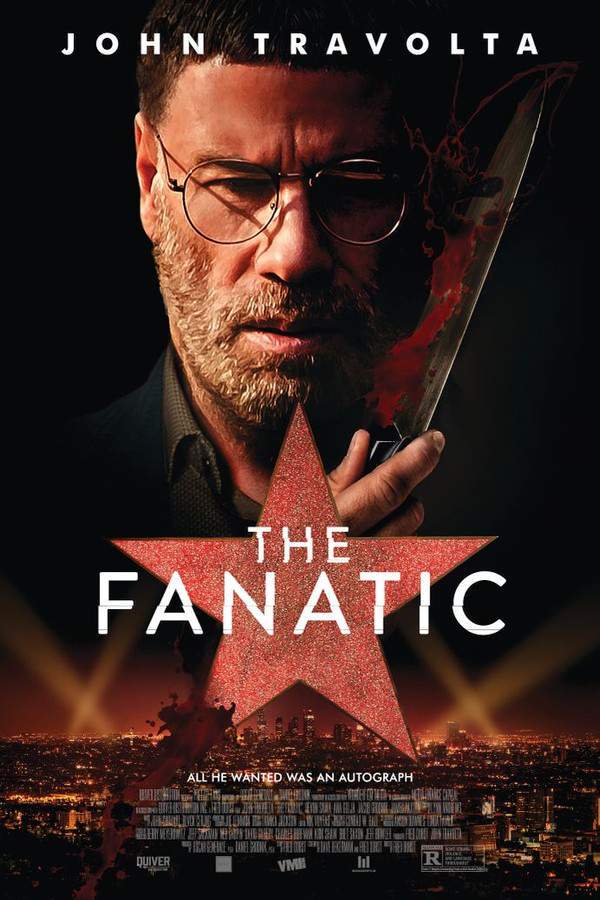
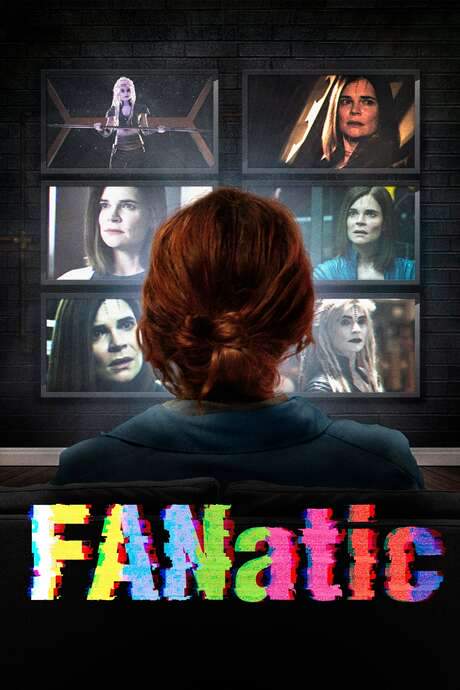
Moose John Travolta is an autistic man who works as a street performer on Hollywood Boulevard, living among movie memorabilia in a way that makes his apartment feel like a personal museum. His passion centers on the cult movie world, and in particular the fame and aura surrounding Hunter Dunbar Devon Sawa, a star Moose idolizes with an almost fanatical devotion. The film follows a quiet, unsettling ascent into Moose’s increasingly tangled fixation, and it tracks the cost of blurring lines between admiration and obsession.
Moose’s world is upended when the chance to meet Dunbar finally arrives. A tense public moment becomes a missed opportunity when Dunbar’s ex-wife Brenda Jessica Uberuaga arrives and sparks a quarrel. Dunbar storms off, and Moose, driven by longing and a stubborn belief in the magic of autograph moments, trails after him, pleading for a keepsake that would validate his lifelong fantasy. Dunbar’s reaction is sharp and dismissive, a rude rebuff that stings Moose and exposes the fragile line between admiration and intrusion.
Soon afterward, Leah Ana Golja, Moose’s friend and a young paparazza, introduces him to a new tool: a mobile app that publishes the home addresses of famous celebrities, including Dunbar. This discovery reshapes Moose’s approach to meeting his idol. Armed with a letter and a stubborn insistence on connection, Moose travels to Dunbar’s home and tries again for an autograph, hoping to bridge the distance between the myth of a screen icon and the real person behind the legend. Dunbar, wary and protective of his family—especially his young son—tells Moose to stay away from their neighborhood, but he reluctantly signs Moose’s shirt as a reluctant concession to the fan who won’t back down.
At Dunbar’s property, Moose encounters Dora Marta González Rodin, the housekeeper who keeps the private world of the star mostly between four walls. Dora’s presence is a barrier, a reminder of the domestic safety Dunbar is trying to preserve. Moose, pushed back by fear and confusion, is frightened off by Dora, and a growing tense energy seeps into the situation. The encounter ignites a volatile mix of frustration and resentment in Moose, who later clashes with Leah, leading to a startling act of violence against another street performer, Todd Jacob Grodnik. Todd had previously taunted Moose, and the altercation marks a violent tipping point driven by a cocktail of humiliation, envy, and a desperate need to be heard.
The quiet facade of Moose’s life cracks further when he returns to Dunbar’s home. Dora again confronts him, and this time the fear overtakes Moose. He pushes Dora aside, and she falls, striking her head and dying. In the aftermath Moose seizes a chance to invade Dunbar’s private spaces, rifling through personal belongings and then hiding in a closet until the moment Dunbar returns and falls asleep. Moose’s later actions—touching Dunbar’s body and posting photographs beside him to his social feeds—reveal the depth of his obsession and a chilling loss of boundaries.
The next day brings a chilling confrontation in the daylight. Dunbar spots Moose on the street and delivers a threat that he will kill him if he ever crosses paths again, labeling him a stalker. The threat, combined with the mounting pressure of Moose’s escalating behavior, sends Moose into a mental spiral. He destroys his own Hunter Dunbar memorabilia, a symbolic purge of the life he created around his idol, while Leah confronts him, threatening to involve the police for his own safety. Moose pushes Leah out of his home, signaling a further breakdown of his relationships and a deeper retreat into isolation.
The film’s most harrowing sequence unfolds when Moose returns to Dunbar’s home one more time and binds him to a bed. Dunbar awakens to a cruel and taunting sequence of pranks and intimidation. He pleads with Moose to let him go, offering promises of autographs and a friendship if Moose would merely end the nightmare. Moose agrees to untie him, but the moment ends in unthinkable violence as Dunbar, driven by a mix of fear and rage, turns on Moose. He shoots Moose’s fingers with a concealed rifle and stabs him in the eye, an act that shocks him into a brutal, devastating clarity. Dunbar, now a figure who has crossed a dangerous threshold, calmly escorts Moose out of his home, bringing the nightmarish sequence to a grim, clinical close.
Wandering the streets of Hollywood in a state of disoriented collapse, Moose becomes a public spectacle for passing tourists who mistake his injuries for authentic prosthetic makeup. Leah finds him and brings him to a hospital, trying to anchor him back to safety. In the meantime, Dunbar is arrested by the police, who misinterpret the scene and believe he killed Dora. The story closes on a haunting note as Leah recounts Moose’s transformation, describing how he “eventually looks at his injuries like a badge of honour,” a line that is echoed in a final, symbolic drawing of a happy Moose equipped with a pirate hook and an eye patch, with Leah portrayed as a guardian angel in the background.
This story paints a stark portrait of how a fixation can blur the lines between admiration and ownership, and it follows the consequences when the boundary between fantasy and reality becomes dangerously thin. The characters, each rooted in real human flaws and vulnerabilities, collide in a sequence of choices that exposes the fragility of celebrity worship, the fragility of the mind, and the unpredictable toll of obsession on everyone involved.