Plot Explained Spoilers guaranteed!
Plot Explained

Browse by genre

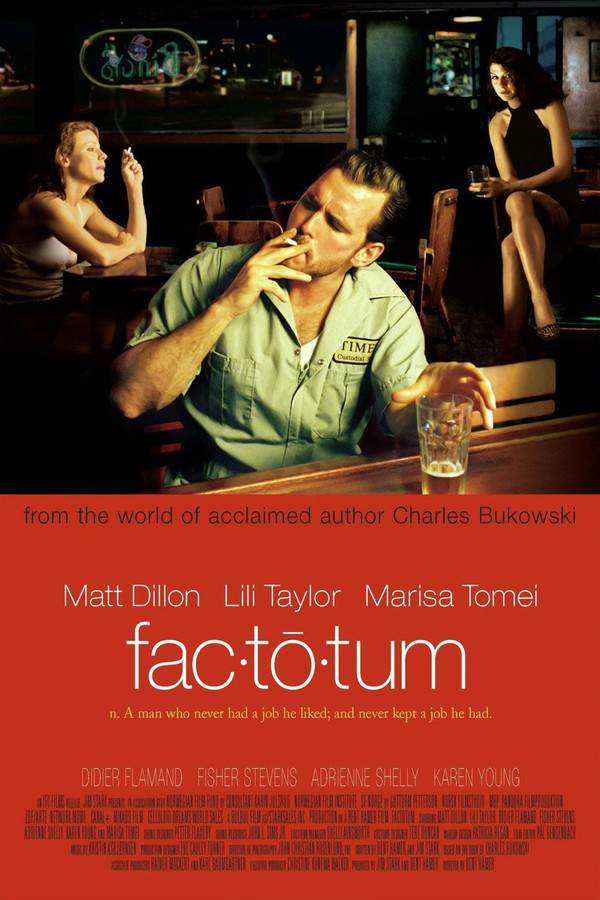
Factotum (2006) movie poster

Characters & Themes

Factotum (2006) Characters, Setting & Themes Explained

Release, runtime and language
2006 · 94 min · English
Loading streaming availability…
Directed by
Bent Hamer
Starring
Marisa Tomei, Lili Taylor, Matt Dillon

Driven by a restless spirit, Henry Chinaski, portrayed by Matt Dillon, drifts through a succession of odd jobs and short-lived relationships. Struggling to find purpose and financial stability, he seeks solace in life’s simple pleasures. His experiences offer a candid and poignant look at the challenges of finding meaning and connection in a world of fleeting moments.

On this page (9)
  1. 1 Where to watch
  2. 2 Characters explained (3)
  3. 3 Where & when it takes place
  4. 4 Themes & meaning (3)
  5. 5 Character & meaning questions
  6. 6 The book behind the movie
  7. 7 Movie threads
  8. 8 Movies like Factotum
  9. 9 Every angle
Loading streaming availability…

3 main characters · contains spoilers

Factotum Characters Explained: Who Is Who

The main characters of Factotum (2006), heroes and villains: what drives them, how they change over the course of the story and what each of them reveals about the film's bigger ideas.

  • Henry 'Hank' Chinaski (Matt Dillon)

    A rough-edged, self-lunding aspiring writer who drifts through a string of menial jobs while battling alcoholism. He oscillates between cynical humor and measurable volatility, a man who seeks meaning in writing yet sabotages himself with drinking and impulsive violence. His relationships are transactional and fraught, revealing a core wish for connection that repeatedly falters under his addictions. Ultimately, he chooses solitude with his writing as his only stable companion.

    • 🍷 Alcoholism
    • 📝 Writer in progress
    • 💔 Self-destructive
  • Jan (Lili Taylor)

    An alcoholic barfly who becomes Hank’s longest-running companion and lover. Her presence anchors Hank’s life at times, yet the relationship grows stale as both drift into predictable patterns. She embodies the cyclical nature of dependency and the lure of escapism through substances and shared misery. Her arc reflects how fragile connections dissolve when life becomes too habitual.

    • 🍷 Alcoholic
    • 💘 Relationship
    • 🎭 Complicated
  • Laura (Marisa Tomei)

    A sympathetic bar companion who helps Hank access alcohol with the aid of a wealthy, eccentric man. She represents a gentler form of companionship and a glimpse of care within a world of cynicism. Her dynamics with Hank emphasize the ambiguous boundaries between generosity and opportunism in the urban underbelly. Her presence adds a softer counterpoint to Hank’s more volatile relationships.

    • 💖 Compassion
    • 🍸 Bar culture
    • 🤝 Ambiguity

Last updated: October 04, 2025 at 08:05

Was this helpful?

Setting

Where and When Does Factotum Take Place?

The setting of Factotum (2006): the year and time period, the places and locations, and how they shape the characters, the mood and the tension of the story.

Time period

Location

United States

Set against an American urban backdrop, the film moves through bars, factories, hotels, and docks as Hank drifts between jobs. The locations reflect a rough, working-class landscape where a writer-to-be struggles to find stability. The settings feel intimate and transient, underscoring a life defined by routine, booze, and fleeting connections.

  • 🏙️ Urban life
  • 🍺 Bar culture
  • 🗽 American setting

Last updated: October 04, 2025 at 08:05

Was this helpful?

3 major themes

Factotum Meaning: Themes & Message Explained

What is Factotum (2006) really about? The emotional, social and philosophical themes the film keeps returning to, its symbolism and the message beneath the surface.

  • Alcoholism

    Alcoholism drives the narrative and binge-driven cycles of employment and failure. Hank’s life is shaped by drinking, which sabotages opportunities and deepens his detachment from others. The film uses barroom scenes and intoxicated episodes to reveal how addiction both fuels and erodes his ambition. The struggle with sobriety (or lack thereof) becomes a lens on personal responsibility and self-destruction.

  • Loneliness

    Beneath the social chaos, the story dwells on isolation and the ache for meaningful connection. Hank drifts from one relationship to another, turning companionship into a temporary refuge from emptiness. The recurring pattern with Jan and Laura highlights how intimacy can be paradoxically comforting and hollow. In the end, solitude appears as the only constant, even as art beckons.

  • Art & Ambition

    The pursuit of writing stands alongside the chaotic lifestyle as the central tension. Hank clings to the idea that art could redeem his existence, even as he sabotages himself with every drink and misstep. The narrative frames writing as a demanding, solitary fight against circumstance. The climactic voiceover frames writing as the ultimate, albeit costly, vocation worth pursuing.

Last updated: October 04, 2025 at 08:05

Was this helpful?

Character & theme questions

Factotum Characters & Meaning: Your Questions Answered

The questions people ask about Factotum (2006): who the characters really are, their relationships, what the symbols mean, where it takes place and what the movie is really about. Each answer contains spoilers.

Q1

What kind of setting does the film portray?

The film is set in an American urban environment, moving through bars, factories, hotels, and docks. This rough, working-class landscape reflects a world of instability where Hank drifts between menial jobs. The settings feel intimate yet transient, emphasizing a life defined by routine, alcohol, and fleeting human connections.

  • american setting
  • urban life
  • working class
  • bar culture
Q2

What are the main themes explored?

The film centers on three interconnected themes: alcoholism as a destructive force that sabotages opportunities and deepens detachment; loneliness and the ache for meaningful connection despite repeating patterns of shallow relationships; and the tension between art and self-sabotage, as Hank clings to writing as a potential redemption despite constant failure.

  • alcoholism
  • loneliness
  • art
  • ambition
  • addiction
Q3

Who is Hank Chinaski?

Hank is a rough-edged, self-destructive aspiring writer who drifts through menial jobs while battling alcoholism. He oscillates between cynical humor and volatility, seeking meaning in writing yet consistently sabotaging himself through drinking and impulsive behavior. His core wish for connection repeatedly fails under the weight of his addictions, leading him to choose solitude with writing as his only constant companion.

  • henry chinaski
  • protagonist
  • writer
  • alcoholic
Q4

What does the film say about alcoholism?

Alcoholism drives the narrative through binge-driven cycles of employment and failure. The film reveals how drinking both fuels and erodes Hank's ambition, using barroom scenes and intoxicated episodes as a lens on personal responsibility and self-destruction. His struggle with sobriety becomes the central force that shapes every relationship and opportunity in his life.

  • alcohol
  • addiction
  • drinking
  • sobriety
  • substance abuse
Q5

What role does loneliness play in the story?

Loneliness operates as an underlying ache throughout the film. Hank drifts from one relationship to another, using temporary companionship as a refuge from emptiness. His recurring relationships with Jan and Laura highlight how intimacy can feel both comforting and hollow. Ultimately, solitude emerges as the only constant in his life, even as the possibility of art beckons him forward.

  • loneliness
  • isolation
  • connection
  • relationships
  • solitude
Q6

Who is Jan and what does she represent?

Jan is an alcoholic barfly who becomes Hank's longest-running companion and lover. She anchors his life at times, but their relationship grows stale as both partners drift into predictable, cyclical patterns. She represents the paradoxical nature of dependency, where shared misery and substances create bonds that feel meaningful yet ultimately dissolve into habitual emptiness.

  • jan
  • relationship
  • dependency
  • barfly
  • companionship
Q7

Who is Laura and how does she differ from Jan?

Laura is a sympathetic bar companion who helps Hank access alcohol through a wealthy, eccentric man. She represents a gentler form of companionship and offers a glimpse of genuine care within a cynical world. Unlike Jan's more volatile dynamic with Hank, Laura emphasizes the ambiguous boundaries between generosity and opportunism, providing a softer counterpoint to Hank's relationships.

  • laura
  • marisa tomei
  • kindness
  • companionship
  • opportunism
Q8

How does the film portray art and writing as a pursuit?

Writing stands as the central tension alongside Hank's chaotic lifestyle. He clings to the belief that art could redeem his existence, even as he consistently sabotages himself through drinking and missteps. The narrative frames writing as a demanding, solitary fight against circumstance. The climactic voiceover presents writing as the ultimate, albeit costly, vocation worth pursuing despite its personal toll.

  • writing
  • art
  • ambition
  • creativity
  • vocation
Q9

What is the overall tone and mood of the film?

The film maintains a melancholic tone characterized by quiet sadness and reflective mood. Its intensity stays medium, avoiding high drama through an observational, episodic structure. The pacing is steady, moving through similar cycles of jobs and relationships. This candid, almost detached realism presents serious themes of addiction and failure without becoming overwhelmingly heavy.

  • tone
  • mood
  • melancholy
  • atmosphere
  • realism
Q10

What does the ending signify about Hank's journey?

The ending is intentionally ambiguous. Hank is left alone with his writing and alcohol, which can be interpreted as either a resigned acceptance of his chosen path or a bleak encapsulation of his isolation. The final voiceover frames writing as his ultimate vocation, suggesting that despite the self-destruction, he has found something worth holding onto, even if it means embracing solitude.

  • ending
  • solitude
  • acceptance
  • isolation
  • conclusion

Movie threads

More Movies Like Factotum, by Mood & Story

Curated lists built around what makes Factotum tick: the same mood, the same kind of story or the same emotional payoff. Each list explains why these movies belong together.

Movies about aimless drifters like Factotum

Character studies of people wandering through life without a clear direction. If you liked the wandering, episodic nature of Factotum, explore more movies about characters adrift in life. These films share a focus on day-to-day struggles, fleeting connections, and the search for meaning in a seemingly directionless existence, often with a similar gritty realism.

  • wandering
  • apathetic
  • lonely
  • resigned
  • gritty
  • reflective
  • Tone: melancholic, reflective, apathetic
  • Pacing: steady, episodic
Why these movies?

The story pattern: Stories in this thread are typically episodic, following a protagonist through a series of similar cycles—dead-end jobs, transient relationships, and personal vices. The plot is less about a traditional arc and more about accumulating experiences that paint a portrait of a specific kind of urban solitude and existential aimlessness.

Why they belong together: These movies are grouped by their central character archetype: the passive drifter. They share a melancholic tone, steady pacing, and a focus on the small, often squalid, details of a life without conventional purpose, creating a coherent vibe of resigned loneliness.

Movies about creative struggle and addiction like Factotum

Stories of artists wrestling with their craft amid personal turmoil and addiction. For viewers who appreciated Factotum's portrayal of a writer's battle with alcoholism, this list features similar stories of artists grappling with their demons. These films examine the gritty reality of the creative process, often showing how addiction and unstable lives both fuel and hinder artistic expression.

  • creative struggle
  • addiction
  • turbulent
  • urban loneliness
  • existential
  • gritty
  • Tone: gritty, melancholic, candid
  • Pacing: steady, character-driven
Why these movies?

The story pattern: The narrative pattern follows an artist—writer, musician, painter—as they navigate the challenges of their craft while battling personal vices, typically addiction. The story is a push-and-pull between moments of creative clarity and cycles of self-sabotage, leading to an often ambiguous ending regarding their ultimate success or failure.

Why they belong together: These films are united by their core theme: the inextricable link between artistic endeavor and personal dysfunction. They share a gritty mood, medium emotional weight, and a focus on the raw, often unglamorous, reality of the creative life, making the recommendations feel thematically cohesive.

If you liked this

Movies Like Factotum

Similar movies to Factotum: the same genre, themes or kind of story. Each one comes with its own plot summary, timeline and ending explained.

Browse all movie summaries

Every angle

Factotum (2006) Explained: Plot, Timeline & Characters

Everything about Factotum in one place: what happens in the plot summary, the timeline in chronological order, the characters and meaning and a spoiler-free summary. What's After the Movie adds the cast, box office and post-credit scenes.

Coming soon on iOS and Android

The Plot Explained Movie Summary App

Plot summaries, endings explained and timelines on your phone. Catch up on any movie in minutes, save your favorites and never miss a twist again.

Be the first to know when we launch. Your email stays private, always.

Learn more about the app