Year: 2011
Runtime: 102 min
Director: Philipp Stölzl
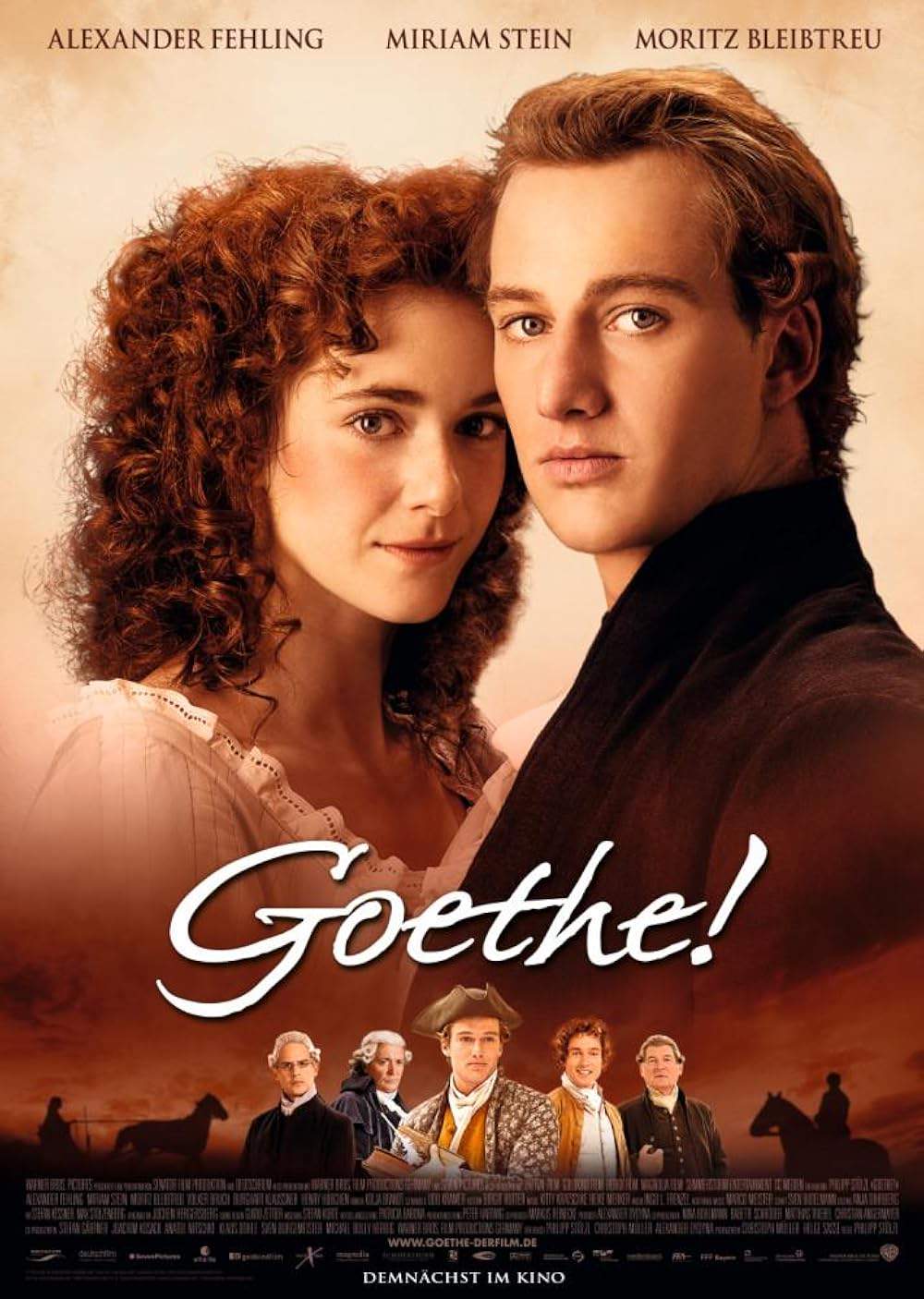
During the 18th century in Germany, a young and aspiring poet, Johann Goethe, journeys to a quiet provincial town hoping to reignite his creative ambitions. He finds mentorship and friendship with his supervisor, Kestner, but his world is turned upside down by the arrival of Lotte. Goethe falls deeply in love, only to discover their romance is forbidden due to her father's prior engagement. He must then grapple with the complexities of love, duty, and societal expectations.
Find where to stream, rent, or buy Young Goethe in Love (2011) in the US with current JustWatch availability, up-to-date pricing, and platform listings for subscription, rental, and digital purchase options.
Warning: spoilers below!
Haven’t seen Young Goethe in Love yet? This summary contains major spoilers. Bookmark the page, watch the movie, and come back for the full breakdown. If you're ready, scroll on and relive the story!
Read the complete plot breakdown of Young Goethe in Love (2011), including all key story events, major twists, and the ending explained in detail. Discover what really happened, and what it all means.
In the scenic setting of Wetzlar, a charming town in 18th century Germany, aspiring poet Johann Wolfgang Goethe finds himself at a crucial juncture in his life. After failing to obtain a doctoral degree in law from the University of Strasbourg, he is sent by his father to the imperial law court, where he must review dusty records under the stern watch of Kestner. It is within this mundane environment that Goethe strikes up a friendship with a fellow junior clerk, Wilhelm Jerusalem, who opens his eyes to the lively social scene surrounding them.
During one of these gatherings, Goethe’s gaze falls upon the enchanting Lotte Buff, the daughter of a widower who is devoted to caring for her seven younger siblings in a quaint manor on the outskirts of town. As Goethe’s feelings for Lotte deepen, a series of serendipitous encounters draws them closer together. A sudden rainstorm traps them in a dilapidated castle, where their shared passion ignites amidst the echoes of thunder.
Meanwhile, Kestner has been discreetly negotiating with Lotte’s father, ecstatic at the idea of marrying off his eldest daughter to a respected lawyer, thus ensuring a bright future for the family. Although Lotte harbors reservations about Kestner, she reluctantly consents to their engagement, blissfully unaware of Goethe’s budding affection for her.
In a twist of fate, Kestner approaches Goethe with an unusual request to be his best man, which Goethe enthusiastically accepts, even offering to pen some heartfelt phrases for the wedding ceremony. However, fate takes a cruel turn when Lotte writes to Goethe, citing duty and family obligations as the reasons for ending their affair. Heartbroken, he attempts to visit her, only to stumble upon an engagement party that shatters his remaining hope. Despondently returning to his lodgings, Goethe witnesses Jerusalem’s aching sorrow over his own unrequited love for a married woman, echoing his own despair.
As Goethe wrestles with profound feelings of loss and disillusionment, he is struck by the tragic realities that unravel before him. In a moment of inspired clarity, he decides to channel his turbulent emotions into a poignant narrative titled The Sorrows of Young Werther, which he sends to Lotte as a farewell gift. Although moved by its exquisite prose, Lotte chooses to keep the manuscript a secret, presenting it to a publisher without revealing its true author.
When Goethe’s father eventually releases him from his duties, the young writer returns to Frankfurt, only to discover that he has become a literary sensation as his heartfelt book resonates with readers far and wide.
Last updated: November 22, 2024 at 18:08
Explore frequently asked questions about Young Goethe in Love (2011) with spoiler-rich answers covering the full plot summary, major story beats, character motivations, hidden details, and ending meaning. This movie summary FAQ helps explain confusing scenes, plot twists, and narrative decisions in clear, searchable detail.
Lotte consents to her engagement with Kestner because of her sense of family duty. As the eldest daughter of a widower caring for seven younger siblings, she feels responsible for securing the family's future. Kestner is a respected lawyer who can provide financial stability, which is why her father had already negotiated the match. Although Lotte harbors reservations about Kestner, she prioritizes her family's needs over her personal emotions.
Earlier in the story, Lotte is established as devoted to caring for her seven younger siblings, showing her sacrificial nature.
Kestner appears genuinely unaware of Goethe's romantic feelings for Lotte. At the social gatherings, Goethe's connection with Lotte is subtle enough that Kestner doesn't recognize it as romantic interest. His request is made in good faith, seeing Goethe as a colleague and friend. The dramatic irony intensifies when Goethe, despite his heartbreak, agrees to participate.
The social scenes show Goethe and Lotte connecting, but Kestner is focused on the lively social scene rather than observing their interactions closely.
Goethe agrees to be the best man because he is still unaware that Lotte has genuine feelings for him. He hopes to win her over before the wedding and doesn't realize the engagement is already finalized. Additionally, as a年轻 man in a difficult position, he may feel obligated to accept the request from a colleague. The moment he learns of Lotte's decisive break-up letter, the wedding arrangements become finalized.
Goethe's optimism about his chances is evident in his enthusiastic acceptance and even offering to write heartfelt phrases for the ceremony.
Lotte ends her relationship with Goethe by letter because she recognizes her duty to her family cannot be overridden by personal feelings. Her father's prior engagement to Kestner has already secured her future, and as the eldest sibling, she cannot abandon her responsibilities. She cites both duty and family obligations as reasons, choosing the practical stability her marriage to Kestner will provide over her romantic desires.
The story establishes early that Lotte is devoted to her seven younger siblings, setting up her prioritizing of family over personal happiness.
After witnessing Jerusalem's sorrow over his own unrequited love for a married woman, Goethe experiences profound grief and disillusionment. In a moment of inspired clarity, he decides to transform his turbulent emotions into art. The novel becomes both a cathartic outlet for his pain and a farewell gift to Lotte, allowing him to process his loss through creative expression.
Jerusalem's parallel situation of pining for a married woman echoes Goethe's own despair, triggering his artistic response.
The sudden rainstorm forces Goethe and Lotte to take refuge together in a dilapidated castle, where they share intimate conversations amid thunder and lightning. This serendipitous trapping deepens their emotional connection, revealing their shared passions and desires. The romantic atmosphere of the storm catalyzes their relationship into openly acknowledged feelings.
This moment marks the turning point from Goethe observing Lotte to them forming a genuine bond.
Goethe is sent to Wetzlar's imperial law court by his father after he fails to obtain a doctoral degree in law from the University of Strasbourg. His father sees this position as a way for Goethe to gain practical legal experience and potentially restart his career, though the work involves reviewing dusty records in a stifling environment.
This academic failure sets the entire story in motion by placing Goethe in Wetzlar where he meets Lotte.
Wilhelm Jerusalem's hopeless love for a married woman serves as a thematic mirror to Goethe's own situation with Lotte. When Goethe returns to his lodgings despondent after discovering the engagement party, he witnesses Jerusalem's similar anguish. This parallel intensifies Goethe's despair and reinforces the story's themes of unrequited love and societal constraints.
Jerusalem is introduced earlier as the friend who opens Goethe's eyes to the social scene, establishing their connection before this parallel emerges.
Goethe achieves immense fame when The Sorrows of Young Werther resonates with readers far and wide, yet this professional triumph comes directly from his personal tragedy. His heartbreak over losing Lotte becomes the source of his creative genius. The novel's success in Frankfurt contrasts sharply with his emotional devastation, making his achievement both inspiring and sorrowful.
The meta notes establish the 'BITTERSWEET' ending, with personal tragedy paradoxically spawning professional triumph.
Discover curated groups of movies connected by mood, themes, and story style. Browse collections built around emotion, atmosphere, and narrative focus to easily find films that match what you feel like watching right now.
Stories where passionate, forbidden love becomes the catalyst for enduring art.This collection features movies like Young Goethe in Love, where a passionate but impossible romance fuels a great artistic or literary creation. If you enjoyed seeing personal tragedy channeled into creative genius, you'll find similar stories of love, loss, and legacy here.
Stories in this thread follow a character, often an artist or writer, who experiences a deep, transformative, and ultimately unattainable love. The central conflict arises from societal barriers or fate, leading to heartbreak. The narrative arc traces how this profound emotional pain is metabolized, becoming the essential raw material for the character's most significant artistic achievement.
These films are grouped by their shared exploration of the romantic ideal that great art requires great suffering. They blend high romance scores with a melancholic, reflective tone, culminating in a bittersweet ending that balances personal loss with creative triumph.
Emotional dramas where societal duty and family honor crush a passionate connection.If you liked the heart-wrenching forbidden love story in Young Goethe in Love, this selection features similar movies where passionate relationships are tested by strict societal rules and family obligations. Discover other dramatic tales of romance battling against duty in period settings.
The narrative pattern involves two characters from different stations or with prior obligations falling deeply in love. Their happiness is threatened not by a villain, but by the immovable weight of societal expectation and familial duty. The story unfolds as a steady, painful progression towards an inevitable, heartbreaking choice, prioritizing responsibility over personal fulfillment.
These films share a core thematic conflict between intense personal passion and external societal pressures. They are united by a steady, dramatic pace, a melancholic tone, and a high degree of romantic and emotional stakes, resulting in a deeply bittersweet or sad conclusion.
Don't stop at just watching - explore Young Goethe in Love in full detail. From the complete plot summary and scene-by-scene timeline to character breakdowns, thematic analysis, and a deep dive into the ending - every page helps you truly understand what Young Goethe in Love is all about. Plus, discover what's next after the movie.
Track the full timeline of Young Goethe in Love with every major event arranged chronologically. Perfect for decoding non-linear storytelling, flashbacks, or parallel narratives with a clear scene-by-scene breakdown.
Discover the characters, locations, and core themes that shape Young Goethe in Love. Get insights into symbolic elements, setting significance, and deeper narrative meaning - ideal for thematic analysis and movie breakdowns.