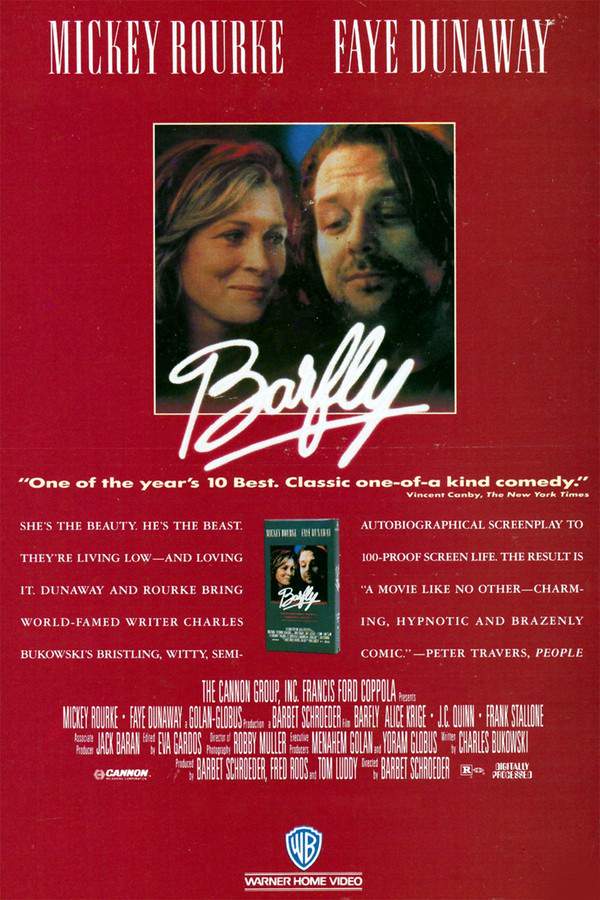
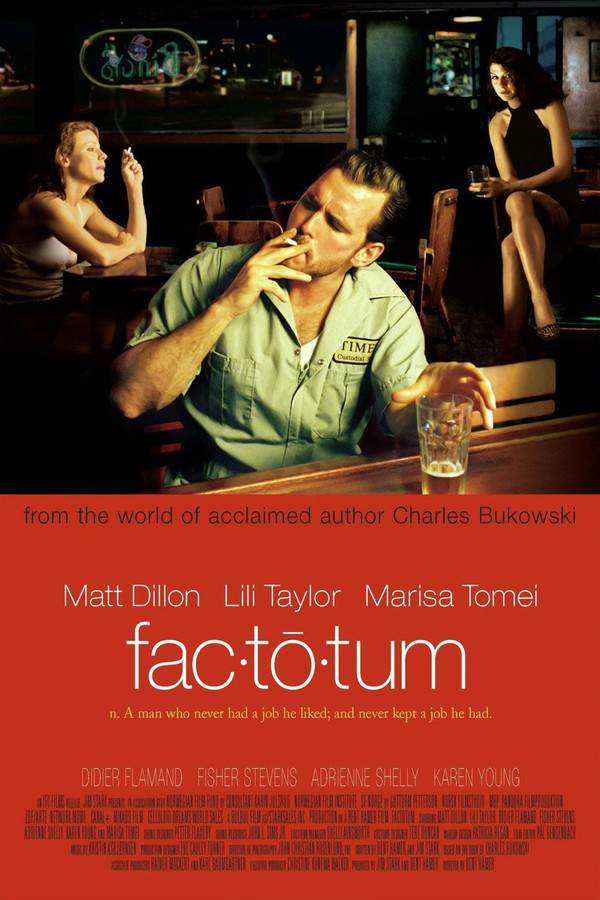
Destitute alcoholic Henry Chinaski lives in a rundown Los Angeles apartment and scrapes by with menial jobs, all while pursuing his art—poems and short stories that fetch only small sums from magazines and papers. His days are a tangled blend of rough living and fragile writing, a cycle that keeps looping through late nights and cheap sustenance as he searches for something that feels both authentic and worthwhile.
Henry frequents The Golden Horn, a gritty bar where he drinks and rubs elbows with other alcoholics, often clashing with the bartender he hates, Eddie. After a fight with Eddie leaves him beaten, Henry channels energy into a reckless act—stealing a sandwich from a patron to power through the next rounds and to win back his edge. This incident stirs tension with Jim, the bar’s owner and one of Henry’s close friends, who urges him to rest in his apartment and regroup.
Refueled, Henry returns to The Golden Horn and pushes Eddie into another confrontation, which he ultimately survives. His night continues at the nearby Kenmore, where the city’s glow dims and his drink becomes a lifeline. It’s there that he meets Wanda, an alcoholic who is also a kept woman. Wanda’s initial anger gives way to fascination as she tests the limits of their bond. They buy liquor together, and Wanda steals corn from a field, drawing police attention. They flee to her apartment, where the corn boils, turns out green and inedible, and conjures a moment of despair for Wanda. Henry offers quiet comfort amid the breakdown, trying to soothe the fear of a life that often seems to betray her.
The couple’s fragile harmony shatters when Henry learns that Wanda has slept with Eddie. He reproaches her, and Wanda lashes out with her purse, knocking him unconscious. A detective following Henry later spots him bloodied and calls 911; two paramedics arrive and seem unfazed by the scene, telling him not to waste their time. Wanda returns that night, and the two apologize, hinting at a shaky possibility of reconciliation. The next morning, Wanda leaves to search for work, and Henry is left to navigate the consequences of their volatile dynamic.
Enter a new force in Henry’s orbit: a wealthy book publisher who has been impressed by his writing and wants to publish his work. The arrival is mediated through a detective, and the publisher offers Henry a $500 advance—an amount that promises security but also raises questions about what Henry is willing to trade for recognition. He revisits the act of intruding into another apartment after hearing a man threaten his wife, a moment that crescendos into a violent stabbing. With a sense of urgency, Henry and his new patron drive through the city; at one point he rams a car while the other couple’s kiss glitters in the green light of a street where anything might happen. The publisher invites him home, and there, over drinks, they share an intense night.
What begins as the lure of wealth and endless booze slowly reveals itself as a complicated cage of expectations. Henry recognizes the gulf between his world and the publisher’s gilded life, remarking that she is “trapped in a cage with golden bars.” The notion of an escape hatch becomes clear only as Henry prepares to walk away from the arrangement, sensing that his art, not the coddled protection of money, might be his truest ally. Before departing, he faxes a bit of the advance to Eddie and leaves a teasing tip, “Buy a drink on me,” a wry nod to flawed generosity that momentarily bridges the old barroom world with the promise of something more.
The finale returns to the bar’s familiar rhythm. Eddie steps out for another agreed-upon bout, followed by the crowd of barflies who chant and cheer as the two men collide once more in a raw, aimless fight. The night ends not with a neat resolution but with a raw, stubborn affirmation of life’s rough edges—the kind of ending that feels earned in its stubborn honesty, the kind of ending that lingers in the memory like the last swallow of a long night’s drink.