Plot Explained Spoilers guaranteed!
Plot Explained

Browse by genre

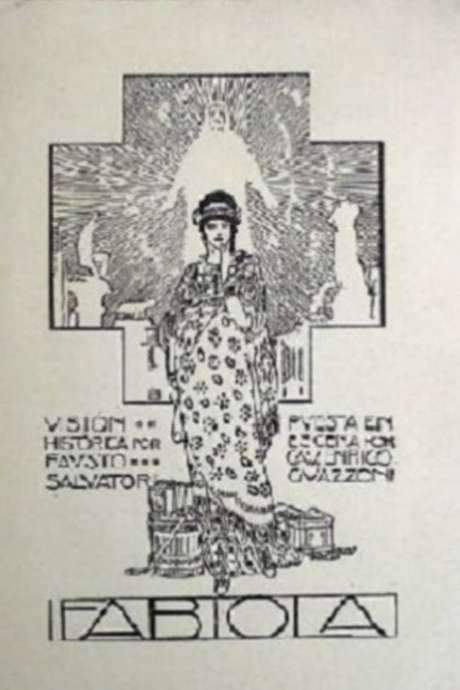
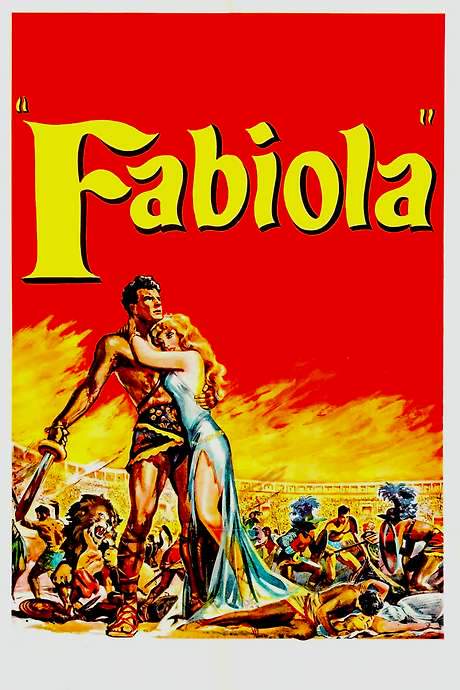
Fabiola (1949) movie poster

Plot Summary

Fabiola (1949) Plot Summary Explained

Release, runtime and language
1949 · 164 mins · Italian
Loading streaming availability…
Directed by
Alessandro Blasetti
Starring
Michel Simon, Franco Interlenghi, Massimo Girotti, Rina Morelli, Michèle Morgan, Guglielmo Barnabò

In ancient Rome, Fabiola, the senator’s daughter, falls in love with Rhual, a Gallic gladiator. When her father is murdered, the populace blames the Christians, sparking a wave of persecution. Rhual confesses his Christian faith, is accused of the murder and sentenced to fight to the death in the arena.

On this page (7)
  1. 1 Where to watch
  2. 2 What happens: full plot
  3. 3 Plot questions answered
  4. 4 The book behind the movie
  5. 5 Movie threads
  6. 6 Movies like Fabiola
  7. 7 Every angle
Loading streaming availability…

Full plot summary · contains spoilers

What Happens in Fabiola: Full Plot Summary

The whole story of Fabiola (1949) explained, from the opening scene to the final frame: every key event, every twist and what it all adds up to. Read it as a quick recap before the sequel, to check a scene you missed, or to finally understand what really happened.

In ancient Rome, a delicate romance blooms between Fabiola, Michèle Morgan, the daughter of a powerful senator, and Rhual, Henri Vidal, a bold Gaul who fights as a gladiator. Their courtship starts in the tranquil gardens of a seaside villa owned by Senator Fabius Severus, Michel Simon, whose vision embraces religious tolerance and the freeing of slaves. But the city is tense, as reactionary politicians blame the rising Christian movement for unrest, and a night of violence changes everything when Fabius Severus is murdered, sparking a harsh purge and turning public opinion against Christians.

At the trial that follows, Rhual is accused and the Christians are condemned alongside him. In a moment of moral courage, Rhual steps forward to defend the believers, but the verdict remains severe. The persecution intensifies as many Christians are jailed or killed, among them the centurion Sebastian of the Praetorian Guard, Massimo Girotti, who is denounced as a Christian and dies a martyr. Amid the chaos, Fabiola fights to secure Rhual's freedom, yet he initially rejects her help. The turning point arrives when she openly declares her allegiance to the Christians and chooses to stand with them in the arena, signaling that she is not responsible for her father's death.

Rhual's restraint during the combats—refusing to kill his fellow fighters—begins a shift that inspires the other gladiators to lay down their arms as well. As the tension peaks, the arriving forces of Emperor Constantine press against the city walls, sparking a broader uprising. In the end, peace returns to Rome, and the imperial banners bear the sign of Christ, symbolizing a new era of tolerance and hope for a divided empire.

Last updated: October 05, 2025 at 12:26

Was this helpful?

Plot questions answered

Fabiola Plot Explained: Your Questions Answered

The questions people ask most about Fabiola (1949): what happens in the confusing scenes, why the characters do what they do, the twists, hidden details and what the ending means. Each answer contains spoilers.

Q1

Why is Rhual accused of murdering Fabius Severus?

Rhual is accused because the authorities needed a visible culprit to justify the persecution of Christians. When Senator Fabius Severus is murdered by reactionary politicians, the government seizes the opportunity to blame the Christian movement. Rhual, who is secretly an agent of Constantine working to promote Christianity, becomes a convenient target since he was known to be associated with the senator. The accusation allows the authorities to condemn both Rhual and the Christians simultaneously.

Foreshadowing: Earlier, Rhual was invited to the senator's villa, placing him at the scene of the crime.

  • rhual
  • fabius severus
  • murder accusation
  • christian persecution
  • roman trial
Q2

Why does Rhual initially refuse Fabiola's offer to free him?

Rhual refuses because he wrestles with fear, duty, and the moral implications of accepting help outside the Christian cause. He believes his place is with the other Christians facing persecution, and accepting a privileged escape would betray his faith and companions. Additionally, Rhual is struggling with the complexity of his situation, as a secret agent of Constantine, he has larger responsibilities than personal survival.

Foreshadowing: Rhual already demonstrated moral courage by defending Christians at his trial.

  • rhual
  • fabiola
  • freedom
  • christian faith
  • prison
Q3

What is Rhual's connection to Emperor Constantine?

Rhual is secretly an agent of Emperor Constantine, who is working to promote Christianity throughout the Roman Empire. This explains why Rhual was present at Senator Fabius Severus's villa, the senator himself advocated for religious tolerance and the freeing of slaves, aligning with Constantine's goals. Rhual's dual identity as both a gladiator and a political operative makes him a key figure in the underground movement to bring Christianity to power.

Foreshadowing: Constantine was known historically for converting to Christianity and legalizing the faith.

  • rhual
  • constantine
  • agent
  • christianity
  • roman empire
Q4

Why does Fabiola decide to support the Christians?

Fabiola decides to support the Christians after she realizes they are not responsible for her father's murder. When she publicly declares her allegiance and joins them in the arena, she signals that the Christians have been wrongly accused. Her change of heart also stems from her love for Rhual and her recognition that the persecution is politically motivated rather than justified by any real crime.

Foreshadowing: Fabiola initially suspected Rhual of involvement in the murder, but her investigation revealed the truth.

  • fabiola
  • christians
  • arena
  • support
  • father murder
Q5

How does Rhual's mercy in the arena trigger the uprising?

When forced to fight other gladiators in the arena, Rhual refuses to kill them, showing remarkable mercy. This act of compassion inspires the other gladiators to lay down their arms as well, transforming the arena from a spectacle of violence into a symbol of resistance. The crowd witnesses this remarkable display of non-violence, which fuels public sentiment against the current regime and helps spark the broader uprising that coincides with Constantine's arrival.

Foreshadowing: The arena was already a place of political execution, making it a powerful stage for rebellion.

  • rhual
  • arena
  • mercy
  • gladiators
  • uprising
  • arms
Q6

Why are Christians blamed for Fabius Severus's murder?

Christians are blamed because reactionary politicians need a justification to suppress the growing Christian movement. Rather than acknowledge that political opponents killed the senator to stoke anti-Christian sentiment, the authorities deliberately accuse Christians of the crime. This allows them to launch a purge while using public outrage over the murder as cover for religious persecution.

Foreshadowing: The city was already tense with political and religious conflict before the murder occurred.

  • christians
  • fabius severus
  • murder
  • blame
  • persecution
Q7

What happens to Sebastian the centurion?

Sebastian, a centurion of the Praetorian Guard, is denounced as a Christian and arrested. Despite his status as a Roman soldier, he refuses to renounce his faith and is executed as a martyr. His death demonstrates the extent of the persecution, which targets Christians regardless of their social position or role in Roman society.

Foreshadowing: Sebastian's earlier position as a Praetorian Guard made his conversion to Christianity particularly scandalous to the authorities.

  • sebastian
  • centurion
  • martyr
  • praetorian guard
  • execution
Q8

What is the significance of Constantine's forces arriving at Rome?

Constantine's advance troops reaching the city walls marks a turning point in the story. Their arrival triggers a broader uprising against the current regime and signals that political power is about to shift. This military presence emboldens the Christians and opponents of the persecution, leading directly to the resolution where peace returns and Christian symbols are adopted by the empire.

Foreshadowing: Rhual's secret mission was connected to Constantine's plans all along.

  • constantine
  • rome
  • army
  • arrival
  • uprising
Q9

What happens when Fabiola enters the arena?

When Fabiola enters the arena alongside the Christians, she publicly declares that they are not responsible for her father's death. This act shifts public perception by demonstrating that even the senator's own daughter vouches for the Christians' innocence. Her presence transforms the arena from a place of execution into a stage for solidarity and redemption.

Foreshadowing: Fabiola had previously tried to secure Rhual's freedom through less public means.

  • fabiola
  • arena
  • christians
  • declaration
  • public support
Q10

Why does the persecution of Christians intensify so quickly?

The persecution intensifies quickly because the murder of Senator Fabius Severus provides the authorities with a pretext to move against Christians. Rather than investigate the actual perpetrators, the government uses the incident to launch a purge. The timing also serves political interests, as some politicians actively seek to suppress the Christian movement and use the murder as a convenient catalyst.

Foreshadowing: The city was already tense with religious conflict before the violence occurred.

  • persecution
  • christians
  • murder
  • intensify
  • political agenda

Movie threads

More Movies Like Fabiola, by Mood & Story

Curated lists built around what makes Fabiola tick: the same mood, the same kind of story or the same emotional payoff. Each list explains why these movies belong together.

Historical Dramas of Faith and Persecution like Fabiola

Stories of unwavering belief tested by violent historical oppression. If you enjoyed Fabiola's depiction of early Christians facing Roman tyranny, you'll find similar powerful stories here. This collection features movies like Fabiola that explore faith, martyrdom, and hope against a backdrop of historical oppression and political unrest, offering tense, heavy, and ultimately uplifting viewing experiences.

  • dramatic
  • tense
  • oppressive
  • hopeful
  • uplifting
  • suspenseful
  • Tone: tense, dramatic, hopeful
  • Pacing: steady, epic
Why these movies?

The story pattern: These narratives typically follow a community or individual whose core beliefs put them in direct conflict with a dominant, hostile power structure. The plot revolves around escalating persecution, tests of faith, and the choice between compromise and martyrdom, often building towards a pivotal moment of liberation or symbolic victory that affirms their struggle.

Why they belong together: Movies in this thread are grouped by their shared focus on the intense emotional weight of religious or ideological persecution within a grand historical setting. They blend heavy themes with a steady, dramatic pace and a tone that shifts from tense oppression to hopeful resolution, creating a specific, impactful vibe.

Forbidden Romance Epics with High Stakes like Fabiola

Love blooms dangerously amidst societal violence and political turmoil. Fans of the risky love story between Fabiola and Rhual will appreciate these movies. Discover films similar to Fabiola that feature a compelling forbidden romance set against a backdrop of political unrest or violence, where the relationship becomes a beacon of hope in a dark and tense world.

  • romantic
  • tense
  • dramatic
  • suspenseful
  • hopeful
  • tragic
  • Tone: romantic, tense, dramatic
  • Pacing: steady, character-driven
Why these movies?

The story pattern: The narrative pattern involves two lovers from different social spheres or opposing sides of a conflict whose relationship is illicit. Their love story serves as the emotional core, while the external plot of societal pressure, imprisonment, or violence constantly threatens to tear them apart, testing their commitment and ultimately defining their fate.

Why they belong together: These films are connected by their potent mix of a high-stakes romantic arc with a dramatically tense and oppressive atmosphere. The pacing is steady, focusing on both the personal emotional journey and the escalating external dangers, creating a specific blend of romance, suspense, and heavy emotional weight.

If you liked this

Movies Like Fabiola

Similar movies to Fabiola: the same genre, themes or kind of story. Each one comes with its own plot summary, timeline and ending explained.

Browse all movie summaries

Every angle

Fabiola (1949) Explained: Plot, Timeline & Characters

Everything about Fabiola in one place: what happens in the plot summary, the timeline in chronological order, the characters and meaning and a spoiler-free summary. What's After the Movie adds the cast, box office and post-credit scenes.

Coming soon on iOS and Android

The Plot Explained Movie Summary App

Plot summaries, endings explained and timelines on your phone. Catch up on any movie in minutes, save your favorites and never miss a twist again.

Be the first to know when we launch. Your email stays private, always.

Learn more about the app