Plot Explained Spoilers guaranteed!
Plot Explained

Browse by genre

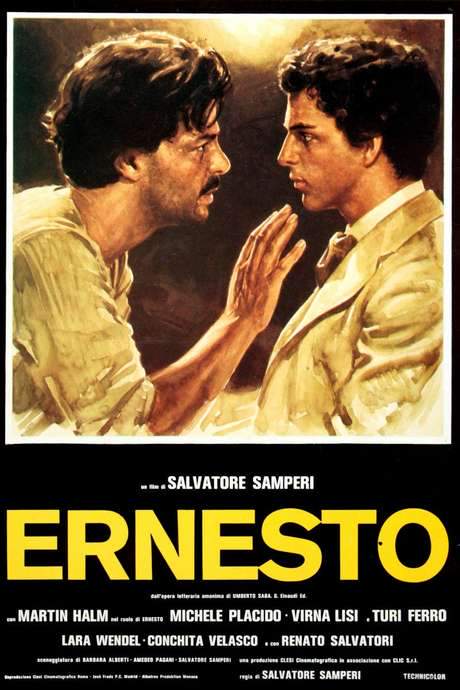
Ernesto (1979) movie poster

Characters & Themes

Ernesto (1979) Characters, Setting & Themes Explained

Release, runtime and language
1979 · 98 mins · Italian
Directed by
Salvatore Samperi
Starring
Renato Salvatori, Lara Wendel, Michele Placido, Concha Velasco, Marco Guadagno, Virna Lisi

Set in early‑1900s Trieste, Ernesto is a young Italian Jew who works in his uncle’s factory. Uncertain about his sexual identity, he embarks on a clandestine relationship with one of his uncle’s employees, navigating personal desire amid family expectations and the social constraints of the era.

On this page (7)
  1. 1 Characters explained (11)
  2. 2 Where & when it takes place
  3. 3 Themes & meaning (3)
  4. 4 Character & meaning questions
  5. 5 Movie threads
  6. 6 Movies like Ernesto
  7. 7 Every angle

11 main characters · contains spoilers

Ernesto Characters Explained: Who Is Who

The main characters of Ernesto (1979), heroes and villains: what drives them, how they change over the course of the story and what each of them reveals about the film's bigger ideas.

  • Ernesto

    A 17-year-old who pursues socialist ideas and secretly explores his sexuality before marrying, torn between personal desire and family expectations.

    • 🌈 Sexuality
    • 💔 Repression
    • 🧭 Coming-of-age
  • Cesco

    played by Renato Salvatori

    The unnamed stableboy with whom Ernesto forms a passionate, clandestine bond, challenging social norms and testing his loyalty to his family.

    • 💘 Forbidden romance
    • 🕵️‍♂️ Secret relationship
    • 🧍‍♂️ Class tension
  • Ilio / Rachele

    played by Lara Wendel

    15-year-old twins who captivate Ernesto’s affections; both are portrayed by Lara Wendel, complicating boundaries of gender and romance.

    • 👯‍♀️ Twin love
    • 💕 Infatuation
    • 🌀 Ambiguous identity
  • Ernesto's Mother

    played by Virna Lisi

    A widowed mother distressed by her son's sexuality and social standing, whose expectations shape the family dynamics.

    • 💔 Maternal concern
    • 🛡️ Honor
    • 🗝️ Family pressures
  • Uncle Giovanni

    played by Francisco Marsó

    Violin-loving uncle who provides intellectual and emotional influence, whose disapproval adds tension to Ernesto's journey.

    • 🎻 Family influence
    • 🏠 Domestic life
    • 🧭 Guidance
  • Aunt Regina

    played by Concha Velasco

    Ernesto’s aunt who anchors the family’s concerns about propriety and respectability within the social circle.

    • 👵 Family pressure
    • 🧭 Respectability
    • 🗂️ Tradition
  • The Man

    played by Michele Placido

    The unnamed stableboy lover in Ernesto’s early affair, illustrating the era's tendency to obscure intimate partners.

    • 💑 Hidden romance
    • 🗝️ Secrecy
    • 🕰️ Ephemeral
  • Signora Luzzato

    played by Gisela Hahn

    Mother of Ilio and Rachele, part of the household that forms the twins' upbringing and social world.

    • 👩‍👧 Family unit
    • 🗺️ Cultural roots
    • 🕊️ Guidance
  • Ernesto's Friend Andrea

    played by Stefano Madia

    A figure in Ernesto’s circle who observes or influences him within his social milieu.

    • 🧑‍🤝‍🧑 Friendship
    • 👥 Social circle
    • 🧭 Influence
  • Carlo Wilder

    played by Turi Ferro

    A character in Ernesto's world who contributes to its political or social dimensions.

    • 🏛️ Social status
    • 🕵️‍♂️ Plot element
    • 🗺️ Context
  • Prostitute Sandra

    played by Miranda Nocelli

    A prostitute figure Ernesto visits, illustrating his attempts to reconcile desires with a strict social code.

    • 💄 Prostitution
    • 🕯️ Secrecy
    • 🧭 Compromise

Last updated: February 18, 2026 at 23:26

Was this helpful?

Setting

Where and When Does Ernesto Take Place?

The setting of Ernesto (1979): the year and time period, the places and locations, and how they shape the characters, the mood and the tension of the story.

Time period

1911

The events unfold in 1911, a period of strict social codes and evolving ideas about sexuality. The Austro-Hungarian context informs attitudes toward class, family honor, and public morality. Ernesto's secret relationship unfolds against this conservative backdrop and the looming pre-war tensions. The era's expectations push the characters toward secrecy and self-denial.

Location

Trieste

Trieste is a port city on the Adriatic Sea with a mosaic of cultures. In 1911 it belonged to Austria-Hungary, shaping the social backdrop of Ernesto's world. The urban setting includes family homes, offices, and streets that frame the characters' lives. The city serves as a stage where tradition meets the beginnings of modern attitudes.

  • 🏙️ Coastal city
  • 🗺️ Historic port

Last updated: February 18, 2026 at 23:26

Was this helpful?

3 major themes

Ernesto Meaning: Themes & Message Explained

What is Ernesto (1979) really about? The emotional, social and philosophical themes the film keeps returning to, its symbolism and the message beneath the surface.

  • Sexual Identity

    Ernesto's awakening occurs within a society that censors non-normative desires. His intense relationship with a stableboy challenges family and community norms, highlighting the vulnerability of youth coming to terms with attraction. The narrative uses intimate moments to explore longing, secrecy, and the social consequences of desire in a restrictive era.

  • Societal Norms

    Public morality dictates private lives, pressing characters to hide and rationalize their actions. Ernesto hides his relationship from his mother and uncle, illustrating the heavy weight of reputation. The shift from a forbidden romance to a marriage underscores how people navigate norms and expectations.

  • Family and Duty

    The family circle—mother, uncle, and aunt—shapes Ernesto's sense of belonging and obligation. Seeking approval drives him to marry, blending love with duty and the hope of harmony within the household. The story probes the costs and resilience of family loyalty under social surveillance.

Last updated: February 18, 2026 at 23:26

Was this helpful?

Character & theme questions

Ernesto Characters & Meaning: Your Questions Answered

The questions people ask about Ernesto (1979): who the characters really are, their relationships, what the symbols mean, where it takes place and what the movie is really about. Each answer contains spoilers.

Q1

What is the setting of Ernesto and why does it matter?

Ernesto is set in Trieste in 1911, a port city on the Adriatic Sea that belonged to Austria-Hungary at the time. This Austro-Hungarian context creates a socially conservative backdrop where non-normative desires were censored, shaping the characters' need for secrecy and self-denial.

Foreshadowing: Trieste's position as a multicultural port hints at the tension between traditional values and emerging modern attitudes.

  • trieste
  • austria-hungary
  • 1911
  • setting
  • port city
  • social context
Q2

How does the 1911 setting influence the story's themes?

The year 1911 was marked by strict social codes and evolving ideas about sexuality. The Austro-Hungarian context influenced attitudes toward class, family honor, and public morality. These expectations pushed characters toward secrecy and self-denial, making Ernesto's secret relationship with the stableboy socially dangerous.

Foreshadowing: The pre-war tensions and conservative atmosphere create the pressure that forces Ernesto to choose between authentic desire and family acceptance.

  • 1911
  • austria-hungary
  • social codes
  • era
  • historical context
  • pre-war
Q3

What does Ernesto say about sexual identity?

The film explores Ernesto's sexual awakening within a society that censors non-normative desires. His intense relationship with a stableboy challenges family and community norms, highlighting the vulnerability of youth coming to terms with attraction. The narrative uses intimate moments to explore longing, secrecy, and the social consequences of desire in a restrictive era.

Foreshadowing: Ernesto's early encounters with both men and women set up the central conflict between his authentic self and societal expectations.

  • sexual identity
  • awakening
  • desire
  • secrecy
  • social norms
  • lgbtq
Q4

How do societal norms shape the characters in Ernesto?

Public morality dictates private lives in this film, pressing characters to hide and rationalize their actions. Ernesto hides his relationship from his mother and uncle, illustrating the heavy weight of reputation. The shift from his forbidden romance to marriage shows how people navigate norms and expectations, often at the cost of their authentic selves.

Foreshadowing: The contrast between Ernesto's secret passion and his public life foreshadows his eventual submission to conventional marriage.

  • societal norms
  • morality
  • reputation
  • expectations
  • marriage
  • conformity
Q5

What role does family play in Ernesto's story?

The family circle, mother, uncle, and aunt, shapes Ernesto's sense of belonging and obligation. Seeking their approval drives him to marry, blending love with duty and the hope of harmony within the household. The story probes the costs and resilience of family loyalty under social surveillance, showing how family expectations can pressure individuals to deny their true selves.

Foreshadowing: Ernesto's relationship with his mother and uncle establishes the tension between personal desire and familial duty that defines his arc.

  • family
  • duty
  • loyalty
  • mother
  • uncle
  • marriage
  • expectations
Q6

Who is Ernesto and what motivates him?

Ernesto is a 17-year-old Italian Jew who works in his uncle's factory and pursues socialist ideas. He is uncertain about his sexual identity and embarks on a clandestine relationship with one of his uncle's employees. His central motivation is navigating personal desire amid family expectations and the social constraints of the era, torn between what he wants and what his family demands.

Foreshadowing: Ernesto's socialist leanings suggest an openness to change that conflicts with the conservative world he inhabits.

  • ernesto
  • protagonist
  • motivation
  • sexual identity
  • family expectations
  • jewish
Q7

What is the significance of Ernesto's relationship with the stableboy?

Ernesto's passionate, clandestine bond with the stableboy (Cesco) challenges social norms and tests his loyalty to his family. This relationship represents his authentic self and genuine desire, contrasting with the forced conventionality he ultimately accepts. The relationship highlights the vulnerability of youth coming to terms with attraction in a restrictive society.

Foreshadowing: The intensity of Ernesto's connection with Cesco makes his eventual denial of this part of himself more tragic.

  • stableboy
  • cesco
  • secret relationship
  • love
  • forbidden romance
  • clandestine
Q8

Why is Trieste's identity as a multicultural port city important to the story?

Trieste's identity as a port city with a mosaic of cultures creates a unique stage where tradition meets the beginnings of modern attitudes. The city's position in Austria-Hungary yet Italian-speaking character adds layers to the cultural tension. This setting reflects the broader theme of characters caught between who they are and who society demands they be.

Foreshadowing: The cultural mix of Trieste mirrors Ernesto's own internal conflict between different parts of his identity.

  • trieste
  • multicultural
  • port city
  • culture
  • austria-hungary
  • italian identity

Movie threads

More Movies Like Ernesto, by Mood & Story

Curated lists built around what makes Ernesto tick: the same mood, the same kind of story or the same emotional payoff. Each list explains why these movies belong together.

Movies about forbidden love and identity like Ernesto

Historical stories where love and identity collide with oppressive social norms. A collection of films like Ernesto that explore forbidden self-discovery and romantic awakening within strict historical settings. If you enjoyed the themes of clandestine desire versus societal pressure, you'll find similar bittersweet and emotionally heavy stories here.

  • forbidden love
  • identity crisis
  • social constraint
  • melancholic
  • tense
  • introspective
  • Tone: bittersweet, melancholic
  • Pacing: steady, character-driven
Why these movies?

The story pattern: These narratives follow protagonists grappling with a core aspect of their identity—often related to sexuality or love—that is forbidden by the society or era they live in. The journey typically involves a secret exploration of this self, leading to intense internal conflict and a resolution that sacrifices true happiness for social acceptance.

Why they belong together: They are grouped together because they share a central theme of a character's authentic self being at odds with their world. The mood is consistently melancholic and tense, with a bittersweet tone and a heavy emotional weight stemming from the protagonist's necessary compromise or self-denial.

Movies with a quiet internal conflict like Ernesto

Intimate character studies focused on the slow burn of personal turmoil. Discover films similar to Ernesto that focus on a protagonist's internal struggle and quiet emotional turmoil. If you liked the steady pace and heavy, introspective mood of Ernesto, these character-driven dramas will resonate.

  • introspective
  • conflicted
  • slow burn
  • character study
  • psychological
  • melancholic
  • Tone: introspective, conflicted
  • Pacing: steady, slow burn
Why these movies?

The story pattern: The plot is secondary to the protagonist's internal journey. The story unfolds through a series of personal encounters and reflections, building tension from the gap between their inner desires and outward actions. The climax is often a quiet, personal defeat or a somber acceptance of a constrained life.

Why they belong together: This thread connects films that share a specific mood and pacing: introspective, steady, and emotionally heavy. The similarity lies in the focus on a character's unspoken pain and the suffocating weight of their internal conflicts, rather than external plot mechanics.

If you liked this

Movies Like Ernesto

Similar movies to Ernesto: the same genre, themes or kind of story. Each one comes with its own plot summary, timeline and ending explained.

Browse all movie summaries

Every angle

Ernesto (1979) Explained: Plot, Timeline & Characters

Everything about Ernesto in one place: what happens in the plot summary, the timeline in chronological order, the characters and meaning. What's After the Movie adds the cast, box office and post-credit scenes.

Coming soon on iOS and Android

The Plot Explained Movie Summary App

Plot summaries, endings explained and timelines on your phone. Catch up on any movie in minutes, save your favorites and never miss a twist again.

Be the first to know when we launch. Your email stays private, always.

Learn more about the app