Plot Explained Spoilers guaranteed!
Plot Explained

Browse by genre

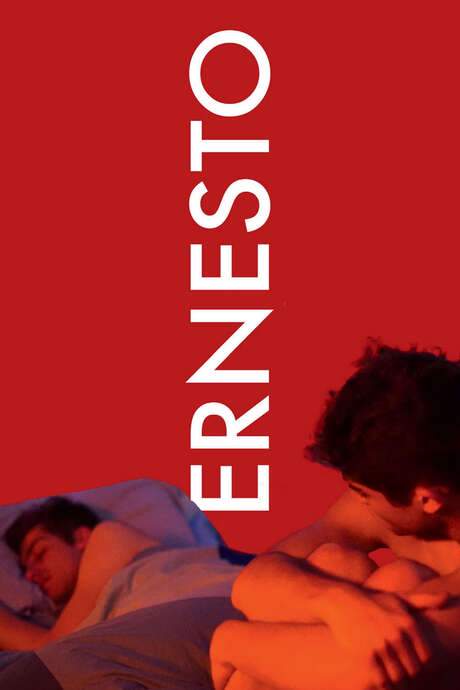
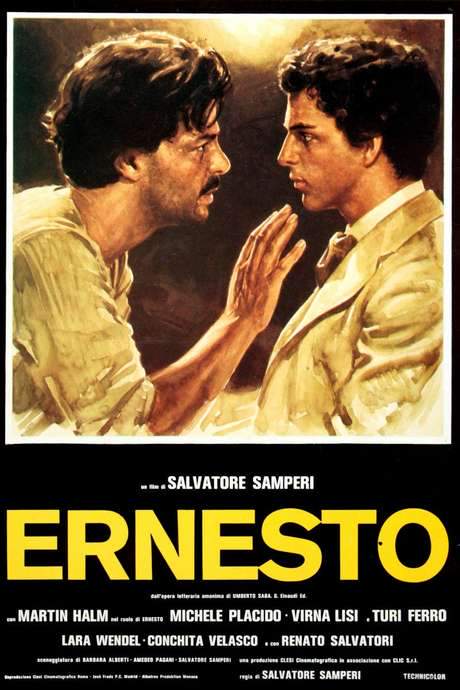
Ernesto (1979) movie poster

Timeline

Ernesto (1979) Timeline Explained – Every Event in Order

Release, runtime and language
1979 · 98 mins · Italian
Directed by
Salvatore Samperi
Starring
Renato Salvatori, Lara Wendel, Michele Placido, Concha Velasco, Marco Guadagno, Virna Lisi

Set in early‑1900s Trieste, Ernesto is a young Italian Jew who works in his uncle’s factory. Uncertain about his sexual identity, he embarks on a clandestine relationship with one of his uncle’s employees, navigating personal desire amid family expectations and the social constraints of the era.

On this page (5)
  1. 1 Events in order (12)
  2. 2 Timeline questions answered
  3. 3 Movie threads
  4. 4 Movies like Ernesto
  5. 5 Every angle

12 events in order · contains spoilers

Ernesto Timeline: Events in Chronological Order

Every key event of Ernesto (1979) in order, scene by scene, with when and where it takes place. Use it to untangle flashbacks, time jumps and parallel storylines, to refresh your memory before the sequel or to find the exact scene you are thinking of.

  1. Ernesto's early life in Trieste

    In 1911, Ernesto is a 17-year-old living with his widowed mother in his violin-loving Jewish uncle's house and working a routine office job. He begins to voice socialist views largely to provoke his uncle, showing a restless temperament. The setting is framed as socially constrained, shaping his choices.

    When
    1911
    Where
    Trieste
  2. Ernesto challenges family with socialist views

    To upset his uncle, Ernesto openly espouses socialist beliefs, creating friction at home. The family tensions foreshadow the conflict between his desires and traditional expectations.

    When
    1911
    Where
    Trieste
  3. Meeting the stableboy and a secret romance

    Ernesto meets a stableboy and they form an intense, secret romance that develops despite societal norms. Their bond deepens into an emotional and physical relationship.

    When
    1911
    Where
    Trieste
  4. Romance is discovered; Ernesto loses his job

    The relationship is discovered, leading to Ernesto losing his job. He also reveals to his mother the nature of his relationship, further straining the family.

    When
    1911
    Where
    Office/City, Trieste
  5. Reaction at home

    Ernesto's mother reacts with distress, illustrating the era's moral judgments. He wrestles with guilt and the weight of his family's disapproval.

    When
    1911
    Where
    Mother's home, Trieste
  6. The relationship ends; he turns to prostitution

    Disillusionment from the affair pushes Ernesto toward prostitution, ending his relationship with the stableboy. He becomes more detached from his earlier self.

    When
    1911
    Where
    Trieste
  7. Violin lessons bring Rachel and Emilio into his life

    Ernesto takes violin lessons and encounters 15-year-old Rachel and her twin Emilio, who are both depicted by the same actress. They become significant figures as they fall for him.

    When
    1911
    Where
    Violin studio
  8. The twins fall in love; Ernesto marries the sister

    Both Rachel and Emilio fall in love with Ernesto, and he ends up marrying the sister, forming a new family dynamic. The marriage resolves tensions with his mother and uncle and with his former employer.

    When
    1911
    Where
    Ernesto's home
  9. Ernesto outgrows spontaneity, denies past

    Having outgrown his years of spontaneity, he begins to deny his earlier sexual past. He encounters his first lover again but refuses to recognize him, signaling a deliberate erasure of that history.

    When
    1911
    Where
    Trieste
  10. Marriage as a turning point toward conventional life

    The marriage marks a shift toward a conventional life, centering Ernesto's attention on family and social acceptance. The narrative frames this as a response to time's pressures.

    When
    1911
    Where
    Trieste
  11. Setting and social constraints in 1911 Trieste

    The story remains anchored in Trieste in 1911, highlighting the social constraints shaping Ernesto's choices. The setting emphasizes the tension between desire and duty.

    When
    1911
    Where
    Trieste
  12. Resolution: transformation through denial

    The arc concludes with Ernesto reorganizing his life around marriage and conventional ties, while denying his past desires. The ending suggests memory and social constraint define his present identity.

    When
    1911
    Where
    Trieste

Last updated: February 18, 2026 at 23:46

Was this helpful?

Timeline questions answered

Ernesto Timeline Explained: Your Questions Answered

When does it happen, and why in that order? The questions people ask about the chronology of Ernesto (1979): time jumps, flashbacks, cause and effect between scenes and the correct order of events, each answered with spoilers.

Q1

Why does Ernesto start voicing socialist beliefs?

Ernesto openly espouses socialist views primarily to provoke his uncle and rebel against the conservative family environment. This act represents his restless temperament and his desire to challenge the traditional values imposed by his uncle's household. The socialist beliefs serve as a vehicle for expressing his broader dissatisfaction with social constraints, though his true inner conflict revolves around his sexual identity rather than political ideology.

Foreshadowing: His rebellious stance hints at the deeper personal conflict he will soon confront regarding his true identity.

  • ernesto
  • socialist views
  • uncle
  • rebellion
  • trieste
Q2

Why does Ernesto turn to prostitution after his relationship ends?

After his secret romance with the stableboy is discovered and ends, Ernesto becomes disillusioned with the emotional pain of hiding his true self. The discovery led to losing his job and devastating his mother, making him feel that authentic relationships bring only suffering. Prostitution represents a detached, transactional approach to his desires that avoids emotional vulnerability and social scrutiny.

Foreshadowing: This shift foreshadows Ernesto's later pattern of denying his authentic self in favor of social acceptance.

  • ernesto
  • prostitution
  • stableboy
  • disillusionment
  • self-denial
Q3

Why does Ernesto decide to marry Rachel?

Ernesto marries Rachel after meeting her and her twin brother Emilio during violin lessons. Though he has been exploring his sexuality with men, he chooses the conventional path of marrying a woman to satisfy family expectations and achieve social acceptance. The marriage resolves the tensions with his mother and uncle, restoring his place in the family and society. It represents his surrender to societal pressure rather than following his true desires.

Foreshadowing: The twins being played by the same actress hints at the blurred lines between Ernesto's genuine attractions and the identity he performs for society.

  • ernesto
  • rachel
  • marriage
  • conventional life
  • family expectations
Q4

Why does Ernesto refuse to recognize his first lover when they meet again?

When Ernesto encounters his former lover (the stableboy) again later in life, he deliberately denies knowing him. This refusal represents his complete embrace of conventional life and his effort to erase his authentic past. By denying his former lover, Ernesto chooses social acceptance and respectability over his true history, illustrating how deeply societal constraints have shaped his self-denial.

Foreshadowing: This moment crystallizes the tragic arc established when he first turned to prostitution, his gradual abandonment of authentic self in favor of social survival.

  • ernesto
  • stableboy
  • denial
  • past
  • shame
Q5

Why does Ernesto's mother react so strongly to his relationship?

Ernesto's mother reacts with distress because same-sex relationships were deeply taboo in early 1900s Trieste, particularly within the Jewish community where family honor and social standing were paramount. Her reaction reflects the moral judgments of the era and the intense pressure families faced to conform to societal norms. Ernesto's revelation also comes after he has already lost his job due to the discovered relationship, compounding her anguish.

Foreshadowing: This familial conflict sets the precedent for Ernesto's later decision to prioritize family harmony over personal truth.

  • ernesto
  • mother
  • reaction
  • shame
  • family expectations
Q6

How does Ernesto's marriage to Rachel resolve the family conflict?

Ernesto's marriage to Rachel effectively ends the family crisis by providing a socially acceptable outcome that restores the family's honor and respectability. The marriage satisfies his mother and uncle's expectations for him to pursue a conventional life. It also improves his relationship with his former employer, who had fired him after his romance was discovered. The union becomes a societal pacifier that heals the rifts created by his previous secret life.

Foreshadowing: The resolution through marriage foreshadows the tragic cost of this conformity, his denial of authentic self.

  • ernesto
  • rachel
  • marriage
  • family resolution
  • trieste
Q7

What is the significance of Rachel and Emilio being twins played by the same actress?

Rachel and Emilio are twins played by the same actress, which creates a powerful visual metaphor for Ernesto's internal conflict between his attraction to men and his need to live conventionally. The casting blurs the lines between the woman he marries and the male identity he is drawn to, suggesting he cannot fully escape his true desires even when choosing societal acceptance. This artistic choice emphasizes how his marriage represents both a rejection and a displacement of his authentic feelings.

Foreshadowing: The twin connection foreshadows Ernesto's later denial of his past, his attempt to reconcile opposing sides of himself by choosing neither.

  • rachel
  • emilio
  • twins
  • same actress
  • symbolism
Q8

What ultimately drives Ernesto to deny his true identity?

Ernesto's denial of his authentic self is driven by the overwhelming social and familial pressure in early 1900s Trieste. The discovery of his relationship led to job loss, maternal distress, and community shame. Confronted with the devastating consequences of being true to himself, Ernesto chooses the path of least resistance: conforming to heteronormative expectations through marriage. His denial represents a survival mechanism shaped by historical context rather than personal weakness.

Foreshadowing: This pattern begins with his initial rebellion through socialism, which ultimately proves powerless against deeper societal forces.

  • ernesto
  • self-denial
  • identity
  • societal pressure
  • survival
Q9

Why does Ernesto lose his job after his romance is discovered?

Ernesto loses his position at his uncle's office when his secret relationship with the stableboy is discovered. The discovery represents a breach of the social and moral standards expected of employees, particularly in the family business. This termination adds to his mother's distress and creates additional pressure for Ernesto to conform to societal expectations, eventually contributing to his decision to pursue a conventional life through marriage.

Foreshadowing: Losing his job marks the first major consequence of living authentically, setting the stage for his later retreat into denial.

  • ernesto
  • job loss
  • stableboy
  • discovery
  • consequences
Q10

What is the meaning behind Ernesto's transformation by the film's end?

The ending represents a bittersweet resolution where Ernesto achieves social acceptance through marriage but at the cost of erasing his authentic past. His transformation illustrates how societal constraints in early 1900s Trieste forced individuals to choose between personal truth and social survival. The film suggests this outcome is less a triumphant transformation than a quiet defeat, Ernesto reorganizes his life around conventional ties while suppressing his genuine identity, leaving him emotionally hollow despite external stability.

Foreshadowing: This ending completes the arc foreshadowed from his earliest acts of rebellion, showing how society ultimately crushed his authentic self.

  • ernesto
  • ending
  • transformation
  • denial
  • acceptance

Movie threads

More Movies Like Ernesto, by Mood & Story

Curated lists built around what makes Ernesto tick: the same mood, the same kind of story or the same emotional payoff. Each list explains why these movies belong together.

Movies about forbidden love and identity like Ernesto

Historical stories where love and identity collide with oppressive social norms. A collection of films like Ernesto that explore forbidden self-discovery and romantic awakening within strict historical settings. If you enjoyed the themes of clandestine desire versus societal pressure, you'll find similar bittersweet and emotionally heavy stories here.

  • forbidden love
  • identity crisis
  • social constraint
  • melancholic
  • tense
  • introspective
  • Tone: bittersweet, melancholic
  • Pacing: steady, character-driven
Why these movies?

The story pattern: These narratives follow protagonists grappling with a core aspect of their identity—often related to sexuality or love—that is forbidden by the society or era they live in. The journey typically involves a secret exploration of this self, leading to intense internal conflict and a resolution that sacrifices true happiness for social acceptance.

Why they belong together: They are grouped together because they share a central theme of a character's authentic self being at odds with their world. The mood is consistently melancholic and tense, with a bittersweet tone and a heavy emotional weight stemming from the protagonist's necessary compromise or self-denial.

Movies with a quiet internal conflict like Ernesto

Intimate character studies focused on the slow burn of personal turmoil. Discover films similar to Ernesto that focus on a protagonist's internal struggle and quiet emotional turmoil. If you liked the steady pace and heavy, introspective mood of Ernesto, these character-driven dramas will resonate.

  • introspective
  • conflicted
  • slow burn
  • character study
  • psychological
  • melancholic
  • Tone: introspective, conflicted
  • Pacing: steady, slow burn
Why these movies?

The story pattern: The plot is secondary to the protagonist's internal journey. The story unfolds through a series of personal encounters and reflections, building tension from the gap between their inner desires and outward actions. The climax is often a quiet, personal defeat or a somber acceptance of a constrained life.

Why they belong together: This thread connects films that share a specific mood and pacing: introspective, steady, and emotionally heavy. The similarity lies in the focus on a character's unspoken pain and the suffocating weight of their internal conflicts, rather than external plot mechanics.

If you liked this

Movies Like Ernesto

Similar movies to Ernesto: the same genre, themes or kind of story. Each one comes with its own plot summary, timeline and ending explained.

Browse all movie summaries

Every angle

Ernesto (1979) Explained: Plot, Timeline & Characters

Everything about Ernesto in one place: what happens in the plot summary, the timeline in chronological order, the characters and meaning. What's After the Movie adds the cast, box office and post-credit scenes.

Coming soon on iOS and Android

The Plot Explained Movie Summary App

Plot summaries, endings explained and timelines on your phone. Catch up on any movie in minutes, save your favorites and never miss a twist again.

Be the first to know when we launch. Your email stays private, always.

Learn more about the app