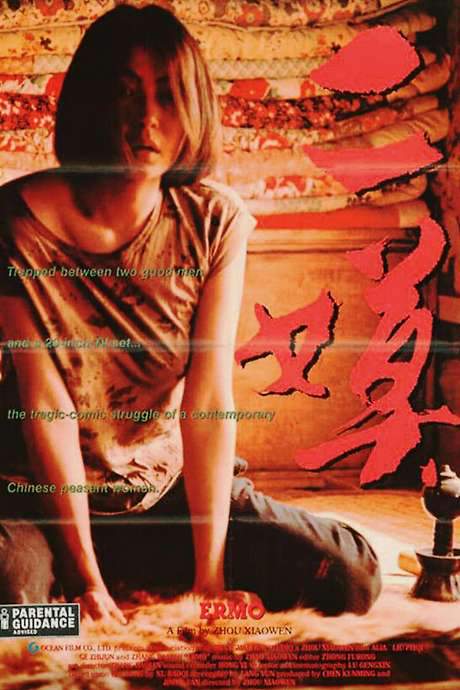
Ermo, Ai Liya, is a hardworking village woman in the northern Hebei province who makes twisty noodles and sells them to support her husband and child. When her neighbor Xiazi, Liu Peiqi, buys a brand-new television, she is struck by dreams of owning one herself and feeling the pull of a life beyond her modest routine. Desperate to own the largest television in the village, she becomes increasingly obsessed with earning money, ultimately leaving the village to work in the town and even resorting to selling blood. These choices take a toll on her health and put a strain on family ties, testing patience, trust, and endurance on all sides.
The film uses Ermo’s arc to reflect sweeping changes in Chinese society during the reform era, marking a shift between those who dive headlong into a capitalist race and those who stay behind. Ermo evolves into a shrewd, business-minded figure—a capable merchant even if her enterprise is as humble as selling dry noodles—and she transforms into a consumer with big aspirations. Meanwhile, her elder husband, Chief, Ge Zhijun, clings to memories of the Mao era, drinking traditional medicine and asserting a status that once mattered in village hierarchies. The dynamic is further complicated by Xiazi’s Wife, Zhang Haiyan, who observes these shifts with a nuanced mix of concern and pragmatism. As Ermo gravitates toward Xiazi, the neighbor who embodies a lifestyle and a social circle she once believed unattainable, the story probes how ambition can sharpen focus even as it erodes intimate bonds. The film suggests that the same modern aspirations that empower one person can also render others marginal, highlighting a society in flux where participation in the “race” does not guarantee happiness or security.
Throughout the narrative, the tension between ambition and sustenance—between profit and family—drives every decision. Ermo’s pursuit of material reward is set against a backdrop of changing gender roles, shifting community loyalties, and the tension between old village authority and new economic realities. The vigor of the new marketplace is mirrored in her growing confidence and efficiency as she negotiates, saves, and plans for a future that looks brighter on the surface but demands new kinds of resilience. Yet the film is careful to show that the most confident, commercially minded characters do not automatically find lasting satisfaction; success in the new order does not come with a guarantee of fulfillment, and those who resist joining the race can feel erased or rendered invisible in a rapidly changing world.
As the story moves toward its conclusion, Ermo achieves her ultimate goal by purchasing the largest television in the district and bringing it back to the village. The act is meant to symbolize more than a mere gadget: it stands for conquest, recognition, and the culmination of years of hard work. But the triumph is tempered by the moment of reckoning that comes with such achievement. After the purchase, she is shown to be physically exhausted and emotionally drained, carrying the weight of the labor, risk, and emotional costs that led to this point. The ending leaves viewers to ponder the price of progress, the cost of aspiration, and the delicate balance between personal ambition and family welfare in a society caught between tradition and modern economic reality.


















Q10
What social changes does Ermo's story depict about China's reform era?
Ermo's story illustrates the shift from Mao-era communal values to capitalist ambition. The film contrasts those who 'dive headlong into a capitalist race' (like Ermo and Xiazi) with those who 'stay behind' (like Chief). It shows changing gender roles as Ermo becomes a shrewd merchant, the erosion of traditional village authority, and the tension between old hierarchies and new economic realities. The story explores how modernization creates both opportunity and displacement.
Foreshadowing: The meta notes explicitly reference 'sweeping changes in Chinese society during the reform era.'