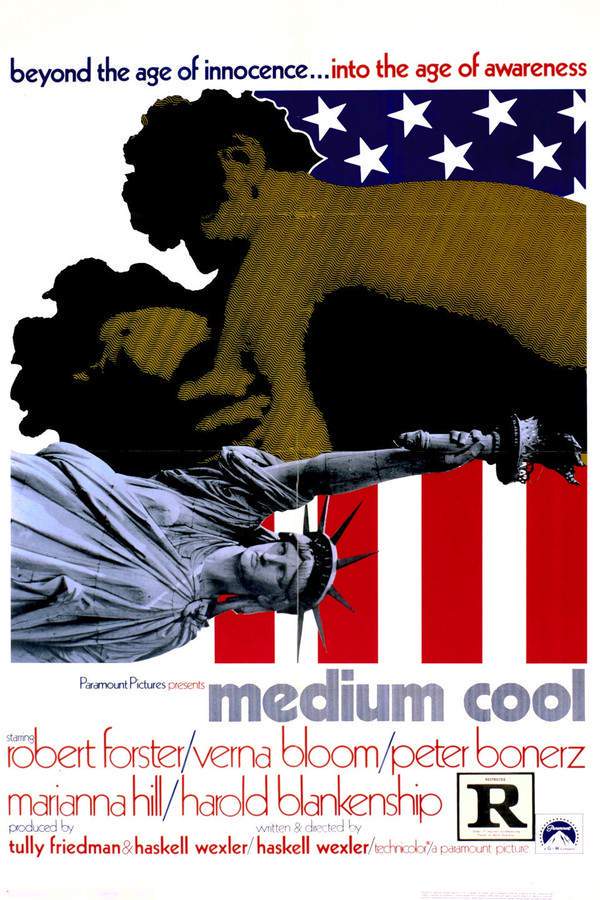
In the moments after receiving his graduate diploma, Jacob Horner finds himself on a bustling train platform, the world around him suddenly detonating into a rapid collage of 1960s turmoil—war, protest, and political assassinations. The onslaught overwhelms him, leaving him suspended between the promise of a new future and a lingering, almost prehistoric echo of collective trauma. The film opens in this fragile liminal space, setting a tone that feels both intensely personal and starkly reflective of an era’s unsettled conscience.
When Jacob slips into a catatonic state, he is taken to the Institute of Psychic Remobilization—affectionately known as The Farm—where Doctor D, an unconventional psychiatrist, presides over a regiment of therapies that blur the line between discipline and performance. The institute’s atmosphere is clinical yet uncanny, populated by figures such as the cross‑dressing Nurse Dockey, whose presence hints at the institution’s willingness to subvert conventional norms in pursuit of psychological “remobilization.” Here, treatment is less about conversation and more about enacting fantasies, creating a disquieting blend of harsh physical routines and experimental audiovisual stimuli.
Released back into the world, Jacob is nudged toward a modest life teaching prescriptive grammar at a local college, a path that seems designed to keep him safely within the margins of society. Yet his new existence quickly intertwines with a cast of eccentric acquaintances—Peggy Rankin, an aging woman who offers a fleeting, unsettling companionship, and Joe Morgan, a charismatic community leader whose magnetic charm conceals an unsettling edge. Through these relationships, the film explores how Jacob’s quest for meaning collides with an environment that pressures him to mute both personal ambition and political engagement.
The mood throughout is one of measured anxiety, a slow‑burning surrealism that mirrors Jacob’s internal disorientation. By immersing viewers in a world where the ordinary is constantly rehearsed against a backdrop of historic unrest, the story invites a meditation on the limits of control, the weight of responsibility, and the uneasy balance between societal expectations and individual desire.