Plot Explained Spoilers guaranteed!
Plot Explained

Browse by genre

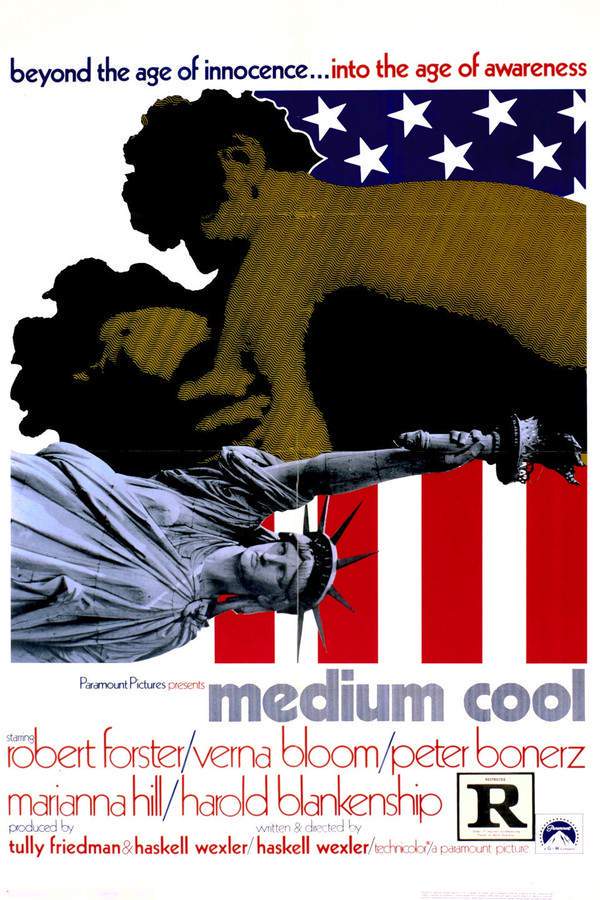
Medium Cool (1969) movie poster

Plot Summary

Medium Cool (1969) Plot Summary Explained

Release, runtime and language
1969 · 111 min · English
Loading streaming availability…
Directed by
Haskell Wexler
Starring
Robert Forster, Peter Bonerz, Marianna Hill, Verna Bloom, Bob McAndrew, Charles Geary

A veteran news cameraman, John Cassellis, documents the tumultuous 1968 Democratic National Convention in Chicago, attempting to remain objective amidst the escalating unrest. However, his professional distance begins to dissolve when he discovers a disturbing connection between his news network and the FBI. This revelation triggers a personal journey of rebellion as he seeks to expose the truth and confront a powerful, controlling force.

On this page (6)
  1. 1 Where to watch
  2. 2 What happens: full plot
  3. 3 Plot questions answered
  4. 4 Movie threads
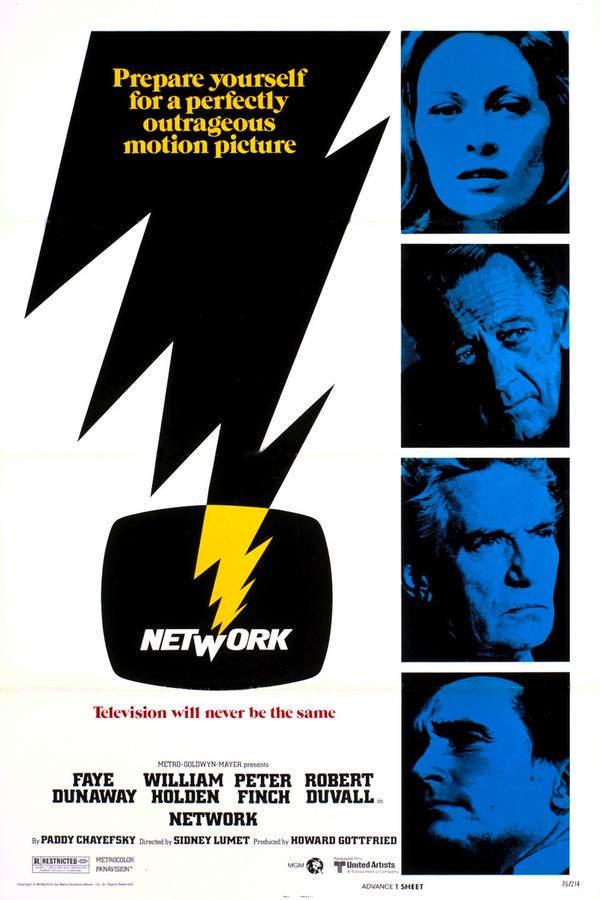
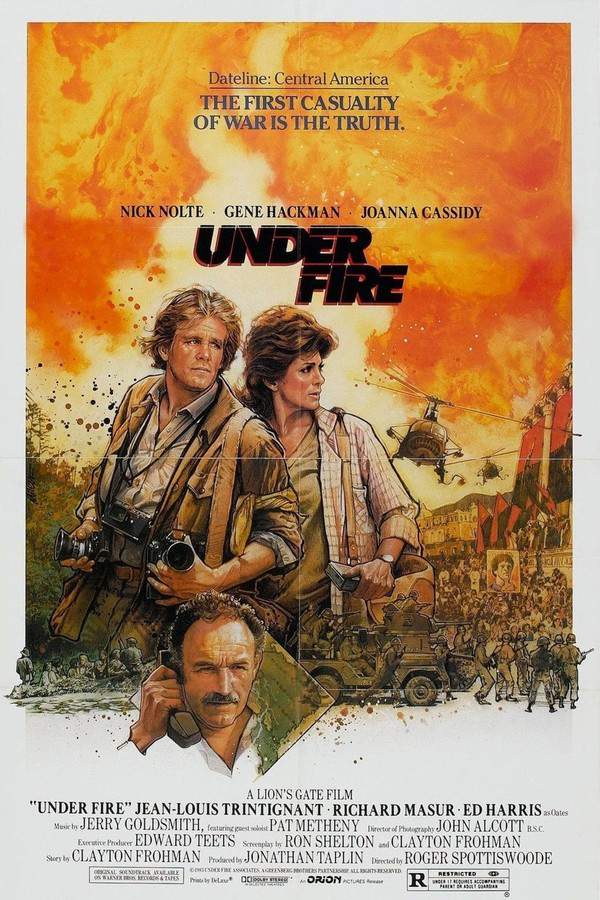
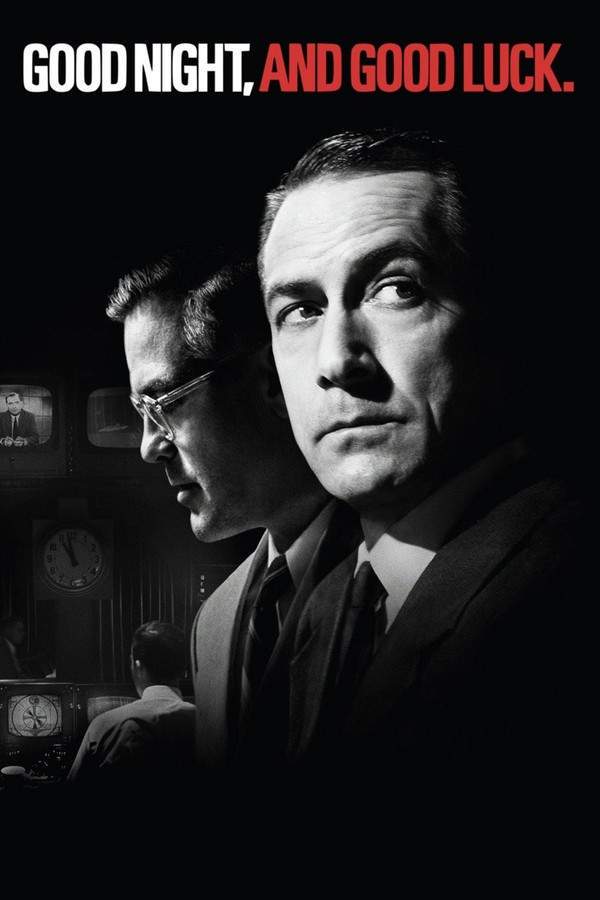
  5. 5 Movies like Medium Cool
  6. 6 Every angle
Loading streaming availability…

Full plot summary · contains spoilers

What Happens in Medium Cool: Full Plot Summary

The whole story of Medium Cool (1969) explained, from the opening scene to the final frame: every key event, every twist and what it all adds up to. Read it as a quick recap before the sequel, to check a scene you missed, or to finally understand what really happened.

John Cassellis, a television news cameraman, is portrayed with a sense of detachment as he focuses solely on capturing the brutal reality of car accidents. With a drive for ratings that overshadows any sense of human empathy, Cassellis prioritizes sensational stories and high audience engagement over personal connections and moral integrity.

When Cassellis discovers that his news station has been leveraging the footage he and his team captured for the benefit of the FBI, his sense of outrage surges. The station's flimsy excuse for firing him only deepens his anger and pushes him to seek new opportunities. This leads him to the Democratic National Convention, where a series of challenging events put his worldview to the test.

During his journey through the ruthless landscape of television reporting, Cassellis meets Eileen—a single mother striving to support her family in Chicago—and her son Harold, haunted by the absence of his father. Despite their shared burdens, a bond begins to form between Cassellis and this resilient family, as he comes to understand their hardships.

However, when Harold goes missing, Eileen seeks Cassellis' help, unwittingly dragging him into the chaos and violence erupting at the convention. The grim reality of police brutality opens Eileen's eyes, prompting her to reach out to Cassellis again. As they attempt to escape the turmoil in his car, both unaware that Harold has safely returned home, Cassellis' reckless driving leads to a catastrophic collision, tragically claiming Eileen's life while leaving him severely injured.

In the chilling aftermath, a bystander stops to film the horrifying scene, only to drive away, abandoning the wreckage and leaving behind a haunting reminder of the devastation and sorrow created by that fateful night.

Last updated: November 17, 2024 at 21:09

Was this helpful?

Plot questions answered

Medium Cool Plot Explained: Your Questions Answered

The questions people ask most about Medium Cool (1969): what happens in the confusing scenes, why the characters do what they do, the twists, hidden details and what the ending means. Each answer contains spoilers.

Q1

Why does John Cassellis get fired from the news station?

Cassellis discovers that his news station has been using footage he and his team captured to benefit the FBI without his knowledge or consent. When he confronts the station management about this unethical arrangement, they offer a flimsy excuse and then fire him. This betrayal by his employer fuels his anger and motivates him to seek new opportunities outside traditional news media.

Foreshadowing: Earlier scenes show Cassellis prioritizing sensational stories and ratings over human empathy, hinting at his eventual awakening to the corruption in his industry.

  • firing
  • news station
  • fbi
  • footage
  • betrayal
Q2

What is the FBI connection that angers Cassellis?

The film reveals that Cassellis' news station has been secretly providing the footage he captures to the FBI, allowing the bureau to use his professional work for their own intelligence purposes. This unauthorized use of his footage without his consent represents a betrayal of journalistic integrity and a disturbing collaboration between media and federal surveillance.

  • fbi
  • surveillance
  • footage
  • media corruption
  • news station
Q3

Why does Cassellis agree to help Eileen find her missing son?

Although Cassellis has maintained emotional detachment throughout his career, his encounter with Eileen and her son Harold awakens his conscience. When Harold goes missing during the chaos of the convention, Eileen desperately asks for his help. Cassellis' decision to assist reflects his growing moral awakening and his shift from purely professional observer to someone personally invested in human welfare.

Foreshadowing: His earlier interactions with Eileen show him beginning to form genuine human connections, breaking from his characteristic detachment.

  • eileen
  • harold
  • help
  • missing
  • convention
Q4

What causes Harold to go missing at the convention?

Harold disappears during the escalating chaos and violence at the Democratic National Convention. The intense crowd turmoil, protests, and police presence create a dangerous environment where a young boy can easily become separated from his mother. This disappearance becomes a pivotal moment that draws Cassellis deeper into the dangerous world of the convention.

  • harold
  • missing
  • convention
  • chaos
  • police
Q5

What does Cassellis witness at the convention that changes him?

During the convention, Cassellis witnesses violent police responses to protesters, including brutal beatings and excessive force against civilians. These firsthand encounters with police brutality shatter his previous ability to remain a detached observer and mark a turning point in his moral transformation. The experience exposes him to the harsh realities of systemic violence that his camera had previously captured from a professional distance.

  • police brutality
  • convention
  • violence
  • protesters
  • witness
Q6

Why does the tragic car accident occur?

As Cassellis and Eileen attempt to escape the chaos of the convention, Cassellis drives recklessly through the dangerous environment. His urgent need to flee the violence, combined with the emotional stress of the situation, leads to catastrophic driving. The result is a serious collision that kills Eileen instantly while leaving Cassellis severely injured. Neither of them knows that Harold has actually returned home safely during their absence.

Foreshadowing: Earlier scenes establish Cassellis' willingness to prioritize action over caution, as shown in his pursuit of sensational footage.

  • car accident
  • eileen
  • death
  • crash
  • driving
Q7

Who is the bystander that films the crash aftermath?

A random bystander approaches the wreckage after the collision and films the horrific scene, capturing the devastating results of Cassellis' reckless driving. This person represents the ultimate irony of Cassellis' career - someone who documents tragedy without intervening. The bystander films the devastation but then drives away without helping, leaving Cassellis alone with the aftermath. This cold departure mirrors Cassellis' own former detachment as a news cameraman.

Foreshadowing: The film opens with Cassellis filming car accidents with similar emotional detachment, establishing this parallel.

  • bystander
  • filming
  • aftermath
  • witness
  • crash
Q8

What is the film saying about media and sensationalism?

Medium Cool presents a stark critique of prioritizing sensational stories and ratings over human life and ethical responsibility. Cassellis' journey from detached cameraman to someone personally affected by tragedy illustrates the personal costs of professional detachment. The film argues that treating human suffering as mere footage for ratings creates a moral vacancy that ultimately consumes both the observer and the observed.

  • media
  • sensationalism
  • critique
  • ratings
  • journalism
Q9

Why does Eileen die in the accident?

Eileen dies because Cassellis' reckless driving during their escape from the convention leads to a catastrophic collision. The impact of the crash is severe enough to kill Eileen instantly while leaving Cassellis with serious injuries. Her death represents the tragic consequence of Cassellis' inability to escape his professional habits - even in a moment requiring human care and caution, he operates with the same reckless urgency he brought to capturing sensational news footage.

  • eileen
  • death
  • accident
  • fatal
  • collision
Q10

What happens to Harold after the accident?

Harold returns home safely to his apartment while Cassellis and Eileen are still attempting to flee the convention chaos. The tragic irony is that their desperate search for the missing boy was unnecessary - he had already made his way back. This cruel twist underscores the film's themes of pointless tragedy and the devastating consequences of misunderstanding and chaos.

  • harold
  • safe
  • home
  • return
  • irony

Movie threads

More Movies Like Medium Cool, by Mood & Story

Curated lists built around what makes Medium Cool tick: the same mood, the same kind of story or the same emotional payoff. Each list explains why these movies belong together.

Movies about journalist disillusionment like Medium Cool

Stories of reporters who lose their professional detachment in a corrupt system. If you liked Medium Cool's exploration of media ethics and personal rebellion, this list features similar movies about journalists and documentarians whose pursuit of the truth leads to a profound moral crisis. These films often share a gritty, realistic tone and a heavy emotional weight, examining the collision between objectivity and human connection.

  • cynical
  • gritty
  • urgent
  • disillusioned
  • tense
  • realistic
  • Tone: cynical, dark, urgent
  • Pacing: steady, methodical
Why these movies?

The story pattern: The narrative follows a protagonist who starts as a detached professional, believing in the power of objective reporting. A pivotal discovery—often involving institutional betrayal or deep-seated corruption—forces them out of their observer role and into active, often dangerous, participation. The story arc is a downward spiral from idealism to disillusionment, ending with a sense of tragic awareness.

Why they belong together: These movies are grouped together because they share a central theme of a professional's loss of innocence within their field. They create a specific, tense vibe by blending the urgency of a newsroom or a documentary project with the slow-burn dread of personal moral collapse, resulting in a sobering and thought-provoking experience.

Cinema vérité political dramas like Medium Cool

Films that use a documentary style to plunge the viewer directly into social upheaval. For viewers who appreciated the immersive, on-the-ground feel of Medium Cool, this section collects movies that use a documentary-style approach to capture political chaos and social unrest. These films are known for their high intensity, urgent pacing, and heavy emotional impact, making you feel like you are in the middle of the action.

  • urgent
  • gritty
  • anxious
  • chaotic
  • realistic
  • unsettling
  • Tone: gritty, anxious, dark
  • Pacing: urgent, variable
Why these movies?

The story pattern: Stories in this thread are defined by their immersive, fly-on-the-wall presentation. They often unfold in real-time or over a condensed period during a major event like a protest, riot, or convention. The plot is less about a traditional character arc and more about the experiential journey of navigating chaos, capturing the confusion, violence, and emotional turbulence of the moment.

Why they belong together: These films are united by their distinctive visual and narrative style, which prioritizes immersive realism over polished storytelling. They share a high-intensity, anxious, and gritty mood that makes the viewer feel like a direct participant in the events. The similarity comes from the specific filmmaking technique and the visceral, urgent experience it creates.

If you liked this

Movies Like Medium Cool

Similar movies to Medium Cool: the same genre, themes or kind of story. Each one comes with its own plot summary, timeline and ending explained.

Browse all movie summaries

Every angle

Medium Cool (1969) Explained: Plot, Timeline & Characters

Everything about Medium Cool in one place: what happens in the plot summary, the timeline in chronological order, the characters and meaning and a spoiler-free summary. What's After the Movie adds the cast, box office and post-credit scenes.

Coming soon on iOS and Android

The Plot Explained Movie Summary App

Plot summaries, endings explained and timelines on your phone. Catch up on any movie in minutes, save your favorites and never miss a twist again.

Be the first to know when we launch. Your email stays private, always.

Learn more about the app