Plot Explained Spoilers guaranteed!
Plot Explained

Browse by genre

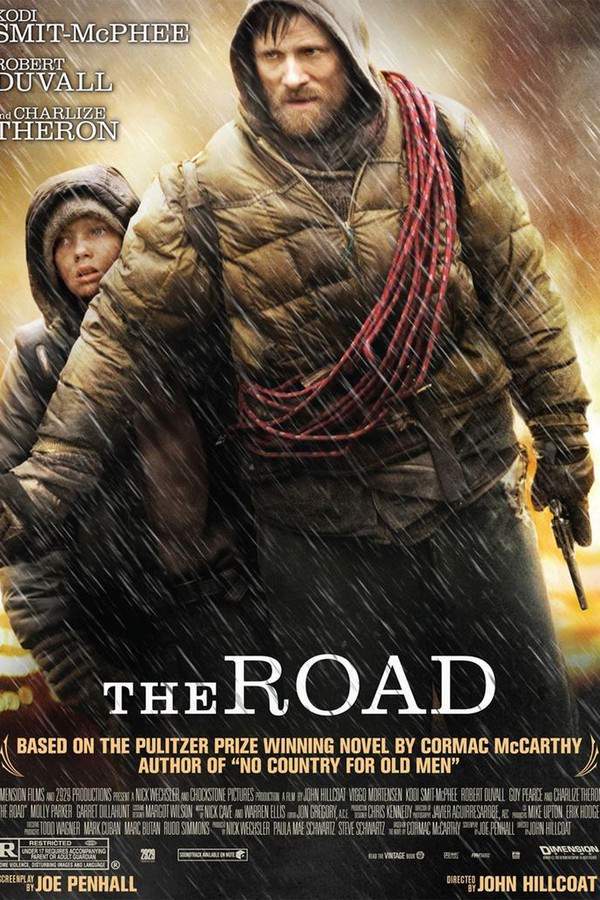
The Road (2009) movie poster

Plot Summary

The Road (2009) Plot Summary Explained

Release, runtime and language
2009 · 111 min · English
JustWatch #5,470 78
Directed by
John Hillcoat
Starring
Charlize Theron, Kodi Smit-McPhee, Viggo Mortensen
Budget
$25M

After an unnamed catastrophe destroys civilization, a father and son journey south across a post-apocalyptic America. They face extreme weather, scarce resources, and the constant threat of violence as they struggle to survive. Driven by love and a determination to protect his son, the man teaches him to maintain hope and avoid the moral compromises that have led others to desperate acts. Their journey is a stark portrayal of the enduring power of the human spirit amidst overwhelming despair.

On this page (7)
  1. 1 Where to watch
  2. 2 What happens: full plot
  3. 3 Plot questions answered
  4. 4 The book behind the movie
  5. 5 Movie threads
  6. 6 Movies like The Road
  7. 7 Every angle

Where to watch

Where to Watch The Road (2009)

Where can you watch The Road? Stream, rent or buy it in the US, including on Amazon Prime Video, Fawesome and Hoopla: current JustWatch availability with up-to-date prices.

Streaming availability powered by JustWatch

Full plot summary · contains spoilers

What Happens in The Road: Full Plot Summary

The whole story of The Road (2009) explained, from the opening scene to the final frame: every key event, every twist and what it all adds up to. Read it as a quick recap before the sequel, to check a scene you missed, or to finally understand what really happened.

The film opens with a poignant flashback showcasing a Man, played by Viggo Mortensen, in bed alongside his wife, portrayed by Charlize Theron. Suddenly, the tranquility is shattered by an eerie sound and an unfamiliar glow filtering through their window. Disturbed, the Man rushes to the bathroom, hastily filling the sink and bathtub with water, while his wife wakes to question his erratic behavior, unaware of the dread the moment entails. As she peers outside to grasp the situation, the narrative swiftly transitions to the somber present day, where the Man, accompanied by his son, traverses a desolate snow-covered road, embodying the weight of a world gripped by chaos and despair.

As they walk, the Man's voice-over unravels his inner turmoil, revealing that he has lost all grasp of time since a catastrophic event occurred at 1:17, signaled by a blinding flash and subsequent rumblings, marking the moment when existence fractured. The ominous atmosphere grows heavier as he reflects on the relentless cold and the encroaching darkness that now envelops their surroundings. With a palpable sense of dread, he expresses his grave fears, including the lurking threats of cannibals and starvation. His journey is not just a search for warmth, but a desperate quest for survival as they aim to reach the coast.

Finding refuge in an abandoned car, the duo takes a moment to rest and share their thoughts, revealing the stark reality of their predicament. The Man possesses a pistol loaded with just two bullets, symbolic of the fragility of hope and the imminent despair that lurks on the horizon. As they reminisce about the boy's mother, held firmly in the grip of memory, the conversation turns dark. The Man grimly instructs his son on the devastating finality of their situation, emphasizing the cruel choice that lies ahead if they ever lose their way.

Through reflective flashbacks, we glimpse the complexities of their past life, where the Man's wife, now deceased, begrudgingly gave birth to their son, painfully aware of the bleak future that awaited them. The moment is abruptly interrupted when the distant sound of a truck jolts the Man awake. Panic-stricken, they flee into the nearby woods, abandoning their cart filled with meager supplies. In a tense encounter, the Man must confront a menacing stranger who taunts their suffering and poses a grave threat to their safety. With quick thinking and unwavering resolve, he draws his weapon and defends his son, exemplifying the lengths a father will go to protect his child.

The subsequent morning reveals the harrowing realities of their existence when they discover their cart has been ransacked. Horrifying evidence of cannibalism lies scattered around, a stark reminder of the perilous world they inhabit. Flashbacks reveal haunting conversations between the Man and his wife, where they ponder the ultimate escape from their nightmarish reality, capturing the struggle between hope and the instinct for survival. As the tension mounts, the son inquires about their morality, prompting the Man to reassure him that they must continue to embody goodness, even in a world corrupted by darkness.

Their journey is fraught with peril as they come across a large, ominous house. Curiosity leads them into a terrifying scenario as they discover a cellar filled with starving captives, forcing them to fight for their lives against desperate souls clinging to their own existence. As night descends, the horrors escalate, with haunting screams echoing in the distance, reminding them that their existence is always just one misstep away from calamity.

With the weight of death ever-present, the Man grapples with mortality as he becomes increasingly ill. Despite the encroaching darkness, they stumble upon a bomb shelter that offers a sliver of hope; yet, this fleeting safety is soon overshadowed by the reality of their situation as they hear the grim sounds of the world above them. The bond between father and son deepens as they encounter a solitary old man, allowing for a brief respite where the boy experiences the kindness of humanity one more time.

As their harrowing journey progresses, they face the disillusionment of a world stripped bare, culminating in the tragic inevitability of loss when the Man succumbs to his affliction. In a powerful and heartbreaking farewell, he urges his son to carry on, to survive, and to keep the fire of humanity alive within himself. The final scenes evoke deep emotional resonance as the son, now faced with the weight of his father’s legacy, encounters a kind stranger, illuminating a path towards hope and connection in an otherwise desolate landscape.

Ultimately, the story encapsulates a harrowing journey through a shattered world, underpinned by themes of survival, sacrifice, and the enduring bond between parent and child. In the face of desolation, it stands as a testament to the strength of the human spirit, exploring the depths of despair while triumphantly flickering with the light of perseverance.
Last updated: December 31, 2024 at 18:09

Was this helpful?

Plot questions answered

The Road Plot Explained: Your Questions Answered

The questions people ask most about The Road (2009): what happens in the confusing scenes, why the characters do what they do, the twists, hidden details and what the ending means. Each answer contains spoilers.

Q1

Why did the mother kill herself in the film?

The mother couldn't bear the thought of raising a child in a world devoid of hope. In a flashback conversation with the Man, she expresses that she cannot bring a new life into such a bleak, destroyed world, leading her to make the tragic decision to end her own life.

Foreshadowing: Earlier scenes show her pregnant and visibly distressed about the future, hinting at her psychological collapse.

  • mother suicide
  • woman's death
  • post-apocalyptic despair
  • giving birth
Q2

What caused the catastrophe at 1:17 AM?

The exact nature of the event is never explained, but the Man describes seeing a blinding flash in the sky followed by rumblings. This moment marked the beginning of the end, causing the world to descend into chaos, cold, and destruction.

Foreshadowing: The opening flashback shows the Man waking to a strange glow and frantically filling containers with water, suggesting he somehow sensed the impending disaster.

  • apocalypse cause
  • flash in sky
  • 1:17
  • world destruction
Q3

Why does the father keep only two bullets in his pistol?

The two bullets are reserved for a grim purpose: if their situation becomes utterly hopeless or they face capture by cannibals, the Man intends to use them on himself and his son rather than allow either to suffer. This reflects the father's desperate attempt to maintain some control over their fate.

Foreshadowing: During a conversation inside the abandoned car, the Man tells his son that the bullets are 'for us' if they ever lose their way.

  • two bullets
  • pistol
  • final choice
  • suicide pact
Q4

What does 'carrying the fire' mean in the movie?

'Carrying the fire' is the father's philosophy that they must preserve their humanity, compassion, and moral goodness even in a world consumed by darkness. It means continuing to be kind, helping others when possible, and refusing to become like the cannibalistic survivors who have lost their humanity. The father believes this internal fire represents what makes them human.

Foreshadowing: The Man repeatedly tells his son they must 'carry the fire' of goodness, contrasting their moral stance with the brutal world around them.

  • carrying the fire
  • humanity
  • morality
  • goodness
Q5

Why are the father and son traveling to the coast?

The Man believes the coast will offer warmth and a better chance of survival. He tells his son they are heading south where it will be warmer, hoping to find food, shelter, and perhaps other survivors who haven't resorted to cannibalism. The coast represents their distant hope for a livable future.

Foreshadowing: From the beginning of their journey, the Man mentions reaching the coast as their primary goal, driven by the belief that southern warmth means survival.

  • coast
  • south
  • journey
  • warmth
  • hope
Q6

What causes the father to become sick and die?

The exact illness is never specified, but the father appears to be suffering from some kind of terminal condition, likely caused by exposure, radiation, or the harsh conditions of the post-apocalyptic world. He deteriorates gradually throughout the journey, becoming increasingly weak until he can no longer continue.

Foreshadowing: The father coughs frequently as they travel, and by the time they reach the coast, he is severely weakened, requiring the son to help him.

  • father death
  • illness
  • sickness
  • deteriorate
Q7

What happened at the abandoned house with the cellar?

The father and son discover what appears to be an abandoned house, but inside they find a cellar filled with starving captives, people who have been imprisoned and are being kept alive for food by a group of cannibals. The duo must fight their way out to escape, experiencing firsthand the horrors other survivors have become capable of.

Foreshadowing: Their discovery of the ransacked cart and signs of cannibalism earlier hinted at the depravity lurking in this new world.

  • abandoned house
  • cellar
  • captives
  • cannibals
  • escape
Q8

Why is the encounter with the old man important?

The old man represents a brief moment of hope and humanity in an otherwise brutal world. He shares a meal with the father and son, treating them with kindness. This encounter shows the son that not everyone has succumbed to moral decay, reinforcing the father's message about carrying the fire of goodness. It provides emotional respite before the story's tragic conclusion.

Foreshadowing: After encountering the cannibal camps and witnessing violence, the old man offers a stark contrast by demonstrating compassion.

  • old man
  • humanity
  • kindness
  • hope
  • meal
Q9

Why does the son choose to go with the stranger at the end?

After his father dies, the son is alone in the world. When a kind stranger approaches with food and an invitation to join his group, the son remembers his father's final wish: to keep carrying the fire and to survive. Rather than surrendering to despair, he chooses hope and connection, deciding to continue living and to trust this new person.

Foreshadowing: The father's final words urge his son to keep going, to carry the fire, and to find goodness in others, exactly what the stranger represents.

  • son
  • stranger
  • join
  • hope
  • ending
  • survive
Q10

Why does the father fill the bathtub with water in the opening flashback?

In the opening flashback, the father wakes to a strange glow outside and immediately fills containers with water, suggesting he somehow senses an impending catastrophe. His urgent, frantic actions indicate he understands something catastrophic is about to happen, though his wife questions his behavior.

Foreshadowing: This scene precedes the 1:17 AM catastrophe, showing the father acting on instinct before the flash occurs.

  • water
  • bathtub
  • flash
  • warning
  • apocalypse
Q11

What is the significance of the father seeing his childhood neighborhood?

The father discovers they are passing through his old childhood neighborhood, now destroyed. This triggers deep emotional pain, as he reflects on lost innocence and the contrast between his past life and the current wasteland. For the son, seeing another boy in the area causes emotional turmoil, reinforcing how the apocalypse has stolen their innocence.
Foreshadowing: The Man pauses to recognize the area, and his emotional reaction signals the depth of personal loss beneath their survival journey.

  • childhood
  • neighborhood
  • memory
  • lost innocence
  • father past
Q12

What do they find at the coast?

When they finally reach the coast, instead of finding hope and warmth, they discover a polluted, grey beach with dead fish and an ominous atmosphere. Their dream of a better life at the coast is shattered, symbolizing how the apocalypse has destroyed everywhere, leaving no safe haven.

Foreshadowing: The father's hopes for the coast represent the family's original plan to escape the devastation inland.

  • coast
  • beach
  • pollution
  • disappointment
  • no hope

Movie threads

More Movies Like The Road, by Mood & Story

Curated lists built around what makes The Road tick: the same mood, the same kind of story or the same emotional payoff. Each list explains why these movies belong together.

Bleak post-apocalyptic survival movies like The Road

Survival stories set in desolate worlds stripped of civilization and hope. If the desolate world and desperate struggle for survival in The Road resonated with you, explore these similar movies. This collection features films about humanity's end, moral collapse, and the grim fight to persevere in harsh, unforgiving environments where hope is a rare and fragile commodity.

  • desolate
  • oppressive
  • grim
  • desperate
  • anxious
  • somber
  • Tone: bleak, oppressive, grim
  • Pacing: slow, methodical, grueling
Why these movies?

The story pattern: Narratives in this thread typically follow a linear journey or a day-to-day survival grind in a world after a major collapse. The central conflict is often against the environment and other desperate survivors, with a focus on the psychological and moral challenges of staying human in an inhuman world. Character arcs revolve around maintaining—or losing—one's humanity in the face of overwhelming despair.

Why they belong together: These films are grouped by their shared setting of a collapsed world, a consistently bleak and oppressive tone, and a focus on the raw, unvarnished struggle for existence. They create a cohesive experience through similar atmospheres of dread, themes of moral testing, and a heavy emotional weight that leaves a lasting impact.

Movies about parental sacrifice and protection like The Road

Stories where a parent's love is tested by extreme circumstances. If the powerful father-son bond and themes of sacrifice in The Road moved you, these movies explore similar emotional territory. This selection features heavy dramas where a parent's love is the central driving force against overwhelming adversity, focusing on the costs and triumphs of protection.

  • anxious
  • somber
  • heartfelt
  • desperate
  • protective
  • melancholic
  • Tone: heavy, anxious, bittersweet
  • Pacing: steady, character-driven
Why these movies?

The story pattern: The narrative pattern follows a parent (or guardian) facing extreme external threats, with the child's safety as the primary motivation for all action. The plot is driven by the parent's choices, which often involve significant moral compromises or physical risks. The emotional journey is one of escalating tension and concern, culminating in a resolution that tests the limits of the protective bond.

Why they belong together: These films are united by their central theme of parental sacrifice and the intense emotional dynamic of protecting a vulnerable child. They share a heavy emotional weight, high personal stakes, and a tone that balances love and hope against a backdrop of anxiety and potential tragedy.

If you liked this

Movies Like The Road

Similar movies to The Road: the same genre, themes or kind of story. Each one comes with its own plot summary, timeline and ending explained.

Browse all movie summaries

Every angle

The Road (2009) Explained: Plot, Timeline & Characters

Everything about The Road in one place: what happens in the plot summary, the timeline in chronological order, the characters and meaning and a spoiler-free summary. What's After the Movie adds the cast, box office and post-credit scenes.

Coming soon on iOS and Android

The Plot Explained Movie Summary App

Plot summaries, endings explained and timelines on your phone. Catch up on any movie in minutes, save your favorites and never miss a twist again.
Be the first to know when we launch. Your email stays private, always.

Learn more about the app