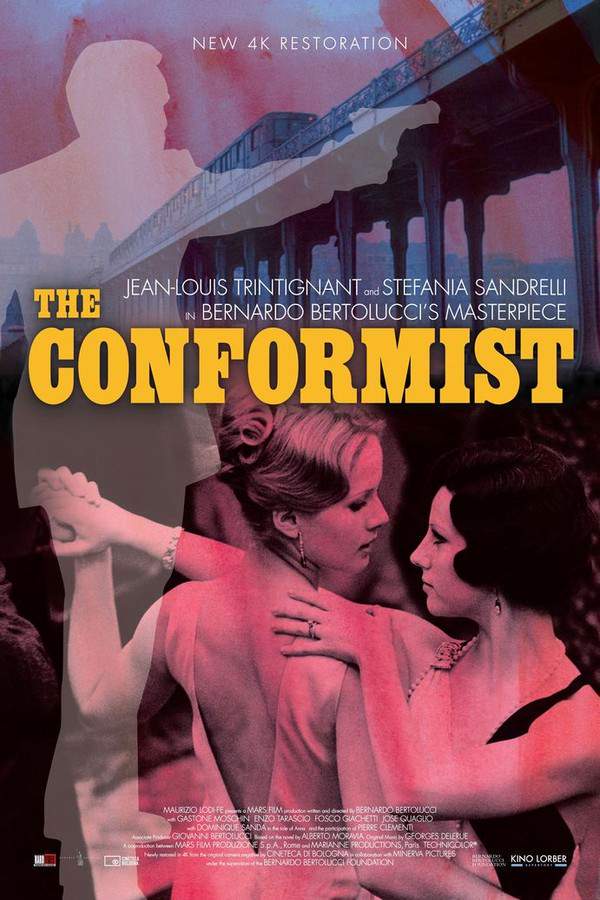
The Conformist

The Conformist

Year: 1970

Runtime: 107 min

Language: Italian

Director: Bernardo Bertolucci

Drama

In 1930s Italy, a man seeks acceptance and stability by joining the Fascist party. His pursuit of conformity is intertwined with a dark past, revealed through unsettling flashbacks. These memories depict a passionate and forbidden romance, a traumatic event involving violence, and the enduring burden of guilt that shapes his present actions and motivations.

Warning: spoilers below!

Haven’t seen The Conformist yet? This summary contains major spoilers. Bookmark the page, watch the movie, and come back for the full breakdown. If you're ready, scroll on and relive the story!

The Conformist (1970) – Full Plot Summary & Ending Explained

Read the complete plot breakdown of The Conformist (1970), including all key story events, major twists, and the ending explained in detail. Discover what really happened—and what it all means.

In 1938 Paris, Marcello Clerici, Jean-Louis Trintignant, finalises his preparations to assassinate his former university professor, Luca Quadri, leaving his wife, Giulia, in their hotel room. After receiving a call, Marcello is collected in a car driven by his subordinate, Special Agent Manganiello.

A series of flashbacks follow, revealing a fragmented portrait of his life and psyche. They show Marcello discussing with his blind friend, Italo, his hopes of marrying, and his attempts to join the Fascist secret police, alongside visits to his parents in Rome: a morphine-addicted mother lingering in a decaying villa and a father residing in an insane asylum. The memories deepen the sense that Marcello has long been shaped by a harsh, morally ambiguous world.

In a pivotal 1917 flashback, Marcello is a boy taunted by schoolmates until Lino, a chauffeur, intervenes. Lino reveals a pistol and then sexually assaults him. Marcello partly resists, then grabs the weapon and fires, first at the walls and then at Lino, before fleeing, convinced that he has committed murder. This moment haunts him across decades, planting the seeds of a conscience shaped by fear, guilt, and a craving for control.

Another memory centers on a conversation with Giulia about confession, even though Marcello is an atheist. He hopes to win her Roman Catholic parents’ approval for their marriage, so he agrees to confess. In the priest’s eyes, Marcello admits to sins such as the rape and presumed murder of Lino, premarital sex, and a perceived lack of guilt. He tells the priest that he prioritizes a normal life and a traditional marriage with children, a desire that contrasts with the darker impulses he harbors. The priest is shocked, but absolves him once he learns that Marcello works for the Fascist secret police.

The mission accelerates in Ventimiglia, where Fascist officer Raoul orders him to eliminate Quadri, a staunch anti-Fascist intellectual living in exile in France. To disguise the operation as a honeymoon, Marcello takes Giulia to Paris, intending to carry out the assassination without arousing suspicion. The trip unsettles him, yet opportunity and temptation push him forward.

While visiting Quadri, Marcello is drawn to Anna, Quadri’s French wife, and begins pursuing her. Anna, aware of Marcello’s dangerous Fascist sympathies, responds to his advances and forms a complex bond with Giulia as well. The two women dress in lavish styles and accompany their husbands to a dance hall, where Quadri’s intellectual integrity and Marcello’s loyalties are put to the test. Manganiello, who has been tailing Marcello, remains skeptical of his true intentions throughout.

Marcello secretly returns the gun he has been given and feeds Manganiello the location of Quadri’s country house in Savoy, where the couple plans to retreat the next day. Despite Marcello’s caution and Giulia’s warning, Anna chooses to accompany her husband into the countryside, drawn by the allure of the dangerous liaison and the prospect of freedom.

On a secluded Alpine road, Quadri and Anna are fatally shot by fascist agents. Anna, horrified, watches as the killers close in. When the assailants shift their attention to her, she runs toward the car behind for help and discovers Marcello in the back seat, realizing his betrayal. She screams and flees into the woods, pursued by the agents. Marcello watches as she is shot dead; Manganiello, disgusted, steps away to light a cigarette, chastising Marcello for his cowardice in not shooting Anna when she came toward the car.

The years move forward to 1943, amid Mussolini’s resignation and the collapse of the Fascist regime. Marcello now has a daughter with Giulia and appears settled in a conventional life. One night, as crowds celebrate the fall of Mussolini, he strolls through Rome with Italo and overhears two men flirting, recognizing one as Lino, who survived the earlier assault. A shattering awareness dawns: he never killed Quadri, and the burden of that long-held guilt intensifies. He begins to denounce Lino as a Fascist, a homosexual, and the murderer of the Quadris, while also turning on Italo as a Fascist. As an anti-Fascist crowd sweeps past, taking Italo away, Marcello sits beside a small fire and stares at the lingering memory of Lino’s companion—now seen as a naked young man nearby—an unsettling image that underscores the hollowness of the world he has inhabited and the price of his choices.
Last Updated: October 09, 2025 at 15:44

Mobile App Preview

Coming soon on iOS and Android

The Plot Explained Mobile App

From blockbusters to hidden gems — dive into movie stories anytime, anywhere. Save your favorites, discover plots faster, and never miss a twist again.

Sign up to be the first to know when we launch. Your email stays private — always.

Explore Movie Threads

Discover curated groups of movies connected by mood, themes, and story style. Browse collections built around emotion, atmosphere, and narrative focus to easily find films that match what you feel like watching right now.

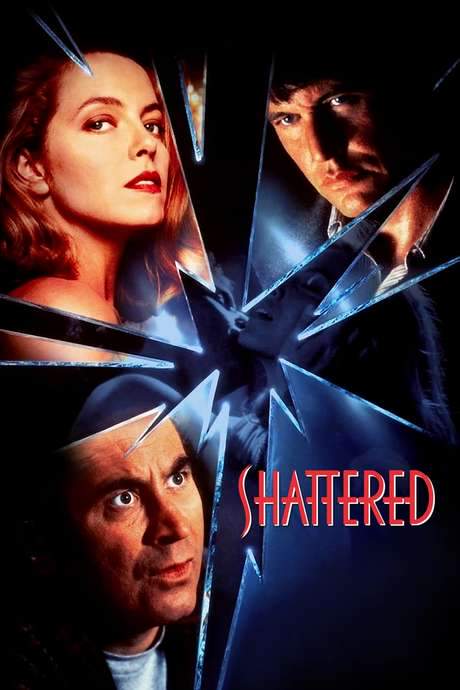
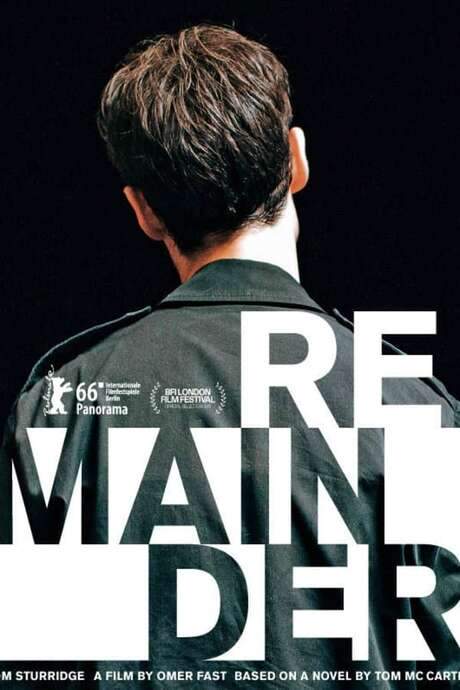
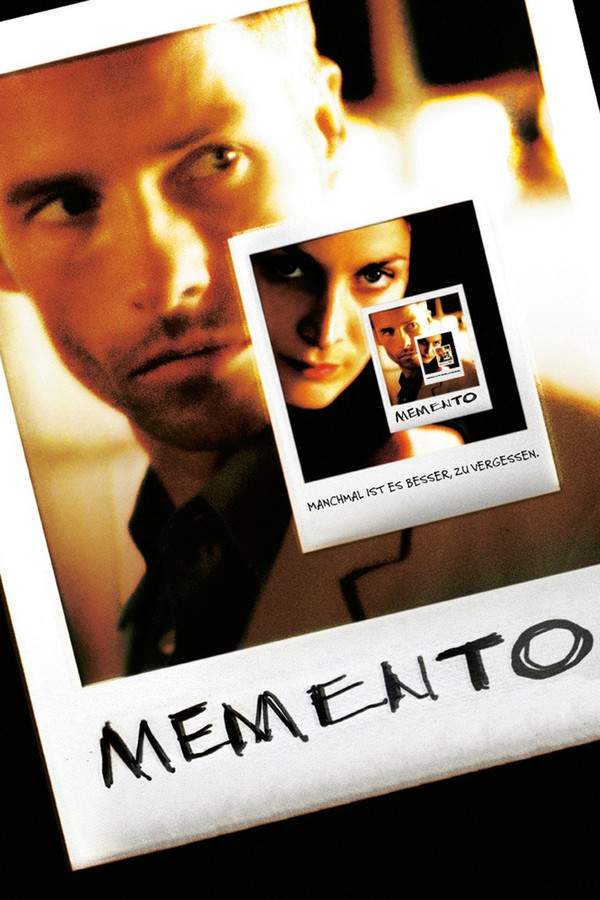
Movies with fractured narratives and psychological unraveling like The Conformist

Stories where traumatic pasts resurface through non-linear narratives to shape a fractured present.Find movies like The Conformist that use flashbacks and non-linear storytelling to delve into themes of repressed memory, trauma, and guilt. These similar psychological dramas often feature complex timelines where the past haunts and dictates the present.

unsettlinghauntedintrospectivemelancholicpsychologicalfragmentedanxious

Narrative Summary

Films in this thread often unfold through a mosaic of past and present, where key events from a character's history are revealed out of sequence. This structure mirrors the process of memory itself, creating a journey of discovery about the origins of their current psychological distress, moral ambiguity, or motivations.

Why These Movies?

These films are grouped by their shared narrative technique and psychological focus. They prioritize internal states over external plot, using time as a flexible tool to build a deeply subjective and often unsettling experience centered on memory, trauma, and identity.

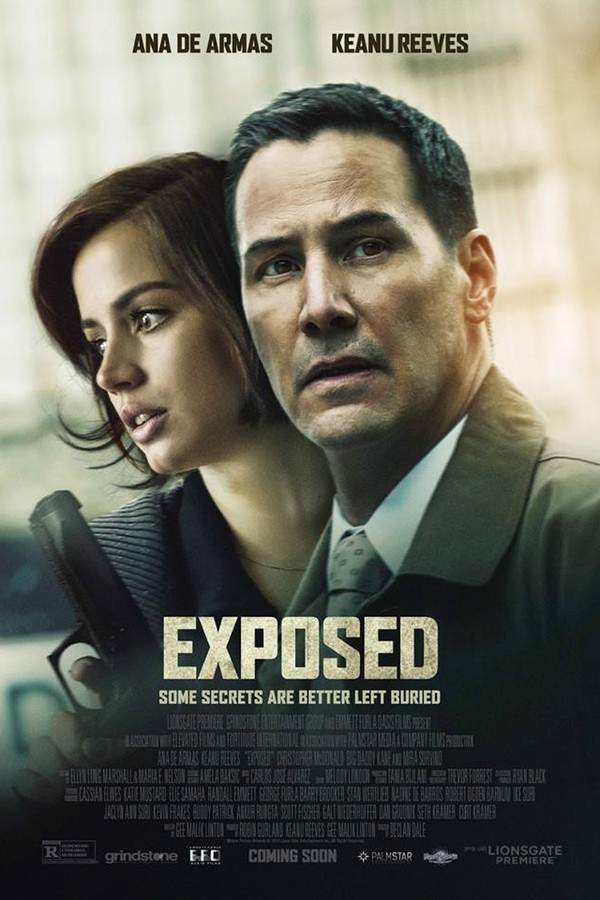
Stories about moral compromise and political conformity like The Conformist

Character studies of individuals losing their morality to gain acceptance within an oppressive ideology.If you liked The Conformist, explore these movies about characters betraying their morals to fit into a fascist or oppressive society. These similar dramatic stories examine the heavy guilt and psychological toll of conformity within corrupt systems.

oppressiveclaustrophobicpessimisticanxiousmoral ambiguityguilt-riddenpolitical

Narrative Summary

The narrative typically follows a protagonist's descent into complicity, often beginning with a desire for a normal life. Their journey is marked by escalating moral betrayals, leading to a profound internal conflict and a bleak realization of their own hollow identity, usually culminating in a devastating, irreversible outcome.

Why These Movies?

These films share a powerful thematic core: exploring the intersection of personal weakness, political ideology, and moral collapse. They create a claustrophobic, oppressive mood by focusing on the internal guilt and existential dread of someone who has sacrificed their soul for an empty promise of stability.

Unlock the Full Story of The Conformist

Don't stop at just watching — explore The Conformist in full detail. From the complete plot summary and scene-by-scene timeline to character breakdowns, thematic analysis, and a deep dive into the ending — every page helps you truly understand what The Conformist is all about. Plus, discover what's next after the movie.

The Conformist Timeline

Track the full timeline of The Conformist with every major event arranged chronologically. Perfect for decoding non-linear storytelling, flashbacks, or parallel narratives with a clear scene-by-scene breakdown.

The Conformist Timeline

Characters, Settings & Themes in The Conformist

Discover the characters, locations, and core themes that shape The Conformist. Get insights into symbolic elements, setting significance, and deeper narrative meaning — ideal for thematic analysis and movie breakdowns.

Characters, Settings & Themes in The Conformist

The Conformist Spoiler-Free Summary

Get a quick, spoiler-free overview of The Conformist that covers the main plot points and key details without revealing any major twists or spoilers. Perfect for those who want to know what to expect before diving in.

The Conformist Spoiler-Free Summary

More About The Conformist

Visit What's After the Movie to explore more about The Conformist: box office results, cast and crew info, production details, post-credit scenes, and external links — all in one place for movie fans and researchers.

More About The Conformist

Similar Movies to The Conformist

Discover movies like The Conformist that share similar genres, themes, and storytelling elements. Whether you’re drawn to the atmosphere, character arcs, or plot structure, these curated recommendations will help you explore more films you’ll love.