Plot Explained Spoilers guaranteed!
Plot Explained

Browse by genre

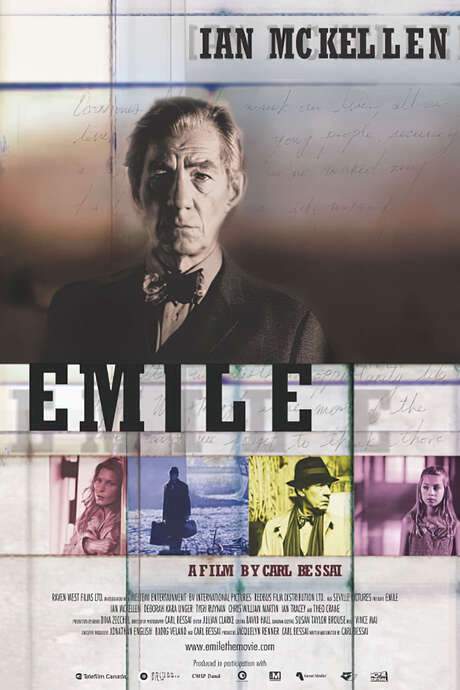
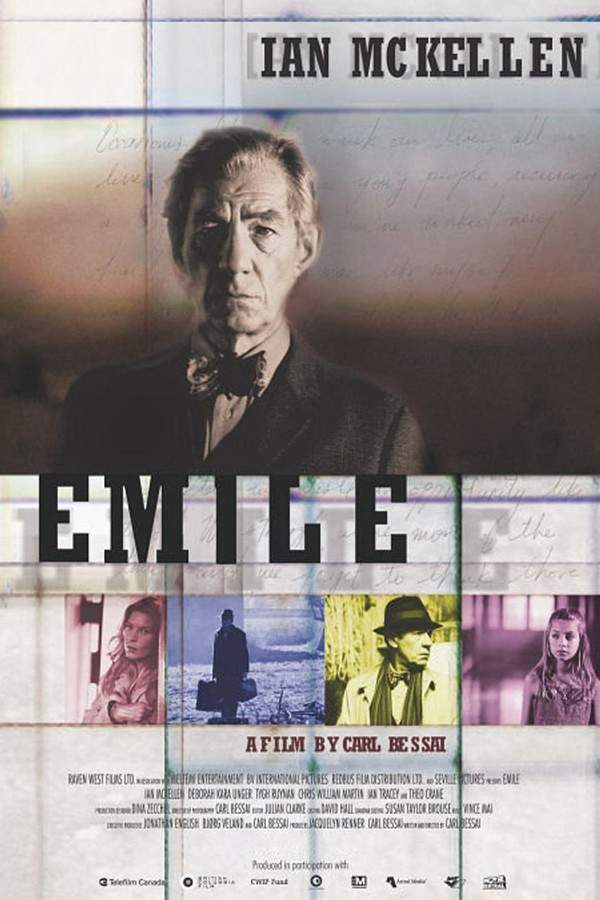
Emile (2005) movie poster

Characters & Themes

Emile (2005) Characters, Setting & Themes Explained

Release, runtime and language
2005 · 92 min · English
Loading streaming availability…
Directed by
Carl Bessai

Following a period of retirement, a professor returns home, initiating a journey of introspection. Ian McKellen portrays Emile as he grapples with a difficult past and strained relationships with his brothers. Confronted with resurfacing memories, he seeks forgiveness from his niece, Nadia, while developing an unexpected connection with her young daughter. The story explores themes of family, regret, and the possibility of redemption through understanding and reconciliation.

On this page (8)
  1. 1 Where to watch
  2. 2 Characters explained (5)
  3. 3 Where & when it takes place
  4. 4 Themes & meaning (4)
  5. 5 Character & meaning questions
  6. 6 Movie threads
  7. 7 Movies like Emile
  8. 8 Every angle
Loading streaming availability…

5 main characters · contains spoilers

Emile Characters Explained: Who Is Who

The main characters of Emile (2005), heroes and villains: what drives them, how they change over the course of the story and what each of them reveals about the film's bigger ideas.

  • Emile

    A young man who leaves Saskatchewan for England, becoming an academic and turning his back on his Canadian past. He carries unresolved guilt about his brothers' deaths and returns decades later seeking to understand his family and himself.

    • 🧭 Identity
    • 🕰️ Guilt
    • 🌍 Change
  • Nadia (Deborah Kara Unger)

    Carl's now-adult daughter, who has recently separated from her husband. She is a focus of Emile's long-delayed attempt to reconnect with his past as he visits Victoria with her ten-year-old daughter Maria. Her life sits at the center of the family’s fragile history.

    • 👨‍👩‍👧 Family
    • 💔 Separation
    • 🧭 Legacy
  • Carl

    Emile's brutal older brother whose death in a pickup crash after Freddy's suicide becomes the catalyst for the family's tragedy. His memory lingers in Emile's recollections and in his attempt to understand Nadia.

    • 🕯️ Loss
    • 💔 Family
    • 🚗 Tragedy
  • Freddy

    The creative younger brother who dies by gas fumes in his pickup, precipitating a chain of guilt and regret that haunts Emile across decades.

    • 🎭 Creativity
    • ⏳ Grief
    • 💀 Death
  • Maria

    Nadia's ten-year-old daughter, who appears in the present-day timeline. Her interactions with Emile anchor the film’s exploration of legacy and reconciliation.

    • 👧 Family
    • 🧭 Legacy
    • 🌊 Vancouver Coast

Last updated: February 17, 2026 at 17:59

Was this helpful?

Setting

Where and When Does Emile Take Place?

The setting of Emile (2005): the year and time period, the places and locations, and how they shape the characters, the mood and the tension of the story.

Time period

Late 20th to early 21st century

The story spans decades, beginning with Emile's youth and departure for England, and moving to a present-day reunion in Canada. It juxtaposes a distant rural past with a contemporary timeline where memories resurface. The shift in time underscores how choices ripple through generations, shaping identity and relationships.

Location

Saskatchewan, England, Victoria (British Columbia)

The narrative moves across three main settings: the Saskatchewan family farm where Emile's brutal older brother Carl dominates the landscape, the English university world where Emile becomes an academic, and the coastal city of Victoria, British Columbia, where a decades-later reunion unfolds. The film contrasts harsh rural beginnings with a modern, memory-soaked present. The locations anchor the emotional arc as past and present collide in Emile's reveries triggered by an old typewriter.

  • 🏞️ Saskatchewan
  • 🇬🇧 England
  • 🌊 Victoria (British Columbia)

Last updated: February 17, 2026 at 17:59

Was this helpful?

4 major themes

Emile Meaning: Themes & Message Explained

What is Emile (2005) really about? The emotional, social and philosophical themes the film keeps returning to, its symbolism and the message beneath the surface.

  • Memory

    Memory and its unreliability drive the narrative, as Emile revisits past events and their meanings. The typewriter found among Nadia's belongings acts as a portal to half-remembered moments that blur fact and fantasy. The film uses memory to explore guilt, forgiveness, and the possibility of reconciliation.

  • Time

    Time moves across decades, highlighting how choices echo through generations. Present-day scenes sit alongside fragments of Emile's youth, creating a dialogue between what was and what is. The story uses this temporal layering to examine how memory reshapes identity over time.

  • Identity

    Emile's adoption of an English academic persona signals a tension between his Canadian origins and his self-fashioning abroad. The journey back to his roots challenges the persona he built and invites a reconsideration of where he truly belongs. The narrative questions whether identity is a fixed label or a evolving story shaped by wounds and loyalties.

  • Grief

    The deaths of Freddy and Carl cast a long shadow, shaping Emile's sense of loss and responsibility. Grief is explored as a weight that can either imprison or deepen a connection to family. As memories surface, the film probes whether facing the past can lead to genuine reconciliation or merely a more nuanced understanding of what was lost.

Last updated: February 17, 2026 at 17:59

Was this helpful?

Character & theme questions

Emile Characters & Meaning: Your Questions Answered

The questions people ask about Emile (2005): who the characters really are, their relationships, what the symbols mean, where it takes place and what the movie is really about. Each answer contains spoilers.

Q1

Where does the movie Emile take place?

The film moves between three main locations: the Saskatchewan family farm where Emile grew up, England where he built his academic career, and Victoria, British Columbia, where the present-day reunion unfolds. The contrast between the harsh rural Canadian landscape and the more civilized English university world reflects Emile's internal tension between his roots and the persona he adopted abroad.

Foreshadowing: The Saskatchewan farm is introduced early as a site of trauma, with memories of Emile's difficult relationship with his brother Carl emerging as he returns.

  • saskatchewan
  • england
  • victoria
  • british columbia
  • setting
  • locations
  • farm
Q2

What time period is Emile set in?

The story spans from Emile's youth in the late 20th century through to the early 2000s, when the present-day reunion occurs in Victoria. The film uses this temporal breadth to show how choices made decades earlier continue to shape relationships and identities in the present.

Foreshadowing: The narrative's opening establishes the historical context of Emile's departure, hinting at the years of separation that follow.

  • time period
  • timeline
  • decades
  • 1990s
  • 2000s
  • present day
Q3

What are the main themes in Emile?

Emile explores memory and its unreliability, time and how past choices echo through generations, identity and belonging across cultures, and grief over lost family members. The film examines whether redemption and reconciliation are possible after decades of guilt and abandonment.

Foreshadowing: The opening scenes establish memory as a central element, with Emile's reveries triggered by an old typewriter.

  • memory
  • time
  • identity
  • grief
  • themes
  • redemption
  • reconciliation
  • family
Q4

How does Emile explore memory?

Memory drives the narrative as Emile revisits past events that blur fact and fantasy. An old typewriter found among Nadia's belongings acts as a portal to half-remembered moments, allowing the film to explore guilt, forgiveness, and the possibility of reconciliation through fragmented recollections.

Foreshadowing: The typewriter serves as a literal device that unlocks memory sequences throughout the film.

  • memory
  • typewriter
  • past
  • recollection
  • flashback
  • guilt
Q5

What does Emile say about identity and belonging?

The film explores how Emile adopted an English academic persona while turning his back on his Canadian roots. His journey back to British Columbia challenges the identity he constructed abroad and forces him to reconsider where he truly belongs. The narrative questions whether identity is fixed or an evolving story shaped by wounds and loyalties.

Foreshadowing: Emile's departure for England is presented as an abandonment of his past, setting up the central tension of his return.

  • identity
  • belonging
  • roots
  • canada
  • england
  • self-discovery
  • persona
Q6

How does Emile handle grief and loss?

The deaths of Emile's brothers, Freddy's suicide and Carl's subsequent fatal pickup crash, cast a long shadow over the narrative. The film explores grief as a weight that can either imprison or deepen connections to family. As memories surface, Emile confronts whether facing the past can lead to genuine reconciliation or merely a more nuanced understanding of loss.

Foreshadowing: The brothers' deaths are referenced early, establishing the tragedy that haunts Emile throughout the film.

  • grief
  • loss
  • death
  • suicide
  • brothers
  • family trauma
  • mourning
Q7

Who is Emile in the movie?

Emile is a retired professor who returns to Canada after decades away, grappling with unresolved guilt over his brothers' deaths. He left Saskatchewan for England as a young man, abandoning his family to become an academic. The film follows his attempt to reconnect with his past and seek forgiveness from his niece Nadia.

Foreshadowing: Emile's departure from Saskatchewan is established as a central betrayal that fuels his guilt.

  • emile
  • professor
  • protagonist
  • academic
  • guilt
  • return
  • family
Q8

Who is Nadia in Emile?

Nadia is Carl's adult daughter, who has recently separated from her husband. She becomes the focal point of Emile's attempt to reconnect with his past, as he visits her in Victoria alongside her ten-year-old daughter Maria. Her life sits at the center of the family's fragile history and represents Emile's chance at reconciliation.

Foreshadowing: Nadia's presence in Victoria is established early as the destination of Emile's journey home.

  • nadia
  • carl's daughter
  • niece
  • family
  • connection
  • reconciliation
Q9

What happened to Emile's brothers?

Emile had two brothers: Freddy, the creative younger sibling who died by suicide via gas fumes in his pickup, and Carl, the brutal older brother who died in a pickup crash shortly after Freddy's death. These tragedies become the catalyst for Emile's decades-long guilt and his ultimate quest for forgiveness.

Foreshadowing: The brothers' deaths are revealed through memory fragments, establishing the central trauma.

  • freddy
  • carl
  • brothers
  • deaths
  • suicide
  • tragedy
  • pickup crash
Q10

What is the tone and mood of Emile?

The film has a predominantly melancholic tone centered on themes of regret, abandonment, and family tragedy. The pacing is slow, focusing on character introspection and memory-triggered reveries rather than plot-driven action. While the themes are heavy, dealing with suicide and emotional neglect, the ending suggests a bittersweet possibility of healing and forgiveness.

Foreshadowing: The opening establishes the reflective, emotionally weighted atmosphere that persists throughout.

  • tone
  • mood
  • melancholy
  • sadness
  • introspection
  • bittersweet
  • drama
Q11

What role does the Saskatchewan farm play in Emile?

The Saskatchewan farm represents Emile's painful past and the site of his difficult relationship with his older brother Carl. It is depicted as a harsh rural environment where the tragedy of Freddy's suicide and Carl's subsequent death unfolded. The farm serves as a contrast to the modern, civilized English academic world Emile escaped to.

Foreshadowing: The farm is introduced as a place of trauma that Emile fled from, setting up his psychological journey.

  • saskatchewan
  • farm
  • rural
  • past
  • childhood
  • carl
  • escape

Movie threads

More Movies Like Emile, by Mood & Story

Curated lists built around what makes Emile tick: the same mood, the same kind of story or the same emotional payoff. Each list explains why these movies belong together.

Movies about late-life reckoning like Emile

Elderly protagonists confront buried regrets and seek family reconciliation. Find films similar to Emile that explore themes of elderly regret and family reconciliation. If you liked Ian McKellen's quiet portrayal of a professor confronting his past, you'll appreciate these slow-burn dramas about making amends later in life.

  • introspective
  • regretful
  • melancholic
  • quiet
  • nostalgic
  • somber
  • Tone: melancholic, reflective, bittersweet
  • Pacing: slow, deliberate
Why these movies?

The story pattern: The narrative follows an aging protagonist who is compelled to revisit a place or people from their past, triggering a deep introspection. Through memories and present-day interactions, they grapple with past mistakes, often involving family estrangement, and attempt a fragile reconciliation, leading to a bittersweet resolution.

Why they belong together: These movies are grouped by their shared focus on a slow-paced, character-driven exploration of regret and the complex emotional weight of seeking forgiveness and connection in one's later years.


Melancholic family dramas with unresolved grief like Emile

Stories where family trauma and sorrow simmer beneath quiet surfaces. Explore movies similar to Emile that deal with heavy themes of family grief, loss, and abandonment. If you were moved by the film's exploration of a tragic past and strained relationships, these somber dramas will resonate with you.

  • somber
  • grieving
  • melancholic
  • unresolved
  • regretful
  • heavy
  • Tone: somber, melancholic, heavy
  • Pacing: slow, character-driven
Why these movies?

The story pattern: The plot revolves around a family unit haunted by a specific, often tragic, event from the past. The story unfolds slowly, revealing the deep-seated sorrow and unresolved tensions between relatives. The emotional journey is heavy, focusing on the characters' struggle with grief and the elusive nature of closure.

Why they belong together: This group is defined by a shared melancholic atmosphere, a narrative centered on profound family loss, and a slow-burn exploration of how grief and regret permeate relationships across time.

If you liked this

Movies Like Emile

Similar movies to Emile: the same genre, themes or kind of story. Each one comes with its own plot summary, timeline and ending explained.

Browse all movie summaries

Every angle

Emile (2005) Explained: Plot, Timeline & Characters

Everything about Emile in one place: what happens in the plot summary, the timeline in chronological order, the characters and meaning and a spoiler-free summary. What's After the Movie adds the cast, box office and post-credit scenes.

Coming soon on iOS and Android

The Plot Explained Movie Summary App

Plot summaries, endings explained and timelines on your phone. Catch up on any movie in minutes, save your favorites and never miss a twist again.

Be the first to know when we launch. Your email stays private, always.

Learn more about the app