Plot Explained Spoilers guaranteed!
Plot Explained

Browse by genre

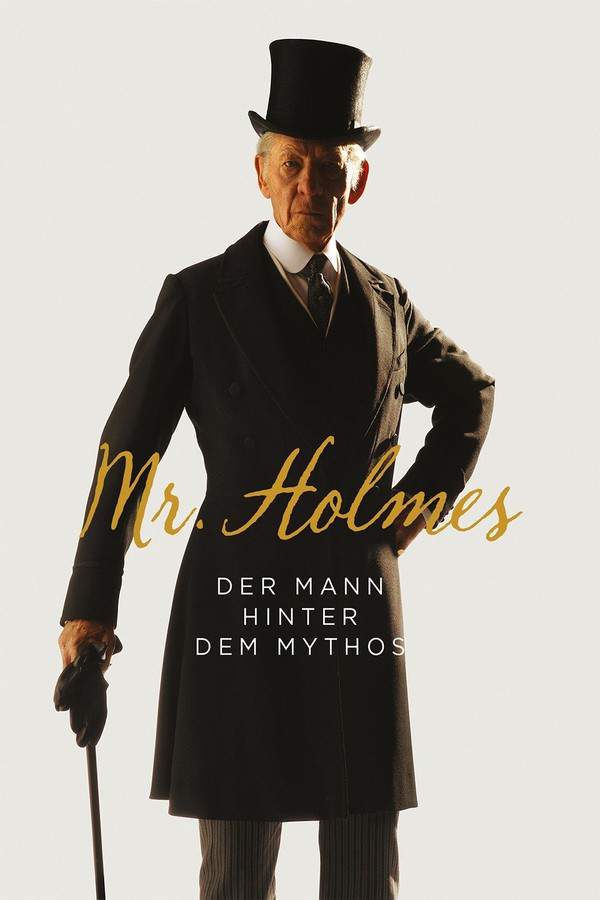
Mr. Holmes (2015) movie poster

Plot Summary

Mr. Holmes (2015) Plot Summary Explained

Release, runtime and language
2015 · 104 min · English
JustWatch #4,161 42
Directed by
Bill Condon
Starring
Hiroyuki Sanada, Ian McKellen, Laura Linney, Hattie Morahan

As an aging Sherlock Holmes (Ian McKellen) returns from a journey to Japan, he grapples with the lingering impact of the atomic bomb and seeks refuge in the quiet of the countryside. Accompanied by his devoted housekeeper and her inquisitive young son, Roger, Holmes finds himself increasingly preoccupied with an unsolved case from his past. As his mind begins to fail, he desperately seeks to unravel the mystery and confront life's most profound questions before his memories fade completely.

On this page (7)
  1. 1 Where to watch
  2. 2 What happens: full plot
  3. 3 Plot questions answered
  4. 4 Movie threads
  5. 5 Movies like Mr. Holmes
  6. 6 Categories
  7. 7 Every angle

Where to watch

Where to Watch Mr. Holmes (2015)

Where can you watch Mr. Holmes? Stream, rent or buy it in the US, including on fuboTV, Paramount Plus Essential and Paramount Plus Premium: current JustWatch availability with up-to-date prices.

Streaming availability powered by JustWatch

Full plot summary · contains spoilers

What Happens in Mr. Holmes: Full Plot Summary

The whole story of Mr. Holmes (2015) explained, from the opening scene to the final frame: every key event, every twist and what it all adds up to. Read it as a quick recap before the sequel, to check a scene you missed, or to finally understand what really happened.

In 1947, the once-renowned detective Sherlock Holmes, now 93 years old, resides in a tranquil farmhouse in Sussex alongside his widowed housekeeper, Mrs. Munro, and her young son Roger. Fresh from a journey to Hiroshima, Holmes has begun experimenting with a prickly ash plant he obtained to aid his declining memory. He is particularly troubled by the portrayal of his last case, The Adventure of the Dove Grey Glove, written by his former companion, Dr. Watson. Driven to pen his own narrative, he finds himself struggling to recollect the events.

Holmes gradually forms a bond with Roger, entrusting him with the care of the bees in the farmhouse's apiary. As they spend more time together, Holmes is enchanted by Roger's curiosity and mind, leading to a burgeoning paternal affection. Through their interactions, Roger’s inquisitiveness prompts Holmes to uncover memories of his past case, revealed in flashbacks that hint at a significant failure leading to his retirement from detective work.

The narrative shifts back nearly 30 years, to a time shortly after the First World War. Watson had married and moved from Baker Street, leaving Holmes to grapple with a case regarding Thomas Kelmot. Thomas sought Holmes’ help to understand why his wife, Ann—played by Laura Linney—had grown estranged after enduring two miscarriages. Holmes followed Ann through London and suspected her of plotting to murder her husband as he witnessed her forging cheques, purchasing poison, and planning her demise. However, Holmes discerned her true intentions: she aimed to secure gravestones for herself and her lost children, followed by her own suicide.

In their fateful meeting, Ann confided in Holmes, expressing a mutual sense of isolation. Though tempted to share the burden of loneliness, Holmes ultimately urged her to return to Thomas. Gratefully, Ann poured the poison onto the ground, yet tragically, in later news, Holmes discovered that Ann had ended her life under a train. Consumed by guilt, he withdrew from the world, spiraling into despair—the narrative adapted by Watson into a more uplifting tale.

The flashbacks continue with Holmes’ recent visit to Japan, where he encountered a man named Tamiki Umezaki. Initially perceived as an admirer, Umezaki confronted Holmes about his father's disappearance during a business trip to England, believing Holmes had influenced him to abandon his family. Disappointed by Holmes' cold response, Umezaki felt robbed of a connection he had always cherished.

Back in the present, Mrs. Munro grows increasingly frustrated with the demands of caring for Holmes, especially as he becomes more reliant on her assistance. Tension ensues between her and Roger, who harbors dreams beyond their modest life. When Mrs. Munro secures employment at a hotel in Portsmouth, Roger dreads the idea of leaving Holmes behind. One day, Holmes discovers Roger unconscious after a reckless encounter with wasps in the garden while attempting to protect the apiary. The incident leads to Mrs. Munro blaming Holmes for being self-centered. However, they work together to resolve the issue and rush Roger to the hospital, where he begins to recover.

Amidst this, Holmes confesses to Mrs. Munro that he was too scared and self-involved to offer Ann the comfort she craved, expressing a desire for her and Roger to remain a part of his life. He assures them they will inherit his estate upon his passing. Following this momentous revelation, Holmes composes a letter to Umezaki, portraying his father in a noble light as a man who valiantly served the British Empire. As Roger helps teach his mother the art of beekeeping, Holmes finds solace in enacting a legacy reminiscent of his experience in Hiroshima—creating a stone circle to remember those he has lost throughout the years.
Last updated: November 09, 2024 at 11:22

Was this helpful?

Plot questions answered

Mr. Holmes Plot Explained: Your Questions Answered

The questions people ask most about Mr. Holmes (2015): what happens in the confusing scenes, why the characters do what they do, the twists, hidden details and what the ending means. Each answer contains spoilers.

Q1

Why did Sherlock Holmes retire from detective work?

Holmes retired because of a devastating failure in his last case involving Ann Kelmot. After he urged her to return to her husband, she committed suicide under a train. Consumed by guilt over his inability to help her, Holmes withdrew from the world and abandoned detective work, retreating into isolation.

  • retirement
  • ann kelmot
  • suicide
  • guilt
  • case failure
Q2

Why is Holmes upset about Dr. Watson's book about his last case?

Watson wrote 'The Adventure of the Dove Grey Glove', portraying the case with a more uplifting narrative. Holmes is distressed because the book falsely depicts the outcome as positive, erasing the tragic reality of Ann's suicide. This misrepresentation forces Holmes to confront his failed attempt to save her.

  • dr watson
  • dove grey glove
  • book
  • memory
  • last case
Q3

Why did Ann Kelmot want to end her life?

Ann was devastated after suffering two miscarriages, which left her emotionally shattered and estranged from her husband Thomas. She forged cheques to purchase poison and planned to take her own life, wanting gravestones for herself and her lost children before dying.

  • ann kelmot
  • miscarriage
  • suicide
  • poison
  • gravestones
Q4

What was Holmes's mistake in handling Ann Kelmot's case?

Although Holmes correctly deduced Ann's true intention was suicide rather than murdering her husband, he failed to offer her the personal comfort she desperately needed. When Ann confessed her loneliness and despair, Holmes urged her to return to Thomas instead of sharing her burden, a decision he later deeply regretted.

  • mistake
  • comfort
  • ann kelmot
  • loneliness
  • regret
Q5

Why did Holmes travel to Hiroshima?

Holmes visited Hiroshima shortly before the film takes place in 1947. He was there to participate in an experiment involving a prickly ash plant, which he hoped would help improve his declining memory. The trip also exposed him to the aftermath of the atomic bomb, deepening his reflections on loss and mortality.

  • hiroshima
  • prickly ash
  • memory
  • experiment
  • 1947
Q6

Who was the Japanese man who confronted Holmes and why?

The man was Tamiki Umezaki, who approached Holmes in Japan believing his father had disappeared during a business trip to England. Umezaki thought Holmes had somehow influenced his father to abandon his family. Holmes's cold response disappointed Umezaki, who had hoped for a meaningful connection.

  • tamiki umezaki
  • japan
  • father
  • confrontation
  • disappearance
Q7

Why does Holmes teach Roger about beekeeping?

Holmes develops a paternal affection for young Roger and wants to create a meaningful legacy. By entrusting Roger with caring for the bees in the farmhouse apiary, Holmes passes on knowledge and purpose, forming a bond that helps both of them heal from their respective losses and loneliness.

  • roger
  • bees
  • beekeeping
  • legacy
  • bonding
  • father figure
Q8

What does the stone circle Holmes creates represent?

The stone circle serves as a memorial to everyone Holmes has lost throughout his life, particularly Ann Kelmot. The act parallels his experience in Hiroshima, where he witnessed the need to remember those who perished. It represents his attempt to find peace and honor the dead while coming to terms with his own mortality.

  • stone circle
  • memorial
  • hiroshima
  • loss
  • remembrance
Q9

Why does Holmes leave his estate to Mrs. Munro and Roger?

Holmes confesses to Mrs. Munro that he was too scared and self-involved to offer Ann the comfort she needed. Seeking redemption, he wishes to ensure Mrs. Munro and Roger have a permanent home and future by leaving them his estate, creating a new family connection before his memories fade completely.

  • estate
  • inheritance
  • mrs munro
  • roger
  • family
  • redemption
Q10

What happened when Roger got stung by wasps?

Roger was injured while attempting to protect the apiary from wasps to help Holmes. He was stung multiple times and collapsed unconscious in the garden. The incident caused tension between Mrs. Munro and Holmes, who she blamed for being self-centered, but they worked together to get Roger to the hospital where he recovered.

  • roger
  • wasps
  • sting
  • accident
  • hospital
  • apiary

Movie threads

More Movies Like Mr. Holmes, by Mood & Story

Curated lists built around what makes Mr. Holmes tick: the same mood, the same kind of story or the same emotional payoff. Each list explains why these movies belong together.

Movies about aging and memory like Mr. Holmes

Quiet reflections on memory, legacy, and the slow fade of a brilliant mind. If you appreciated the quiet, melancholic reflection on memory and legacy in Mr. Holmes, explore these similar films. This collection features thoughtful dramas and character studies that delve into the experiences of aging protagonists confronting their past and the fragility of their own minds.

  • melancholic
  • reflective
  • quiet
  • lonely
  • nostalgic
  • pensive
  • Tone: melancholic, reflective, bittersweet
  • Pacing: slow, deliberate, contemplative
Why these movies?

The story pattern: Stories in this thread often center on an elderly protagonist looking back on their life, confronting past regrets or a specific unsolved mystery. The narrative may be non-linear, weaving together present-day struggles with memories, emphasizing the subjective and fading nature of recollection. The primary conflict is internal, a race against time and a declining mind to find closure or understanding.

Why they belong together: These movies are grouped together because they share a gentle, melancholic tone, a slow, contemplative pace, and a deep thematic focus on aging, dementia, and the meaning of a life's work. They prioritize emotional resonance and character depth over plot-driven action.

Mystery movies with a final case like Mr. Holmes

A weary investigator confronts a haunting past case for one last shot at redemption. For viewers who enjoyed the personal, reflective mystery at the heart of Mr. Holmes, this selection features similar detective stories. These films focus on a seasoned investigator grappling with a haunting unsolved case from their past, where solving the mystery means confronting their own personal demons and regrets.

  • pensive
  • nostalgic
  • lonely
  • reflective
  • somber
  • redemptive
  • Tone: melancholic, introspective, bittersweet
  • Pacing: slow to steady, character-driven
Why these movies?

The story pattern: The narrative follows a seasoned detective who is pulled back into an old, emotionally charged case. The investigation becomes a journey of personal reckoning, often revealing the detective's own flaws or failures. The plot intertwines the procedural elements with a profound character arc, leading to a resolution that provides emotional closure more than a simple victory.

Why they belong together: Movies fit this thread due to their unique blend of the mystery genre with a deeply personal, character-driven narrative. They share a slower pace, a melancholic or bittersweet tone, and a focus on themes like regret, redemption, and the personal cost of a life dedicated to solving puzzles.

If you liked this

Movies Like Mr. Holmes

Similar movies to Mr. Holmes: the same genre, themes or kind of story. Each one comes with its own plot summary, timeline and ending explained.

Browse all movie summaries

Categories

Movie Lists Featuring Mr. Holmes

Mr. Holmes appears in these hand-built movie categories. Each one groups movies by a specific mood, theme or story type, with their plot summaries and endings explained.

View all movie categories

Every angle

Mr. Holmes (2015) Explained: Plot, Timeline & Characters

Everything about Mr. Holmes in one place: what happens in the plot summary, the timeline in chronological order, the characters and meaning and a spoiler-free summary. What's After the Movie adds the cast, box office and post-credit scenes.

Coming soon on iOS and Android

The Plot Explained Movie Summary App

Plot summaries, endings explained and timelines on your phone. Catch up on any movie in minutes, save your favorites and never miss a twist again.

Be the first to know when we launch. Your email stays private, always.

Learn more about the app