Plot Explained Spoilers guaranteed!
Plot Explained

Browse by genre

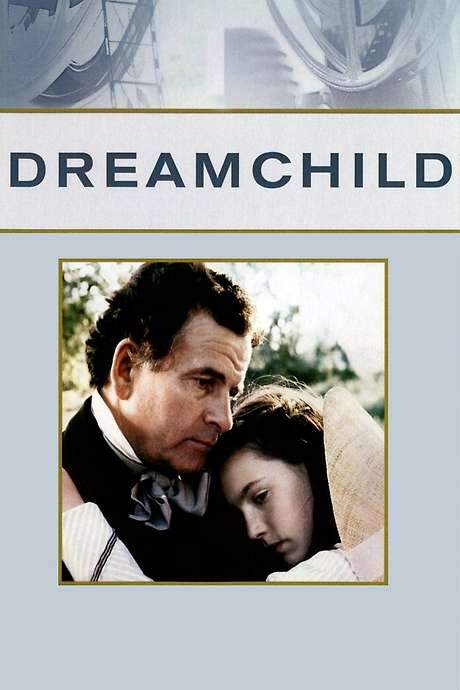
Dreamchild (1985) movie poster

Timeline

Dreamchild (1985) Timeline Explained – Every Event in Order

Release, runtime and language
1985 · 94 mins · English
Loading streaming availability…
Directed by
Gavin Millar
Starring
Julie Walters, Ian Holm, Coral Browne, Sam Douglas, Peter Gallagher, James Wilby

He loved the child we will never forget… Eighty‑year‑old Alice Hargreaves travels to Columbia University for a reception honoring Lewis Carroll. As a child she shared a close friendship with the writer, inspiring his most famous work. Now she reflects on that bond, recognizing its lingering, complex emotional impact.

On this page (6)
  1. 1 Where to watch
  2. 2 Events in order (12)
  3. 3 Timeline questions answered
  4. 4 Movie threads
  5. 5 Movies like Dreamchild
  6. 6 Every angle
Loading streaming availability…

12 events in order · contains spoilers

Dreamchild Timeline: Events in Chronological Order

Every key event of Dreamchild (1985) in order, scene by scene, with when and where it takes place. Use it to untangle flashbacks, time jumps and parallel storylines, to refresh your memory before the sequel or to find the exact scene you are thinking of.

  1. Disembarkation chaos and new alliance

    As Alice and Lucy step ashore, they are mobbed by journalists seeking a splashy quote about Mr. Dodgson. Jack Dolan intervenes, offering help and guiding their press coverage. The encounter begins a tense, purposeful negotiation with fame.

    When
    present day
    Where
    Ship/Shore
  2. Dolan becomes agent and sparks romance

    Dolan quickly becomes her agent, lining up endorsement opportunities and steering media narratives. He and Lucy grow closer amid the pressure, while Alice remains wary of the spotlight. A quiet romantic current forms between Jack and Lucy as the stories unfold.

    When
    present day
    Where
    Hotel and press events
  3. Alice's hotel room hallucination begins

    Alone in their hotel room, Alice hallucinates Dodgson and the Wonderland characters appearing in the room with her. They mock her aging and forgetfulness, mixing memory with fear and longing. The surreal visit deepens her internal struggle over their past relationship.

    When
    that night
    Where
    Hotel room
  4. Tea party with Dodgson and Wonderland figures

    During the fantasy, she joins the tea party where Dodgson and the Wonderland figures tease her for aging and memory lapses. The scene juxtaposes childish fantasy with the ache of aging and hints at buried tensions. It foreshadows the complexities of their history.

    When
    that night
    Where
    Hotel room (fantasy tea party)
  5. 1862 boating party flashback

    The film cuts to the lazy boating party of July 4, 1862, where Dodgson, then a mathematics professor at her father's college, entertains Alice and her sisters with a whimsical tale that grows into Alice's Adventures in Wonderland. This memory anchors the origins of their bond. It also lays the groundwork for possible, uneasy overtones in their relationship.

    When
    July 4, 1862
    Where
    River boat
  6. Insinuation of Dodgson's infatuation

    Through further flashbacks, the film insinuates Dodgson harbored romantic feelings for Alice, suggesting an undercurrent beyond mentorship. The memory blends adoration with possessiveness, complicating the idea of him as a purely benevolent guide. These scenes blur the lines between guardian and admirer.

    When
    1862 (memory)
    Where
    Memory/flashback sequences
  7. Dodgson's jealousy as Alice meets her future husband

    Alice realizes Dodgson's jealousy when she meets the man who would become her husband, challenging his sense of possession. She recalls his uneasy reactions and the way he guarded his place in her life. The moment reframes the dynamic from mentorship to a power struggle.

    When
    1862
    Where
    Memory
  8. Alice toys with Dodgson's affections

    She recalls deliberately baiting his affections to provoke his nervous stutter, a revelation that complicates the late-19th-century dynamic of mentor and muse. The memory exposes a game-like tension beneath their interactions. It reframes Dodgson not just as a mentor, but as someone vulnerable to her tests.

    When
    1862
    Where
    Memory
  9. Present-day self-reflection and understanding

    Back in the present, Alice wrestles with her past, trying to understand what actually happened and what she wanted from Dodgson. She weighs memory against truth and questions how much of her story is shaped by nostalgia. The introspection lays the groundwork for choosing her path forward.

    Where
    Present day, in her mind
  10. Columbia University acceptance speech

    Delivering her acceptance speech at Columbia University, she begins to acknowledge Dodgson's role and the complexity of their relationship. The moment marks a turning point where she resolves to own her story rather than be defined by it. Emotions mix with resolve as she moves toward closure.

    When
    present day
    Where
    Columbia University
  11. Final forgiveness fantasy

    In a closing fantasy with the Mock Turtle and Gryphon, Alice and Dodgson forgive one another and find peace. The sequence reframes their history as something that can be reconciled in memory. It hints at healing rather than erasure and suggests resolution through imagination.

    When
    end of film
    Where
    Imaginary tea party
  12. Resolution and moving forward

    The film closes with Alice embracing her life with new clarity, supported by Lucy and Dolan, ready to move forward. Her past remains a mosaic rather than a verdict, shaping how she steps into the future. She carries the memory as insight, not guilt or shame.

    Where
    Present day

Last updated: October 14, 2025 at 04:07

Was this helpful?

Timeline questions answered

Dreamchild Timeline Explained: Your Questions Answered

When does it happen, and why in that order? The questions people ask about the chronology of Dreamchild (1985): time jumps, flashbacks, cause and effect between scenes and the correct order of events, each answered with spoilers.

Q1

Why does Alice see Dodgson and the Wonderland characters in her hotel room?

The surreal appearances are not literal hallucinations but visual representations of Alice's inner thoughts and memories. As an elderly woman reflecting on her past, she conjures Dodgson and the fantastical figures from her childhood to process the complex emotions surrounding their relationship. The Wonderland characters mock her aging and forgetfulness, symbolizing her internal struggle with how she wants to remember versus how things actually happened.

Foreshadowing: The opening chaos of reporters and the pressure of reliving her past create the psychological conditions for these dreamlike visitations.

  • Alice Hargreaves
  • Lewis Carroll
  • Wonderland characters
  • hallucination
  • memory
  • hotel room scene
Q2

What did Alice realize about her relationship with Dodgson?

Alice comes to understand that their relationship was more complicated than simple mentorship or childhood friendship. Through flashbacks, she recognizes that Dodgson harbored romantic feelings toward her that extended beyond appropriate boundaries. Simultaneously, she acknowledges her own role in their dynamic, she deliberately baited his affections to provoke his nervous stutter, revealing a power struggle beneath the surface.

Foreshadowing: The early tea party scene hints at tension and unresolved feelings between them.

  • Alice Dodgson relationship
  • realization
  • power dynamics
  • mentorship
  • childhood memories
Q3

Why did Alice toy with Dodgson's affections?

In her 1862 memories, Alice recalls deliberately provoking Dodgson's feelings as a kind of game or test. She wanted to see how much control she had over him and enjoyed the attention, even though she didn't reciprocate his romantic interest. This revelation complicates the traditional narrative of Dodgson as the sole aggressor, showing Alice as an active participant in their complicated dynamic.

Foreshadowing: The film hints at this playful-but-manipulative dynamic early in the flashback sequences.

  • Alice teasing Dodgson
  • power play
  • childhood interactions
  • nervous stutter
Q4

What is the significance of the July 4, 1862 boating party?

The boating party is the foundational memory where Dodgson first told the whimsical story that would become Alice's Adventures in Wonderland. This memory represents the origin of their bond and the creative spark behind one of literature's most famous works. The film uses this scene to establish both the magic and the underlying tension of their relationship.

Foreshadowing: This flashback is introduced early and echoes throughout the film as the touchstone of their connection.

  • boating party
  • July 4 1862
  • Alice Adventures in Wonderland
  • origin story
  • Lewis Carroll
Q5

Why does Alice feel conflicted about Dodgson?

Alice struggles with conflicting emotions: gratitude for the inspiration and attention she received as a child, awareness of the inappropriate nature of his adult fascination with her, and recognition of her own complicity in their dynamic. She must reconcile the man who created magical stories for her with the man whose feelings may have crossed ethical boundaries.

Foreshadowing: The dream tea party scenes repeatedly surface this tension between warmth and discomfort.

  • Alice conflict
  • gratitude
  • resentment
  • memory vs truth
  • past relationship
Q6

What happens in the final fantasy sequence with the Mock Turtle and Gryphon?

In the closing scene, Alice participates in a final dreamlike tea party with the Mock Turtle and Gryphon where she and Dodgson achieve reconciliation and forgiveness. This sequence represents her internal resolution, she chooses to accept the complexity of their history without either condemning or endorsing it, finding peace by telling her own story on her own terms.

Foreshadowing: Earlier tea party scenes build toward this moment of emotional closure.

  • Mock Turtle
  • Gryphon
  • forgiveness
  • reconciliation
  • ending
  • peace
  • closure
Q7

What is Jack Dolan's role in the present-day story?

Jack Dolan is a former journalist who becomes Alice's media advisor and practical helper during the chaos of her unexpected fame. He intervenes when reporters mob Alice and Lucy, eventually becoming her agent to manage endorsement opportunities. His presence provides a grounding, realistic counterpoint to the surreal dream sequences, and he develops a romantic relationship with Lucy.

Foreshadowing: Jack's introduction during the disembarkation chaos establishes him as a practical protector.

  • Jack Dolan
  • agent
  • media
  • Lucy romance
  • present day story
Q8

Why does Alice deliver a speech at Columbia University?

Alice travels to Columbia University to accept an honor recognizing her connection to Lewis Carroll. Her speech marks a turning point where she chooses to acknowledge the complexity of her relationship with Dodgson rather than simply accepting the romanticized version of their history. She begins to own her story publicly.

Foreshadowing: This moment follows her internal journey of reflection and self-examination.

  • Columbia University
  • acceptance speech
  • public acknowledgment
  • closure
  • Lewis Carroll tribute
Q9

What does the film suggest about Dodgson's true feelings for Alice?

The film strongly implies that Dodgson's fascination with Alice extended beyond a teacher's interest in a bright student. Through flashbacks and memory sequences, it suggests romantic possessiveness and jealousy, particularly when Alice meets her future husband. The film doesn't provide explicit confirmation but creates an unsettling undercurrent about the appropriateness of his attention.

Foreshadowing: The boating party flashback establishes the intensity of his attachment from the start.

  • Dodgson romantic feelings
  • jealousy
  • obsession
  • mentor or admirer
  • Alice Liddell
Q10

How does Alice find peace with her past?

Alice achieves peace not by reaching a clear verdict on Dodgson but by accepting the complexity of their relationship. She acknowledges both the wonder of the stories he created for her and the troubling aspects of his attention. By telling her own version of events at Columbia and in her final dream conversation, she regains control of her narrative.

Foreshadowing: Her journey through memory and dream sequences gradually builds toward this acceptance.

  • peace
  • acceptance
  • resolution
  • reconciliation
  • moving forward
  • closure

Movie threads

More Movies Like Dreamchild, by Mood & Story

Curated lists built around what makes Dreamchild tick: the same mood, the same kind of story or the same emotional payoff. Each list explains why these movies belong together.

Movies about elderly reflections like Dreamchild

Stories where elderly protagonists revisit the ghosts of their youth. If you liked the reflective journey in Dreamchild, explore more movies about elderly protagonists revisiting their past. These films share a melancholic, quiet tone and use memory to explore themes of aging, legacy, and reconciliation, offering similar contemplative experiences.

  • reflective
  • melancholic
  • nostalgic
  • quiet
  • haunting
  • contemplative
  • Tone: melancholic, reflective
  • Pacing: slow, contemplative
Why these movies?

The story pattern: Narratives in this thread typically juxtapose a quiet present with a turbulent or significant past, often through flashbacks or surreal dream sequences. The central conflict is internal, as the protagonist grapples with long-buried emotions and re-evaluates pivotal relationships from their younger years, leading toward a nuanced understanding or bittersweet peace.

Why they belong together: Movies are grouped here for their shared focus on an elderly protagonist's internal journey, their melancholic and reflective tone, and their use of memory as a narrative device to explore the weight of the past on the present.


Dreamlike memory movies similar to Dreamchild

Films where the line between memory, dream, and reality blurs. Find films with a dreamlike atmosphere like Dreamchild. These movies use surreal visuals and a non-linear structure to delve into memory and psychology, creating a similar haunting, introspective, and melancholic viewing experience for fans of quirky, surreal storytelling.

  • dreamlike
  • surreal
  • haunting
  • psychological
  • introspective
  • atmospheric
  • Tone: haunting, melancholic
  • Pacing: slow, atmospheric
Why these movies?

The story pattern: The narrative pattern involves a character, often in a state of reflection or crisis, whose perception of reality becomes fluid. Past events are revisited not as straightforward flashbacks but as symbolic, distorted dreamscapes. The plot is secondary to the emotional and thematic exploration of how we remember and are shaped by our history.

Why they belong together: These films are connected by their dreamlike, surreal aesthetic, their focus on memory as a central theme, and their moderate narrative complexity that blends reality with fantasy to create a specific, introspective mood.

If you liked this

Movies Like Dreamchild

Similar movies to Dreamchild: the same genre, themes or kind of story. Each one comes with its own plot summary, timeline and ending explained.

Browse all movie summaries

Every angle

Dreamchild (1985) Explained: Plot, Timeline & Characters

Everything about Dreamchild in one place: what happens in the plot summary, the timeline in chronological order, the characters and meaning and a spoiler-free summary. What's After the Movie adds the cast, box office and post-credit scenes.

Coming soon on iOS and Android

The Plot Explained Movie Summary App

Plot summaries, endings explained and timelines on your phone. Catch up on any movie in minutes, save your favorites and never miss a twist again.

Be the first to know when we launch. Your email stays private, always.

Learn more about the app