Plot Explained Spoilers guaranteed!
Plot Explained

Browse by genre

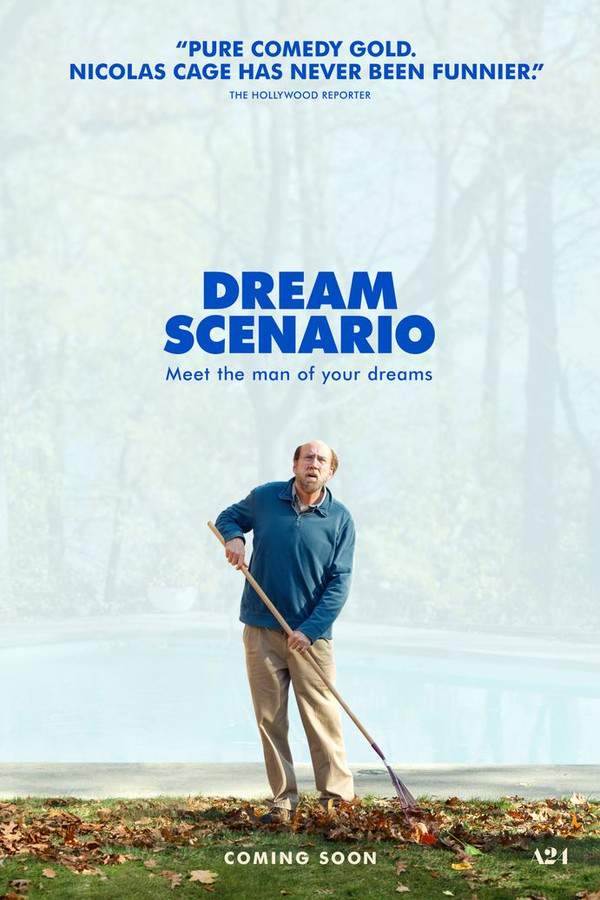
Dream Scenario (2023) movie poster

Ending Explained

Dream Scenario (2023) Ending Explained – Final Scene & Meaning

Release, runtime and language
2023 · 1 h 42 m · English
Echo score 68
Loading streaming availability…
Directed by
Kristoffer Borgli
Starring
Nicolas Cage, Julianne Nicholson, Dylan Baker, Maev Beaty, Paula Boudreau, Star Slade
Budget
$10M

A hapless everyman named Paul Matthews finds his life upended when he unexpectedly begins appearing in the dreams of millions of people. This darkly comedic and unsettling film follows Paul as he grapples with the surreal consequences of becoming an unwitting celebrity in the subconscious of the masses. As his appearances take a bizarre and increasingly disturbing turn, he must confront the strange phenomenon and its impact on his life and those around him.

On this page (7)
  1. 1 Where to watch
  2. 2 What happens at the end
  3. 3 Final events in order
  4. 4 Ending questions answered
  5. 5 Movie threads
  6. 6 Movies like Dream Scenario
  7. 7 Every angle
Loading streaming availability…

Ending explained · contains spoilers

What Happens at the End of Dream Scenario?

How Dream Scenario (2023) ends, what the final scene means, which earlier moments set it up and how to read the ending if the film leaves it open. The full ending explained, with every spoiler.

In the end, Paul’s life is utterly shattered by the mysterious and uncontrollable phenomenon where strangers suddenly start dreaming about him. What began as a curious viral sensation quickly spirals out of control, leaving him isolated and vilified. As people’s dreams transform, he shifts from being a passive observer to a violent, monstrous figure in his own subconscious, reflecting his inner turmoil and regret. His attempts to regain respect, publish his research, or salvage his family only lead to further alienation and chaos. His reputation is destroyed, and he becomes a pariah, lashed out at by society and even physically attacked. The culmination of his nightmare occurs during a tragic, uncontrollable outburst at his daughter’s school event, which ends with him hurting someone and facing the harsh realities of cancel culture—where accusations and judgments are made instantly, often without understanding the full story. Ultimately, Paul separates from his family, retreats from public life, and although he writes a book about his ordeal titled “I Am Your Nightmare,” he is haunted by the loss of his personal life and the chaos he unintentionally caused. The film ends with Paul in solitude, finding solace in dreams where he can still hold onto his wife, away from the chaos of reality — a bittersweet reminder that, in the world of dreams and subconscious fears, some things are impossible to control or escape.

Last updated: June 25, 2025 at 08:44

Was this helpful?

The last 4 events

How Dream Scenario Ends: The Final Events in Order

The last events of Dream Scenario (2023) in chronological order, the run-up to the ending explained above. The complete timeline has all 15 events, scene by scene.

Open the full timeline
  1. Personal Turmoil and Consideration for Divorce

    The impact of these events leads Paul to contemplate divorce from Janet as he struggles with unacknowledged feelings and the breakdown of his family. Meanwhile, Sophie feels caught between her parents, creating a poignant family dynamic rife with tension and confusion.

  2. Innovative Dream Traversal Technology

    As Paul attempts to regain control of his narrative, he shifts focus towards his groundbreaking work on dream traversal technology. However, this innovation faces scrutiny from the public, especially from social media influencers who exploit his ideas, complicating his quest for redemption.

  3. Dynamic Book Launch Mishap

    Paul’s attempts to write his autobiography in France culminate in publishing frustrations, including a disastrous book launch event where a light fixture unexpectedly collapses on him. This misfortune reflects the ongoing chaos in his life, symbolizing the broader themes of miscommunication and turmoil.

    Where
    Bookstore
  4. A Surreal Rescue in Dreamscape

    With renewed determination, Paul activates the dream-travel device, desperate to connect with Janet in her dream. Dressed in the oversized suit from her visions, he traverses surreal landscapes, culminating in a poignant moment where he expresses to her, 'I wish this were reality,' conveying deep emotional resonance.

    Where
    Janet's Dream

Ending questions answered

Dream Scenario Ending: Your Questions Answered

The questions people ask most about the ending of Dream Scenario (2023): what the final scene means, how the twist works, what happens to each character and how to read the ending. Each answer contains spoilers.

Q1

Why does Paul become violent in other people's dreams?

Paul's dream appearances transform from neutral to violent as his mental state deteriorates. The violence in the dreams reflects his inner turmoil, frustration, and sense of powerlessness. As his waking life unravels, losing his job, facing public humiliation, and watching his family drift away, his subconscious manifests these negative emotions into the violent scenarios that populate other people's dreams. The more his life falls apart, the more monstrous he becomes in the dreamscape.

Foreshadowing: Earlier dreams show Paul in mundane situations, but as the phenomenon escalates, the tone shifts dramatically toward aggression and threat.

  • paul matthews
  • dream violence
  • subconscious
  • psychological transformation
  • dream invasion
Q2

What happens at Paul's daughter's school event?

The school event marks Paul's breaking point. During a school presentation, Paul experiences a public outburst that spirals out of control. The exact details are not fully specified in the ending text, but it results in him physically hurting someone. This incident represents the culmination of all his accumulated stress and public humiliation, and it directly leads to his family completely severing ties with him. The event becomes the final nail in coffin for his public reputation.

Foreshadowing: Paul's escalating frustration and inability to control the dream phenomenon build toward an inevitable violent release.

  • school event
  • public outburst
  • family separation
  • breaking point
  • violence
Q3

Does Paul end up with his wife at the end?

Paul does not reconcile with his wife in reality. His marriage ends, and he separates from his family. However, the film ends with Paul finding a form of connection with his wife in the dream world, a bittersweet moment where he can hold her again. This is explicitly framed as a fantasy or dream sequence, not reality. The answer makes clear that in waking life, he remains alone, having lost his family permanently.

Foreshadowing: The dream sequences throughout the film establish that Paul's subconscious can construct scenarios where he interacts with his wife in ways reality no longer allows.

  • wife
  • marriage
  • family
  • separation
  • dream sequence
  • reality vs dreams
Q4

What does the final dream scene mean?

The final dream scene represents Paul's only remaining source of comfort after losing everything. In the dream, he can still hold his wife, something impossible in his fractured reality. This ending is deliberately ambiguous in its meaning, it could be interpreted as Paul's mind escaping into fantasy to cope with isolation, or simply as a poignant illustration of how the dream phenomenon continues to dominate his life even after his public downfall. The film frames it as bittersweet precisely because it is explicitly not real.

Foreshadowing: Earlier dreams where Paul appears to his wife show their emotional connection, which makes the final dream both comforting and tragic.

  • final scene
  • dream sequence
  • isolation
  • coping mechanism
  • bittersweet ending
Q5

Why does Paul become a pariah in the story?

Paul becomes a pariah because the public perception of him shifts dramatically as the dream content becomes darker and more violent. People who previously found him fascinating or curious begin fearing and hating him. The film critiques "cancel culture" by showing how accusations and judgments spread instantly without understanding the full story. Paul is attacked physically and socially, losing his job, his friends, and eventually his family, all because he cannot control what people dreamforeshadowing about him.

  • cancel culture
  • public perception
  • social media
  • pariah
  • villification
  • reputation
Q6

What happens to Paul at the end of Dream Scenario?

At the end, Paul is completely isolated, having lost his wife, daughter, and social standing. He writes a book titled "I Am Your Nightmare" about his experience but retreats from public life entirely. The film concludes with him alone, finding brief comfort only in dreams where he can reconnect with his wife. His life is permanently shattered by the uncontrollable phenomenon that started as a curious viral sensation.

Foreshadowing: The film builds steadily toward isolation, with each attempt Paul makes to fix his situation making things worse.

  • paul matthews
  • ending
  • isolation
  • book
  • nightmare
  • solitude
Q7

Is the ending real or is Paul imagining everything?

The ending operates on two levels: the reality of Paul's shattered life is unambiguous, he has lost his family, his career, and his reputation. However, the final moment where he holds his wife in a dream is explicitly framed as a dream, not reality. The film distinguishes clearly between the waking world (where Paul is alone and ruined) and the dream world (where he can still connect with his wife). The bittersweet tone comes from this contrast between the harsh reality and the comforting fantasy.

Foreshadowing: The entire film blurs lines between Paul's dreams and reality, making the final distinction between the two especially significant.

  • reality vs dreams
  • ambiguous ending
  • fantasy
  • psychological
  • interpretation
Q8

Why can't Paul control the dreams people have about him?

Paul has no control over the dreams whatsoever. The central horror of the film is that he is an unwitting passenger in millions of people's subconscious minds. He cannot influence what people dream, cannot choose who dreams about him, and cannot stop the phenomenon once it begins. As people's perceptions of him shift from curiosity to fear, the dream content changes accordingly, but this reflects the dreamers' psychology, not Paul's intentions.

Foreshadowing: Early in the film, Paul discovers the dreams passively, realizing he appears without any ability to direct the content.

  • control
  • dreams
  • powerless
  • phenomenon
  • subconscious
  • invasion
Q9

What is the film's message about cancel culture?

The film offers a critical look at cancel culture by showing how quickly public opinion turns against Paul based on fear and misunderstanding. People judge him without understanding the full story, he cannot defend himself against accusations made in the realm of dreams, which he does not control. The film suggests that modern public judgment is instant and often unfair, especially when the subject cannot respond to or clarify the nature of the accusations.

Foreshadowing: Paul's attempts to publish his research or explain his situation all fail, underscoring his powerlessness against public perception.

  • cancel culture
  • public judgment
  • social media
  • accusations
  • reputation
  • unfair
Q10

What does the book title "I Am Your Nightmare" mean?

The book Paul writes, "I Am Your Nightmare," represents his final attempt to reclaim his narrative after becoming an unwilling figure of fear in the collective subconscious. The title is ironic because it acknowledges the role he came to play in people's dreams, becoming a monster in their nightmares, while also suggesting he is the nightmare of modern celebrity culture: someone who became famous for something entirely beyond their control.

Foreshadowing: The transformation of Paul's dream persona from neutral to monstrous directly sets up this title's meaning.

  • book
  • title
  • nightmare
  • fame
  • celebrity
  • narrative control

Movie threads

More Movies Like Dream Scenario, by Mood & Story

Curated lists built around what makes Dream Scenario tick: the same mood, the same kind of story or the same emotional payoff. Each list explains why these movies belong together.

Movies where ordinary lives become surreal nightmares like Dream Scenario

Stories where an ordinary person's life is upended by bizarre public scrutiny. If you enjoyed the blend of absurd fame and personal collapse in Dream Scenario, this thread features movies like it. These films explore similar narratives of surreal public shaming, identity crises triggered by bizarre phenomena, and the dark comedy of modern celebrity culture.

  • surreal
  • unsettling
  • satirical
  • anxious
  • absurd
  • isolating
  • Tone: dark, satirical, unsettling
  • Pacing: steady, escalating
Why these movies?

The story pattern: This narrative pattern typically begins with a mundane protagonist who becomes the center of an inexplicable and surreal public event. Their life swiftly escalates from normalcy into a waking nightmare, as public perception twists into hostility, leading to professional ruin, personal isolation, and a profound identity crisis.

Why they belong together: Movies in this thread are grouped by their shared exploration of the surreal intersection between private life and public spectacle. They feature a steady, escalating pace of dread, a darkly satirical tone, and a heavy emotional weight centered on themes of alienation and the psychological toll of fame.

Anxious dark comedies with psychological themes like Dream Scenario

Films that blend cringe humor with deep-seated psychological unease. For viewers who liked the anxious, surreal humor and psychological distress of Dream Scenario. This collection highlights similar dark comedies where the comedy stems from cringe-worthy situations, existential angst, and the slow unraveling of a protagonist's mental state.

  • anxious
  • unsettling
  • cringe comedy
  • absurd
  • existential
  • psychological
  • Tone: dark, anxious, bittersweet
  • Pacing: steady, building tension
Why these movies?

The story pattern: Stories in this thread often follow a protagonist grappling with a personal or existential crisis, navigated through a lens of awkward, satirical, or absurd humor. The comedy serves not to relieve the tension but to heighten the underlying anxiety, leading to a climax that is emotionally heavy and often bittersweet.

Why they belong together: These movies are united by their specific tonal blend: a dark comedic sensibility underpinned by a high level of psychological tension and anxiety. They share a steady pacing that builds unease, a high emotional intensity, and a focus on the absurdity of modern life and personal collapse.

If you liked this

Movies Like Dream Scenario

Similar movies to Dream Scenario: the same genre, themes or kind of story. Each one comes with its own plot summary, timeline and ending explained.

Browse all movie summaries

Every angle

Dream Scenario (2023) Explained: Plot, Ending, Timeline & Characters

Everything about Dream Scenario in one place: what happens in the plot summary, the timeline in chronological order, the characters and meaning, the ending explained and a spoiler-free summary. What's After the Movie adds the cast, box office and post-credit scenes.

Coming soon on iOS and Android

The Plot Explained Movie Summary App

Plot summaries, endings explained and timelines on your phone. Catch up on any movie in minutes, save your favorites and never miss a twist again.

Be the first to know when we launch. Your email stays private, always.

Learn more about the app