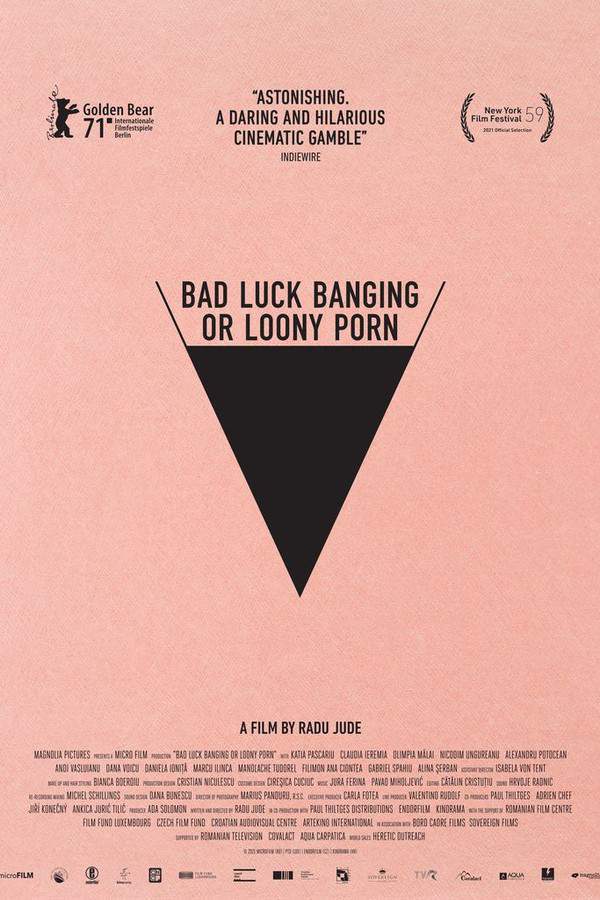
Emi Cilibiu, portrayed by Katia Pascariu, is a dedicated history teacher working at a prestigious high school in Romania. Her life takes a dramatic turn when she and her husband, Eugen, decide to film an intimate moment that is intended to be private. However, after Eugen uploads this intimate video to a fetish site, it quickly spirals out of control as it is downloaded and disseminated across various public pornographic websites. The fallout from this shocking exposure lands Emi in a world of scrutiny as both the school staff and the parents of her students become outraged by her actions. Consequently, they summon her to a contentious parent-teacher conference scheduled one evening shortly after the video goes viral.
As the day of the conference approaches, Emi navigates a series of errands, all while grappling with the mounting frustration she feels over the pervasive sexism, nationalism, and consumerism that permeate Romanian society. The ongoing COVID-19 pandemic adds to her discontent, intensifying her sense of alienation. The film intersperses her narrative with a compelling montage that showcases the director's insightful commentary on various subjects tied to the overarching themes of the story. In this montage, some segments spark laughter, such as a modified traditional Romanian folk dance designed for social distancing, while others take a darker tone. It juxtaposes the lessons of significant historical events, like the French and Romanian Revolutions, with pertinent images that highlight commercialization, betraying a biting critique of contemporary culture.
When Emi arrives at the meeting, she faces the unsettling reality that her fate at the school is at stake. A compassionate administrator informs her that the parents and faculty will vote on whether her employment should continue, accusing her of a "moral transgression." If the majority votes against her, she will be compelled to resign. Among the assembled parents, there are divisive figures such as a retired army lieutenant, a fascist-leaning jet pilot, a socially conservative priest, and a seemingly supportive "nice guy" whose motives are questionable. As the evening unfolds, these parents not only condemn Emi's controversial actions but also unleash a barrage of misogynistic attitudes, racism, and outright denial of historical truths that Emi employs in her defense.
In a surprising twist toward the film’s conclusion, viewers are presented with three distinct alternate endings. The first scenario sees Emi “acquitted,” leading to a chaotic encounter with an antagonistic parent. In the second ending, she is “convicted,” resulting in her resignation without further conflict. The final and most fantastical interpretation depicts her in a superhero guise reminiscent of Wonder Woman, ensnaring her detractors in a net and forcing her harshest critics to face a humiliating fate.
This exploration of societal double standards, sexual politics, and educational ethics is both profound and unsettling, compelling audiences to question their own moral compass within the context of a rapidly changing world.