









Plot Explained Spoilers guaranteed!
Plot Explained

Browse by genre

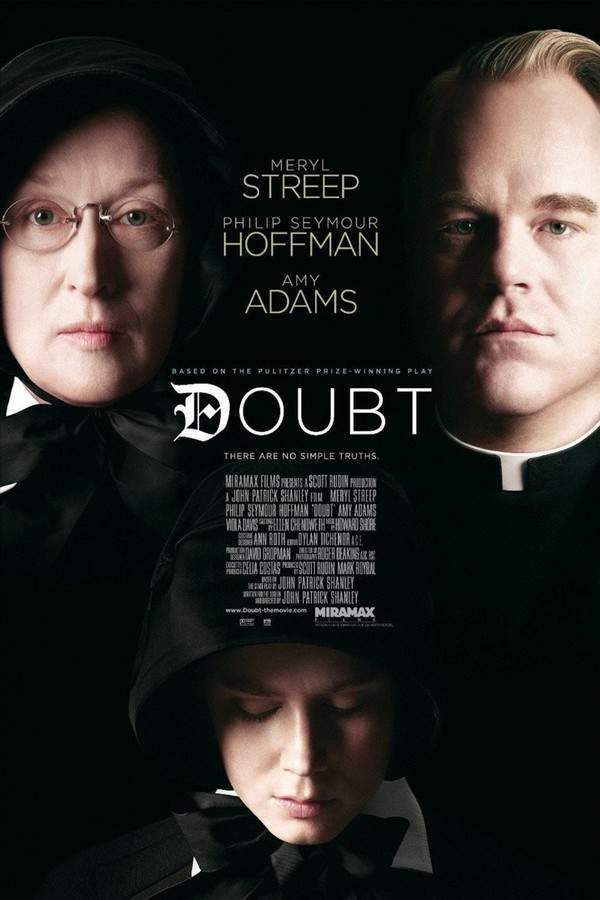
Doubt (2008) movie poster

Timeline

Doubt (2008) Timeline Explained – Every Event in Order

Release, runtime and language
2008 · 104 min · English
Directed by
John Patrick Shanley
Starring
Philip Seymour Hoffman, Amy Adams, Meryl Streep
Budget
$20M

In 1964, St. Nicholas School in the Bronx faces upheaval as the progressive Father Flynn questions established norms, much to the dismay of the strict Principal Sister Aloysius Beauvier. The school's first black student, Donald Miller, arrives, intensifying racial tensions. When a young nun, Sister James, voices concerns about Father Flynn's behavior, Sister Aloysius becomes determined to investigate, leading to a tense confrontation that tests their beliefs and threatens to destroy the school community.

On this page (7)
  1. 1 Where to watch
  2. 2 Events in order (15)
  3. 3 Timeline questions answered
  4. 4 The book behind the movie
  5. 5 Movie threads
  6. 6 Movies like Doubt
  7. 7 Every angle

Where to watch

Where to Watch Doubt (2008)

Where can you watch Doubt? Stream, rent or buy it in the US, including on Hoopla, Kanopy and Amazon Video: current JustWatch availability with up-to-date prices.

Streaming availability powered by JustWatch

15 events in order · contains spoilers

Doubt Timeline: Events in Chronological Order

Every key event of Doubt (2008) in order, scene by scene, with when and where it takes place. Use it to untangle flashbacks, time jumps and parallel storylines, to refresh your memory before the sequel or to find the exact scene you are thinking of.

  1. Introduction to the Bronx

    The film opens in a working-class Irish/Italian Catholic neighborhood in the Bronx, New York, circa 1964. The viewers are introduced to the setting through a series of establishing shots featuring a quiet church garden, statues, and daily life activities among the residents.

    When
    1964
    Where
    Bronx, New York
  2. Jimmy's First Day as Altar Boy

    A young boy named Jimmy is awakened by his mother for Sunday mass, signifying his first day as an altar boy. In his rush, he encounters a Russian immigrant asking for a paper and coffee, but he cannot stop to chat because he is late.

    Where
    Jimmy's House
  3. Father Flynn's Sermon

    During mass, Father Flynn delivers a sermon reflecting on the assassination of President Kennedy and its unifying effects amidst despair. His words resonate deeply within the packed congregation, as he discusses the crises of faith everyone experiences.

    Where
    St. Nicholas Church
  4. Introduction of Donald Miller

    Donald Miller, the first black student at the school, also serves as an altar boy and shares a moment of self-doubt with Jimmy. This interaction highlights the racial and social dynamics at play, with Donald expressing concern over his appearance.

    Where
    St. Nicholas Church
  5. Sister Aloysius's Watchful Eye

    Following the sermon, Sister Aloysius, the principal, sternly monitors the children and enforces discipline. She reprimands a student for misbehavior, establishing her authoritative presence and strict moral code within the school environment.

    Where
    St. Nicholas School
  6. Sister James's Classroom Dynamics

    In the classroom, Sister James struggles to manage her students, facing distractions and finding trouble with contraband items. Her interactions with Sister Aloysius reveal the underlying tension between the nuns regarding teaching methods and discipline.

    Where
    St. Nicholas School
  7. Concern Over Donald

    Sister Aloysius expresses concern for Donald after noticing he seemed strange following a meeting with Father Flynn. Aloysius emphasizes the importance of vigilance, suggesting that Donald may be target to more sinister behavior due to his vulnerability as the only black student.

    Where
    Convent
  8. Aloysius's Investigation Begins

    After speaking with Sister James about her concerns, Aloysius begins a covert investigation against Flynn, suspecting inappropriate behavior with Donald. She articulates her mission to uncover the truth while maintaining her authority over the school's moral obligations.

    Where
    Convent
  9. Flynn's Defense

    Father Flynn defends his approach to teaching and his compassion towards Donald, arguing for the importance of kindness in a time of change. He attempts to create an environment where students feel understood and valued, conflicting with Aloysius’s strict measures.

    Where
    St. Nicholas School
  10. The Confrontation

    Aloysius confronts Flynn about her suspicions of him manipulating Donald. The tension escalates as she presses him for answers regarding his intentions, while Flynn denies any wrongdoing and questions her motives, emphasizing his genuine concern for the boy.

    Where
    Flynn's Office
  11. Flynn's Farewell Sermon

    Following the mounting tensions, Father Flynn delivers a farewell sermon, framing his departure as a poignant moment. He speaks of the winds of change and expresses his affection for the community, leaving emotional responses from both students and staff.

    Where
    St. Nicholas Church
  12. Aloysius's Torn Conscience

    After Flynn's departure, Sister Aloysius grapples with her moral choices and feelings of guilt. She reflects on the validity of her actions and the cost of protecting the parish's boys compared to the truth she cannot definitively prove.

    Where
    Convent
  13. Sister James's Doubts

    Sister James returns and discusses the ramifications of Flynn's exit with Aloysius. Doubts about whether the right decisions were made begin to cloud her judgment, as she struggles to reconcile her faith with the uncertainty of the situation.

    Where
    Convent
  14. Consequences of Actions

    Aloysius learns that rather than facing consequences for his alleged actions, Flynn has been promoted to a larger parish. This news shocks her, highlighting the systemic issues present within the church and leaving her feeling insulated in her moral certainty.

    Where
    Convent
  15. Final Reflection

    In a poignant closure, Aloysius breaks down, revealing she has doubts about the morality of her actions. This moment encapsulates the central theme of the film, focusing on faith, morality, and the gray areas in between that leave both characters and audiences questioning the truth.

    Where
    Convent

Last updated: December 31, 2024 at 18:09

Was this helpful?

Timeline questions answered

Doubt Timeline Explained: Your Questions Answered

When does it happen, and why in that order? The questions people ask about the chronology of Doubt (2008): time jumps, flashbacks, cause and effect between scenes and the correct order of events, each answered with spoilers.

Q1

Why does Sister Aloysius become suspicious of Father Flynn?

Sister Aloysius notices behavioral changes in Donald Miller after his private meetings with Father Flynn. She sees Donald as vulnerable due to being the school's first black student in a predominantly white institution, and her strict moral code makes her suspicious of any adult showing unusual interest in a child. Her conservative worldview contrasts sharply with Father Flynn's progressive teaching methods, fueling her conviction that something inappropriate may be occurring.

Foreshadowing: Earlier scenes show Father Flynn defending his compassionate approach to teaching and his special attention to Donald, which Aloysius views as suspicious.

  • sister aloysius
  • father flynn
  • suspicion
  • donald miller
  • investigation
Q2

What does Sister James witness that worries her about Father Flynn?

Sister James observes Father Flynn in physical proximity to Donald during a private meeting in his office. She describes seeing him embrace Donald from behind and notices the boy's discomfort. As a novice nun with limited life experience, she struggles to interpret what she's seen and brings her vague concerns to Sister Aloysius, who immediately takes action.

Foreshadowing: The dinner scene where nuns discuss their teaching methods foreshadows the divide between Aloysius's rigidity and Flynn's more personal approach to students.

  • sister james
  • father flynn
  • witness
  • donald miller
  • concern
Q3

Why is Donald Miller important to the plot of Doubt?

Donald Miller serves as the catalyst for the entire conflict as the first black student at St. Nicholas School. His vulnerability as a minority student in 1964 makes him both a target of Father Flynn's progressive compassion and a potential victim in Sister Aloysius's suspicions. His presence intensifies the racial tensions of the era and forces characters to confront issues of power, protection, and prejudice.

Foreshadowing: Donald's self-doubt about his appearance when talking to Jimmy establishes his insecurities and isolates him within the student body.

  • donald miller
  • black student
  • racial tension
  • victim
  • 1964
Q4

What happens during Sister Aloysius's confrontation with Father Flynn?

Aloysius directly confronts Flynn in his office, accusing him of inappropriate conduct with Donald Miller. She presents no concrete evidence, relying on her authority and moral certainty to press for a confession. Flynn denies the allegations, describes his genuine concern for Donald as the school's only black student, and questions her motivations. The confrontation remains unresolved, with Flynn maintaining his innocence while Aloysius refuses to back down.

Foreshadowing: Earlier scenes of Aloysius's investigation and her conversations with Sister James build toward this explosive meeting.

  • confrontation
  • aloysius
  • flynn
  • accusation
  • denial
Q5

Why does Father Flynn leave St. Nicholas School?

Father Flynn departs after the mounting tensions and accusations create an impossible situation. He delivers a farewell sermon about winds of change, expressing love for the community while leaving under a cloud of suspicion. Rather than facing investigation, the church transfers him to a larger parish, effectively promoting him despite the unresolved allegations.

Foreshadowing: The confrontation scene establishes that Flynn's position has become untenable due to Aloysius's persistent scrutiny.

  • father flynn
  • departure
  • transfer
  • leaves
  • controversy
Q6

What are Sister Aloysius's doubts at the end of the film?

After Flynn leaves, Aloysius learns he has been promoted rather than punished, which shocks her. She breaks down and admits to Sister James, "I have doubts, such doubts," revealing her uncertainty about whether her moral crusade was justified. She cannot know if her actions protected children or unnecessarily destroyed a good man's career. The ambiguity mirrors the film's title, certainty has dissolved into doubt.

Foreshadowing: Throughout the film, Aloysius operates on conviction rather than evidence, setting up the inevitable reckoning with the consequences of her actions.

  • aloysius
  • doubt
  • ending
  • guilt
  • morality
  • uncertainty
Q7

How does Father Flynn defend his relationship with Donald Miller?

Father Flynn insists his interactions with Donald were motivated by genuine compassion for a vulnerable student. He argues that Donald needed special attention as the only black student facing prejudice and isolation. Flynn defends his progressive teaching methods, suggesting that kindness and understanding are more important than rigid adherence to traditional authority. He portrays himself as a progressive figure trying to help students in a changing world.

Foreshadowing: His sermon about unity following Kennedy's assassination establishes his belief in confronting difficult social issues directly.

  • father flynn
  • defense
  • donald miller
  • compassion
  • progressive
Q8

Does Father Flynn actually abuse Donald Miller in Doubt?

The film deliberately provides no definitive answer. No concrete evidence of abuse is ever presented, and the audience is left to weigh the competing interpretations of Aloysius's certainty versus Flynn's denials. The ambiguity is central to the film's theme, sometimes certainty in moral matters is itself a form of arrogance, and truth may remain unknowable.

Foreshadowing: The title itself, "Doubt," foreshadows that resolution will not come.

  • abuse
  • truth
  • ambiguity
  • ending
  • unresolved
Q9

Why does Sister James struggle with the situation between Aloysius and Flynn?

Sister James represents naive goodness caught between two opposing moral forces. Her brief observation of Flynn with Donald provides the initial spark for the investigation, but her gentle nature makes her uncomfortable with confrontation. She wants to believe the best of everyone while also feeling compelled to protect children. Her journey reflects the human cost of living with moral uncertainty.

Foreshadowing: Her classroom struggles with discipline and contraband establish her as someone who lacks the hard edge needed for the conflict.

  • sister james
  • conflict
  • naive
  • morals
  • doubt
Q10

How does race factor into the story of Doubt?

Donald Miller's status as the school's first black student in 1964 creates a charged atmosphere. Father Flynn's extra attention to Donald could be seen as either genuine progressive compassion or inappropriate grooming. Sister Aloysius views Donald as particularly vulnerable to exploitation due to his racial isolation. The film uses this racial dynamic to explore themes of power, protection, and the unique pressures facing minority children in institutions.

Foreshadowing: Donald's insecurity about his appearance when meeting Jimmy highlights his awareness of being different.

  • race
  • black student
  • 1964
  • discrimination
  • vulnerability
Q11

Why does Father Flynn mention Kennedy's assassination in his sermon?

Father Flynn's opening sermon references President Kennedy's recent assassination as an event that united people in shared grief. He uses this to illustrate his theme of doubt and unity, that everyone experiences crises of faith and that collective suffering can bring people together. This sermon establishes Flynn as a progressive, empathetic priest who addresses contemporary issues from the pulpit, contrasting with the traditional, rigid approach of Sister Aloysius.

Foreshadowing: The sermon sets up the film's central theme of doubt and the tension between progressive and traditional Catholic values.

  • kennedy
  • assassination
  • sermon
  • 1964
  • unity
Q12

What personal cost does Sister Aloysius pay for her actions?

Aloysius pays a significant emotional and moral price for her certainty. After driving Flynn out, she discovers he has been promoted rather than punished, which shakes her conviction that she did the right thing. Her final breakdown, admitting she has doubts, reveals the psychological toll of living with unproven accusations. She sacrificed her peace of mind and potentially an innocent man's career in pursuit of moral certainty that never came.

Foreshadowing: Her stern demeanor and strict enforcement of rules throughout the film show a woman who has built her identity on moral certainty.

  • aloysius
  • cost
  • certainty
  • guilt
  • emotional toll
Q13

What do the dinner scenes among the nuns reveal about the story?

The dinner scenes contrast the rigid, rule-bound world of the nuns with Father Flynn's more progressive approach. These conversations establish the tension between Sister Aloysius's traditional authority and Flynn's modern methods. The nuns discuss teaching approaches, discipline, and ultimately the suspicions about Flynn, revealing the internal politics of the convent and the pressure women faced within the Catholic institutional hierarchy.

Foreshadowing: The dinners provide crucial character development for Sister James and establish the divided opinions among the faculty.

  • nuns
  • dinner
  • convent
  • tension
  • conversations
Q14

What does the title Doubt refer to?

The title Doubt has multiple layers of meaning. It refers to the uncertainty about whether Father Flynn committed misconduct, the central mystery remains unresolved. It also describes Sister Aloysius's journey from certainty to doubt about her own moral convictions. Finally, it captures the film's exploration of faith, both religious and moral, and how certainty itself can become a form of blindness. The ambiguity of the title reflects the film's refusal to provide easy answers.

Foreshadowing: Father Flynn's sermon about crises of faith establishes doubt as the film's central thematic concern from the very beginning.

  • title
  • doubt
  • meaning
  • ambiguity
  • faith
  • uncertainty

Movie threads

More Movies Like Doubt, by Mood & Story

Curated lists built around what makes Doubt tick: the same mood, the same kind of story or the same emotional payoff. Each list explains why these movies belong together.

Claustrophobic institutional dramas like Doubt

Stories where suspicion festers within the rigid confines of a single location. If you liked the tense, confined atmosphere of Doubt, explore more films that trap suspicion and moral conflict within rigid institutional walls. These movies focus on psychological tension, authority figures under scrutiny, and the suffocating power dynamics of closed communities.

  • claustrophobic
  • tense
  • suspenseful
  • morally gray
  • anxious
  • quiet
  • Tone: tense, somber, anxious
  • Pacing: slow, deliberate
Why these movies?

The story pattern: These narratives typically unfold within a single, restrictive setting where a suspicion or crisis arises, challenging the established order. The protagonist, often an insider, investigates the truth, leading to a tense confrontation that exposes the institution's flaws and tests personal convictions, often without a clear resolution.

Why they belong together: They are grouped by their shared focus on tense, character-driven conflicts erupting in isolated, rule-bound environments. The similarity lies in the potent mix of psychological pressure, moral ambiguity, and the claustrophobic feeling of being trapped with a growing threat.

Movies with ambiguous moral questions like Doubt

Films where the central conflict hinges on a truth that can never be fully confirmed. If you appreciated the unresolved central question of Doubt, you'll find similar films here that explore moral gray areas and leave the audience to draw their own conclusions. These stories challenge viewers with complex ethical dilemmas where right and wrong are not clearly defined.

  • morally gray
  • thought-provoking
  • unsettling
  • ambiguous
  • psychological
  • somber
  • Tone: morally gray, tense, somber
  • Pacing: slow, thoughtful
Why these movies?

The story pattern: The journey revolves around a central accusation or mystery that lacks definitive proof. Characters are driven by their own convictions, leading to a clash of perspectives. The story's power lies in its refusal to provide closure, instead focusing on the emotional and ethical fallout of living with uncertainty.

Why they belong together: They share a defining narrative structure built around an unprovable accusation, creating a profoundly ambiguous experience. The similarity is in the thematic weight placed on doubt itself, exploring the psychological impact on characters and the audience when clear answers are denied.

If you liked this

Movies Like Doubt

Similar movies to Doubt: the same genre, themes or kind of story. Each one comes with its own plot summary, timeline and ending explained.

Browse all movie summaries

Every angle

Doubt (2008) Explained: Plot, Timeline & Characters

Everything about Doubt in one place: what happens in the plot summary, the timeline in chronological order, the characters and meaning and a spoiler-free summary. What's After the Movie adds the cast, box office and post-credit scenes.

Coming soon on iOS and Android

The Plot Explained Movie Summary App

Plot summaries, endings explained and timelines on your phone. Catch up on any movie in minutes, save your favorites and never miss a twist again.

Be the first to know when we launch. Your email stays private, always.

Learn more about the app