Plot Explained Spoilers guaranteed!
Plot Explained

Browse by genre

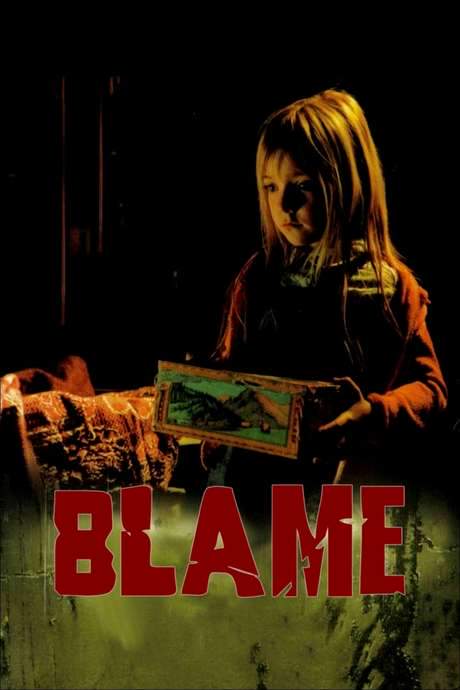
Blame (2018) movie poster

Plot Summary

Blame (2018) Plot Summary Explained

Release, runtime and language
2018 · 100 min · English
Echo score 68
JustWatch #16,235 13
Starring
Chris Messina, Marcia DeBonis, Tate Donovan, Owen Campbell, Quinn Shephard, Luke Slattery

During a new school year at a suburban high school, shy Abigail finds comfort in literature, much to the frustration of the scheming Melissa. When an unexpected casting in Arthur Miller's The Crucible favors Abigail over Melissa, her confidence grows and her connection with Jeremy deepens. However, Melissa's envy intensifies, triggering a series of events that expose unsettling secrets and impact the entire school community.

On this page (6)
  1. 1 Where to watch
  2. 2 What happens: full plot
  3. 3 Plot questions answered
  4. 4 Movie threads
  5. 5 Movies like Blame
  6. 6 Every angle

Where to watch

Where to Watch Blame (2018)

Where can you watch Blame? Stream, rent or buy it in the US, including on Amazon Prime Video, Philo and Starz: current JustWatch availability with up-to-date prices.

Streaming availability powered by JustWatch

Full plot summary · contains spoilers

What Happens in Blame: Full Plot Summary

The whole story of Blame (2018) explained, from the opening scene to the final frame: every key event, every twist and what it all adds up to. Read it as a quick recap before the sequel, to check a scene you missed, or to finally understand what really happened.

Abigail begins her journey lying in bed, reluctant to return to high school, referenced only as "MHS". In her bedroom, she has a copy of "Sybil," hinting at her struggles. During a meeting with her parents and Ms. Cohen, it is decided that she needs to get back to her routine as soon as possible, with her parents in agreement.

Meanwhile, the character of Melissa, played by Nadia Alexander, is introduced as a rebellious cheerleader whose vibrant, multicolored hair and heavy makeup reflect her defiance. She lives with Robert, a man who emphasizes the importance of school and tells her to get out of bed. However, Melissa reacts defiantly, asserting “He's not my father,” revealing the nature of their relationship as guardianship rather than parenthood.

As Abigail enters the school environment, she encounters Melissa and her friends Sophie and Ellie, who mock her with the nickname "Psycho Sybil," linking it to her limp. In class with Mrs. Howell, Abigail reveals her fascination with glass animals, showcasing her unique yet fragile perspective in a world where she feels out of place.

In a surprising twist, Eric, a classmate played by Owen Campbell, expresses interest in Abigail, asking for her number, but the moment quickly turns tense when he jokes about her multiple personalities. The next day, the classroom dynamic shifts as Jeremy Woods takes over Mrs. Howell's class after she goes into labor. Instead of following the lesson plan, Jeremy decides that the class will perform "The Crucible" for the Drama Showcase, stirring excitement and competition among the students. He assigns Abigail the lead role of Abigail, which makes Melissa, who perceives Eric as her boyfriend, irritated and possessive.

Outside of school, Jeremy faces pressure from his friend Jennifer, who questions his commitment to teaching versus pursuing acting. Their relationship seems strained, with Jennifer expressing her disappointment that he doesn’t have long-term goals. Meanwhile, Abigail retreats into her artistic and eerie world, lighting candles in her room and creating spooky art that reflects her inner turmoil.

As rehearsals get under way, Abigail’s talent begins to shine through, and she’s given the opportunity to learn more about the production process. Despite missing some key players like Eric and Melissa during practice, Jeremy’s encouragement helps Abigail excel. As preparations for the football game and the drama performance ramp up, we see a glimpse of Melissa’s secretive plans to take revenge on Abigail.

Their rivalry intensifies when Melissa and her friends turn on Abigail, drinking and partying while plotting against her. When Eric apologizes to Abigail for missing a rehearsal, his intentions remain questionable as ulterior motives come to light. In a series of events marked by bullying and manipulation, Abigail becomes more committed to her character, even dressing like her onstage persona, leading to further tensions with Melissa.

Jeremy and Abigail’s bond deepens during rehearsals, culminating in a close moment when they must perform a kiss, prompting rumors about their relationship. Meanwhile, Sophie begins to piece together evidence of inappropriate conduct between Abigail and Jeremy, creating a mystery that spreads through the school like wildfire.

As the performance looms, tensions escalate, and Melissa makes a crucial decision that could change everything. She confronts Jeremy, claiming inappropriate actions and exposing her own trauma, which reveals the darker side of her relationship with Robert, showing a disturbing cycle of abuse. This dramatic turn of events leads to Melissa feeling isolated, while Abigail, who has already put in so much effort, appears at the performance just in time.

In the end, the story navigates complex themes of identity, relationships, and the consequences of misunderstandings, culminating in a dramatic performance that leaves school dynamics and personal lives forever altered. As the characters’ secrets unravel and tensions reach a breaking point, the film explores the blurred lines of friendship, rivalry, and the search for identity in an unforgiving high school environment.
Last updated: May 12, 2025 at 07:04

Was this helpful?

Plot questions answered

Blame Plot Explained: Your Questions Answered

The questions people ask most about Blame (2018): what happens in the confusing scenes, why the characters do what they do, the twists, hidden details and what the ending means. Each answer contains spoilers.

Q1

Why does Melissa hate Abigail so much?

Melissa's hatred stems from jealousy over the Crucible casting. Jeremy gives Abigail the lead role instead of Melissa, who believed she would get it because she considers Eric her boyfriend. This rejection, combined with Abigail's growing confidence and connection with Jeremy, triggers Melissa's escalating campaign of bullying and revenge.

Foreshadowing: Melissa's possessive behavior toward Eric is established early when she calls him her boyfriend before he even shows interest in Abigail.

  • melissa
  • abigail
  • rivalry
  • jealousy
  • crucible casting
Q2

What is the nature of Jeremy and Abigail's relationship?

Jeremy and Abigail's relationship is mentorship-based, not romantic. Despite rumors spread by Sophie after finding Ellie's diary, their interactions are professional. Jeremy supports Abigail as her drama teacher, helps her with rehearsals, and drives her home after she gets locked in the auditorium. The kiss during rehearsal is part of the play, not a genuine romantic moment.

Foreshadowing: Sophie's discovery of the diary fuels speculation, but the evidence is circumstantial and misinterpreted.

  • jeremy
  • abigail
  • teacher
  • relationship
  • rumors
Q3

Why does Melissa falsely accuse Jeremy of inappropriate behavior?

Melissa accuses Jeremy to sabotage the play and destroy Abigail's success after losing the lead role. During the confrontation, Melissa reveals she is actually a victim of abuse from her guardian Robert, projecting her trauma onto Jeremy. Her allegations are a manipulation tactic rather than a genuine complaint.

Foreshadowing: Melissa's tense home life with Robert and her statement 'He's not my father' hint at an unstable household situation.

  • melissa
  • jeremy
  • false accusations
  • abuse
Q4

What is revealed about Melissa's home life?

Melissa lives with her guardian Robert, not her father. She defiantly states 'He's not my father' when he tells her to get up for school. Later, during her confrontation with Jeremy, she reveals she has been abused by Robert, exposing a disturbing cycle of trauma that contributes to her volatile behavior.

Foreshadowing: Early scenes show Robert urging Melissa to go to school while she pushes back against his authority, hinting at their complicated dynamic.

  • melissa
  • robert
  • guardian
  • abuse
  • home life
Q5

Why do the other students call Abigail 'Psycho Sybil'?

Students mock Abigail with the nickname 'Psycho Sybil' because she walks with a limp and they associate her with the book 'Sybil' in her bedroom, which deals with multiple personality disorder. The nickname reflects her status as an outsider and the cruel social dynamics at MHS, where her unique interests in glass animals and spooky art make her a target.

Foreshadowing: Abigail's copy of 'Sybil' is visible in her bedroom at the start, establishing her as someone who feels different.

  • abigail
  • sybil
  • nickname
  • bullying
  • symbolism
Q6

Why does Abigail change her appearance during rehearsals?

Abigail transforms by dressing more provocatively as she prepares for her role as Abigail in The Crucible. This change reflects her growing confidence and her immersion in the character, but it also intensifies her conflict with Melissa, who views this as further proof of Abigail stealing her thunder.

Foreshadowing: Jeremy assigns Abigail the role of Abigail, encouraging her to embody the character fully.

  • abigail
  • transformation
  • appearance
  • confidence
  • role
Q7

Does the play actually happen at the end of the movie?

Abigail appears at the performance just in time, suggesting the Crucible production proceeds despite the chaos. However, the movie ends with the fallout from Melissa's accusations still looming, leaving the ultimate outcome ambiguous. The school dynamics and personal relationships are left 'forever altered' without clear resolution.

Foreshadowing: The buildup to homecoming night and the performance creates tension about whether Abigail will actually perform.

  • crucible
  • play
  • performance
  • ending
  • resolution
Q8

What evidence does Sophie find in the diary?

Sophie discovers Ellie's diary in the chemistry lab, which contains evidence of Abigail and Jeremy's relationship. This discovery fuels rumors about an inappropriate teacher-student connection, though the diary likely documents innocent interactions magnified by speculation.

Foreshadowing: Rumors about Jeremy and Abigail begin circulating after their kiss during rehearsal.

  • sophie
  • diary
  • evidence
  • rumors
  • chemistry lab
Q9

Why does Jeremy take over Mrs. Howell's class?

Jeremy takes over the class because Mrs. Howell goes into labor during class. Rather than following the planned curriculum, he decides the class will perform The Crucible for the Drama Showcase, assigning roles to students. His decision creates both opportunity for Abigail and tension with Melissa over casting.

Foreshadowing: Mrs. Howell's sudden departure sets the stage for Jeremy's unconventional teaching approach.

  • jeremy
  • mrs howell
  • teacher
  • class
  • theater
Q10

What is the significance of Abigail's glass animals?

Abigail's collection of glass animals, including a unicorn, represents her fragile and unique perspective. She shares them during class, revealing her inner world to Mrs. Howell. The glass animals symbolize her sensitivity and isolation, contrasting with the harsh social environment of high school.

Foreshadowing: This moment occurs before Mrs. Howell goes into labor, establishing Abigail's creative and vulnerable nature.

  • glass animals
  • unicorn
  • symbolism
  • abigail
  • identity
Q11

Why is Melissa's behavior so extreme throughout the movie?

Melissa's extreme behavior stems from multiple factors: jealousy over losing the Crucible lead role, her unstable home life with an abusive guardian, and her possessiveness over Eric. These layers of trauma and insecurity manifest as bullying, manipulation, and eventually false accusations, making her a complex antagonist.
Foreshadowing: Her defiance toward Robert and quickness to claim Eric as her boyfriend hint at underlying insecurity.

  • melissa
  • behavior
  • trauma
  • jealousy
  • manipulation
Q12

What happens in the final confrontation between Abigail and Melissa?

The final confrontation occurs outside school where Abigail encounters Melissa. This meeting represents the climax of their rivalry, with unresolved tensions between them. The movie ends ambiguously, leaving their relationship and the consequences of Melissa's accusations uncertain.

Foreshadowing: The buildup from the diary discovery, the allegations, and the looming performance creates the tension leading to this confrontation.

  • confrontation
  • melissa
  • abigail
  • school
  • ending

Movie threads

More Movies Like Blame, by Mood & Story

Curated lists built around what makes Blame tick: the same mood, the same kind of story or the same emotional payoff. Each list explains why these movies belong together.

Dark Academic Dramas like Blame

Where institutional pressure and personal ambition spiral into moral collapse. Movies like 'Blame' that mine the dark side of academic life. These similar drama stories feature tense rivalries, abuse of power, and secrets that unravel within the confined world of a school or university. If you liked the unsettling atmosphere of 'Blame', you'll find more gripping tales here.

  • unsettling
  • tense
  • claustrophobic
  • melancholic
  • defiant
  • gripping
  • Tone: dark, tense, melancholic
  • Pacing: steady, building dread
Why these movies?

The story pattern: Stories typically center on a cloistered academic environment where a rivalry or ethical transgression sets off a chain reaction. Characters grapple with ambition, jealousy, and the abuse of intellectual or social power, leading to serious accusations, psychological manipulation, and a gradual erosion of morality.

Why they belong together: Movies are grouped here for their shared setting of intense academic pressure, a dark and serious tone, and narratives where personal conflicts escalate to have severe, life-altering consequences for the characters involved.

Movies About Reputation Destruction like Blame

Stories where envy and lies are weaponized to destroy a reputation. If you liked the plot of 'Blame' where a false accusation spirals out of control, explore these similar movies. This section features stories about revenge, envy, and psychological manipulation, focusing on the devastating impact of character assassination in close-knit communities.

  • tense
  • anxious
  • gripping
  • unsettling
  • defiant
  • melancholic
  • Tone: dark, tense, unsettling
  • Pacing: steady, escalating tension
Why these movies?

The story pattern: The narrative follows a protagonist who becomes the target of a manipulative individual or group. Through lies, social exclusion, or serious accusations, the attacker seeks to ruin the protagonist's life. The story is a tense unfolding of the attack and its psychological toll, often leaving relationships and reputations in ruins.

Why they belong together: These films share a core plot mechanism: the weaponization of information or social influence for revenge. They are united by a high level of psychological tension, a dark tone, and an exploration of the devastating effects of bullying and false narratives.

If you liked this

Movies Like Blame

Similar movies to Blame: the same genre, themes or kind of story. Each one comes with its own plot summary, timeline and ending explained.

Browse all movie summaries

Every angle

Blame (2018) Explained: Plot, Timeline & Characters

Everything about Blame in one place: what happens in the plot summary, the timeline in chronological order, the characters and meaning and a spoiler-free summary. What's After the Movie adds the cast, box office and post-credit scenes.

Coming soon on iOS and Android

The Plot Explained Movie Summary App

Plot summaries, endings explained and timelines on your phone. Catch up on any movie in minutes, save your favorites and never miss a twist again.

Be the first to know when we launch. Your email stays private, always.

Learn more about the app