Plot Explained Spoilers guaranteed!
Plot Explained

Browse by genre

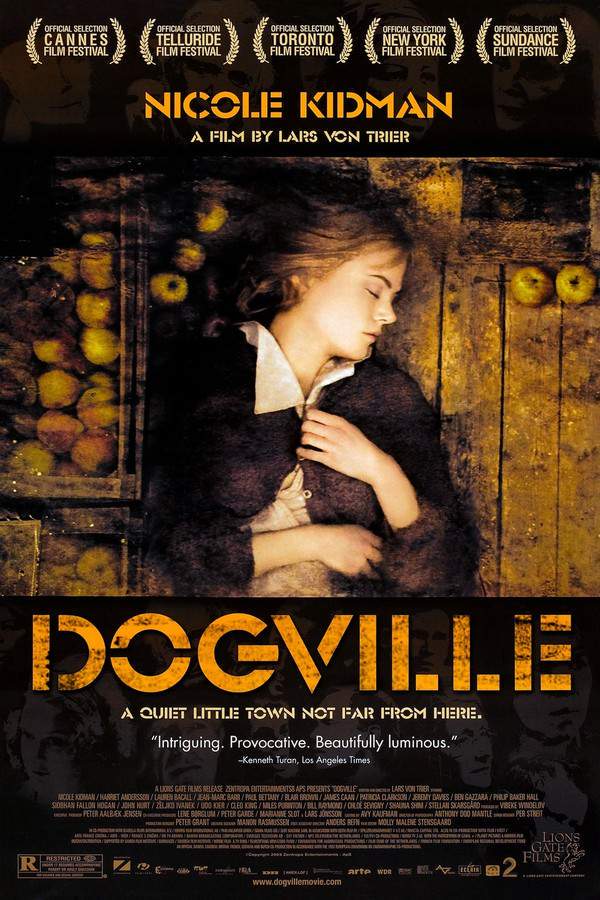
Dogville (2004) movie poster

Plot Summary

Dogville (2004) Plot Summary Explained

Release, runtime and language
2004 · 178 min · English
JustWatch #13,695 3
Directed by
Lars von Trier
Starring
Paul Bettany, Nicole Kidman, Lauren Bacall
Budget
$10M

In the isolated, fictional town of Dogville, a mysterious woman named Grace arrives seeking refuge. The townspeople, initially offering protection, demand increasingly difficult tasks and payments in return. As Grace’s dependence grows, so does the community’s contempt and cruelty, exposing the dark side of human nature and challenging her resilience in a place where kindness proves to be a precarious facade.

On this page (6)
  1. 1 Where to watch
  2. 2 What happens: full plot
  3. 3 Plot questions answered
  4. 4 Movie threads
  5. 5 Movies like Dogville
  6. 6 Every angle

Where to watch

Where to Watch Dogville (2004)

Where can you watch Dogville? Stream, rent or buy it in the US, including on MUBI: current JustWatch availability with up-to-date prices.

Streaming availability powered by JustWatch

Full plot summary · contains spoilers

What Happens in Dogville: Full Plot Summary

The whole story of Dogville (2004) explained, from the opening scene to the final frame: every key event, every twist and what it all adds up to. Read it as a quick recap before the sequel, to check a scene you missed, or to finally understand what really happened.

Dogville is a tiny American town nestled in the Rocky Mountains, boasting a solitary road leading up to it, but with no real outlet aside from the towering peaks. The film opens with a prologue introducing us to around a dozen of its fifteen residents, depicted as charming yet flawed individuals, whose imperfections are easily forgivable.

The viewer sees the town through the lens of Tom Edison, an aspiring writer who often finds himself procrastinating by attempting to rally his fellow townsfolk for meetings centered on "moral rearmament." Tom harbors ambitions to step into the shoes of his aging father, aiming to become the town's new moral and spiritual compass.

It is during one of his ventures that he encounters Grace, a woman fleeing from dangerous gangsters after an apparent attempt on her life. Grace, possessing both beauty and modesty, is eager to escape, yet Tom convinces her that the mountains are impassable. Just as they converse, the gangsters draw near the town, prompting Tom to quickly conceal Grace within a nearby mine. When one gangster inquires about her whereabouts, Tom lies and declines to reveal anything, leading the gangster to offer him a reward should he have any news on the woman.

Motivated by the chance to showcase the town's moral values, Tom decides to present Grace as a "case study" at his next meeting, encouraging the residents to step up and prove their commitment to helping a stranger. Despite initial skepticism, Tom proposes that Grace should be granted two weeks to earn the townspeople's affection.

Per Tom's suggestion, Grace starts assisting with local chores—visiting the lonely, blind Jack McCay, managing the small town shop, and caring for the children of Chuck and Vera. Although there is initial reluctance, the townsfolk gradually accept Grace's contributions, as her assistance brings warmth and ease to their lives. Over time, she grows closer to the residents, including Jack, who pretends not to be blind; Grace cunningly leads him to admit the truth, earning his respect.

As the two-week deadline approaches, the townspeople vote unanimously for Grace to remain in their midst. However, the mood shifts when the police arrive to post a "Missing" flyer with Grace's likeness at the mission house. While spirits remain high, a cloud looms over the town during their July 4th celebrations. After Tom awkwardly professes his love for Grace—who has transformed the town for the better—the police return once more, this time with a "Wanted" poster, branding Grace a suspect in a bank robbery. It is widely acknowledged that she must be innocent, as she has been engaged in her daily chores throughout the incident.

Despite this, Tom insists that for the safety of the town—now harboring a felon—Grace needs to increase her contributions in exchange for less pay. The once voluntary arrangement starts taking on a coercive tone, which leaves Grace feeling uncomfortable. Nevertheless, eager to please Tom, she reluctantly agrees.

The situation deteriorates as Grace struggles under her newfound burden. Mistakes ensue, and the townspeople's frustration is misdirected at her. Male citizens begin to make unwelcome advances, while female residents display growing hostility. Even the children partake in this disturbing dynamic: Jason, the young son of Chuck and Vera, pressure Grace into spanking him, to which she ultimately complies after much coercion. It is not long before Chuck assaults Grace, exposing her vulnerability to profound exploitation.

When Tom discusses the prospect of escape with Grace, Vera turns on her, blaming her for both Jason's spanking and Chuck's attack. Seeking retribution, Vera threatens to destroy the porcelain figurines made by the town shop, which Grace had acquired with her meager earnings. Torn between the memories of teaching stoicism to her children, Grace begs for mercy. Vera, however, beats her down, destroying the first two figurines. As Grace fails to contain her tears, Vera claims the rest, smashing the last of them. With this symbolic loss of belonging, Grace realizes she must flee. Together with Tom and Ben, the freight driver, she attempts to escape in his apple truck, only to be assaulted by Ben and subsequently returned to the town.

Determined not to let her slip away again, the townspeople conspire against her. The money used to pay Ben was taken without Tom's father's knowledge, and Grace faces accusations of theft. Tom opts not to speak up, explaining that it's the only way he can protect Grace without raising suspicion. At this juncture, Grace's status as a slave is conclusively established: she is forcefully collared and chained to a heavy iron wheel, rendering her incapable of escape. To further strip her dignity, a bell is affixed to her collar, announcing her presence throughout the town. Intriguingly, Tom remains the sole male citizen who does not take advantage of her.

Matters culminate in a night assembly where, with Tom’s prompting, Grace recounts the torment she has suffered at the hands of the townspeople. Ashamed and in utter denial, they ultimately decide to cast her out. When Tom reaches out to console Grace after this betrayal, he attempts to engage with her intimately, having been the only man in town not to have crossed that line. However, Grace denies him, which fuels Tom's fury—not just at her rejection, but more at his realization of how low he might stoop to engage with her like the others.

In a moment of desperation, he calls upon the mobsters, and, with community backing, proposes that Grace be imprisoned in her shack. When the gangsters finally arrive, they are received warmly by Tom and an ad hoc committee of townsfolk. It is during this confrontation that we learn Grace's true identity: the daughter of a formidable crime leader, she fled from a life she could no longer bear.

Her father, confronting her in his lavish limousine, chastises her for being condescending toward others regarding their moral failings. Initially resistant, Grace reevaluates her perspective of the townsfolk and acknowledges that condemning them by her stringent standards would warrant their extinction. This internal struggle leads her to align once more with her father's dark legacy, ultimately commanding the obliteration of the town and its residents.

She orders Vera to witness the murder of her children, placing her in a perverse position where withholding tears is a dire test. The film reaches its harrowing climax with the town engulfed in flames, and the citizens face a brutal end by gangsters under the direct orders of Grace. In a chilling finale, she takes Tom's life personally, marking his death amidst the chaos. As the ashes of Dogville settle, Grace spares only one soul—the loyal dog, Moses, who symbolizes the lone innocent amid the town's decay. Ironically, the only creature that hasn't betrayed her becomes the sole survivor in the ravaged remains of her former community.
Last updated: November 04, 2024 at 07:13

Was this helpful?

Plot questions answered

Dogville Plot Explained: Your Questions Answered

The questions people ask most about Dogville (2004): what happens in the confusing scenes, why the characters do what they do, the twists, hidden details and what the ending means. Each answer contains spoilers.

Q1

Why does Grace agree to stay in Dogville after arriving?

Grace initially wants to escape through the mountains, but Tom convinces her they're impassable. More importantly, Tom presents her stay as a "case study" to prove the town's moral values, appealing to Grace's desire to help others. She agrees to stay for two weeks to earn the townspeople's affection, believing she can make a positive difference in their community.

  • grace
  • tom edison
  • dogville
  • case study
  • moral values
Q2

Why do the residents of Dogville turn against Grace?

The shift happens gradually after the police post a "Wanted" poster branding Grace as a bank robbery suspect. Although everyone acknowledges her innocence, Tom uses this as justification to demand she work more for less pay. This creates a power imbalance where the townspeople begin viewing Grace as someone who owes them more than she can give, leading to resentment, unwelcome advances, and ultimately physical assault.

Foreshadowing: Earlier in the film, Grace assists various residents and gradually wins them over, making the later betrayal more stark.

  • dogville residents
  • grace
  • exploitation
  • wanted poster
  • betrayal
Q3

Why does Grace allow herself to be collared and enslaved in Dogville?

After a failed escape attempt where she's assaulted by the freight driver Ben and returned to town, Grace has no remaining allies. The townspeople conspire against her, accusing her of theft. Tom chooses not to defend her, explaining it's the only way to protect her without raising suspicion. With no means of escape and completely isolated, Grace becomes trapped in her role as a slave, collared with a bell that announces her presence throughout the town.

Foreshadowing: Grace's earlier attempts to help others and earn trust contrast with her complete loss of agency.

  • grace
  • enslavement
  • collar
  • bell
  • dogville
  • imprisonment
Q4

Why does Grace order the destruction of Dogville?

When Grace's father, a powerful crime leader, arrives in his limousine, he confronts her about being condescending toward others' moral failings. Grace initially defends her judgment of the townspeople but then realizes her own hypocrisy, having lived among them and benefited from their kindness before betraying them, she cannot condemn them without condemning herself. This leads her to embrace her father's dark legacy and order the mobsters to annihilate the entire town and its residents.

Foreshadowing: Grace's transformation from a refuge seeking mercy to someone delivering judgment mirrors the town's own moral decline.

  • grace
  • father
  • crime leader
  • destruction
  • revenge
  • dogville annihilation
Q5

Why does Tom call the gangsters to Dogville?

After Grace rejects Tom's attempt to be intimate with her, the one man in town who didn't assault her, he feels fury not just at her rejection but at realizing how low he was willing to stoop. In desperation and revenge, Tom contacts the gangsters and proposes they imprison Grace. The townspeople form an ad hoc committee to welcome the mobsters, cementing their collaboration with the criminal underworld.

  • tom edison
  • gangsters
  • revenge
  • rejection
  • imprisonment
Q6

Why does Grace personally kill Tom at the end?

Grace kills Tom personally because he represents the final betrayal, he was the one person who seemed morally superior, the one man who didn't take advantage of her, yet he was the one who called the gangsters and handed her over. By killing him herself, Grace completes her transformation into someone like her father, executing judgment on the person who promised to protect her but ultimately betrayed her like everyone else.

Foreshadowing: Tom's earlier moral posturing about "moral rearmament" makes his ultimate failure more hypocritical.

  • grace
  • tom edison
  • murder
  • betrayal
  • final judgment
Q7

What happens to the dog Moses in Dogville?

The dog Moses is the only creature that survives the town's destruction. This is significant because Moses represents the lone innocent in Dogville, the only being that never betrayed Grace or treated her cruelly. While humans proved treacherous, the dog remained loyal. Grace spares Moses as a symbol of the only remaining goodness in the community she obliterated.

  • moses
  • dog
  • survival
  • innocence
  • dogville
Q8

What is Grace running from at the beginning of Dogville?

Grace is fleeing from dangerous gangsters after an apparent attempt on her life. It's revealed later that she's the daughter of a powerful crime leader and fled from a life she could no longer bear. Her father explains she left because she couldn't tolerate his criminal world, yet she carries both its privileges and its capacity for ruthless judgment.

  • grace
  • gangsters
  • crime leader
  • father
  • escape
Q9

Why does Vera destroy Grace's porcelain figurines?

Vera destroys Grace's porcelain figurines, items Grace purchased with her meager earnings, as a form of psychological warfare. When Grace tries to teach Vera's children stoicism, Vera blames Grace for Jason's spanking and Chuck's assault. Threatening to destroy the figurines, Vera coerces Grace into begging for mercy, then smashes them anyway. This symbolic destruction marks Grace's loss of belonging and triggers her decision to escape.

  • vera
  • figurines
  • destruction
  • grace
  • psychological abuse
Q10

Why doesn't anyone in Dogville help Grace when she's being abused?

Once the power dynamic shifts and Grace becomes labeled as a suspect, the townspeople collectively decide she owes them more than she's giving. The community normalizes her exploitation because everyone participates, male residents make advances, female residents grow hostile, and even children coerce her. The few who might have helped, like Tom, choose self-preservation over morality, leaving Grace completely isolated.

  • dogville
  • community
  • abuse
  • isolation
  • bystanders
Q11

Why does Grace reject Tom after he professes his love?

After Grace recounts her torment to the town assembly and they're cast out, Tom tries to engage with her intimately, believing he's entitled to this because he's the only man who didn't assault her. Grace rejects him, which enrages Tom, not just because of rejection, but because it forces him to confront how similar he is to the other men. His rage leads him to call the gangsters, proving his moral superiority was always an illusion.

  • grace
  • tom edison
  • rejection
  • love
  • betrayal

Movie threads

More Movies Like Dogville, by Mood & Story

Curated lists built around what makes Dogville tick: the same mood, the same kind of story or the same emotional payoff. Each list explains why these movies belong together.

Dark Fables of Moral Decay Like Dogville

Stories where a small community reveals its dark, exploitative nature. If you were fascinated by the moral collapse in Dogville, explore more movies like it. These similar films and thrillers feature isolated communities where facades of kindness crumble, revealing systemic exploitation and a dark examination of human nature.

  • allegorical
  • oppressive
  • unsettling
  • pessimistic
  • philosophical
  • harsh
  • Tone: dark, bleak, philosophical
  • Pacing: slow, deliberate
Why these movies?

The story pattern: These stories often follow a linear descent, where an outsider or a destabilizing event exposes the hidden cruelty within a closed community. The plot methodically escalates from feigned hospitality to outright oppression, serving as an allegory for larger societal ills. The focus is less on individual villains and more on the group's collective moral failure.

Why they belong together: They are grouped by their shared function as bleak moral parables, their oppressive and claustrophobic atmosphere, and their unwavering focus on the dark potential within collective human behavior. The tone is consistently philosophical and pessimistic.

Slow Burn Psychological Thrillers Like Dogville

Films where psychological tension builds slowly into suffocating cruelty. For viewers who appreciated the slow burn tension of Dogville, this list features similar movies with a slow pace and high psychological intensity. These dramas and thrillers focus on rising dread, emotional oppression, and a bleak, heavy viewing experience.

  • slow burn
  • psychological
  • oppressive
  • claustrophobic
  • unsettling
  • heavy
  • Tone: dark, tense, unsettling
  • Pacing: slow burn
Why these movies?

The story pattern: The narrative unfolds with deliberate slowness, focusing on the incremental escalation of control, degradation, or abuse. The conflict is primarily psychological, pitting resilience against a suffocating environment or a manipulative system. The journey is often a linear descent into despair, with a climax that confirms the built-up tension.

Why they belong together: They share a specific combination of slow pacing and high psychological intensity, creating a uniquely heavy and unsettling viewing experience. The mood is consistently oppressive and claustrophobic, prioritizing emotional and psychological tension over physical action.

If you liked this

Movies Like Dogville

Similar movies to Dogville: the same genre, themes or kind of story. Each one comes with its own plot summary, timeline and ending explained.

Browse all movie summaries

Every angle

Dogville (2004) Explained: Plot, Timeline & Characters

Everything about Dogville in one place: what happens in the plot summary, the timeline in chronological order, the characters and meaning and a spoiler-free summary. What's After the Movie adds the cast, box office and post-credit scenes.

Coming soon on iOS and Android

The Plot Explained Movie Summary App

Plot summaries, endings explained and timelines on your phone. Catch up on any movie in minutes, save your favorites and never miss a twist again.

Be the first to know when we launch. Your email stays private, always.

Learn more about the app