Plot Explained Spoilers guaranteed!
Plot Explained

Browse by genre

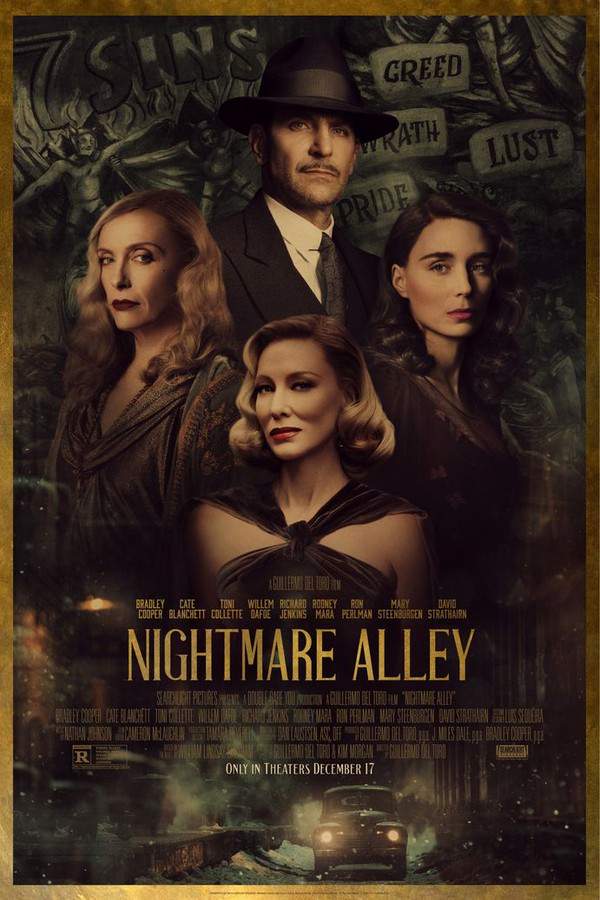
Nightmare Alley (1947) movie poster

Plot Summary

Nightmare Alley (1947) Plot Summary Explained

Release, runtime and language
1947 · 110 min · English
JustWatch #22,223 18
Directed by
Edmund Goulding
Starring
Coleen Gray, Mike Mazurki, Tyrone Power, Joan Blondell, Taylor Holmes, Bonnie Bannon

A charismatic drifter named Stanton Carlisle joins a traveling carnival, hoping to find opportunity and belonging. There, he learns the tricks of the trade from the mysterious "Mademoiselle Zeena" and her troubled husband, Pete. As Stanton hones his deceptive skills, he leaves the carnival and ventures into a world of glamour and danger, where he encounters a manipulative psychologist and a wealthy, influential client, leading him down a path of corruption and unforeseen consequences.

On this page (6)
  1. 1 Where to watch
  2. 2 What happens: full plot
  3. 3 Plot questions answered
  4. 4 The book behind the movie
  5. 5 Movie threads
  6. 6 Every angle

Where to watch

Where to Watch Nightmare Alley (1947)

Where can you watch Nightmare Alley? Stream, rent or buy it in the US, including on YouTube TV: current JustWatch availability with up-to-date prices.

Streaming availability powered by JustWatch

Full plot summary · contains spoilers

What Happens in Nightmare Alley: Full Plot Summary

The whole story of Nightmare Alley (1947) explained, from the opening scene to the final frame: every key event, every twist and what it all adds up to. Read it as a quick recap before the sequel, to check a scene you missed, or to finally understand what really happened.

The story unfolds with Stanton "Stan" Carlisle (Tyrone Power), a man with a notorious past, who starts by disposing of a dubious figure in his home, igniting a shift in his life. After this incident, he boards a bus that takes him to a vibrant traveling carnival. Here, he watches an unsettling performance by Clem Hoatley (Mike Mazurki), who introduces the "Geek" ([Paul Anderson]), a character whose bizarre and gruesome act of killing chickens both horrifies and captivates the audience.

As Stan mingles with carnival folk, he encounters Bruno ([Mike Mazurki]), the strongest man, and Major Mosquito ([Taylor Holmes]), the smallest. Initially thought of as a mere troublemaker, Stan soon gains their respect and is invited to join their ranks as they prepare for their next destination. During this journey, he grows particularly close to Molly Cahill (Coleen Gray), whose mesmerizing act involves harnessing electrifying energy. Bruno is quick to warn Stan to respect Molly, reminding him of a promise he made to her father, underlining the stakes should he fail to honor it.

When chaos ensues at the carnival due to a surprise escape by the "Geek," Stan and Clem frantically search for him. Tensions erupt when the Geek suddenly strikes Stan with a rock, but before matters escalate, Clem intervenes. As the carnival progresses, Stan's fascination with Zeena ([Joan Blondell]) grows—a clairvoyant who possesses an extraordinary ability to connect with her audience. Together with her husband Pete ([George Beranger]), they devise an act that emphasizes her mediumistic talents.

As Stan delves deeper into the world of manipulation and illusion, he comes up with a plan to incorporate Molly into his act, envisioning an electrifying performance that merges their talents. Issues begin to surface, confronting Stan as he struggles between his mounting feelings for those around him and his instinct for self-preservation. Following a night of indulgence, Clem shares a harrowing tale about the origins of the Geek, illustrating the man’s tragic fate of being stripped of his identity.

Stan attempts to learn the tricks of the trade from Zeena and Pete, but the couple warns him against meddling with the dead. During a fateful blend of whiskey and deceit, Stan becomes embroiled in a dangerous game, ultimately leading to tragedy when an unexpected death rocks their world—Pete's demise, a pivotal moment that escalates into chaos amongst the carnival crew.

With emotions running high and tensions palpable, Stan and Molly's relationship intensifies, prompting him to persuade her to leave the carnival with him. They share a passionate kiss, but their plans are interrupted by Bruno, who lashes out in anger. Molly's passionate declaration of love calms Bruno, though Stan’s farewell to Zeena, wherein he offers her Pete's prized book, is met with a refusal.

As the plot thickens, two years have flown by, and Stan's act in New York, dubbed "The Great Stanton," captures audiences' imaginations. Stan impressively showcases his supposed psychic abilities while performing alongside Molly. However, a twist occurs when Dr. Lilith Ritter ([Helen Walker]) enters their world, intrigued by Stan's talents and offering a stark view on what awaits him.

>“I can feel the spirit of your son.”

Intrigued, Stan engages in discussions with Judge Charles Kimball ([Ian Keith]), who commissions a private reading to satisfy his quest for closure regarding his son's death. However, the gripping tension between Stan and his deteriorating moral compass grows, while the shadows of his past loom large, revealing a troubling relationship with his father that weighs heavily on his psyche.

As the narrative spirals into deception, Stan's connection with Lilith intensifies, leading to his manipulation of wealthy patrons, including Ezra Grindle ([George Beranger]), in a dangerous game driven by greed and ambition. Stan becomes entwined in a web of darkness, culminating in chaos as he plans to stage fake séances, seeking to exploit those grieving.

However, the fateful web tightens unbearably as Molly uncovers Stan's infidelity, driving a wedge between them. After a series of brutal confrontations and tragic events, including a shocking double murder, Stan finds himself adrift in a maelstrom of disgrace.

The final act leads him back to Lilith, but betrayal lurks at every corner as Stan discovers her true intentions. He spirals deeper into desperation, marking the conclusion of an agonizing journey, now finding himself unceremoniously rejected from performing as a clairvoyant at a new carnival. The story closes with Stan, once a man of promise, now a shell of his former self—destined to take on the tragic role of the "Geek," forever laughing through tears as his life spirals into shadows beyond redemption.
Last updated: November 17, 2024 at 13:59

Was this helpful?

Plot questions answered

Nightmare Alley Plot Explained: Your Questions Answered

The questions people ask most about Nightmare Alley (1947): what happens in the confusing scenes, why the characters do what they do, the twists, hidden details and what the ending means. Each answer contains spoilers.

Q1

Why does Pete die at the carnival?

Pete dies after a night of drinking whiskey mixed with a lethal chemical. Stan inadvertently poisons Pete when he adds a cleaning solution to the whiskey during a moment of recklessness. This tragedy marks a turning point that sends shockwaves through the carnival crew and sets Stan on his path of deception.

Foreshadowing: Earlier, Zeena and Pete had warned Stan not to meddle with the dead, foreshadowing the destructive consequences of his tampering.

  • pete death
  • carnival
  • poisoning
  • zeena
  • pete
Q2

Why does Stan end up as the Geek?

Stan becomes the Geek after his elaborate scheme of deceiving wealthy clients collapses. When his manipulation of Ezra Grindle fails and Dr. Lilith Ritter betrays him, Stan is left penniless and disgraced. Unable to find work as a clairvoyant, he is reduced to taking the lowest job available, the very same degraded role he once watched with horror at the carnival.

Foreshadowing: The film opens with Stan witnessing the Geek's disturbing act, establishing the tragic cycle that ultimately consumes him.

  • geek fate
  • stan downfall
  • carnival cycle
  • tragic ending
Q3

What is Stan's relationship with Dr. Lilith Ritter?

Dr. Lilith Ritter is a psychologist who becomes Stan's partner in exploiting wealthy clients. She refers grieving patrons like Judge Charles Kimball and Ezra Grindle to Stan for fake séances. However, Lilith ultimately betrays Stan, revealing she was using him all along to steal his methods. She tricks Stan into a fake seance with her wealthy lover, exposing his fraud to the police.

Foreshadowing: When Lilith first meets Stan, she offers a stark warning about his future, hinting at the manipulative dynamic to come.

  • lilith ritter
  • psychologist
  • deception
  • betrayal
  • ezra grindle
Q4

Why does Stan betray Molly with Lilith?

Stan betrays Molly because his ambition and greed consume him. After moving to New York and gaining success as 'The Great Stanton,' he becomes seduced by the wealth and power available through Lilith's high-society connections. His affair with Lilith represents his complete moral corruption, abandoning the honest life he could have had with Molly.

Foreshadowing: Early in the carnival, Bruno warns Stan to respect Molly, foreshadowing his failure to honor that trust.

  • molly betrayal
  • stan infidelity
  • lilith affair
  • ambition corruption
Q5

What is the Geek and what does he represent?

The Geek is a carnival performer who appears to go into a trance and kill chickens with his teeth. In reality, the Geek is a broken man, likely a carnival worker who was fed alcohol and drugs to make him perform. The Geek represents the ultimate dehumanization and exploitation within the carnival world, serving as the tragic fate that awaits those who fall to the lowest rung.

Foreshadowing: Clem tells Stan the tragic story of how a man becomes a Geek, hinting at the dark cycle that will later consume Stan himself.

  • geek
  • carnival exploitation
  • chickens
  • tragic fate
Q6

Why does Ezra Grindle kill himself?

Ezra Grindle commits suicide after Stan manipulates him during a fake séance. Stan tricks Grindle into believing he can contact his dead son, using information stolen from Zeena's act. This cruel deception drives Grindle to despair. When the truth is exposed, Grindle is humiliated and unable to face the consequences, leading to his suicide.

Foreshadowing: Stan had used the same cold reading techniques learned from Zeena and Pete to exploit Grindle's grief.

  • ezra grindle
  • suicide
  • seance fraud
  • cold reading
Q7

Why does Molly leave Stan?

Molly leaves Stan after discovering his affair with Dr. Lilith Ritter. The betrayal shatters their relationship, which had been strained by Stan's growing obsession with wealth and deception. Molly represents the honest, decent life Stan is abandoning in pursuit of his criminal ambitions.

Foreshadowing: Bruno's early warning about respecting Molly foreshadows Stan's ultimate failure to protect their relationship.

  • molly leaves
  • affair discovery
  • stan betrayal
  • relationship end
Q8

What happens to Zeena after Pete's death?

After Pete's death, Zeena is left grieving but continues performing at the carnival. When Stan offers her Pete's code book, the secret to their medium act, she refuses to take it, showing her disgust at Stan's role in her husband's death. Zeena represents the honest practitioners of the carnival who refuse to sink to Stan's level of deception.

Foreshadowing: Zeena had warned Stan about meddling with the dead, making her refusal a direct consequence of his recklessness.

  • zeena
  • pete death
  • code book
  • carnival
  • medium
Q9

Why does Stan kill the man at the beginning of the film?

The opening scene shows Stan disposing of a dubious figure in his home, establishing his criminal past. This act propels him to leave town and join the traveling carnival, seeking a fresh start. The nature of this incident remains somewhat vague, but it establishes Stan as a man willing to commit violence to protect himself, hinting at the darker aspects of his character that will emerge later.

Foreshadowing: This violent beginning foreshadows Stan's moral descent throughout the film.

  • stan past
  • violence
  • criminal background
  • opening scene
Q10

What happens to Stan at the end of the movie?

At the end of Nightmare Alley, Stan is completely broken. After his schemes collapse and Lilith betrays him, he returns to the carnival, but now as a broken man seeking any job. He is reduced to becoming the Geek, the lowest and most degrading role in the carnival. The film closes on Stan performing the Geek's act, laughing through tears as he has become exactly what he once watched in horror.

Foreshadowing: The cyclical nature of the story, starting and ending at the carnival, emphasizes how Stan has come full circle to the lowest possible point.

  • stan fate
  • final scene
  • geek role
  • downfall
  • tragedy

Movie threads

More Movies Like Nightmare Alley, by Mood & Story

Curated lists built around what makes Nightmare Alley tick: the same mood, the same kind of story or the same emotional payoff. Each list explains why these movies belong together.

Moral decay stories like Nightmare Alley

Stories where ambition corrupts and leads to an inevitable, bleak collapse. If you enjoyed the tragic descent in Nightmare Alley, explore more movies about characters corrupted by ambition. These films, often dramas or noirs, feature a steady pacing and heavy emotional weight, charting a path from aspiration to a bleak, morally bankrupt end.

  • grim
  • fatalistic
  • cynical
  • desperate
  • tragic
  • atmospheric
  • Tone: dark, cynical, fatalistic
  • Pacing: steady, methodical
Why these movies?

The story pattern: Narratives in this thread typically follow a cause-and-effect structure, where a character's fatal flaw—often greed, hubris, or a desperate need for belonging—sets them on a path of increasing compromise. The story methodically strips away their morality, leading to a climax that emphasizes the inescapable consequences of their choices.

Why they belong together: These movies are grouped by their shared focus on a tragic, character-driven downfall. They possess a dark, cynical tone, a steady, deliberate pacing that builds a sense of doom, and a high emotional intensity born from witnessing a human soul unravel. The bleak endings are a key unifying element.

Gritty film noirs like Nightmare Alley

Atmospheric tales of grifters and con artists in a morally ambiguous underworld. Fans of the deceptive, atmospheric world of Nightmare Alley will find more like it here. These movies capture the essence of film noir: cynical protagonists, a dark and grim mood, psychological manipulation, and stories set on the fringes of society.

  • noir
  • cynical
  • atmospheric
  • sinister
  • psychological
  • grim
  • Tone: dark, sinister, cynical
  • Pacing: steady, atmospheric
Why these movies?

The story pattern: The narrative pattern often involves a protagonist, usually an anti-hero or outright grifter, navigating a web of lies and double-crosses. The plot twists through a world of shadows and intrigue, where the main conflict is as much about surviving the psychological games as it is about physical danger.

Why they belong together: These films are united by their core noir sensibilities: a dark, atmospheric mood, a cynical worldview, and central themes of deception, manipulation, and fate. They share a steady, sometimes slow-burn pacing that allows the tension and sense of dread to build effectively within their richly drawn, sinister worlds.

Every angle

Nightmare Alley (1947) Explained: Plot, Timeline & Characters

Everything about Nightmare Alley in one place: what happens in the plot summary, the timeline in chronological order, the characters and meaning and a spoiler-free summary. What's After the Movie adds the cast, box office and post-credit scenes.

Coming soon on iOS and Android

The Plot Explained Movie Summary App

Plot summaries, endings explained and timelines on your phone. Catch up on any movie in minutes, save your favorites and never miss a twist again.

Be the first to know when we launch. Your email stays private, always.

Learn more about the app