Plot Explained Spoilers guaranteed!
Plot Explained

Browse by genre

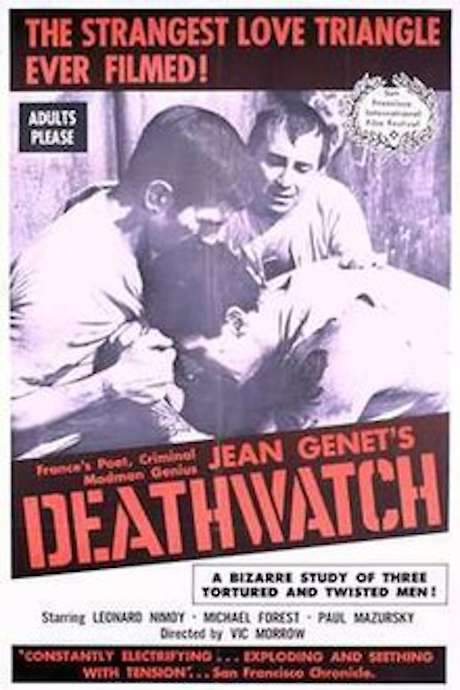
Deathwatch (1966) movie poster

Spoiler-Free Summary

Deathwatch (1966) Spoiler-Free Summary – What It's About

Release, runtime and language
1966 · 88 mins · English
Loading streaming availability…
Directed by
Vic Morrow
Starring
Leonard Nimoy, Paul Mazursky, Gavin MacLeod, Robert Ellenstein, Michael Forest, Andre Tayir

Homosexual outlaws on a rampage! Based on a play by Jean Genet, a small-time thief battles with his gay cellmate over a third illiterate, muscular convict.

On this page (7)
  1. 1 Where to watch
  2. 2 What it is about
  3. 3 Is it worth watching?
  4. 4 After you watch
  5. 5 Movie threads
  6. 6 Movies like Deathwatch
  7. 7 Every angle
Loading streaming availability…

Spoiler-free summary · safe to read

What Is Deathwatch About? (No Spoilers)

The plot of Deathwatch (1966) without spoilers: what it is about, who it follows and where it takes place, told without the twists or the ending. Enough to decide whether it is your next watch, not enough to ruin it.

In the grim confines of a French prison, a group of outlaws navigates a world where authority hangs by a thread and survival depends on the fragile balance of power. The claustrophobic corridors echo with a mixture of raw aggression and uneasy camaraderie, creating an atmosphere that feels both suffocating and electric. Within this tight‑knit community, the tension between survival and self‑assertion is omnipresent, hinting at larger questions about freedom and identity.

At the heart of the story is Greeneyes, a towering, illiterate inmate whose silence masks a simmering inner turmoil. He clings to the fragile connection with his wife through letters read aloud by his cellmate, a ritual that reveals both his vulnerability and his yearning for control over a fate that seems predetermined. His relationship with his wife, though mediated by others, becomes a barometer for his own sense of power and helplessness, casting a lingering shadow over his interactions with those around him.

Sharing the cell are Lefranc, a smooth‑talking jewel thief, and Maurice, a tough‑mouthed hoodlum, each vying for respect in an environment where alliances shift as quickly as the guard’s whistle. Their rivalry is mirrored by the presence of Snowball, a formidable figure whose influence looms large over the others. The delicate dance of loyalty, envy, and the pursuit of status creates a simmering undercurrent that propels the narrative forward without ever revealing its ultimate resolution.

The film’s tone blends stark realism with an almost theatrical intensity, reflecting its origins in Jean Genet’s play. The stark lighting, the echoing corridors, and the palpable tension between characters convey a world where every gesture carries weight, and where the struggle for dominance is as much about inner truth as outward survival. This atmospheric portrait invites viewers to linger on the complexities of power, desire, and the human condition within a stark, unforgiving prison setting.

Last updated: December 04, 2025 at 23:27

Was this helpful?

What to expect

Is Deathwatch Worth Watching? What It Feels Like

Is it dark, sad, slow, intense or confusing? The mood of Deathwatch (1966) in a few tags, without a word about how it ends. Each tag opens a list of movies that feel the same.

After you watch

Seen Deathwatch? Now Read the Spoilers

Once you have watched Deathwatch (1966), come back for the full story: the plot summary with spoilers, the timeline in chronological order, the characters and meaning.

Movie threads

More Movies Like Deathwatch, by Mood & Story

Curated lists built around what makes Deathwatch tick: the same mood, the same kind of story or the same emotional payoff. Each list explains why these movies belong together.

Confinement power plays like in Deathwatch

Stories where volatile relationships unravel in tight, oppressive spaces. If you liked the tense psychological battles and oppressive setting of Deathwatch, explore more movies about volatile power dynamics in confined worlds. These films capture the desperate struggle for control in places like prisons, submarines, and isolated institutions where alliances are fragile and survival is a brutal game.

  • claustrophobic
  • oppressive
  • volatile
  • desperate
  • brutal
  • psychological tension
  • Tone: dark, oppressive
  • Pacing: steady, building tension
Why these movies?

The story pattern: A narrative pattern where characters are physically or socially trapped, leading to escalating conflicts over dominance and submission. The plot is driven by shifting alliances, betrayals, and the psychological toll of living under constant threat, typically culminating in a devastating outcome for the characters.

Why they belong together: These films are grouped together because they share a core focus on the intense psychological and emotional effects of confinement, creating a consistent mood of claustrophobia, desperation, and high-stakes interpersonal conflict. They often feature a bleak or tragic tone and a steady pacing that builds dread.


Bleak stories of masculinity like Deathwatch

Raw portrayals of men confronting their own futility and fragile identities. For viewers who appreciated Deathwatch's exploration of male identity, power, and despair, this collection features similar movies about men in crisis. These dramatic films examine volatile masculinity, homoerotic tensions, and existential dread, often ending on a bleak note without redemption.

  • desperate
  • melancholic
  • brutal
  • existential
  • volatile
  • psychological
  • Tone: dark, melancholic
  • Pacing: steady, character-driven
Why these movies?

The story pattern: The narrative follows a male protagonist or group of men as their constructed identities and relationships are tested to the breaking point. The journey typically involves a confrontation with desire, violence, and the futility of their struggle, leading to a conclusion that offers no solace or redemption, only a deeper sense of despair.

Why they belong together: Movies in this thread are connected by their profound and critical look at masculine identity in states of crisis. They share a heavy emotional weight, a dark or bleak tone, and a focus on complex, often destructive relationships between men, resulting in a consistently somber and thought-provoking viewing experience.

If you liked this

Movies Like Deathwatch

Similar movies to Deathwatch: the same genre, themes or kind of story. Each one comes with its own plot summary, timeline and ending explained.

Browse all movie summaries

Every angle

Deathwatch (1966) Explained: Plot, Timeline & Characters

Everything about Deathwatch in one place: what happens in the plot summary, the timeline in chronological order, the characters and meaning and a spoiler-free summary. What's After the Movie adds the cast, box office and post-credit scenes.

Coming soon on iOS and Android

The Plot Explained Movie Summary App

Plot summaries, endings explained and timelines on your phone. Catch up on any movie in minutes, save your favorites and never miss a twist again.

Be the first to know when we launch. Your email stays private, always.

Learn more about the app