Plot Explained Spoilers guaranteed!
Plot Explained

Browse by genre

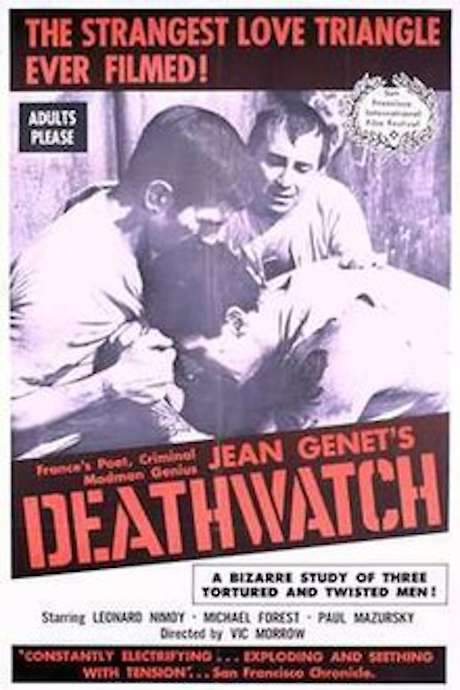
Deathwatch (1966) movie poster

Characters & Themes

Deathwatch (1966) Characters, Setting & Themes Explained

Release, runtime and language
1966 · 88 mins · English
Loading streaming availability…
Directed by
Vic Morrow
Starring
Leonard Nimoy, Paul Mazursky, Gavin MacLeod, Robert Ellenstein, Michael Forest, Andre Tayir

Homosexual outlaws on a rampage! Based on a play by Jean Genet, a small-time thief battles with his gay cellmate over a third illiterate, muscular convict.

On this page (8)
  1. 1 Where to watch
  2. 2 Characters explained (5)
  3. 3 Where & when it takes place
  4. 4 Themes & meaning (3)
  5. 5 Character & meaning questions
  6. 6 Movie threads
  7. 7 Movies like Deathwatch
  8. 8 Every angle
Loading streaming availability…

5 main characters · contains spoilers

Deathwatch Characters Explained: Who Is Who

The main characters of Deathwatch (1966), heroes and villains: what drives them, how they change over the course of the story and what each of them reveals about the film's bigger ideas.

  • Greeneyes (Michael Forest)

    A murderer awaiting execution who is illiterate and relies on Lefranc to read letters from his wife. His emotional arc moves from desire for his wife's death to a grim moment of realization and a partial, painful shift toward dependency on the prison system and its guards. He experiences rage, vulnerability, and a momentary clarity about his own limits.

    • 🧠 Illiteracy
    • 🔗 Dependency
    • 🕊️ Survival
  • Jules LaFranc (Leonard Nimoy)

    A jewel thief turned inmate who manipulates others to win Greeneyes' favor. He writes and speaks for Lefranc, aiming to ascend in power, but his plan backfires when his imitation of loyalty is exposed. His murder of Maurice seems to secure his status momentarily, but reveals the hollowness of his ambition.

    • 🗡️ Scheming
    • 🗝️ Opportunism
  • Maurice (Paul Mazursky)

    A hoodlum cellmate who competes with Lefranc for Greeneyes' favor. His confidence fuels brawls and rivalries and he is taunted by Lefranc. He ultimately becomes a victim in the survival calculus of the prison.

    • 💥 Rivalry
    • 🧭 Ambition
  • Snowball

    A powerful inmate whose presence and alliances influence the prison's balance of power. He interacts with Greeneyes and contributes to the ebb and flow of contraband and protection within the cell block.

    • 🛡️ Power
    • 🧭 Influence
  • Guard (Robert Ellenstein)

    A guard who fluctuates between friendliness and coercion, enabling contraband exchanges and manipulating inmate dynamics. His role highlights how authorities sustain the prison's harsh order.

    • ⚖️ Authority
    • 🗝️ Corruption

Last updated: October 05, 2025 at 08:36

Was this helpful?

Setting

Where and When Does Deathwatch Take Place?

The setting of Deathwatch (1966): the year and time period, the places and locations, and how they shape the characters, the mood and the tension of the story.

Time period

Historical

The narrative is anchored in a historical prison setting where capital punishment by guillotine is part of everyday life. The atmosphere evokes a bygone era when such executions were public and central to the justice system. The prisoners' choices and relationships are framed by this stern clock and the constant countdown to the execution.

Location

Prison, France

The film unfolds inside a grim prison where murderers await execution by guillotine. The environment shapes fragile alliances, brutal power plays, and the struggle for survival among inmates. Daily life is defined by bars, watchful guards, and the looming threat of death as guilt and ambition collide.

  • 🔒 Prison
  • 🕰️ Historical setting
  • ⚖️ Capital punishment

Last updated: October 05, 2025 at 08:36

Was this helpful?

3 major themes

Deathwatch Meaning: Themes & Message Explained

What is Deathwatch (1966) really about? The emotional, social and philosophical themes the film keeps returning to, its symbolism and the message beneath the surface.

  • Power and Survival

    Power within the prison is negotiated through fear, manipulation, and proximity to Greeneyes. Lefranc and Maurice jockey for influence, using schemes and aggression to win favor while facing brutal competition from fellow inmates. The constant threat of violence drives alliances, betrayals, and a precarious balance of control.

  • Psychological Prison

    Greeneyes describes an internal prison of his own making, showing how guilt, illiteracy, and desperation trap him as surely as the bars. The schemes reveal how thoughts and plans can imprison a person just as much as any cell. The film explores freedom, control, and the slippery line between cunning and cruelty.

  • Betrayal and Death

    Lefranc's murder of Maurice exposes the fragility of loyalty in confinement, where ambition and fear trump affection. Greeneyes's disgust and the guards' complicity expose how power structures sustain violence. The chain of betrayals escalates until the cost of survival becomes deadly.

Last updated: October 05, 2025 at 08:36

Was this helpful?

Character & theme questions

Deathwatch Characters & Meaning: Your Questions Answered

The questions people ask about Deathwatch (1966): who the characters really are, their relationships, what the symbols mean, where it takes place and what the movie is really about. Each answer contains spoilers.

Q1

Where is Deathwatch set?

The film takes place inside a grim French prison where murderers await execution by guillotine. The setting is dominated by bars, watchful guards, and the constant looming threat of death, creating an oppressive atmosphere that shapes all inmate interactions.

  • prison
  • france
  • setting
  • location
Q2

What time period does the film depict?

The story is set in a historical era when capital punishment by guillotine was part of everyday life in France. This period context frames the prisoners' choices and relationships, with the stern clock and countdown to execution constantly hanging over the narrative.

  • historical
  • era
  • time period
  • france
  • guillotine
Q3

What does the prison setting represent?

Beyond physical confinement, the prison represents a psychological prison where guilt, illiteracy, and desperation trap characters as surely as the bars do. The film explores how thoughts and schemes can imprison a person just as effectively as any cell.

  • prison
  • symbolism
  • psychological imprisonment
  • freedom
Q4

What are the main themes in Deathwatch?

The film explores three interconnected themes: Power and Survival, where inmates negotiate influence through fear and manipulation; Psychological Prison, showing how internal struggles trap characters as much as physical confinement; and Betrayal and Death, revealing how loyalty crumbles under ambition and fear.

  • themes
  • power
  • survival
  • betrayal
  • psychological
Q5

How does Deathwatch portray power dynamics?

Power within the prison is constantly negotiated through fear, manipulation, and strategic alliances. Lefranc and Maurice compete for Greeneyes' favor using schemes and aggression, while facing brutal competition from fellow inmates. The constant threat of violence drives a precarious balance of control.

  • power
  • control
  • manipulation
  • alliances
  • hierarchy
Q6

What does the title Deathwatch mean?

The title refers to the constant vigil prisoners keep as they await execution. It captures both the literal countdown to death and the psychological surveillance within the prison, where inmates watch each other for signs of weakness or betrayal.

  • deathwatch
  • title
  • meaning
  • execution
Q7

Who is Greeneyes in the film?

Greeneyes is a murderer awaiting execution who is illiterate and relies on Lefranc to read letters from his wife. His emotional journey moves from desiring his wife's death to a painful shift toward dependency on the prison system. He experiences rage, vulnerability, and moments of stark clarity about his limitations.

  • greeneyes
  • michael forest
  • character
  • prisoner
Q8

Who is Lefranc and what is his role?

Jules LaFranc is a jewel thief who manipulates others to win Greeneyes' favor. He writes and speaks for Greeneyes, aiming to ascend in the prison's power hierarchy. His scheme to appear loyal eventually backfires, and his murder of Maurice reveals the hollowness of his ambitions.

  • lefranc
  • leonard nimoy
  • character
  • manipulator
Q9

What role does Maurice play in the story?

Maurice is a hoodlum cellmate who competes with Lefranc for Greeneyes' favor. His confidence fuels brawls and rivalries, and he becomes a victim in the brutal survival calculus of the prison. His fate exposes how ambition and fear trump affection in the confined environment.

  • maurice
  • paul mazursky
  • character
  • rival
Q10

How does the film handle betrayal?

The film shows how loyalty in confinement is fragile, where ambition and fear trump genuine affection. Lefranc's murder of Maurice exposes this vulnerability. Greeneyes' disgust and the guards' complicity reveal how existing power structures sustain violence, creating an escalating chain of betrayals.

  • betrayal
  • loyalty
  • murder
  • violence
Q11

What role do the guards play in the prison?

The guards fluctuate between friendliness and coercion, enabling contraband exchanges while manipulating inmate dynamics. Their role highlights how authorities sustain the prison's harsh order, using both direct control and subtle manipulation to maintain the brutal hierarchy.

  • guard
  • authority
  • prison system
  • control

Movie threads

More Movies Like Deathwatch, by Mood & Story

Curated lists built around what makes Deathwatch tick: the same mood, the same kind of story or the same emotional payoff. Each list explains why these movies belong together.

Confinement power plays like in Deathwatch

Stories where volatile relationships unravel in tight, oppressive spaces. If you liked the tense psychological battles and oppressive setting of Deathwatch, explore more movies about volatile power dynamics in confined worlds. These films capture the desperate struggle for control in places like prisons, submarines, and isolated institutions where alliances are fragile and survival is a brutal game.

  • claustrophobic
  • oppressive
  • volatile
  • desperate
  • brutal
  • psychological tension
  • Tone: dark, oppressive
  • Pacing: steady, building tension
Why these movies?

The story pattern: A narrative pattern where characters are physically or socially trapped, leading to escalating conflicts over dominance and submission. The plot is driven by shifting alliances, betrayals, and the psychological toll of living under constant threat, typically culminating in a devastating outcome for the characters.

Why they belong together: These films are grouped together because they share a core focus on the intense psychological and emotional effects of confinement, creating a consistent mood of claustrophobia, desperation, and high-stakes interpersonal conflict. They often feature a bleak or tragic tone and a steady pacing that builds dread.

Bleak stories of masculinity like Deathwatch

Raw portrayals of men confronting their own futility and fragile identities. For viewers who appreciated Deathwatch's exploration of male identity, power, and despair, this collection features similar movies about men in crisis. These dramatic films examine volatile masculinity, homoerotic tensions, and existential dread, often ending on a bleak note without redemption.

  • desperate
  • melancholic
  • brutal
  • existential
  • volatile
  • psychological
  • Tone: dark, melancholic
  • Pacing: steady, character-driven
Why these movies?

The story pattern: The narrative follows a male protagonist or group of men as their constructed identities and relationships are tested to the breaking point. The journey typically involves a confrontation with desire, violence, and the futility of their struggle, leading to a conclusion that offers no solace or redemption, only a deeper sense of despair.

Why they belong together: Movies in this thread are connected by their profound and critical look at masculine identity in states of crisis. They share a heavy emotional weight, a dark or bleak tone, and a focus on complex, often destructive relationships between men, resulting in a consistently somber and thought-provoking viewing experience.

If you liked this

Movies Like Deathwatch

Similar movies to Deathwatch: the same genre, themes or kind of story. Each one comes with its own plot summary, timeline and ending explained.

Browse all movie summaries

Every angle

Deathwatch (1966) Explained: Plot, Timeline & Characters

Everything about Deathwatch in one place: what happens in the plot summary, the timeline in chronological order, the characters and meaning and a spoiler-free summary. What's After the Movie adds the cast, box office and post-credit scenes.

Coming soon on iOS and Android

The Plot Explained Movie Summary App

Plot summaries, endings explained and timelines on your phone. Catch up on any movie in minutes, save your favorites and never miss a twist again.

Be the first to know when we launch. Your email stays private, always.

Learn more about the app