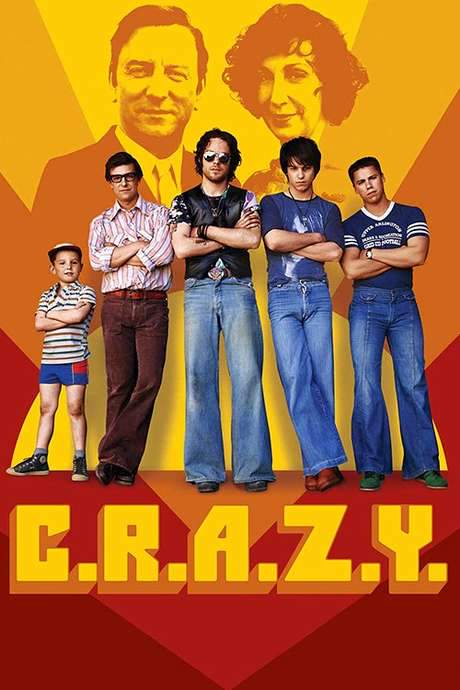
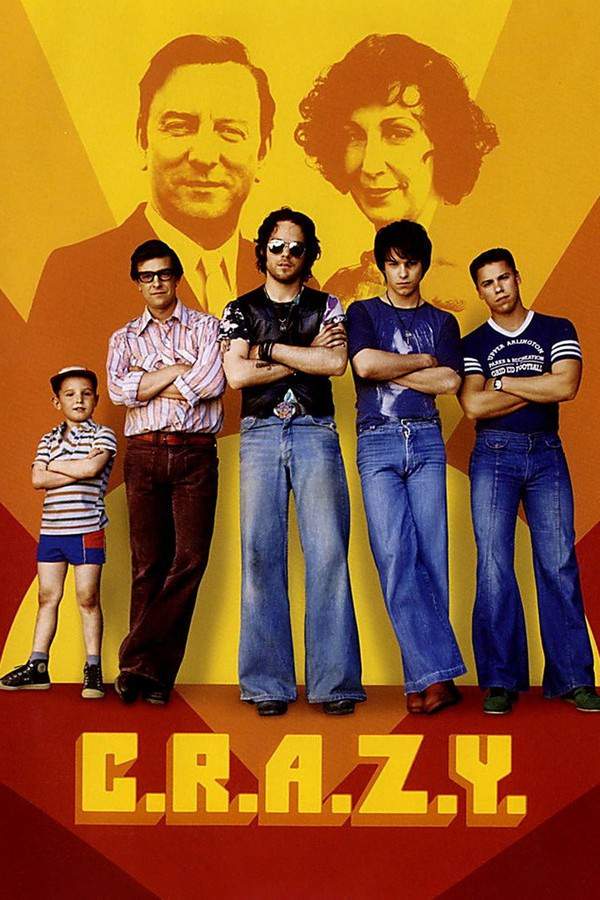
Born on Christmas in 1960, Zac grows up as one of four, soon five, Beaulieu brothers: the bookish Christian, the rebellious Raymond, the sporty and sometimes blunt Antoine, and then Yvan. He shares a close, complex bond with his father, Gervais, but that bond begins to fray as Zac’s individuality and nonconformity come into sharper focus. The family’s dynamic unravels dramatically when Gervais comes home to find Zac wearing his mother’s clothes, an event that effectively宣اری marks the beginning of an ongoing, painful rift between father and son.
At the 1975 Christmas party, Zac shares a joint with Paul, Brigitte’s boyfriend, sparking a new, confusing attraction. Zac’s friend Michelle tries to kiss him, but he gently blocks her advances to protect their friendship. Soon after, he learns that Brigitte has returned to Paul. A sense of restlessness pushes Zac toward new experiences, and a spontaneous moment on a red light while riding his motorcycle nearly ends in tragedy when he’s struck by a car and hospitalized. During his recovery, he learns that Brigitte is back with Paul.
As Zac begins a relationship with Michelle, the situation at home grows tenser. The moment of closure and crisis arrives when Gervais insists that Zac undergo therapy to “cure” his sexuality. The therapist provocatively concludes that Zac’s earlier acts were the result of a subconscious, deliberate mistake meant to reveal his “gay” nature to his father, a diagnosis that Deeply disturbs Zac and his sense of self.
By the Christmas dinner of 1980, Zac and Michelle’s relationship has intensified, both emotionally and physically. The family news worsens when Christian announces his engagement, and during Christian’s wedding reception, Zac and Paul are seen sharing a joint—mistakenly interpreted as a kiss by a guest. The overheard gossip reaches Gervais, who confronts Zac in the rain. In a moment of raw honesty, Zac admits that he is not kissing Paul, but he confesses that he wishes he had been. Michelle, hiding nearby, hears him, and in the chaos that follows, Gervais tells Zac to leave. He then flees, traveling as far as Jerusalem.
In a pivotal, painful turn, Zac, disillusioned after a sexual encounter that leaves him restless, wanders the desert. A Bedouin discovers him, offers water, and takes him under care. He returns home to a new wave of sorrow: his second eldest brother lies in the hospital after a heroin overdose and dies the next day. After the funeral, Gervais shares a tender, emotional embrace with Zac, signaling a possible healing of their fractured relationship.
A decade later, Zac reflects on those years and recalls how Gervais had, in many ways, become a father again—so much so that he even welcomed Zac’s lover into the house. The story tracks the long arc of family, identity, and forgiveness, painting a portrait of a young man navigating love, conflict, and acceptance amid a family that is slowly learning to reconcile the past with the present.