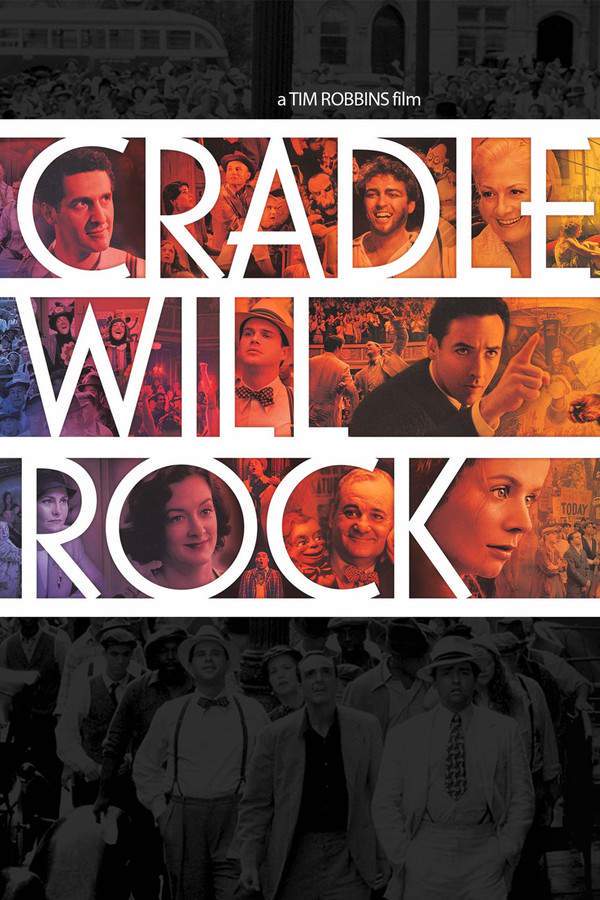
In the shadow of the Great Depression, 1930s New York hums with a restless energy where labor protests meet bold artistic experiments. The city’s streets are plastered with striking murals, its theaters promise affordable escapism, and an uneasy dialogue between commerce, politics, and creativity bubbles beneath every storefront. The atmosphere is both gritty and hopeful, a place where ideas clash as loudly as the factories’ clamor, setting the stage for a cultural battle that feels as inevitable as the dust settling over the skyline.
At the heart of this turmoil lies the Federal Theatre Project, a New Deal initiative overseen by Hallie Flanagan, determined to bring theater to the masses. Inside its bustling offices a talented yet tormented playwright, Marc Blitzstein, wrestles with his next musical, while visionary director Orson Welles and pragmatic producer John Houseman prepare to stage something that could become a rallying cry for an era. Their ambition is tempered by the looming presence of a government eager to police dissent, creating a charged tension that powers every rehearsal and whispered conversation.
Parallel to the theatrical world, a network of artists, activists, and policymakers navigates its own uneasy alliances. Hazel Huffman, an ardent anti‑communist, balances her loyalties while attending secretive gatherings, and Tommy Crickshaw, a ventriloquist yearning for meaningful work, finds himself pulled between personal desire and ideological pressure. Across the city, Margherita Sarfatti, a cultural envoy of Mussolini’s regime, courts influential American magnates such as Nelson Rockefeller, whose patronage has brought Diego Rivera’s politically charged murals to the Rockefeller Center. Their interactions hint at a fragile partnership where art serves both propaganda and rebellion, and where personal convictions are tested by the demands of power.
The film’s tone weaves together satire, earnest idealism, and a palpable sense of impending conflict. It captures a moment when creators stand on the brink of either being silenced or igniting a movement, inviting the audience to feel the electric anticipation that comes when culture, conscience, and censorship converge in a city that never sleeps.