Plot Explained Spoilers guaranteed!
Plot Explained

Browse by genre

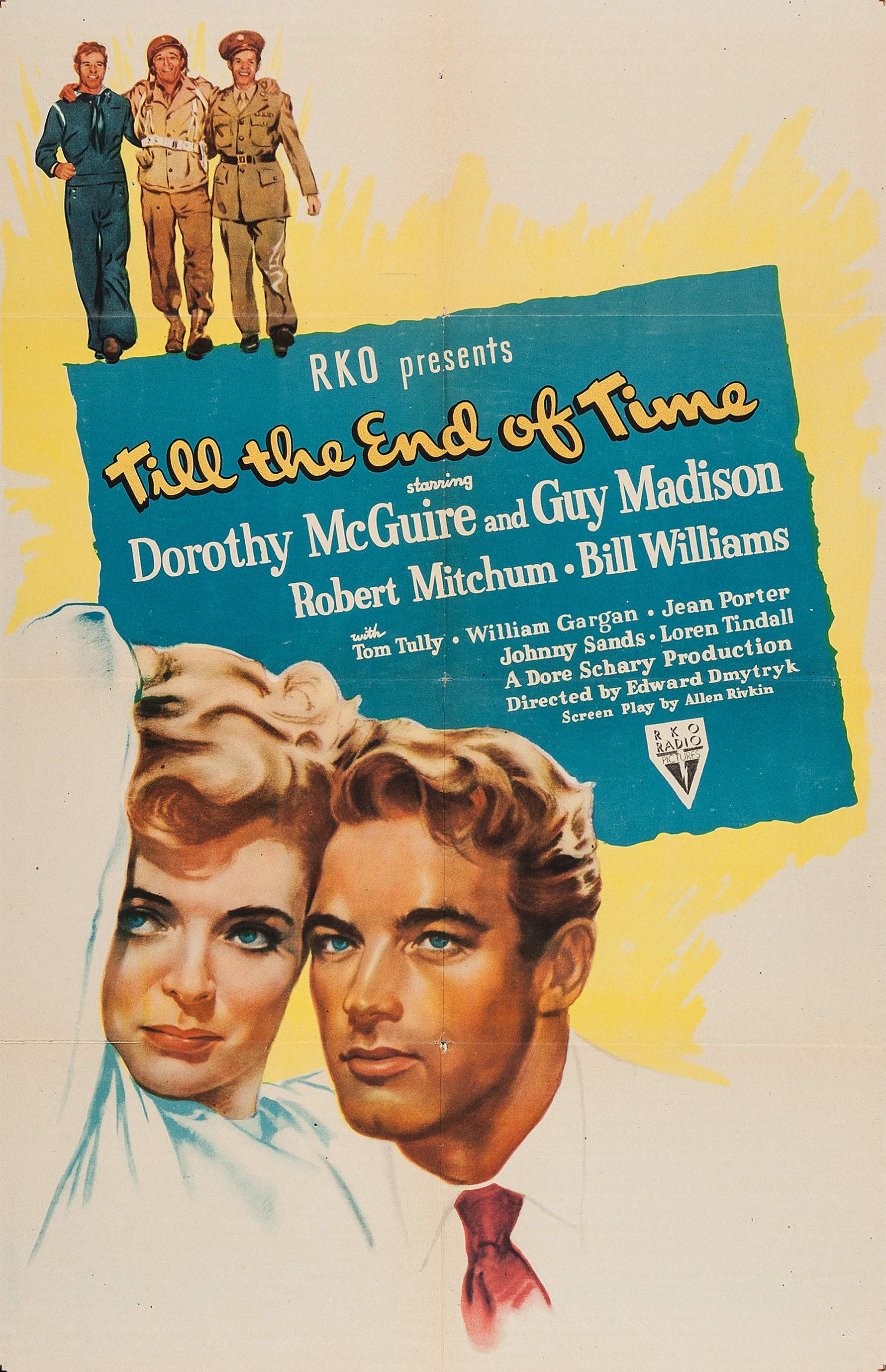
Till the End of Time (1946) movie poster

Plot Summary

Till the End of Time (1946) Plot Summary Explained

Release, runtime and language
1946 · 105 min
Loading streaming availability…
Directed by
Edward Dmytryk
Starring
Robert Mitchum, Johnny Sands, Dorothy McGuire, Tom Tully, Bill Williams, Guy Madison

Amidst the devastation of war in Europe, a vibrant cabaret singer finds her life and love complicated by a passionate, yet forbidden, romance with a wealthy aristocrat. Their intense relationship faces challenges from societal pressures and the harsh realities of the ongoing conflict, forcing them to confront difficult choices and fight for their future.

On this page (6)
  1. 1 Where to watch
  2. 2 What happens: full plot
  3. 3 Plot questions answered
  4. 4 Movie threads
  5. 5 Movies like Till the End of Time
  6. 6 Every angle
Loading streaming availability…

Full plot summary · contains spoilers

What Happens in Till the End of Time: Full Plot Summary

The whole story of Till the End of Time (1946) explained, from the opening scene to the final frame: every key event, every twist and what it all adds up to. Read it as a quick recap before the sequel, to check a scene you missed, or to finally understand what really happened.

As the euphoria of VJ Day fades, two experienced Marine Corps friends, Corporal William "Bill" Tabeshaw (Robert Mitchum), a former cowboy marked by war injuries, and Private First Class Cliff Harper (Johnny Sands), find themselves unexpectedly thrown into civilian life. Cliff, who enlisted after Pearl Harbor and is free of physical wounds, struggles with the emotional burden of nearly four lost years in the service. While adjusting to the post-war surroundings of Los Angeles, he becomes infatuated with his new neighbor, Helen Ingersoll, a vibrant 18-year-old who has developed a crush on him.

In search of comfort among familiar faces, Cliff heads to Scuffy's, now a bar, where he reunites with naval aviator Pinky (Bill Williams). Over drinks, Pinky introduces Cliff to Pat Ruscomb, a grieving war widow coming to terms with her husband's death just 14 months earlier. Initially hesitant, Cliff and Pat feel an undeniable chemistry, leading to a spontaneous encounter at her apartment. Yet, Pat suggests that their bond is merely a product of wartime chaos, leaving Cliff feeling disillusioned.

Upon returning home to his joyful parents, C.W. and Amy, Cliff's restlessness intensifies. His mother's eagerness to forget the war and return to normalcy frustrates him even more. In an effort to process his feelings, he tries to connect with Pat, but his attempts are met with silence. As he lies awake, Cliff is torn between pretending to sleep for his parents' sake and letting the tears of sorrow fall freely.

The following day, Pinky invites Cliff to join him and Pat for ice skating, dubbing Pat as his "date." Unsure of their relationship's nature, Cliff decides to bring along Helen, who lightens the mood with her presence. At a coffee shop, Cliff finds himself providing comfort to a fellow veteran struggling with post-war life, while Pat encourages him to face his emotional turmoil and share his experiences with his family.

As Cliff grapples with his father’s expectations, he reaches a breaking point, adamantly refusing to choose a specific direction in life. The tension escalates at breakfast when he tries to confide in his mother, who advises him to "stop dwelling on the past." Bill then bursts into their lives, boasting of a recent windfall and plans to invest in a small ranch in New Mexico. Cliff engages in lighthearted banter with Bill about women, gambling, and drinking, while his mother's disapproval hangs in the air.

Bill and Cliff visit their friend Sgt. Perry Kincheloe, a double amputee who had shared a hospital room with Bill during the war. Now at home, Perry mentors his younger brother in boxing and rejects any suggestion to use his artificial legs. His journey serves as a somber reminder that some scars from war never truly heal.

As they reminisce at Scuffy's bar, Bill reflects on Perry's struggles, noting how the Marine had once flourished in the hospital but is now sinking into despair. Cliff observes the camaraderie of their wartime experiences contrasted against the loneliness of civilian life. The sight of Pat in the bar, waiting for an Army Air Forces captain, provokes feelings of jealousy and unhappiness in Cliff.

When Cliff faces an argument with his parents after returning home late, he's unable to convey the depth of his friendship with Bill and the shared trauma of their past. The emotional chasm between their war experiences and new realities fuels his sense of isolation. Outside Pat's apartment, the sight of her sharing a goodnight kiss with another man ignites his anger, leading him to insult her and storm away, leaving her in anguish.

The following morning, Cliff offers reconciliation, revealing his growing affection for Pat. Her defenses come down as she opens up about marrying her late husband, highlighting her conflict between honoring his memory and her evolving feelings for Cliff. As they bond over their shared loneliness, Pat suggests that Cliff could work at her electronics factory to find purpose. However, on his first day, a minor dispute with the foreman leads to unforeseen consequences that culminate in Cliff proposing to Pat—urging her to escape worries and responsibilities, a plan bound to create complications down the line.

Bill arrives at Cliff's home, his carefree attitude masking the severe pain from his head injuries sustained in battle. Choosing to ignore his health, he drags Cliff out for a night on the town. They call on Perry, who, despite his circumstances, joins them for an outing. Chaos erupts at their encounter with a veterans' organization, leading to Bill’s explosive anger over their exclusionary policies. The confrontation results in violence, as Perry channels his fighting spirit and Bill suffers a serious blow to the head.

As Bill prepares for surgery, the hospital atmosphere is thick with uncertainty. He shares his dreams of a stable future with Cliff, yearning to trade the unpredictable life of a soldier for something grounded and fulfilling. On the cusp of change, Cliff reflects on his own journey and his budding love for Pat.

Cliff's father, C.W., reassures him that transitioning to civilian life parallels the transformation he experienced as a soldier, reminding him that such changes take time. The arrival of good news—Bill’s recovery—settles the tension, paving the way for a heartfelt reunion between Cliff and Pat, underscoring their shared hope and love for what lies ahead.
Last updated: November 17, 2024 at 22:01

Was this helpful?

Plot questions answered

Till the End of Time Plot Explained: Your Questions Answered

The questions people ask most about Till the End of Time (1946): what happens in the confusing scenes, why the characters do what they do, the twists, hidden details and what the ending means. Each answer contains spoilers.

Q1

Why does Cliff feel so disconnected from his family after returning from the war?

Cliff struggles to reconnect with his family because he cannot bridge the gap between his wartime experiences and their desire to return to normal life. His mother urges him to 'stop dwelling on the past,' but Cliff is haunted by nearly four years of trauma that his parents cannot understand. He feels torn between pretending to sleep for his parents' sake and allowing himself to grieve openly, creating an emotional isolation that makes him feel like a stranger in his own home.

  • cliff harper
  • post-war adjustment
  • veteran trauma
  • family tension
Q2

Why does Pat push Cliff away after their first encounter?

Pat suggests their connection is merely a product of wartime chaos because she is still grieving her late husband who died just 14 months earlier. She is conflicted between honoring his memory and allowing herself to develop feelings for Cliff. By dismissing their bond as circumstantial, Pat is protecting herself from the guilt of moving on while also testing whether Cliff's interest is genuine or just a coping mechanism.

  • pat ruscomb
  • war widow
  • grief
  • emotional conflict
Q3

Why does Bill choose to ignore his serious head injuries?

Bill masks his pain with a carefree attitude, dragging Cliff out for nights on the town despite suffering serious head injuries from the war. He refuses to acknowledge his deteriorating health because addressing it would force him to confront the reality that his combat injuries have permanently changed his life. His denial leads to the violent confrontation at the veterans' organization where he suffers a blow to the head that requires emergency surgery.

  • bill tabeshaw
  • war injuries
  • denial
  • head trauma
Q4

What triggers Cliff to propose to Pat so suddenly?

Cliff proposes to Pat on his first day at her electronics factory after a minor dispute with the foreman escalates. The impulsive proposal is not born from careful consideration but from Cliff's desperate desire to escape his mounting responsibilities and find purpose. He urges Pat to 'escape worries and responsibilities' with him, revealing his characteristic pattern of fleeing from difficult situations rather than facing them head-on.

  • cliff proposal
  • pat ruscomb
  • impulsiveness
  • escape
Q5

Why does Bill explode at the veterans organization?

Bill's violent outburst at the veterans organization stems from his anger at their exclusionary policies. As a Marine who served and suffered injuries, he is offended by an organization meant to support veterans that rejects Perry Kincheloe, a double amputee who clearly deserves assistance. The confrontation channels Bill's frustation over his own denied needs and those of fellow wounded veterans, culminating in a physical altercation that leaves him seriously injured.

  • bill tabeshaw
  • veterans organization
  • conflict
  • perry kincheloe
Q6

What does Perry Kincheloe represent in the story?

Perry Kincheloe serves as a somber mirror for what Cliff and Bill could become. A double amputee who shares a hospital room with Bill during the war, Perry mentors his younger brother in boxing and refuses to use artificial legs, channeling his fighting spirit. His journey illustrates that some scars from war never truly heal, and his presence at the veterans' organization confrontation highlights the ongoing struggles faced by the most severely wounded veterans.

  • perry kincheloe
  • war veteran
  • amputation
  • sacrifice
Q7

Why is Cliff drawn to Pat despite her initial rejection?

Cliff is drawn to Pat because they share a fundamental understanding of loneliness and loss. Both are struggling with the transition from wartime to civilian life, Cliff with his emotional trauma and Pat with her grief over her late husband. When Pat finally opens up about her marriage and conflict between honoring her husband's memory and her feelings for Cliff, their bond deepens because they recognize in each other the same wounded, searching spirit.

  • cliff pat relationship
  • shared loneliness
  • emotional connection
Q8

What does Bill's surgery represent in the narrative?

Bill's surgery represents a turning point that tests the characters' hope for the future. In the hospital, Bill shares his dreams of a stable life, trading the unpredictable existence of a soldier for something grounded. The uncertainty of his surgery creates tension that brings Cliff and Pat closer together, and the good news of Bill's recovery becomes the catalyst that eases familial tensions and allows the central couple to reunite with hope.

  • bill surgery
  • recovery
  • hope
  • turning point
Q9

How does Cliff finally reconcile with his parents?

Cliff's reconciliation with his parents comes through his father's reassurance that transitioning to civilian life takes time, just as it took time for C.W. to adjust when he returned from his own soldiering days. The arrival of good news about Bill's recovery removes the immediate tension, allowing Cliff to feel hopeful rather than trapped. His growing love for Pat also gives him a sense of direction and purpose that eases his restlessness.

  • cliff family reconciliation
  • c.w. harper
  • father son relationship

Movie threads

More Movies Like Till the End of Time, by Mood & Story

Curated lists built around what makes Till the End of Time tick: the same mood, the same kind of story or the same emotional payoff. Each list explains why these movies belong together.

Post-War Lives Stories like Till the End of Time

Stories about soldiers and civilians rebuilding their lives after the trauma of conflict. If you liked Till the End of Time's focus on veteran adjustment, explore more movies about characters grappling with post-war trauma and rebuilding their lives. These films capture the bittersweet mix of grief, hope, and the search for normalcy after conflict.

  • melancholic
  • pensive
  • hopeful
  • grieving
  • lonely
  • reflective
  • Tone: bittersweet, melancholic
  • Pacing: steady, reflective
Why these movies?

The story pattern: The narrative pattern follows characters—often soldiers but also civilians—as they navigate the aftermath of war. The conflict is primarily internal and social, revolving around trauma, alienation from a society that doesn't understand, and the challenge of forging new connections or reviving old ones.

Why they belong together: Movies in this thread are grouped by their shared focus on the psychological and emotional aftermath of conflict. They share a bittersweet, melancholic tone, a steady, character-driven pace, and a medium emotional weight centered on themes of loss, memory, and the difficult path toward healing.

Forbidden Romance Films similar to Till the End of Time

Intense, socially impossible love stories set during or after major societal upheaval. Find more movies like Till the End of Time, featuring passionate, forbidden romances that bloom amidst societal turmoil. These stories explore love challenged by class, war, or family conflict, resulting in a bittersweet and emotionally resonant experience.

  • romantic
  • passionate
  • restless
  • hopeful
  • melancholic
  • defiant
  • Tone: bittersweet, passionate
  • Pacing: steady, emotionally driven
Why these movies?

The story pattern: The narrative revolves around a central romance that is considered taboo or impractical due to external factors like class, family disapproval, or wartime loyalties. The plot is driven by the tension between the characters' desires and the oppressive societal norms or dangerous circumstances that threaten to tear them apart.

Why they belong together: These films are connected by their core premise of a love story flourishing against impossible odds. They share a medium-to-high romance score, a bittersweet tone balancing hope and despair, and a steady pacing that allows the emotional weight of the relationship and its obstacles to build effectively.

If you liked this

Movies Like Till the End of Time

Similar movies to Till the End of Time: the same genre, themes or kind of story. Each one comes with its own plot summary, timeline and ending explained.

Browse all movie summaries

Every angle

Till the End of Time (1946) Explained: Plot, Timeline & Characters

Everything about Till the End of Time in one place: what happens in the plot summary, the timeline in chronological order, the characters and meaning and a spoiler-free summary. What's After the Movie adds the cast, box office and post-credit scenes.

Coming soon on iOS and Android

The Plot Explained Movie Summary App

Plot summaries, endings explained and timelines on your phone. Catch up on any movie in minutes, save your favorites and never miss a twist again.

Be the first to know when we launch. Your email stays private, always.

Learn more about the app