Plot Explained Spoilers guaranteed!
Plot Explained

Browse by genre

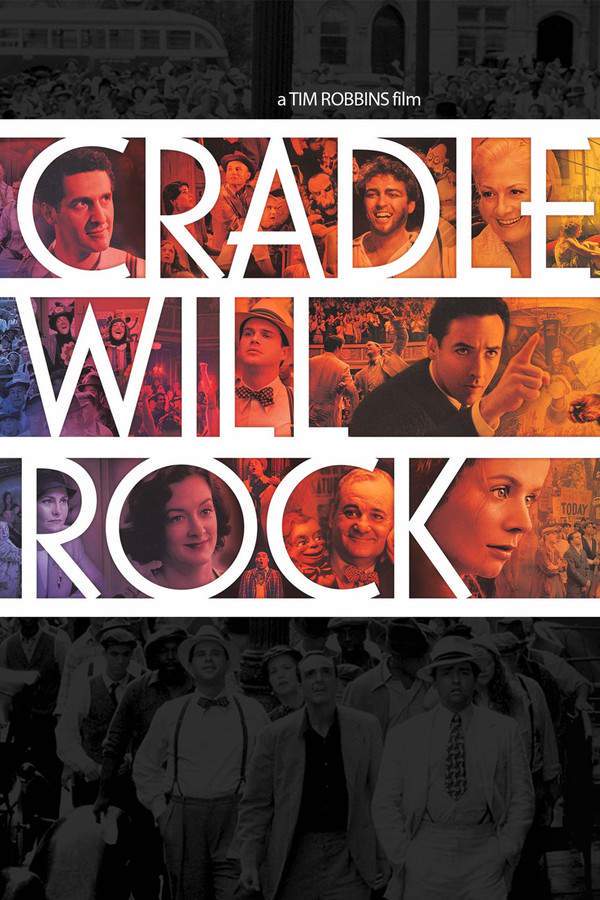
Cradle Will Rock (1999) movie poster

Plot Summary

Cradle Will Rock (1999) Plot Summary Explained

Release, runtime and language
1999 · 132 min · English
Loading streaming availability…
Budget
$36M

During the 1930s in New York, a period of labor unrest and artistic innovation, Diego Rivera's murals grace the lobby of Rockefeller Center, while Margherita Sarfatti orchestrates art sales to support Mussolini's war efforts. Orson Welles' bold stage production, "The Cradle Will Rock," is abruptly halted by U.S. soldiers, igniting a passionate conflict surrounding artistic expression and government censorship, and becoming a symbol of the era's cultural tensions.

On this page (6)
  1. 1 Where to watch
  2. 2 What happens: full plot
  3. 3 Plot questions answered
  4. 4 Movie threads
  5. 5 Movies like Cradle Will Rock
  6. 6 Every angle
Loading streaming availability…

Full plot summary · contains spoilers

What Happens in Cradle Will Rock: Full Plot Summary

The whole story of Cradle Will Rock (1999) explained, from the opening scene to the final frame: every key event, every twist and what it all adds up to. Read it as a quick recap before the sequel, to check a scene you missed, or to finally understand what really happened.

At the peak of the Great Depression, the Federal Theatre Project (FTP), steered by Hallie Flanagan, aims to deliver affordable theatre to millions throughout America. However, the FTP, along with other initiatives under the Works Progress Administration, grapples with mounting anti-communist scrutiny and intensified pressure from the newly formed House Committee on Un-American Activities.

In the heart of New York City, playwright Marc Blitzstein wrestles with creative block on his latest musical, The Cradle Will Rock. One day, during a public demonstration, he is visited by two imaginary entities symbolizing his deceased wife and the renowned German playwright Bertolt Brecht. They inspire him to inject the play with contemporary relevance rather than present it as an abstract notion. Motivated by their encouragement, he successfully completes the musical, which Flanagan greenlights as an FTP production, enlisting director Orson Welles and producer John Houseman for the project.

Amidst these developments, anti-communist FTP official Hazel Huffman organizes a gathering for fellow WPA employees sharing her views. At this meeting, Tommy Crickshaw, a ventriloquist involved with FTP's vaudeville initiative who feels dissatisfaction over his assignment with the talentless duo Sid and Larry, finds himself drawn to Hazel. While rehearsing the disturbing testimony she plans to present to HUAC, they grow closer; however, Hazel ultimately rebuffs Tommy's romantic advances. Experiencing a wave of despondency, Tommy oversleeps and discovers Sid and Larry taking center stage with his act. Following Hazel's eventual summons to testify before HUAC, her colleagues alienate her.

Simultaneously, Margherita Sarfatti, a delegate of Benito Mussolini's regime, visits New York to solicit backing from American industrialists for the war effort. She maintains connections with prominent figures such as William Randolph Hearst, Nelson Rockefeller, and steel tycoon Gray Mathers. Their pro-fascist inclinations create friction with his wife, Constance, who is an avid supporter of the arts and a friend to Houseman. Sarfatti facilitates the introduction between Rockefeller and Diego Rivera, who is commissioned to create a mural in the Rockefeller Center lobby. Tensions arise when Rivera's artwork, rife with communist symbolism including the portrayal of Vladimir Lenin, clashes with both Rockefeller and Sarfatti.

In the aftermath of Hazel's HUAC testimony, the WPA's future hangs in the balance as they face potential budget cuts. Although Flanagan makes a passionate case in front of HUAC defending the FTP, drastic measures follow: production funding is slashed, leading to widespread layoffs and an order to halt all ongoing projects, including The Cradle Will Rock. Now jobless, Tommy takes to the stage to perform a comedic routine, portraying his ventriloquist dummy as a Communist before walking off, leaving the dummy behind.

The production's opening night is thwarted due to FTP budget reductions, as the actors' guild refuses to allow a performance absent federal endorsement. Convicted not to succumb to defeat, Welles and Houseman, with the spirited support of Constance, orchestrate an impromptu performance in an abandoned theatre, featuring Blitzstein as both cast and orchestra. Male lead Aldo Silvano, struggling to provide for his family after distancing himself from his affluent parents due to their fascist views, reluctantly aligns with the union's decision to avert job loss. Meanwhile, female lead Olive Stanton must navigate a critical decision between the show and her established partnership with successful costar John Adair.

As Blitzstein launches into the inaugural song, the audience witnesses the other actors, including Aldo and a now-homeless Olive, spring to life and perform the entire play without ever stepping on stage. With the production drawing to a close, a jubilant celebration erupts among cast and audience alike. In parallel, workers dismantle Rivera's mural; Tommy shares a poignant embrace with a tearful Hazel in his dressing room; and a collective of former FTP artists conduct a mock funeral for Crickshaw's dummy, aptly renamed Federal Theatre Project. This procession culminates in present-day Times Square, decorated with billboards for Broadway productions.
Last updated: November 15, 2024 at 17:01

Was this helpful?

Plot questions answered

Cradle Will Rock Plot Explained: Your Questions Answered

The questions people ask most about Cradle Will Rock (1999): what happens in the confusing scenes, why the characters do what they do, the twists, hidden details and what the ending means. Each answer contains spoilers.

Q1

Why was The Cradle Will Rock production shut down?

The production was shut down when the WPA faced severe budget cuts after Hallie Flanagan testified before HUAC. The FTP's funding was dramatically reduced, leading to widespread layoffs and an order to halt all ongoing projects, including The Cradle Will Rock. Additionally, the actors' guild refused to allow a performance without federal endorsement, effectively preventing the scheduled opening night.

Foreshadowing: Earlier scenes establish the growing anti-communist pressure on the FTP and Hazel's controversial HUAC testimony.

  • federal theatre project
  • huac
  • budget cuts
  • production shutdown
  • orson welles
Q2

How did Orson Welles and John Houseman stage the performance despite the shutdown?

After the official production was cancelled, Welles and Houseman organized an impromptu performance in an abandoned theatre with support from Constance Rockefeller. Marc Blitzstein performed as both cast and orchestra, playing the piano and singing. The other actors, including Aldo Silvano and Olive Stanton, performed the entire play without ever stepping onto the stage, creating a unique underground performance that defied the shutdown order.

Foreshadowing: The film establishes Welles and Houseman's determination to proceed despite opposition earlier in the story.

  • orson welles
  • john houseman
  • abandoned theatre
  • underground performance
  • blitzstein
Q3

Why did Diego Rivera's mural cause controversy at Rockefeller Center?

Nelson Rockefeller commissioned Diego Rivera to create a mural for the Rockefeller Center lobby. However, the finished artwork contained communist symbolism, including a portrait of Vladimir Lenin. Rockefeller and Margherita Sarfatti, who had facilitated the introduction, viewed this as unacceptable given the anti-communist climate. The conflict led to the mural being dismantled, symbolizing the clash between art and political ideology during the era.

Foreshadowing: Sarfatti's earlier meetings with Rockefeller establish their pro-fascist inclinations that clashed with Rivera's communist beliefs.

  • diego rivera
  • rockefeller center
  • mural controversy
  • lenin
  • censorship
Q4

What happened to Tommy Crickshaw after the FTP funding was cut?

After losing his job with the FTP, Tommy Crickshaw performed a comedic routine on stage where he portrayed his ventriloquist dummy as a Communist, then walked off and left the dummy behind. The dummy was later symbolically renamed 'Federal Theatre Project' during a mock funeral procession in Times Square, representing the death of the FTP itself.

Foreshadowing: Tommy earlier expressed dissatisfaction with his assignment and felt marginalized from the main production.

  • tommy crickshaw
  • ventriloquist dummy
  • comedy routine
  • ftp funeral
Q5

Why did Hazel Huffman testify before HUAC?

Hazel Huffman, an anti-communist FTP official, was summoned to testify before the House Un-American Activities Committee. Her testimony was part of the broader political crackdown on suspected communists within government programs. After testifying, she faced alienation from her colleagues, and her actions contributed to the increased scrutiny that ultimately led to the FTP's funding cuts and shutdown.

Foreshadowing: Earlier scenes show Hazel organizing meetings of WPA employees who shared her anti-communist views.

  • hazel huffman
  • huac testimony
  • anti-communist
  • federal theatre project
Q6

What was the significance of the actors performing without being on stage?

During the impromptu performance, the actors remained hidden from view yet performed their roles audibly, creating a surreal theatrical experience. Aldo Silvano, who needed to support his family after breaking ties with his fascist parents, followed the union's decision to avoid losing jobs. Olive Stanton, now homeless, also participated. This creative solution allowed the play to be performed while technically complying with the actors' guild's refusal to appear on stage without federal endorsement.

Foreshadowing: The tension between the union's decision and the actors' personal circumstances was established earlier.

  • aldo silvano
  • olive stanton
  • actors guild
  • underground performance
  • union
Q7

What was Margherita Sarfatti's role in the story?

Margherita Sarfatti was a representative of Benito Mussolini's regime who visited New York to secure financial support from American industrialists for Italy's war effort. She cultivated relationships with powerful figures including William Randolph Hearst, Nelson Rockefeller, and steel tycoon Gray Mathers. She facilitated the commissioning of Diego Rivera's mural, but her pro-fascist agenda ultimately clashed with the artistic and political tensions of the era.

Foreshadowing: The film establishes her connections with American industrialists early in her storyline.

  • margherita sarfatti
  • mussolini
  • fascism
  • rockefeller
  • war funding
Q8

Why did Olive Stanton have to choose between the show and John Adair?

Olive Stanton, the female lead in The Cradle Will Rock, faced a critical decision between participating in the underground performance and maintaining her established partnership with successful costar John Adair. Her choice to join the performance meant risking her existing career, and she ultimately performed while homeless, demonstrating her commitment to the artistic cause despite the personal cost.

Foreshadowing: The tension between artistic integrity and career survival is a recurring theme throughout the film.

  • olive stanton
  • john adair
  • female lead
  • career choice
  • sacrifice
Q9

What did the mock funeral at the end of the movie symbolize?

The mock funeral in Times Square, where former FTP artists carried Tommy Crickshaw's ventriloquist dummy renamed 'Federal Theatre Project,' symbolized the death of the Federal Theatre Project itself. This bittersweet ending represented the end of an era for government-supported theatre, while also celebrating the enduring spirit and resilience of the artists who continued performing despite political oppression.

Foreshadowing: The funeral directly follows the successful underground performance, contrasting triumph with loss.

  • mock funeral
  • times square
  • federal theatre project
  • symbol
  • ending
Q10

What inspired Marc Blitzstein to complete The Cradle Will Rock?

Marc Blitzstein struggled with creative block while working on his musical. During a public demonstration, he was visited by two imaginary entities representing his deceased wife and Bertolt Brecht. These figures encouraged him to make the play relevant to contemporary issues rather than presenting it as an abstract work. Their encouragement motivated him to complete the musical with contemporary political relevance.

Foreshadowing: The imaginary visitors appear early in the film, establishing the creative genesis of the play.

  • marc blitzstein
  • bertolt brecht
  • creative block
  • inspiration
  • musical

Movie threads

More Movies Like Cradle Will Rock, by Mood & Story

Curated lists built around what makes Cradle Will Rock tick: the same mood, the same kind of story or the same emotional payoff. Each list explains why these movies belong together.

Movies about Artists Fighting the System like Cradle Will Rock

Passionate creators fighting institutional suppression to make their voices heard. Explore movies similar to Cradle Will Rock, where passionate artists confront censorship and political pressure. If you enjoyed the story of defiant theatrical expression, you'll find other powerful dramas about creators fighting for their art against powerful institutions.

  • defiant
  • passionate
  • tense
  • anxious
  • hopeful
  • triumphant
  • Tone: tense, defiant, passionate
  • Pacing: steady, methodical
Why these movies?

The story pattern: These narratives typically follow a group or individual artist whose work challenges the status quo. They face escalating pressure from authorities, leading to a climactic act of defiance that asserts the power of art, though often with bittersweet consequences for the creators themselves.

Why they belong together: They are grouped by their shared focus on the creative process as an act of courage, a tense and passionate tone driven by external conflict, and a central theme of artistic expression clashing with political or bureaucratic power.

Complex Historical Ensemble Dramas like Cradle Will Rock

Complex tapestry of interconnected lives during a pivotal historical moment. Find movies with a narrative style similar to Cradle Will Rock. These complex dramas interweave multiple storylines set during a defining historical period, offering a rich, multifaceted look at the people and events that shaped the era.

  • tense
  • anxious
  • complex
  • melancholic
  • hopeful
  • passionate
  • Tone: tense, anxious, melancholic
  • Pacing: steady, character-driven
Why these movies?

The story pattern: The narrative structure is complex, following several characters whose paths cross and diverge. The historical setting acts as a central force that connects their individual struggles, which range from artistic and political to deeply personal, building towards a collective climax that reflects the era's tensions.

Why they belong together: They share a complex, multi-threaded plot structure, a steady pacing that allows for deep immersion in the period, and a tone that balances the anxiety of the times with the passionate convictions of the characters.

If you liked this

Movies Like Cradle Will Rock

Similar movies to Cradle Will Rock: the same genre, themes or kind of story. Each one comes with its own plot summary, timeline and ending explained.

Browse all movie summaries

Every angle

Cradle Will Rock (1999) Explained: Plot, Timeline & Characters

Everything about Cradle Will Rock in one place: what happens in the plot summary, the timeline in chronological order, the characters and meaning and a spoiler-free summary. What's After the Movie adds the cast, box office and post-credit scenes.

Coming soon on iOS and Android

The Plot Explained Movie Summary App

Plot summaries, endings explained and timelines on your phone. Catch up on any movie in minutes, save your favorites and never miss a twist again.

Be the first to know when we launch. Your email stays private, always.

Learn more about the app