Plot Explained Spoilers guaranteed!
Plot Explained

Browse by genre

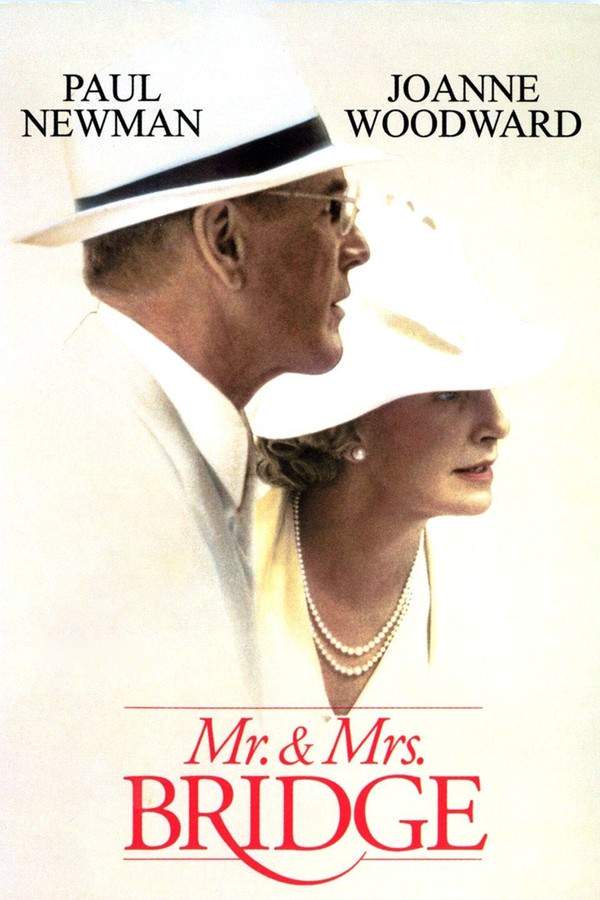
Mr. & Mrs. Bridge (1990) movie poster

Plot Summary

Mr. & Mrs. Bridge (1990) Plot Summary Explained

Release, runtime and language
1990 · 126 min · English
JustWatch #20,210 8
Directed by
James Ivory
Starring
Paul Newman, Joanne Woodward

A wealthy lawyer's seemingly perfect life with his wife and children in the Midwest is disrupted by the onset of World War II. As the war progresses and societal changes occur, tensions rise within the family, exposing underlying issues and challenging their idealized existence. The film explores the impact of external events on personal relationships and the fragility of a privileged lifestyle.

On this page (7)
  1. 1 Where to watch
  2. 2 What happens: full plot
  3. 3 Plot questions answered
  4. 4 Movie threads
  5. 5 Movies like Mr. & Mrs. Bridge
  6. 6 Categories
  7. 7 Every angle

Where to watch

Where to Watch Mr. & Mrs. Bridge (1990)

Where can you watch Mr. & Mrs. Bridge? Stream, rent or buy it in the US, including on Hoopla, Amazon Video and Fandango At Home: current JustWatch availability with up-to-date prices.

Streaming availability powered by JustWatch

Full plot summary · contains spoilers

What Happens in Mr. & Mrs. Bridge: Full Plot Summary

The whole story of Mr. & Mrs. Bridge (1990) explained, from the opening scene to the final frame: every key event, every twist and what it all adds up to. Read it as a quick recap before the sequel, to check a scene you missed, or to finally understand what really happened.

Walter and India Bridge are a couple in their later years, residing in Kansas City during the 1930s. Thanks to Walter's success as a lawyer, they enjoy a comfortable lifestyle, allowing India the pleasures of being a socialite housewife with grown children. However, India expresses to Walter her belief that he doesn’t truly know her, and Walter faces his own internal struggle regarding their eldest daughter Ruth's burgeoning sexual life. When he unexpectedly catches her in an intimate moment on the living room floor, he reluctantly agrees to let her move to New York City, offering her $1,000 to support her new life.

The narrative unfolds across various moments in their lives, many of which seem to lack significant impact. For example, their son Doug achieves the rank of Eagle Scout but does not acknowledge his mother during the ceremony, a moment fraught with awkwardness that goes unaddressed. During an intense storm, Walter and India find refuge in a restaurant, where he shares his dream of traveling to Europe together. Upon embarking on that trip, they marvel at stunning artwork and delight in provocative can-can shows, which rekindle Walter’s affection for India. Nevertheless, their joy is overshadowed by the onset of World War II, symbolized by the Nazis' invasion of Poland just after Walter gifts India a reproduction of her favorite painting.

Upon returning home, India stumbles upon a risqué magazine in Doug's room and subtly responds by giving him an outdated marriage manual without elaborating. The family is further shaken when their daughter Carolyn announces her engagement to a local man. Initially, Walter vehemently opposes the union, but after a forceful conversation with the fiancé, he concedes and allows the wedding to occur at their home.

One evening, Walter’s secretary seeks solace over drinks, confessing long-suppressed feelings for him. Walter, visibly uncomfortable, refrains from reacting and recommends she take a few days off. Amidst family gatherings, India asks Walter to express his love for her more frequently, while also trying to manage her worries about friends facing personal crises, including a tragic overdose.

As the melodrama unfolds, India ironically finds herself trapped in her own car due to a stall, calmly waiting for help during a snowstorm while Walter, unaware of her predicament, brings her flowers. A bystander comments that Walter should embrace more joy in his life, to which he responds, “I have known contentment.” This exchange encapsulates the essence of their lives—characterized by a profound lack of excitement yet a sense of tranquil routine.

The film concludes with home movies of the Bridge family, accompanied by captions that reveal their lives continued on a predictable path, devoid of significant change or upheaval—serving as a poignant reminder of the simple, albeit unremarkable, contentment that defined Mr. and Mrs. Bridge’s existence.
Last updated: November 04, 2024 at 01:57

Was this helpful?

Plot questions answered

Mr. & Mrs. Bridge Plot Explained: Your Questions Answered

The questions people ask most about Mr. & Mrs. Bridge (1990): what happens in the confusing scenes, why the characters do what they do, the twists, hidden details and what the ending means. Each answer contains spoilers.

Q1

Why does Walter give Ruth $1,000 to move to New York?

Walter discovers Ruth in an intimate moment on the living room floor, which shocks him and represents her growing sexual independence. Rather than confront the situation directly, he offers her $1,000 to support a new life in New York City, effectively paying her to leave. This decision reflects Walter's inability to handle his daughter's maturation and his preference for avoiding uncomfortable family conflicts.

Foreshadowing: This moment sets the pattern for how the Bridge family handles emotional tension, by monetary compensation rather than genuine communication.

  • Ruth Bridge
  • New York
  • $1
  • 000
  • Walter Bridge
  • daughter
Q2

Why doesn't Doug acknowledge India at his Eagle Scout ceremony?

During Doug's Eagle Scout ceremony, he deliberately refuses to acknowledge his mother India, creating an awkward moment that goes unaddressed by the family. This act symbolizes the growing emotional distance between India and her children, suggesting unresolved tensions or resentment that the Bridges never discuss openly. The film presents this moment as one of many unaddressed frictions that accumulate throughout their relationships.

Foreshadowing: This ceremony early in the film establishes the pattern of family members ignoring emotional ruptures rather than addressing them.

  • Doug Bridge
  • Eagle Scout
  • ceremony
  • India
  • emotional distance
Q3

Why does Walter initially oppose Carolyn's engagement?

Walter strongly objects to Carolyn's engagement to a local man, clinging to traditional values about his daughter's future. However, after a forceful conversation with the fiancé where the young man stands up to Walter's intimidation, he reluctantly concedes and allows the wedding to occur at their home. This conflict illustrates Walter's struggle between maintaining control over his children and accepting their independence.

Foreshadowing: This confrontation mirrors Walter's earlier inability to handle Ruth's independence, showing a pattern of paternal resistance before eventual surrender.

  • Carolyn engagement
  • Walter Bridge
  • wedding
  • fiancé
  • opposition
Q4

Why does India give Doug an outdated marriage manual?

Upon returning from Europe, India discovers a risqué magazine in Doug's room. Instead of confronting him directly about his sexuality, she responds by giving him an outdated marriage manual without explanation or discussion. This subtle, somewhat humorous act reflects India's conservative approach to parenting and her discomfort with addressing sexual topics openly with her children.

Foreshadowing: This moment establishes India's passive-aggressive communication style when dealing with uncomfortable family matters.

  • Doug
  • marriage manual
  • India
  • risqué magazine
  • parenting
Q5

What does Walter mean when he says 'I have known contentment'?

When a bystander suggests Walter should embrace more joy in his life, Walter responds with 'I have known contentment.' This statement encapsulates the film's central theme, the Bridges live a life of tranquil routine rather than excitement or passion. It's both a philosophical acceptance of their平稳 existence and a quiet admission of emotional stagnation. The line serves as the movie's emotional thesis, acknowledging their comfortable but emotionally limited life.

Foreshadowing: This statement, appearing late in the film, recontextualizes their Europe trip and Walter's secretary confession as missed opportunities for deeper connection.

  • contentment
  • Walter Bridge
  • joy
  • quote
  • meaning
Q6

Why does India get trapped in her car during the snowstorm?

India finds herself trapped in her own car when it stalls during a snowstorm. While she waits calmly for help, Walter, unaware of her situation, goes out to bring her flowers. This ironic moment highlights the disconnection in their marriage: Walter attempts a romantic gesture while his wife is in actual distress, demonstrating how their gestures often miss the real needs of each other.

Foreshadowing: This scene exemplifies the film's pattern of characters failing to truly connect despite their good intentions.

  • India
  • car
  • snowstorm
  • flowers
  • Walter
  • trapped
Q7

Why does World War II begin right after the Europe trip?

Walter and India travel to Europe and experience a rekindling of their romance through art and can-can shows. Their joy is immediately overshadowed by the outbreak of World War II, marked by the Nazis' invasion of Poland. This timing is significant, the world event mirrors their personal journey, as their brief escape from ordinary life is interrupted by global turmoil, returning them to their unchanged existence at home.

Foreshadowing: The war serves as both a historical backdrop and a symbolic reinforcement of how external events penetrate but don't fundamentally alter the Bridge family's emotional patterns.

  • Europe trip
  • World War II
  • Nazis invasion Poland
  • art
  • can-can
  • rekindling
Q8

Why does Walter not respond when his secretary confesses feelings for him?

Walter's secretary confesses long-suppressed feelings for him over drinks after work, seeking emotional solace. Walter visibly feels uncomfortable but refrains from reacting or reciprocating. He simply recommends she take a few days off. This moment demonstrates Walter's commitment to his marriage vows despite the lack of emotional intimacy with India, though it also highlights his tendency to avoid difficult emotional situations entirely.

Foreshadowing: This confession, occurring between the Europe trip and the car stall incident, underscores the theme of missed connections and unspoken feelings throughout the film.

  • secretary confession
  • Walter Bridge
  • feelings
  • marriage
  • discomfort
Q9

Why does India tell Walter he doesn't truly know her?

India expresses to Walter that he doesn't truly know her, revealing a deeper dissatisfaction beneath their comfortable lifestyle. This conversation occurs early in the film and establishes the central emotional tension of their marriage. Despite decades of marriage and material comfort, India feels emotionally unseen and understood only on the surface. This moment sets up the film's exploration of marital distance and unexamined emotional habits.

Foreshadowing: This complaint echoes throughout the film, particularly in moments like the Europe trip (where connection briefly improves) and her request for more frequent expressions of love.

  • India
  • Walter
  • unknown
  • emotional connection
  • marriage
Q10

Why is the film structured as a series of small, unconnected moments?

The film deliberately presents the Bridge family's life through episodic, seemingly disconnected moments rather than a conventional dramatic arc. This structure mirrors the nature of the family's existence, lives marked by unaddressed frictions, missed connections, and predictable routine. The slow pacing and accumulation of small moments create a cumulative emotional impact that reflects the film's themes of stagnation and emotional stagnation rather than dramatic change.

Foreshadowing: The home movie ending reinforces this structure, showing their lives continued with minimal change across years.

  • structure
  • episodic
  • pacing
  • film form
  • character-driven

Movie threads

More Movies Like Mr. & Mrs. Bridge, by Mood & Story

Curated lists built around what makes Mr. & Mrs. Bridge tick: the same mood, the same kind of story or the same emotional payoff. Each list explains why these movies belong together.

Quiet Family Dramas of Unspoken Tension like Mr. & Mrs. Bridge

Stories where domestic life is filled with quiet distance and unexpressed longing. Explore movies like Mr. & Mrs. Bridge that delve into the quiet drama of family life. These similar stories focus on unspoken tensions, generational divides, and the melancholic beauty found in domestic routines and societal expectations.

  • quiet
  • reflective
  • restrained
  • melancholic
  • nostalgic
  • domestic
  • Tone: melancholic, reflective
  • Pacing: slow, deliberate
Why these movies?

The story pattern: The narrative typically follows a family unit over a period of time, often linear, as small conflicts and societal pressures expose underlying fissures. Character arcs are subtle, emphasizing stagnation or quiet realizations rather than dramatic transformation, leading to a cumulative emotional impact.

Why they belong together: These films are grouped by their shared focus on restrained emotion, a slow, observational pace, and a melancholic tone. They prioritize atmosphere and character depth over plot, exploring the profound impact of what is left unsaid within intimate relationships.

Portraits of Midlife Stagnation and Societal Change like Mr. & Mrs. Bridge

Character studies of individuals grappling with quiet discontent as the world shifts around them. If you liked the themes in Mr. & Mrs. Bridge, discover similar movies about midlife crisis and societal change. These dramas explore characters confronting personal stagnation as their comfortable world is challenged by external forces.

  • stagnant
  • reflective
  • poignant
  • nostalgic
  • midlife
  • conformity
  • Tone: bittersweet, melancholic
  • Pacing: slow, contemplative
Why these movies?

The story pattern: The plot revolves around a central character or couple confronting the gap between their idealized life and a growing sense of emptiness. The story is often episodic, using societal upheaval as a backdrop to explore themes of conformity, missed opportunities, and the quiet tragedy of a life not fully lived.

Why they belong together: These movies share a specific thematic focus on midlife ennui and the impact of a changing world on personal identity. They possess a bittersweet or melancholic feel, a straightforward narrative complexity, and a medium emotional weight derived from introspection rather than high drama.

If you liked this

Movies Like Mr. & Mrs. Bridge

Similar movies to Mr. & Mrs. Bridge: the same genre, themes or kind of story. Each one comes with its own plot summary, timeline and ending explained.

Browse all movie summaries

Categories

Movie Lists Featuring Mr. & Mrs. Bridge

Mr. & Mrs. Bridge appears in these hand-built movie categories. Each one groups movies by a specific mood, theme or story type, with their plot summaries and endings explained.

View all movie categories

Every angle

Mr. & Mrs. Bridge (1990) Explained: Plot, Timeline & Characters

Everything about Mr. & Mrs. Bridge in one place: what happens in the plot summary, the timeline in chronological order, the characters and meaning and a spoiler-free summary. What's After the Movie adds the cast, box office and post-credit scenes.

Coming soon on iOS and Android

The Plot Explained Movie Summary App

Plot summaries, endings explained and timelines on your phone. Catch up on any movie in minutes, save your favorites and never miss a twist again.

Be the first to know when we launch. Your email stays private, always.

Learn more about the app