Plot Explained Spoilers guaranteed!
Plot Explained

Browse by genre

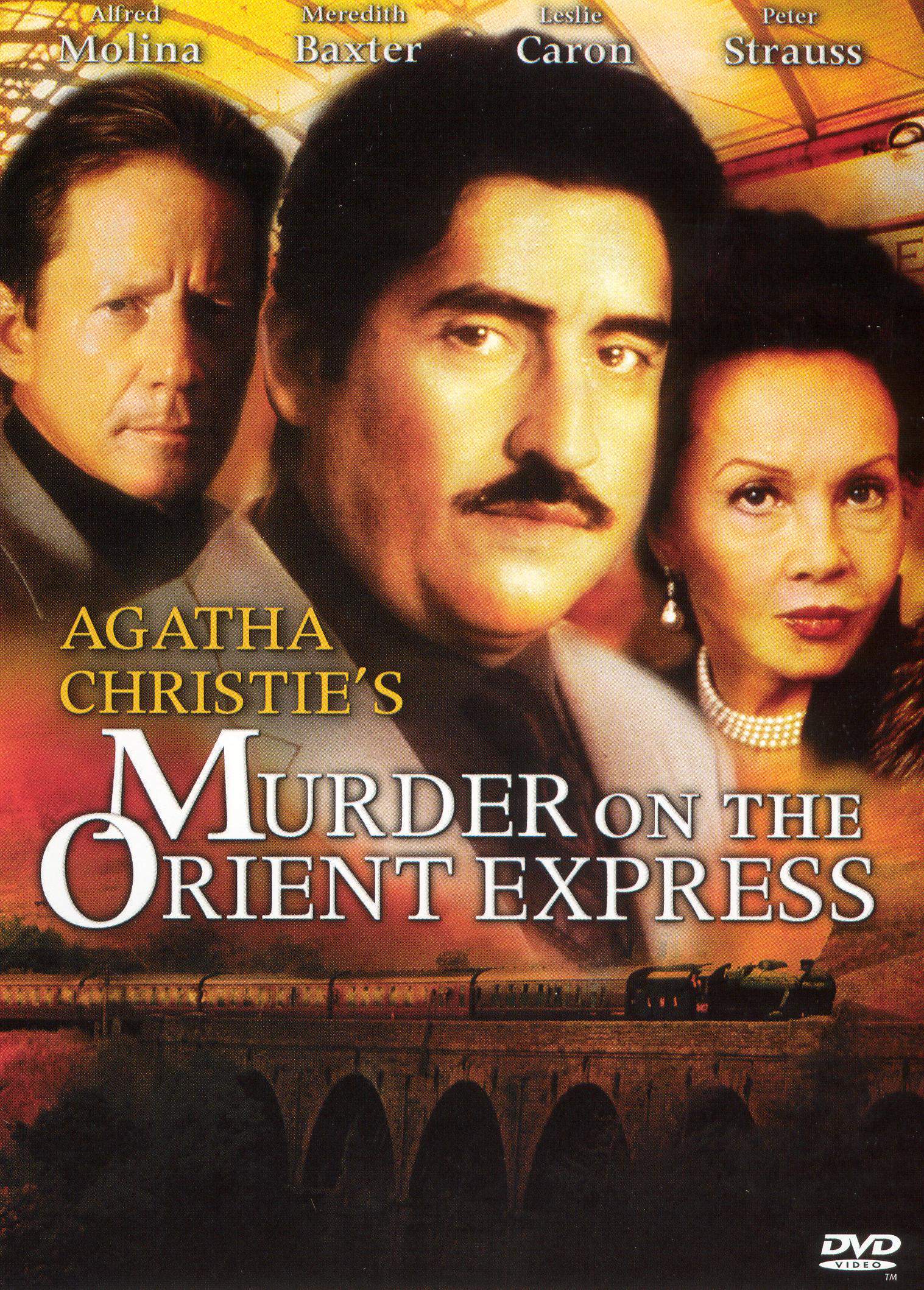
Murder on the Orient Express (2001) movie poster

Plot Summary

Murder on the Orient Express (2001) Plot Summary Explained

Release, runtime and language
2001 · 100 mins · English
Directed by
Carl Schenkel
Starring
Alfred Molina, Amira Casar, Meredith Baxter, Adam James, David Hunt, Dylan Smith

Agatha Christie’s classic whodunit is modernized. After solving a case in Istanbul, famed detective Hercule Poirot boards the luxurious Orient Express bound for London. A rock slide stops the train; a passenger is found stabbed nine times in his cabin. Stranded, Poirot must find the murderer among the trapped travelers.

On this page (6)
  1. 1 What happens: full plot
  2. 2 Plot questions answered
  3. 3 Movie threads
  4. 4 Movies like Murder on the Orient Express
  5. 5 Categories
  6. 6 Every angle

Full plot summary · contains spoilers

What Happens in Murder on the Orient Express: Full Plot Summary

The whole story of Murder on the Orient Express (2001) explained, from the opening scene to the final frame: every key event, every twist and what it all adds up to. Read it as a quick recap before the sequel, to check a scene you missed, or to finally understand what really happened.

Last updated: October 09, 2025 at 16:40

Was this helpful?

Plot questions answered

Murder on the Orient Express Plot Explained: Your Questions Answered

The questions people ask most about Murder on the Orient Express (2001): what happens in the confusing scenes, why the characters do what they do, the twists, hidden details and what the ending means. Each answer contains spoilers.

Q1

Why did Ratchett try to hire Poirot for protection?

Ratchett approached Poirot because he was receiving threatening letters and feared for his life. However, Poirot sensed something 'off' about Ratchett and declined the job. Later, investigation revealed Ratchett was actually John Cassetti, a convicted kidnapper and murderer who had orchestrated the abduction and death of young Daisy Armstrong, making him a target for revenge.

Foreshadowing: Early on, Poirot notes there is something wrong about Ratchett's face, hinting at his true nature.

  • ratchett
  • poirot
  • protection
  • threatening letters
  • hired
Q2

Who was Ratchett really?

Ratchett was secretly John Cassetti, an American gangster who had previously been convicted and imprisoned for the kidnapping and murder of three-year-old Daisy Armstrong. He had changed his identity and was traveling under the name Ratchett when the murder occurred.

Foreshadowing: The burned threatening note discovered by Poirot contained information connecting Ratchett to his criminal past.

  • ratchett
  • john cassetti
  • daisy armstrong
  • kidnapper
  • identity
Q3

What was the Daisy Armstrong case?

Daisy Armstrong was a young girl kidnapped and murdered by John Cassetti. Her death devastated her family, including her father who was a police commissioner and her mother who died of grief. The Armstrong family's tragedy became the central motive linking all the passengers to the murder.

Foreshadowing: The threatening letters Ratchett received referenced his past crimes, connecting to the Armstrong case.

  • daisy armstrong
  • kidnapping
  • murder
  • armstrong family
  • revenge
Q4

Why did all the passengers kill Ratchett together?

Every passenger on the train had a connection to the Armstrong family - they were either relatives, servants, or people whose lives were affected by Daisy Armstrong's murder. Together, they planned and executed Ratchett's murder as a collective act of justice, with each person delivering one of the twelve stab wounds.

Foreshadowing: The discovery of multiple knife wounds suggested more than one attacker from the start.

  • collective murder
  • revenge
  • armstrong
  • daisy
  • passengers
  • stabbing
Q5

Why did Arbuthnot shoot Poirot and deliberately miss?

Arbuthnot was a former army sniper who deliberately aimed to miss when shooting Poirot. This was part of the passengers' coordinated plan to misdirect the investigation. By confessing to the murder and attempting to kill Poirot, Arbuthnot hoped to draw attention away from the others and protect the collective conspiracy.

Foreshadowing: Poirot notes early on that Arbuthnot seems nervous during interrogations, hinting at his involvement.

  • arbuthnot
  • shoot
  • miss
  • sniper
  • confession
  • misdirect
Q6

Why was Mrs. Hubbard attacked on the train?

Mrs. Hubbard was stabbed from behind in her cabin, though she could not identify her attacker. This attack was actually staged by the conspirators as part of their plan. Hubbard later admitted to planning the murder and recruiting the other passengers, using her apparent victimhood to throw off suspicion.

Foreshadowing: The planted evidence in Hubbard's cabin - the bloodstained handkerchief and conductor's button - suggested the attack was staged.

  • mrs hubbard
  • attacked
  • stabbed
  • cabin
  • staged
Q7

Why did Poirot offer the passengers a choice between two verdicts?

Poirot presented two possible conclusions: that a lone killer committed the murder, or that all the passengers were collectively responsible for justice. He then offered them a chance to shoot him dead if they truly believed in their actions. This was a moral test rather than a genuine choice, as Poirot wanted them to confront the weight of their decision.

Foreshadowing: Throughout the investigation, Poirot struggled with the moral complexity of the case.

  • two verdicts
  • moral test
  • choice
  • passengers
  • shoot
Q8

Why did Poirot let the passengers go free?

Poirot decided to present the lone killer theory to the Yugoslavian police, allowing the other passengers to go free. He concluded that justice was impossible in this case because Cassetti, as the murderer of Daisy Armstrong, deserved death. The passengers had been motivated by protecting the innocent and avenging a child, making their crime morally complex.

Foreshadowing: Poirot's earlier decision to decline protecting Ratchett showed his awareness of the man's true nature.

  • free
  • go
  • passengers
  • poirot
  • justice
  • cassetti
Q9

How did Poirot connect all the passengers to the Armstrong case?

Through interrogation, Poirot discovered that each passenger had a connection to the Armstrong family. Some were relatives, others were household servants, and some had been affected by the case in other ways. The conductor, the Princess, the doctor, the widow, and others all shared this tragic link that united them in revenge.

Foreshadowing: The varied backgrounds of the passengers initially seemed random but later revealed deliberate casting.

  • connections
  • armstrong
  • passengers
  • relatives
  • servants
  • united
Q10

Why was Ratchett stabbed twelve times?

Ratchett was stabbed twelve times because twelve different people participated in the murder, each delivering one stab wound. This was a deliberate decision to ensure no single person could be blamed for the killing, making it impossible for any one passenger to be identified as the sole murderer.

Foreshadowing: The multiple stab wounds early indicated multiple attackers rather than a single killer.

  • twelve
  • stabbed
  • times
  • wounds
  • multiple
  • stabbing
Q11

What happens at the end of Murder on the Orient Express?

After the train is rescued and continues to London, Poirot presents his false conclusion of a lone killer to the police, allowing the passengers to continue their lives. As he departs, a British Army messenger hands him a note asking him to investigate a death on the Nile, setting up the events of Death on the Nile.

Foreshadowing: The final scene deliberately mirrors the setup of the next film in the Poirot series.

  • ending
  • death on the nile
  • teaser
  • note
  • messenger
  • continuation
Q12

What was significance of the burned threatening note?

The burned remnants of one of Ratchett's threatening notes were crucial evidence that revealed his true identity as John Cassetti. The note contained details about his past crimes, connecting him to the Armstrong kidnapping and establishing the motive for the passengers' collective revenge.

Foreshadowing: Poirot carefully collects and analyzes the burned pieces to reconstruct the evidence.

  • burned note
  • threatening
  • evidence
  • cassetti
  • armstrong
  • identity

Movie threads

More Movies Like Murder on the Orient Express, by Mood & Story

Curated lists built around what makes Murder on the Orient Express tick: the same mood, the same kind of story or the same emotional payoff. Each list explains why these movies belong together.

Locked-room murder mysteries like Murder on the Orient Express

A brilliant investigator solves a murder in a confined space, interrogating a fixed set of suspects. If you liked the contained, cerebral investigation in Murder on the Orient Express, you'll enjoy these other movies. This list features whodunits where a detective solves a crime in a confined space like a train, mansion, or isolated island, creating a tense, claustrophobic atmosphere.

  • suspenseful
  • claustrophobic
  • methodical
  • mysterious
  • atmospheric
  • cerebral
  • Tone: tense, mysterious
  • Pacing: steady, deliberate
Why these movies?

The story pattern: The narrative follows a structured investigative process. A crime, usually murder, occurs in a location that isolates everyone present. A central detective figure methodically works through a fixed list of suspects, uncovering secrets and connections until the surprising truth is revealed.

Why they belong together: Movies in this thread share a core structure: a confined setting, a set list of suspects, and a methodical detective. They create a similar vibe of intellectual puzzle-solving mixed with the rising tension of being trapped with a killer.
Movies with morally complex resolutions like Murder on the Orient Express

Stories where a crime reveals a complex web of motives, challenging simple notions of guilt and innocence. If you were intrigued by the morally grey ending of Murder on the Orient Express, explore these films. They feature crime stories and thrillers where the investigation leads to a complex, ethically ambiguous conclusion that challenges simple ideas of justice.

  • morally ambiguous
  • thought-provoking
  • tense
  • complex
  • suspenseful
  • dark secrets
  • Tone: tense, thought-provoking
  • Pacing: steady
Why these movies?

The story pattern: The narrative journey involves investigating a crime that initially seems straightforward. As layers are peeled back, a more complicated truth emerges, often involving multiple participants or a motive that blurs the line between victim and perpetrator. The ending typically provides resolution but leaves a lingering sense of moral uncertainty.

Why they belong together: These movies are grouped together by their shared focus on moral complexity. They move beyond a simple 'good vs. evil' dynamic, instead presenting crimes and solutions that force characters and viewers to confront difficult ethical questions.

If you liked this

Movies Like Murder on the Orient Express

Similar movies to Murder on the Orient Express: the same genre, themes or kind of story. Each one comes with its own plot summary, timeline and ending explained.

Browse all movie summaries

Categories

Movie Lists Featuring Murder on the Orient Express

Murder on the Orient Express appears in these hand-built movie categories. Each one groups movies by a specific mood, theme or story type, with their plot summaries and endings explained.

View all movie categories

Every angle

Murder on the Orient Express (2001) Explained: Plot, Timeline & Characters

Everything about Murder on the Orient Express in one place: what happens in the plot summary, the timeline in chronological order, the characters and meaning. What's After the Movie adds the cast, box office and post-credit scenes.

Coming soon on iOS and Android

The Plot Explained Movie Summary App

Plot summaries, endings explained and timelines on your phone. Catch up on any movie in minutes, save your favorites and never miss a twist again.

Be the first to know when we launch. Your email stays private, always.

Learn more about the app