Year: 1974
Runtime: 128 min
Director: Sidney Lumet
During a luxurious train ride through Europe, a wealthy businessman is found dead in his compartment. World-renowned detective Hercule Poirot is among the passengers and must use his extraordinary skills to investigate. As he delves deeper, Poirot finds himself entangled in a complex mystery involving a diverse group of suspects, each with a possible reason to commit the crime. He must unravel their secrets and lies to discover the truth behind this shocking event on the Orient Express.
Warning: spoilers below!
Haven’t seen Murder on the Orient Express yet? This summary contains major spoilers. Bookmark the page, watch the movie, and come back for the full breakdown. If you're ready, scroll on and relive the story!
Read the complete plot breakdown of Murder on the Orient Express (1974), including all key story events, major twists, and the ending explained in detail. Discover what really happened—and what it all means.
After successfully concluding a case in the Middle East, detective Hercule Poirot (Albert Finney) sets off for England aboard the famed Orient Express. During this journey, he reunites with his friend Bianchi (Martin Balsam), who is the director of the Compagnie Internationale des Wagons-Lits, and notices that the train is unusually full for the season, with all first-class cabins booked.
Just as the train departs Istanbul, a wealthy American businessman named Ratchett ([Richard Widmark]) approaches Poirot, offering a hefty sum of $15,000 for his services, as he has been receiving death threats. However, Poirot dismisses the case as uninteresting and declines the offer. As night falls, the train becomes ensnared in a fierce snowstorm in the Balkans. The following morning, the shocking news emerges: Ratchett has been found brutally killed in his cabin.
Determined to uncover the truth, Poirot, alongside Bianchi, enlists the help of Dr. Constantine ([George Coulouris]), a Greek doctor traveling unnoticed in another coach, along with Pierre Michel ([Jean-Pierre Cassel]), the middle-aged French conductor who is also among the suspects but aids in the investigation. As they delve deeper, Poirot uncovers a shocking revelation: Ratchett was not who he seemed; in reality, he was a notorious gangster named Cassetti who had a dark past involving the kidnapping and murder of a young girl named Daisy Armstrong.
An examination by Dr. Constantine indicates that Ratchett had been stabbed twelve times, with evidence suggesting that the murder occurred around 1:15 a.m. while the train was trapped in snow. With the other train compartments locked and no footprints in the snow, it quickly becomes apparent that the murderer is likely still present among the passengers.
As Poirot investigates further, he discovers that all the passengers have ties to the Armstrong family, each harboring motives for revenge due to the tragic aftermath of Daisy’s murder. The suspects include:
Hector McQueen ([Anthony Perkins]), Ratchett’s secretary;
Edward Beddoes ([Sir John Gielgud]), his British valet;
Mary Debenham ([Vanessa Redgrave]), a British teacher returning from Baghdad;
Colonel Arbuthnott ([Sean Connery]), an officer in the British Indian Army;
Princess Natalia Dragomiroff ([Wendy Hiller]), an elderly Russian royal;
Hildegarde Schmidt ([Rachel Roberts]), the Princess’s maid;
Count Rudolf Andrenyi ([Michael York]), a Hungarian diplomat;
Countess Elena Andrenyi ([Jacqueline Bisset]), his wife;
Greta Ohlsson ([Ingrid Bergman]), a Swedish missionary;
Mrs. Harriet Belinda Hubbard ([Lauren Bacall]), a talkative American socialite;
Antonio Gino Foscarelli ([Denis Quilley]), an Italian car salesman;
Cyrus B. “Dick” Hardman ([Colin Blakely]), a detective masquerading as a talent agent;
Pierre-Paul Michel ([Jean-Pierre Cassel]), the conductor of the sleeping car.
As Poirot interrogates each suspect, he uncovers painful connections to the Armstrong tragedy. It becomes clear that several of them had personal stakes in the revenge against Cassetti for the havoc he caused in their lives. Eventually, Poirot reveals that Cassetti had been sedated by Beddoes and McQueen, allowing all present to take turns delivering the fatal wounds.
However, Poirot presents two theories to the remaining passengers: the complex murder in which each suspect played a role, and a simpler explanation involving a potential intruder. He suggests that Cassetti may have been embroiled in a Mafia feud, leading to his demise. Bianchi chooses the less complex explanation for the local police, deeming that Cassetti ultimately got what he deserved. Poirot grapples with his conscience but finds solace in the belief that justice has been served.
Last Updated: November 03, 2024 at 13:10
Discover curated groups of movies connected by mood, themes, and story style. Browse collections built around emotion, atmosphere, and narrative focus to easily find films that match what you feel like watching right now.
Intellectually rigorous detective stories set in isolated locations with a fixed suspect pool.If you enjoyed the intricate puzzle and claustrophobic setting of Murder on the Orient Express, you'll find more movies like it here. This collection features similar locked-room mystery stories where a brilliant detective must uncover the truth among a small, trapped group of suspects.
Stories in this thread typically begin with a crime committed in an isolated environment, trapping a detective and a fixed cast of suspects. The narrative unfolds through a series of interviews and clue discoveries, building a complex web of motives and alibis that the protagonist must logically untangle to reach a surprising, often morally complex, conclusion.
Movies are grouped here for their shared focus on a contained 'locked-room' mystery structure, a methodical and intellectual investigation led by a central detective figure, and a steady buildup of suspense derived from the confined setting and the hidden pasts of the suspects.
Stories where a terrible crime leads to a morally complex act of group vengeance.For viewers who appreciated the morally complex ending of Murder on the Orient Express, this section highlights similar movies about collective justice and revenge. These films explore gray areas of morality, asking difficult questions about right and wrong in the face of profound trauma.
The narrative pattern involves a past traumatic event, often a heinous crime that went unpunished, which binds a group of characters together. In the present, they conspire to enact their own form of justice on the perpetrator, leading to a climax that presents their actions as both understandable and morally fraught, resulting in a deeply ambiguous or mixed-feeling resolution.
These films are united by their central exploration of collective revenge as a response to trauma, their focus on the psychological and moral implications of vigilante justice, and their tendency to deliver endings that are thought-provoking and morally mixed rather than cleanly resolved.
Don't stop at just watching — explore Murder on the Orient Express in full detail. From the complete plot summary and scene-by-scene timeline to character breakdowns, thematic analysis, and a deep dive into the ending — every page helps you truly understand what Murder on the Orient Express is all about. Plus, discover what's next after the movie.
Track the full timeline of Murder on the Orient Express with every major event arranged chronologically. Perfect for decoding non-linear storytelling, flashbacks, or parallel narratives with a clear scene-by-scene breakdown.
Discover the characters, locations, and core themes that shape Murder on the Orient Express. Get insights into symbolic elements, setting significance, and deeper narrative meaning — ideal for thematic analysis and movie breakdowns.
Get a quick, spoiler-free overview of Murder on the Orient Express that covers the main plot points and key details without revealing any major twists or spoilers. Perfect for those who want to know what to expect before diving in.
Visit What's After the Movie to explore more about Murder on the Orient Express: box office results, cast and crew info, production details, post-credit scenes, and external links — all in one place for movie fans and researchers.
Discover movies like Murder on the Orient Express that share similar genres, themes, and storytelling elements. Whether you’re drawn to the atmosphere, character arcs, or plot structure, these curated recommendations will help you explore more films you’ll love.
Murder on the Orient Express (1974) Scene-by-Scene Movie Timeline
Murder on the Orient Express (1974) Movie Characters, Themes & Settings
Murder on the Orient Express (1974) Spoiler-Free Summary & Key Flow
Movies Like Murder on the Orient Express – Similar Titles You’ll Enjoy
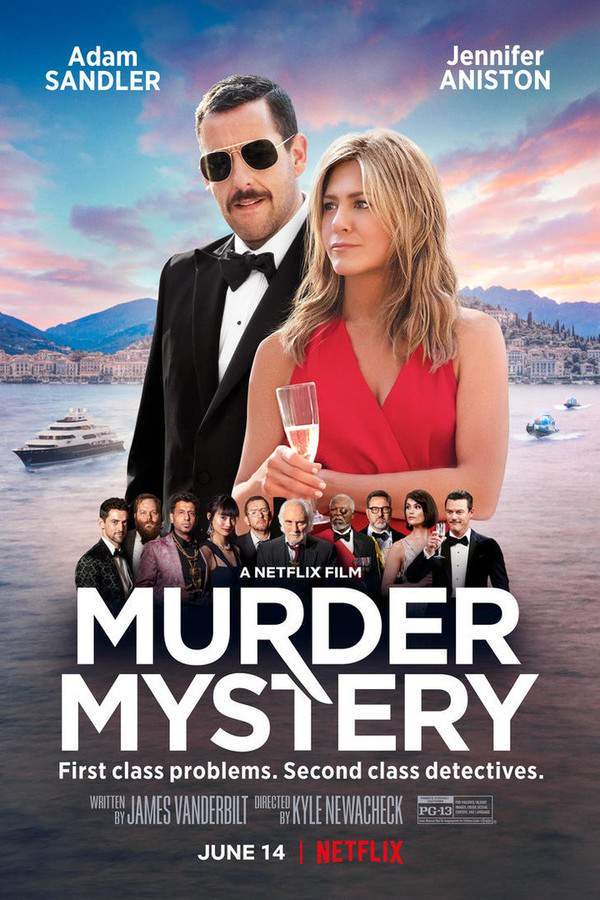
Murder Mystery (2019) Full Movie Breakdown
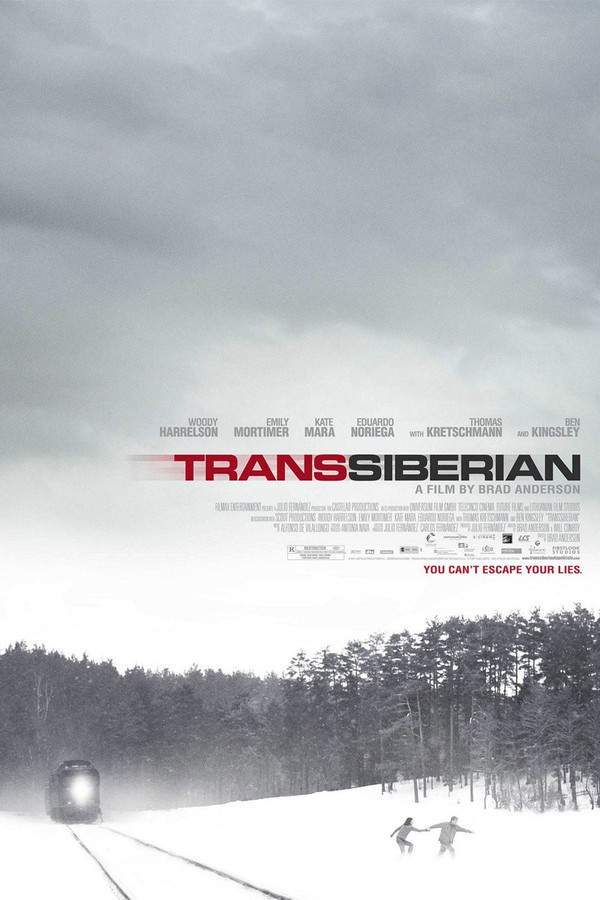
Transsiberian (2008) Plot Summary & Ending Explained
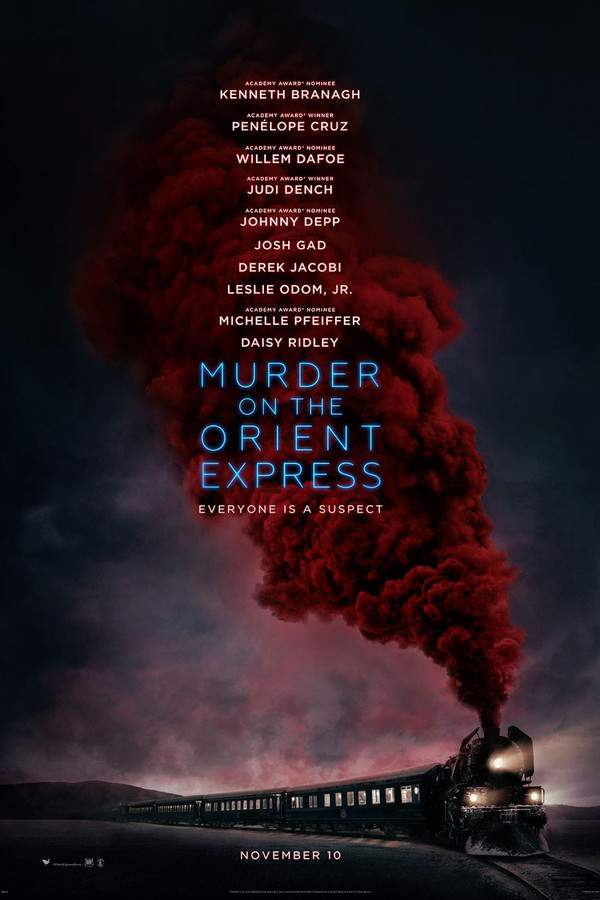
Murder on the Orient Express (2017) Full Movie Breakdown
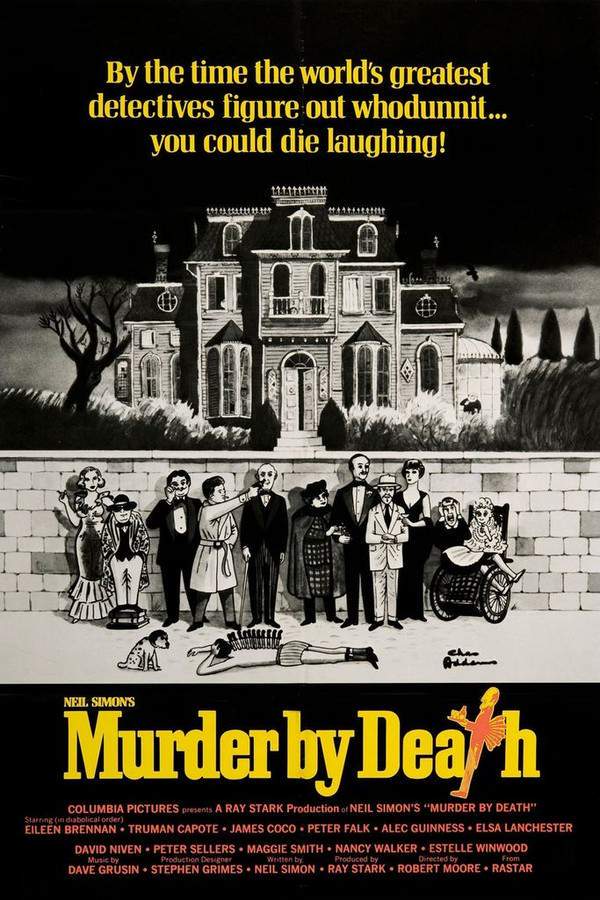
Murder by Death (1976) Spoiler-Packed Plot Recap
Murder on the Orient Express (2001) Full Summary & Key Details
Death, Deceit & Destiny Aboard the Orient Express (2001) Film Overview & Timeline
The Train Killer (1983) Story Summary & Characters
Minder on the Orient Express (1000) Complete Plot Breakdown
Romance on the Orient Express (1985) Plot Summary & Ending Explained
Appointment with Death (1988) Movie Recap & Themes
Murder in Three Acts (1986) Plot Summary & Ending Explained
Invitation to a Murder (2023) Film Overview & Timeline
Murder in Three Acts (1986) Plot Summary & Ending Explained
Murder Over New York (1940) Complete Plot Breakdown
The Silk Express (1933) Complete Plot Breakdown