




Plot Explained Spoilers guaranteed!
Plot Explained

Browse by genre

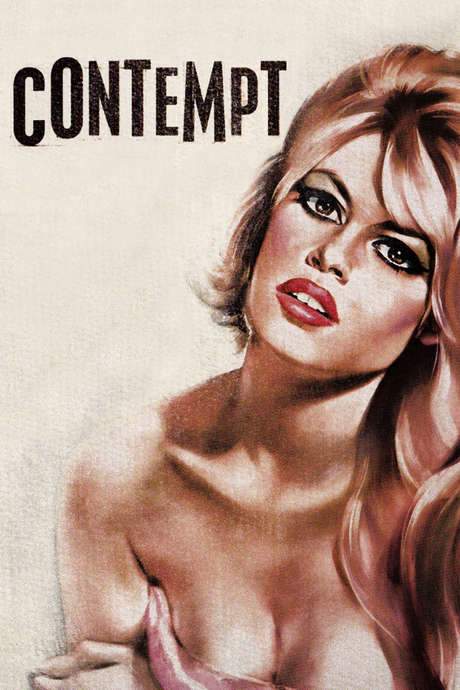
Contempt (1963) movie poster

Timeline

Contempt (1963) Timeline Explained – Every Event in Order

Release, runtime and language
1963 · 103 mins · French
JustWatch #6,206 6
Starring
Michel Piccoli, Jack Palance, Fritz Lang, Brigitte Bardot, Jean-Luc Godard, Raoul Coutard

Jeremy Prokosch, a pragmatic producer dissatisfied with his director’s work, hires the legendary Fritz Lang to helm an ambitious adaptation of “The Odyssey.” Fearing the project will flop, he brings in a screenwriter to revitalize the script. As the professional pressures mount, a personal rift erupts between the writer and his wife, intertwining creative ambition with strained relationships.

On this page (7)
  1. 1 Where to watch
  2. 2 Events in order (12)
  3. 3 Timeline questions answered
  4. 4 The book behind the movie
  5. 5 Movie threads
  6. 6 Movies like Contempt
  7. 7 Every angle

Where to watch

Where to Watch Contempt (1963)

Where can you watch Contempt? Stream, rent or buy it in the US, including on Kanopy and Tubi TV: current JustWatch availability with up-to-date prices.

Streaming availability powered by JustWatch

12 events in order · contains spoilers

Contempt Timeline: Events in Chronological Order

Every key event of Contempt (1963) in order, scene by scene, with when and where it takes place. Use it to untangle flashbacks, time jumps and parallel storylines, to refresh your memory before the sequel or to find the exact scene you are thinking of.

  1. Paul accepts Prokosch's script rework offer in Rome

    Paul Javal, a successful French playwright in Rome, agrees to rewrite the script for Fritz Lang's Odyssey adaptation after being approached by Jerry Prokosch. The deal marks the start of a collaboration that will test loyalty, pride, and moral boundaries as the production unfolds.

    When
    Pre-production, before filming begins
    Where
    Rome (Cinecittà)
  2. Camille joins Paul at Cinecittà

    Camille accompanies Paul on the first day of the project at Cinecittà in Rome. The uneasy balance among Paul, Camille, Prokosch, and Lang foreshadows the tensions that will erupt as the shoot progresses.

    When
    Day 1, morning
    Where
    Cinecittà, Rome
  3. Prokosch invites the crew to his villa and offers Camille a ride

    Prokosch hosts the crew at his villa and offers Camille a ride in his two-seat sports car. Paul watches for signs of romantic manipulation and growing entanglement between Camille and the producer, setting up a triangle of desire and power.

    When
    Day 1, late afternoon
    Where
    Prokosch's villa
  4. Paul withdraws and returns after a delay

    Camille looks to Paul to decline the ride, but he withdraws and follows by taxi, leaving Camille alone with Prokosch. Paul later explains that he was delayed by a traffic accident as he reappears on the scene.

    When
    Evening, Day 1
    Where
    Prokosch's villa vicinity
  5. Camille witnesses Paul with Francesca

    Camille witnesses Paul groping Prokosch's secretary Francesca, intensifying her suspicions about Paul's loyalty and his intent to use her for Prokosch's advantage. She starts to doubt the sincerity of their relationship and the purpose of the film project.

    When
    Day 1, evening
    Where
    Prokosch's villa
  6. Camille declares no love for Paul

    Back at their apartment, Paul and Camille confront the rising tension as Camille openly declares that she no longer loves him. The admission shakes the foundations of their marriage and pushes Paul to rethink his own choices.

    When
    Evening, Day 1
    Where
    Rome, their apartment
  7. Capri trip proposed to rekindle love

    Hoping to rekindle Camille's affection, Paul convinces her to join Prokosch's invitation to Capri for filming. They depart for Capri to shoot the movie, hoping the change of scenery will salvage their relationship.

    When
    Soon after Day 1
    Where
    Capri
  8. Capri clashes over the Odyssey interpretation

    Capri becomes a stage for a clash between Lang and Prokosch over the correct interpretation of Homer's work, with Francesca acting as translator to mediate conversations. The language barrier and differing visions heighten the production tensions.

    When
    During filming in Capri
    Where
    Capri, on location
  9. Paul aligns with Prokosch; infidelity debate

    Paul sides with Prokosch against Lang by arguing Odysseus left his home due to his wife's infidelity, aligning with the producer's pragmatic view. Camille's suspicion of Paul's servility deepens as she watches the collaboration drift away from romance toward control.

    When
    Capri filming period
    Where
    Capri
  10. Confrontation and Camille's departure

    Camille deliberately allows Paul to find her in Prokosch's embrace, and in the ensuing confrontation, she implies that Paul has bartered her to Prokosch. Paul denies the accusation and offers to sever his ties with the film, but Camille refuses and departs for Rome with Prokosch.

    When
    During the Capri confrontation
    Where
    Capri
  11. Camille and Prokosch die in a car crash

    After the confrontation, a car crash kills Camille and Prokosch, ending this personal triangle and leaving Paul to face the consequences of the film’s unraveling.

    When
    Immediate aftermath of departure from Capri
    Where
    Road near Capri, Italy
  12. Lang continues the film; Paul plans his exit

    In the wake of the tragedy, Lang continues working on the film while Paul prepares to leave Capri and return to the theater. The production persists even as personal ruin overshadows the project.

    When
    After the crash
    Where
    Capri, on set; later Rome

Last updated: October 09, 2025 at 14:08

Was this helpful?

Timeline questions answered

Contempt Timeline Explained: Your Questions Answered

When does it happen, and why in that order? The questions people ask about the chronology of Contempt (1963): time jumps, flashbacks, cause and effect between scenes and the correct order of events, each answered with spoilers.

Q1

Why does Camille tell Paul she no longer loves him?

Camille's declaration comes after a single day of being in the toxic environment of the film production. She feels abandoned when Paul leaves her alone with the pushy American producer Prokosch, and she later witnesses Paul groping Francesca, Prokosch's secretary. These events confirm her growing suspicion that Paul is using her as a pawn to secure professional advantage, causing her love to turn to contempt.

Foreshadowing: Earlier, Camille looks to Paul to decline Prokosch's invitation, but he passively withdraws, foreshadowing his eventual betrayal.

  • camille
  • paul
  • love
  • marriage
  • contempt
Q2

What does Paul witness when he finally arrives at Prokosch's villa?

When Paul arrives about thirty minutes late, he finds Camille alone with Prokosch after being left in his two-seat sports car. Paul claims he was delayed by a traffic accident, but the damage to Camille's trust is already done. The mysterious delay and his weak explanation plant seeds of doubt about his honesty and intentions.

Foreshadowing: This moment marks the beginning of Camille's unease about Paul's loyalty and the transactional nature of their relationship.

  • paul
  • camille
  • prokosch
  • villa
  • arrival
Q3

Why does Paul align himself with Prokosch against director Fritz Lang?

Paul sides with Prokosch because he argues that Odysseus left his home due to his wife's infidelity, which aligns with the producer's pragmatic, commercially-minded interpretation of The Odyssey. This choice reflects Paul's willingness to compromise his artistic integrity for professional survival, even as it distances him from Camille, who watches this alignment with growing disdain.

Foreshadowing: Paul's earlier withdrawal from defending Camille against Prokosch foreshadows his later surrender to the producer's will.

  • paul
  • prokosch
  • lang
  • odyssey
  • conflict
Q4

Why does Camille deliberately let Paul find her in Prokosch's embrace?

Camille orchestrates this confrontation as a final test of Paul's character and loyalty. By allowing herself to be found in Prokosch's embrace, she forces Paul to confront the consequences of his professional compromises. When Paul accuses her, she implies he has essentially bartered her to Prokosch for career advancement, revealing the depths of her contempt for his moral failure.

Foreshadowing: Camille's earlier observation of Paul with Francesca had already convinced her of his duplicity, making this confrontation inevitable.

  • camille
  • prokosch
  • paul
  • confrontation
  • departure
Q5

What causes the car crash that kills Camille and Prokosch?

After Camille departs for Rome with Prokosch, they die in a sudden car crash on the road near Capri. The film presents this as a brutal, random tragedy that underscores the fragility of human ambition and desire. No specific cause is shown, it simply happens as a devastating conclusion to the power struggles and personal betrayals that defined the story.

Foreshadowing: The earlier car accident Paul uses as an excuse creates an ironic echo of the fatal crash that ends the film.

  • camille
  • prokosch
  • car crash
  • death
  • tragedy
Q6

Why does Jean-Luc Godard appear as the assistant director?

Jean-Luc Godard appears as the assistant director in his own film, playing a meta-commentary on filmmaking. This self-referential casting blurs the line between fiction and reality, turning the production within the film into a meditation on cinema itself. Godard, already a legendary French New Wave director, cast himself in a supporting role as part of the film's exploration of artistic creation and ego conflicts.

  • godard
  • cameo
  • assistant director
  • meta
  • filmmaking
Q7

What does the title "Contempt" refer to in the film?

The title refers to the complete erosion of respect and love in Paul and Camille's marriage. Camille's love for Paul transforms into contempt as she realizes he is willing to compromise her dignity for professional gain. The word also extends to the broader disdain among the characters, Prokosch's contempt for art, Lang's contempt for commercial interference, and ultimately everyone's contempt for the filmmaking process that destroys personal bonds.

  • contempt
  • title
  • meaning
  • marriage
  • dignity
Q8

What does Camille see when she witnesses Paul with Francesca?

Camille sees Paul groping Francesca, Prokosch's secretary, at the villa. This visible act of infidelity confirms Camille's worst suspicions about Paul's character, that he is willing to use women professionally and personally for advancement. The moment crystallizes her realization that their relationship has become purely transactional, accelerating her declaration that she no longer loves him.

Foreshadowing: This betrayal directly leads to Camille's loss of faith in Paul and sets the stage for her eventual departure.

  • francesca
  • paul
  • camille
  • infidelity
  • witness
Q9

What is the conflict between Fritz Lang and Prokosch about?

Lang and Prokosch clash over how to interpret Homer's Odyssey for the film adaptation. Lang, the legendary German director, insists on an artistically faithful vision, while Prokosch, the American producer, demands a commercial, pragmatic approach. The language barrier, German, French, and English, complicates everything, with Francesca serving as interpreter. Their stalemate represents the eternal tension between art and commerce in filmmaking.

  • lang
  • prokosch
  • odyssey
  • conflict
  • interpretation
Q10

Why does Paul offer to quit the film after Camille's confrontation?

Paul offers to abandon the project in a desperate attempt to salvage his marriage, recognizing that his professional compromise has destroyed Camille's respect. However, Camille refuses his offer and chooses to leave with Prokosch instead. This moment reveals the irreversibility of the damage, Paul cannot simply undo his moral failures by promising to walk away from opportunity.

Foreshadowing: Paul's offer comes too late; Camille has already decided that his character cannot be redeemed.

  • paul
  • camille
  • quit
  • film
  • confrontation

Movie threads

More Movies Like Contempt, by Mood & Story

Curated lists built around what makes Contempt tick: the same mood, the same kind of story or the same emotional payoff. Each list explains why these movies belong together.

Movies about artistic compromise and personal collapse like Contempt

Stories where the pressure of creation unravels personal and professional lives. If you liked Contempt, explore more movies like it that delve into the world of filmmaking and artistic creation under pressure. This collection features stories of directors, writers, and producers facing creative blocks and relationship breakdowns, capturing the tense and melancholic vibe of artistic life.

  • artistic struggle
  • creative tension
  • melancholic
  • critical
  • psychological
  • unraveling
  • Tone: tense, critical, melancholic
  • Pacing: slow, deliberate, character-driven
Why these movies?

The story pattern: Narratives in this thread typically follow creators—directors, writers, artists—as they navigate the treacherous waters of a major project. External pressures from producers or collaborators clash with internal artistic vision, while personal relationships, often romantic partnerships, become collateral damage. The story arc is one of gradual dissolution, where creative frustration mirrors or directly causes a personal unraveling.

Why they belong together: Movies are grouped here for their shared focus on the creative process as a source of high-stakes drama. They share a tense, critical tone, a slow and deliberate pacing that allows for psychological depth, and a heavy emotional weight stemming from the spectacle of talent and love being eroded by ambition and pragmatic compromise.

Movies with marital tension in beautiful settings like Contempt

Beautiful settings that contrast with the slow, painful dissolution of a relationship. Find more movies like Contempt that explore the theme of a relationship falling apart against a deceptively beautiful backdrop. These films use sun-drenched locales to amplify feelings of isolation and tension, perfect for viewers who appreciated the stark contrast in Contempt between the bright Mediterranean and the dark emotional unraveling.

  • sun-drenched
  • marital strife
  • claustrophobic
  • uneasy
  • melancholic
  • emotional unraveling
  • Tone: tense, melancholic, uneasy
  • Pacing: slow, atmospheric, lingering
Why these movies?

The story pattern: The narrative pattern involves a couple, often intellectuals or artists, whose relationship is tested during a stay in a visually stunning location. The external beauty contrasts with their internal turmoil. Communication breaks down in long, quiet, tense scenes. The plot is less about external events and more about the microscopic observation of love turning into resentment, suspicion, or contempt, often leading to a tragic or profoundly sad conclusion.

Why they belong together: These films are connected by their unique atmospheric blend of visual splendor and emotional bleakness. They share a slow, observant pacing that lets tension simmer, a high intensity of unspoken conflict, and a heavy emotional weight. The core experience is the dissonance between a gorgeous world and a disintegrating private one.

If you liked this

Movies Like Contempt

Similar movies to Contempt: the same genre, themes or kind of story. Each one comes with its own plot summary, timeline and ending explained.

Browse all movie summaries

Every angle

Contempt (1963) Explained: Plot, Timeline & Characters

Everything about Contempt in one place: what happens in the plot summary, the timeline in chronological order, the characters and meaning and a spoiler-free summary. What's After the Movie adds the cast, box office and post-credit scenes.

Coming soon on iOS and Android

The Plot Explained Movie Summary App

Plot summaries, endings explained and timelines on your phone. Catch up on any movie in minutes, save your favorites and never miss a twist again.

Be the first to know when we launch. Your email stays private, always.

Learn more about the app