




Plot Explained Spoilers guaranteed!
Plot Explained

Browse by genre

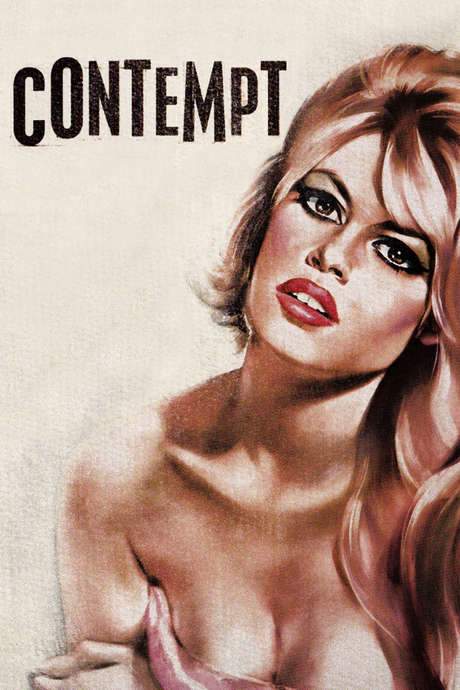
Contempt (1963) movie poster

Characters & Themes

Contempt (1963) Characters, Setting & Themes Explained

Release, runtime and language
1963 · 103 mins · French
JustWatch #6,241 11
Starring
Michel Piccoli, Jack Palance, Fritz Lang, Brigitte Bardot, Jean-Luc Godard, Raoul Coutard

Jeremy Prokosch, a pragmatic producer dissatisfied with his director’s work, hires the legendary Fritz Lang to helm an ambitious adaptation of “The Odyssey.” Fearing the project will flop, he brings in a screenwriter to revitalize the script. As the professional pressures mount, a personal rift erupts between the writer and his wife, intertwining creative ambition with strained relationships.

On this page (9)
  1. 1 Where to watch
  2. 2 Characters explained (8)
  3. 3 Where & when it takes place
  4. 4 Themes & meaning (3)
  5. 5 Character & meaning questions
  6. 6 The book behind the movie
  7. 7 Movie threads
  8. 8 Movies like Contempt
  9. 9 Every angle

Where to watch

Where to Watch Contempt (1963)

Where can you watch Contempt? Stream, rent or buy it in the US, including on Kanopy and Tubi TV: current JustWatch availability with up-to-date prices.

Streaming availability powered by JustWatch

8 main characters · contains spoilers

Contempt Characters Explained: Who Is Who

The main characters of Contempt (1963), heroes and villains: what drives them, how they change over the course of the story and what each of them reveals about the film's bigger ideas.

  • Paul Javal (Michel Piccoli)

    A talented but calculating screenwriter who accepts Prokosch’s offer to elevate his status and secure wealth. He often opts for convenience over confrontation, revealing a willingness to trade relationships for professional gain. His passivity in critical moments highlights how far he will go to please the powers behind the project.

    • 🎭 Ambition
    • 💼 Pragmatism
    • 💬 Relationships
  • Camille Javal (Brigitte Bardot)

    Paul’s wife, who grows suspicious of her husband’s loyalties and is drawn to independence. She asserts her own will, ultimately choosing to leave Capri with Prokosch, signaling a personal break from Paul. Her actions reveal the emotional cost of professional machinations.

    • 💔 Jealousy
    • 🧭 Autonomy
    • 🎭 Drama
  • Jeremy Prokosch (Jack Palance)

    A vulgar, powerful American producer who leverages Camille’s vulnerability to press his film agenda. He embodies the cash-driven side of the movie business and uses charisma to manipulate others. His presence accelerates the moral compromise at the film’s core.

    • 💼 Producer
    • 🔥 Power
    • 🤝 Manipulation
  • Fritz Lang (Fritz Lang)

    Austrian director known for his cinematic vision, constrained by language and the constraints of collaboration with the American producer. He embodies artistic integrity pushed against commercial demands, often clashing with Prokosch over interpretation. His involvement heightens the film’s exploration of art versus commerce.

    • 🎬 Director
    • 🧭 Artistic Vision
  • Francesca Vanini (Giorgia Moll)

    Acting as the interpreter and mediator on set, she navigates between Lang and Prokosch, shaping conversations and outcomes. Her position gives her unusual leverage, making her central to the set’s diplomacy and miscommunications. Her role reflects how language and translation influence creative decisions.

    • 🗣️ Interpreter
    • 🤝 Mediator
  • Lang's Assistant Director (Jean-Luc Godard)

    The on-set assistant director who translates and mediates between the major players, often commenting on filmmaking and the conflict. His presence underscores the film’s self-awareness about cinema as a process. He helps maintain the production’s fragile balance amid tensions.

    • 🗣️ Intermediary
    • 🧭 On-set
  • Cameraman (Raoul Coutard)

    The cinematographer responsible for the visual look of the production, capturing the on-location tension and the studio scenes. His work frames the drama, turning conflicts into images. He represents the technical craft behind the art-house production.

    • 🎥 Cinematography
    • 📷 On-set
  • Sirene (Linda Veras)

    A small but pivotal role that embodies allure and danger on Capri’s beaches, and also mirrors the film’s themes of temptation and consequence. Her presence intensifies Camille’s envy and the film’s moral stakes.

    • 🧜 Siren
    • 🎭 Minor Role

Last updated: October 04, 2025 at 14:24

Was this helpful?

Setting

Where and When Does Contempt Take Place?

The setting of Contempt (1963): the year and time period, the places and locations, and how they shape the characters, the mood and the tension of the story.

Time period

1960s

Set in the era of high-concept European cinema, the story unfolds during a contemporary film production in Italy. The tension between director, writer, and producer reflects the era's shifting power dynamics within the industry. The Capri shoot and Rome studio sequences frame a collision between art-house aspiration and commercial imperatives.

Location

Rome, Cinecittà, Capri

The action unfolds across Rome's iconic Cinecittà studios and the island of Capri, where the film's on-location production drives much of the drama. The Italian film industry backdrop highlights tensions between artistic ambition and commercial demands. Locations are used to illustrate the process of adapting Homer’s Odyssey for modern cinema, under the watchful eyes of industry insiders.

  • 🎬 Film Production
  • 🏛️ Italian Setting
  • 🏝️ Capri Location

Last updated: October 04, 2025 at 14:24

Was this helpful?

3 major themes

Contempt Meaning: Themes & Message Explained

What is Contempt (1963) really about? The emotional, social and philosophical themes the film keeps returning to, its symbolism and the message beneath the surface.

  • Power vs. Commerce

    The project becomes a battleground where artistic control clashes with money and market demands. Lang’s artistic stubbornness contends with Prokosch’s commercial pragmatism, revealing how decisions are shaped by prestige and profit. The struggle exposes how personal relationships are weaponized in the push to finish a saleable film.

  • Love and Betrayal

    Camille’s shifting loyalties expose the fragility of marriage under professional pressure. Paul’s willingness to side with the producer tests their bond and his own integrity. Jealousy and manipulation drive a rift that culminates in a devastating moral turning point.

  • Reality vs Illusion

    Characters navigate a world where scripts, performances, and real emotions intersect, blurring truth and on-screen illusion. The mythic Odyssey is retold to satisfy contemporary appetites, prompting questions about authenticity. Language barriers on set become a metaphor for miscommunication and perception.

Last updated: October 04, 2025 at 14:24

Was this helpful?

Character & theme questions

Contempt Characters & Meaning: Your Questions Answered

The questions people ask about Contempt (1963): who the characters really are, their relationships, what the symbols mean, where it takes place and what the movie is really about. Each answer contains spoilers.

Q1

Where is Contempt set?

The film takes place primarily at Rome's iconic Cinecittà studios and on the island of Capri. These two locations represent different aspects of the filmmaking process, the studio represents the controlled, commercial side of production, while the Capri location shooting captures the artistic and personal tensions that emerge on location.

  • rome
  • capri
  • cinecitta
  • film production
  • setting
  • locations
Q2

What time period does the movie depict?

Contempt is set in the 1960s, during the era of high-concept European cinema. The story reflects the shifting power dynamics within the film industry at that time, showing the collision between art-house aspirations and commercial imperatives that defined that period of filmmaking.

  • 1960s
  • era
  • time period
  • european cinema
  • film industry
  • 1960s cinema
Q3

Why is The Odyssey adaptation important to the story?

The ambitious adaptation of Homer's The Odyssey serves as the film's central metaphor, representing the clash between artistic vision and commercial demands. The struggle to adapt the mythic story for modern audiences mirrors the personal conflicts unfolding among the characters, blurring the lines between the art being created and the real-life drama consuming its creators.

  • the odyssey
  • adaptation
  • homer
  • filmmaking
  • artistic vision
  • metaphor
Q4

What does Power vs Commerce mean in Contempt?

The theme explores how artistic control battles against money and market demands. Fritz Lang's artistic stubbornness contends with producer Jeremy Prokosch's commercial pragmatism, revealing how creative decisions are shaped by both prestige and profit. This struggle becomes the battleground where personal relationships are weaponized to push forward a saleable film.

  • power
  • commerce
  • artistic control
  • fritz lang
  • jeremy prokosch
  • money
  • profit
Q5

How does the Love and Betrayal theme develop?

Camille Javal's shifting loyalties expose the fragility of marriage under professional pressure. Her husband Paul's willingness to side with the producer tests their bond and his own integrity. Jealousy and manipulation drive a rift between them, culminating in a devastating moral turning point that reflects how professional machinations exact an emotional cost.

  • love
  • betrayal
  • marriage
  • camille
  • paul javal
  • jealousy
  • manipulation
  • relationships
Q6

What is the Reality vs Illusion theme about?

The film explores how scripts, performances, and real emotions intersect, blurring the line between truth and on-screen illusion. The retelling of The Odyssey to satisfy contemporary appetites raises questions about authenticity. Language barriers on set become a metaphor for miscommunication and perception, reinforcing how reality and illusion constantly intertwine throughout the production.

  • reality
  • illusion
  • authenticity
  • language barrier
  • miscommunication
  • perception
  • odyssey adaptation
Q7

Who is Paul Javal?

Paul Javal is the film's screenwriter, portrayed by Michel Piccoli. He is a talented but calculating screenwriter who accepts the producer's offer to elevate his status and secure wealth. He often opts for convenience over confrontation, revealing a willingness to trade relationships for professional gain, and his passivity in critical moments highlights how far he will go to please the powers behind the project.

  • paul javal
  • screenwriter
  • michel piccoli
  • writer
  • character
  • ambition
  • professional gain
Q8

Who is Camille Javal?

Camille Javal is Paul Javal's wife, played by Brigitte Bardot. She grows suspicious of her husband's loyalties as professional pressures mount and is drawn toward independence. Her character ultimately chooses to leave Capri with producer Jeremy Prokosch, signaling a personal break from Paul and revealing the emotional cost of the professional machinations surrounding the film.

  • camille javal
  • brigitte bardot
  • wife
  • character
  • independence
  • jeremy prokosch
  • betrayal
Q9

Who is Jeremy Prokosch?

Jeremy Prokosch is the American producer, played by Jack Palance. He is a vulgar, powerful figure who embodies the cash-driven side of the movie business. He leverages Camille's vulnerability to advance his film agenda and uses charisma to manipulate others, accelerating the moral compromise that sits at the film's core.

  • jeremy prokosch
  • producer
  • jack palance
  • american producer
  • money
  • manipulation
  • commercial
Q10

Why is Fritz Lang important to the story?

Fritz Lang, playing himself, is the legendary Austrian director brought in to helm the Odyssey adaptation. He embodies artistic integrity being pushed against commercial demands, often clashing with the producer over interpretation. His presence heightens the film's exploration of art versus commerce, and his own artistic stubbornness becomes a focal point for the central conflict.

  • fritz lang
  • director
  • austrian
  • artistic integrity
  • art vs commerce
  • legend
  • filmmaker
Q11

What is Francesca Vanini's role in the film?

Francesca Vanini serves as the interpreter and mediator on set, navigating between Fritz Lang and Jeremy Prokosch. She shapes conversations and outcomes, giving her unusual leverage in the production's diplomacy. Her role reflects how language and translation influence creative decisions, making her central to understanding the miscommunications that drive the narrative.

  • francesca vanini
  • interpreter
  • mediator
  • language
  • translation
  • communication
  • giorgia moll
Q12

How does the Capri setting affect the narrative?

The island of Capri serves as the on-location production site where much of the drama unfolds. The isolated, Mediterranean setting creates an atmosphere of intensified emotions and vulnerability. It is in Capri where personal relationships deteriorate most visibly, with the beautiful but confined island becoming a backdrop for temptation, envy, and the moral stakes that drive the story's tragic conclusion.

  • capri
  • island
  • location
  • tension
  • isolation
  • temptation
  • emotion
  • setting

Movie threads

More Movies Like Contempt, by Mood & Story

Curated lists built around what makes Contempt tick: the same mood, the same kind of story or the same emotional payoff. Each list explains why these movies belong together.

Movies about artistic compromise and personal collapse like Contempt

Stories where the pressure of creation unravels personal and professional lives. If you liked Contempt, explore more movies like it that delve into the world of filmmaking and artistic creation under pressure. This collection features stories of directors, writers, and producers facing creative blocks and relationship breakdowns, capturing the tense and melancholic vibe of artistic life.

  • artistic struggle
  • creative tension
  • melancholic
  • critical
  • psychological
  • unraveling
  • Tone: tense, critical, melancholic
  • Pacing: slow, deliberate, character-driven
Why these movies?

The story pattern: Narratives in this thread typically follow creators—directors, writers, artists—as they navigate the treacherous waters of a major project. External pressures from producers or collaborators clash with internal artistic vision, while personal relationships, often romantic partnerships, become collateral damage. The story arc is one of gradual dissolution, where creative frustration mirrors or directly causes a personal unraveling.

Why they belong together: Movies are grouped here for their shared focus on the creative process as a source of high-stakes drama. They share a tense, critical tone, a slow and deliberate pacing that allows for psychological depth, and a heavy emotional weight stemming from the spectacle of talent and love being eroded by ambition and pragmatic compromise.

Movies with marital tension in beautiful settings like Contempt

Beautiful settings that contrast with the slow, painful dissolution of a relationship. Find more movies like Contempt that explore the theme of a relationship falling apart against a deceptively beautiful backdrop. These films use sun-drenched locales to amplify feelings of isolation and tension, perfect for viewers who appreciated the stark contrast in Contempt between the bright Mediterranean and the dark emotional unraveling.

  • sun-drenched
  • marital strife
  • claustrophobic
  • uneasy
  • melancholic
  • emotional unraveling
  • Tone: tense, melancholic, uneasy
  • Pacing: slow, atmospheric, lingering
Why these movies?

The story pattern: The narrative pattern involves a couple, often intellectuals or artists, whose relationship is tested during a stay in a visually stunning location. The external beauty contrasts with their internal turmoil. Communication breaks down in long, quiet, tense scenes. The plot is less about external events and more about the microscopic observation of love turning into resentment, suspicion, or contempt, often leading to a tragic or profoundly sad conclusion.

Why they belong together: These films are connected by their unique atmospheric blend of visual splendor and emotional bleakness. They share a slow, observant pacing that lets tension simmer, a high intensity of unspoken conflict, and a heavy emotional weight. The core experience is the dissonance between a gorgeous world and a disintegrating private one.

If you liked this

Movies Like Contempt

Similar movies to Contempt: the same genre, themes or kind of story. Each one comes with its own plot summary, timeline and ending explained.

Browse all movie summaries

Every angle

Contempt (1963) Explained: Plot, Timeline & Characters

Everything about Contempt in one place: what happens in the plot summary, the timeline in chronological order, the characters and meaning and a spoiler-free summary. What's After the Movie adds the cast, box office and post-credit scenes.

Coming soon on iOS and Android

The Plot Explained Movie Summary App

Plot summaries, endings explained and timelines on your phone. Catch up on any movie in minutes, save your favorites and never miss a twist again.

Be the first to know when we launch. Your email stays private, always.

Learn more about the app