Plot Explained Spoilers guaranteed!
Plot Explained

Browse by genre

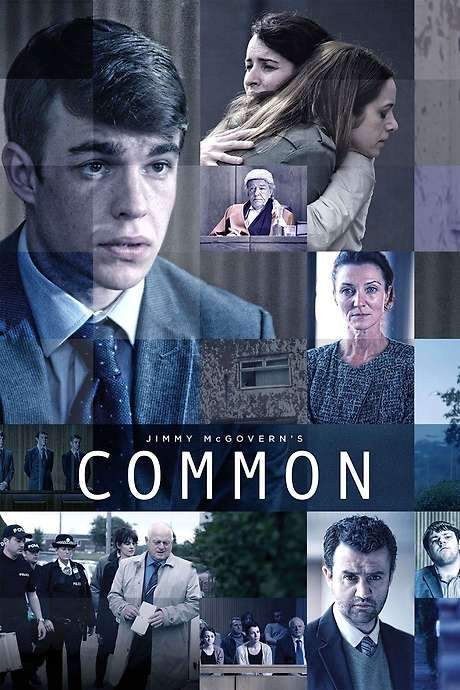
Common (2014) movie poster

Spoiler-Free Summary

Common (2014) Spoiler-Free Summary – What It's About

Release, runtime and language
2014 · 90 mins · English
Directed by
David Blair
Starring
Michael Gambon, Daniel Mays, Jodhi May, Nico Mirallegro, Robert Pugh, Andrew Tiernan

This gritty drama explores the complexities of the UK’s joint enterprise law. Nico Mirallegro portrays Johnjo O’Shea, a naive 17-year-old who unwittingly becomes an accessory to murder after providing transportation for a group of friends. The film follows his journey from innocent bystander to someone entangled in a serious crime, raising questions about responsibility and the legal system. It's a powerful and thought-provoking examination of a controversial issue.

On this page (5)
  1. 1 What it is about
  2. 2 Is it worth watching?
  3. 3 After you watch
  4. 4 Movie threads
  5. 5 Every angle

Spoiler-free summary · safe to read

What Is Common About? (No Spoilers)

The plot of Common (2014) without spoilers: what it is about, who it follows and where it takes place, told without the twists or the ending. Enough to decide whether it is your next watch, not enough to ruin it.

Set against the backdrop of a working-class British community, Common is a gritty, character-driven drama that confronts the murky boundaries between innocence and complicity. At the centre of the story is Johnjo O'Shea, a gentle, naive seventeen-year-old navigating an ordinary life that carries an added vulnerability — he lives with haemophilia, a condition that quietly shapes the way those around him treat him, often as someone to be protected rather than relied upon. When his older brother's friends ask him for a simple favour — borrowing the car to make a routine trip — Johnjo sees little reason to refuse, unaware of the currents moving beneath their casual request.

What follows is a probing examination of how the law interprets presence, intention, and shared action. The film places Johnjo at the heart of the controversial UK doctrine of joint enterprise, raising unsettling questions about where personal responsibility truly ends and collective guilt begins. Even as his family insists he is simply a bystander caught in someone else's chaos, the legal system frames his involvement in far more consequential terms. The tension between these perspectives drives the film's emotional weight, turning what begins as an everyday favour into something that threatens to unravel a young man's future.

The atmosphere is sober and grounded, shot through with the textures of a close-knit neighbourhood where loyalties, suspicions, and unspoken grievances run deep. Within this world, Common treats its subject with care and restraint, resisting easy answers. It is less a thriller than a quiet, methodical study of how a single decision can ripple outward, pulling families and communities into uncomfortable reflection. The result is a thought-provoking portrait of adolescence, fairness, and the fragile line between what we do and what we are deemed responsible for.

Last updated: September 20, 2026 at 15:53

Was this helpful?

What to expect

Is Common Worth Watching? What It Feels Like

Is it dark, sad, slow, intense or confusing? The mood of Common (2014) in a few tags, without a word about how it ends. Each tag opens a list of movies that feel the same.

After you watch

Seen Common? Now Read the Spoilers

Once you have watched Common (2014), come back for the full story: the plot summary with spoilers, the timeline in chronological order, the characters and meaning.

Movie threads

More Movies Like Common, by Mood & Story

Curated lists built around what makes Common tick: the same mood, the same kind of story or the same emotional payoff. Each list explains why these movies belong together.

Bleak legal dramas about injustice like Common

Ordinary people face crushing legal systems that refuse to see their humanity. If you were moved by Common's unflinching look at joint enterprise law, these movies like Common tackle similar systemic injustice and wrongful implication. Expect sobering courtroom scenes, working-class characters crushed by legal machinery, and examinations of culpability, class, and moral responsibility. These similar dramas ask hard questions about how the justice system treats the vulnerable.

  • bleak
  • somber
  • courtroom
  • justice
  • weighty
  • contemplative
  • Tone: bleak, somber, oppressive
  • Pacing: steady, deliberate
Why these movies?

The story pattern: The narrative typically begins with a small, ordinary decision, such as a ride, a favor, or a presence at the wrong moment, that triggers a violent or criminal event. The story then follows an innocent or naive protagonist through police interrogation, courtroom battles, and community fallout. There is rarely a clean victory; instead, the films interrogate how law, doctrine, and class converge to determine guilt. Endings tend toward the bittersweet or bleak, with moments of fragile human connection emerging amid institutional failure.

Why they belong together: These stories share a heavy, contemplative tone, steady pacing that lets moral and legal tensions build, and a focus on systemic issues rather than procedural thrills. They tend to be set in or near working-class communities, with realistic dialogue and grounded performances. Violence, when it appears, is consequential rather than gratuitous, and the emotional register stays somber throughout. Together they form a quiet, devastating tradition of justice-system critique.

Working class youth dramas like Common

Bleak stories of teenagers whose ordinary choices collide with forces they cannot escape. Movies like Common that follow vulnerable teenagers pulled into adult worlds of violence and crime. These similar dramas explore class, juvenile crime, moral responsibility, and grief with a heavy, contemplative tone. If Common's portrayal of a 17-year-old ruined by joint enterprise law hit you hard, expect more stories of working-class youth losing innocence to systems that offer no escape.

  • bleak
  • youth
  • working class
  • social realism
  • tragic
  • contemplative
  • Tone: bleak, weighty, reflective
  • Pacing: steady, character-driven
Why these movies?

The story pattern: A young protagonist, often naive about the world, encounters a single wrong choice, a fleeting loyalty, or a small lapse in judgment that pulls them into a far larger, more dangerous orbit. The film tracks the slow accumulation of consequence: police attention, family fracture, community pressure, and the realization that adulthood has arrived without consent. Romance is absent or ruined, friendships are tested, and the system, whether legal, social, or familial, proves indifferent. Endings are typically bittersweet or bleak, offering small moments of human grace but no true salvation.

Why they belong together: These films share an unflinching British social realist tradition, heavy emotional weight, and a focus on youth navigating class, crime, and consequence. They favor steady pacing, naturalistic performances, and thematic depth over sensationalism. Grief, moral ambiguity, and institutional failure are recurring themes. Viewers looking for the same bruised, contemplative mood will find it throughout this thread.

Every angle

Common (2014) Explained: Plot, Timeline & Characters

Everything about Common in one place: what happens in the plot summary, the timeline in chronological order, the characters and meaning and a spoiler-free summary. What's After the Movie adds the cast, box office and post-credit scenes.

Coming soon on iOS and Android

The Plot Explained Movie Summary App

Plot summaries, endings explained and timelines on your phone. Catch up on any movie in minutes, save your favorites and never miss a twist again.

Be the first to know when we launch. Your email stays private, always.

Learn more about the app