Plot Explained Spoilers guaranteed!
Plot Explained

Browse by genre

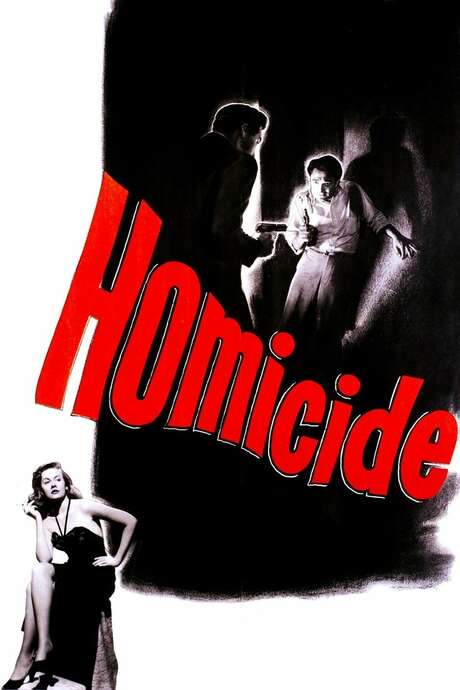
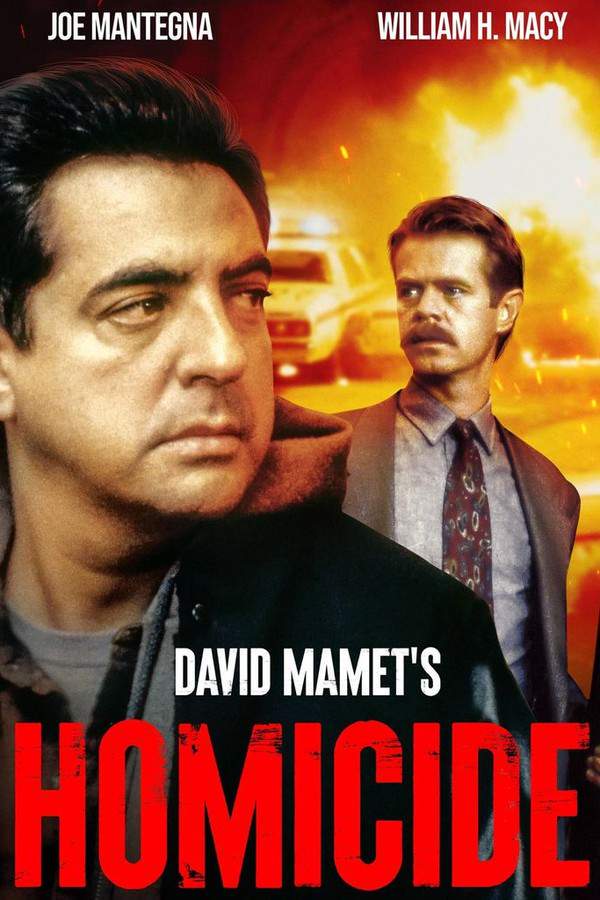
Homicide (1991) movie poster

Timeline

Homicide (1991) Timeline Explained – Every Event in Order

Release, runtime and language
1991 · 102 min · English
Loading streaming availability…
Directed by
David Mamet
Starring
William H. Macy, Joe Mantegna, Jack Wallace, J.J. Johnston, Bernard Gray, Charles Stransky

Detective Bobby Gold investigates a robbery-murder, but the case unexpectedly triggers a profound spiritual awakening. Torn between his duty to uphold the law and a burgeoning sense of truth, he confronts challenging questions of justice and morality. Gold's faith, identity, and loyalty are tested as he navigates the complexities of his role as a lawman.

On this page (6)
  1. 1 Where to watch
  2. 2 Events in order (13)
  3. 3 Timeline questions answered
  4. 4 Movie threads
  5. 5 Movies like Homicide
  6. 6 Every angle
Loading streaming availability…

13 events in order · contains spoilers

Homicide Timeline: Events in Chronological Order

Every key event of Homicide (1991) in order, scene by scene, with when and where it takes place. Use it to untangle flashbacks, time jumps and parallel storylines, to refresh your memory before the sequel or to find the exact scene you are thinking of.

  1. Detective Gold confronts a separate murder scene

    Gold and his partner Tim Sullivan are on the trail of Randolph when they stumble upon the murder of an elderly Jewish candy-store owner in a ghetto. The rumor of a fortune hidden in her basement fuels the case with suspicion and curiosity. This early scene subtly shifts Gold's focus from a high-profile pursuit to a more personal investigation.

    When
    Night
    Where
    Ghetto candy-store
  2. Doctor leverages influence to assign Gold to the case

    The deceased woman's son, a doctor, uses his clout to have Gold reassigned to the case, hoping Gold’s Jewish background will make him more empathetic to the community. Gold resents being pulled off a higher-profile case and feels the politics of ethnicity complicate his work. The development foreshadows how identity will influence the investigation.

    When
    Evening
    Where
    Police department
  3. Gold’s uneasy ties to the Jewish community begin

    Gold's interactions with the Jewish community test his allegiance to the badge against a growing sense of belonging. He confronts his own insecurity about fitting in and senses a growing pride in the community's resilience. These encounters plant seeds of a Jewish consciousness that will shape his choices.

    When
    Evening
    Where
    Community circle
  4. Night survey uncovers a Zionist network

    A nighttime survey of the crime scene reveals a crucial detail from the victim’s past and hints at a Zionist organization operating in the city. The discovery broadens the case from a simple murder to a political network with real stakes. Gold’s curiosity deepens as he senses a larger conflict at play.

    When
    Night
    Where
    Crime scene / city
  5. Gold seeks entry into the Zionist group

    Feeling pulled toward the group, Gold tries to join the Zionist organization, testing his loyalty to the badge against an emerging Jewish identity. He is welcomed with suspicion and pressure, navigating the line between law and communal allegiance. The pursuit signals a turning point in his personal code.

    When
    Night
    Where
    Jewish group meeting place
  6. Revelation: the old woman ran guns for a liberation group

    Gold learns the old woman once ran guns for a Jewish liberation group, a history that reinforces the group's sense of danger and their need to protect their people. This past complicates his view of the organization and elevates the stakes of his choices. The discovery deepens the tension between duty and loyalty.

    When
    Past
    Where
    Police evidence room
  7. Group pressures Gold to steal a member list

    When asked to steal a list of group member names from police evidence to shield the organization, Gold objects and refuses to betray his oath. The leaders rebuke him for denying his faith, underscoring how personal loyalty and religious allegiance are intertwined with the operation. The rift between Gold and the group widens.

    When
    Evening
    Where
    Police evidence room
  8. A Jewish ally leads to a Nazi-stronghold toy shop

    A Jewish woman guides Gold to a toy shop in the city that doubles as a secret stronghold for Nazi sympathizers, a place filled with anti-Jewish propaganda. The visit confirms the community’s fears and shows the real, present danger they face. Gold’s anger grows as he senses the depth of the threat.

    When
    Night
    Where
    Toy shop
  9. Gold destroys the stronghold with a bomb

    Following the woman’s guidance, Gold uses a bomb to destroy the stronghold, blowing up the toy shop. The act starkly exposes the Nazi presence in the city and validates the group’s fears about antisemitism and violence. The raid marks a dramatic turn in Gold’s methods and loyalties.

    When
    Night
    Where
    Toy shop
  10. Group coercion escalates with photographs

    The Zionist group confronts Gold again, demanding compliance and showing him photographs of his actions at the toy shop to coerce his aid. The images weaponize memory and guilt, forcing Gold to weigh his personal ethics against communal pressure. The coercion foreshadows the collision between duty and loyalty.

    When
    Night
    Where
    Jewish group meeting
  11. Raid on Randolph; Sullivan dies in Gold’s arms

    During a raid to apprehend Randolph, Gold arrives too late due to the prior meeting with the Jewish group. Tim Sullivan dies in Gold’s arms from a gunshot, leaving Gold devastated and furious. He charges through the building in a frenzy, loses his gun, and hunts Randolph with a makeshift weapon as the chase culminates in a brutal confrontation.

    When
    Mid-raid
    Where
    Building / raid location
  12. Confrontation, revelation about the mother, and Randolph’s fall

    In a tense basement pursuit, Randolph shoots Gold in the arm while mocking him. Gold reveals that it was Randolph’s mother who turned him in, and a police officer off-screen then shoots Randolph in the chest, ending the threat. The moment shatters any simple sense of justice and loyalty and exposes the complexity of the case.

    When
    End of raid
    Where
    Basement / escape route
  13. The aftermath: isolation and the truth of the fortune

    Gold returns to the precinct to a cool, distant reception from fellow officers who are wary of the fallout from the events. He learns that the old woman was killed by two black kids seeking the supposed fortune hidden in her basement, a revelation that complicates his understanding of motive and community guilt. The case leaves him isolated, grappling with the cost of truth and loyalty.

    When
    After raid
    Where
    Police precinct

Last updated: November 22, 2025 at 15:57

Was this helpful?

Timeline questions answered

Homicide Timeline Explained: Your Questions Answered

When does it happen, and why in that order? The questions people ask about the chronology of Homicide (1991): time jumps, flashbacks, cause and effect between scenes and the correct order of events, each answered with spoilers.

Q1

Why was Detective Gold reassigned to the candy store murder case?

Gold was reassigned because the deceased woman's son, a prominent doctor, leveraged his influence to have Gold take the case. He specifically requested Gold because of Gold's Jewish heritage, believing that would give Gold deeper empathy for the community's tragedy. Gold resented this because it pulled him away from the higher-profile Robert Randolph case.

Foreshadowing: The doctor's request foreshadows how Gold's Jewish identity will become central to the investigation.

  • detective gold
  • reassignment
  • candy store
  • doctor
  • jewish heritage
Q2

Why did Gold bomb the toy shop?

A Jewish woman within the Zionist circle directed Gold to a toy shop that served as a secret stronghold for Nazi sympathizers, filled with anti-Jewish propaganda. Enraged by this evidence of antisemitism and the real threat facing the Jewish community, Gold used a bomb the woman had given him to destroy the stronghold.

Foreshadowing: This act validated the group's fears about antisemitic violence in the city.

  • toy shop
  • bomb
  • nazi propaganda
  • stronghold
  • jewish community
Q3

Why did the Zionist group blackmail Gold with photographs?

After Gold destroyed the toy shop, the Zionist group presented him with photographs of his actions at the stronghold. They used these images to coerce him into retrieving a confidential list of group members from police evidence, a list that could expose and endanger the organization if it remained in police files.

Foreshadowing: The coercion demonstrates how the group prioritizes its survival over individual ethics.

  • blackmail
  • photographs
  • zionist group
  • member list
  • coercion
Q4

Why did Sullivan die during the raid on Randolph?

Gold arrived late to the raid because he was occupied with his confrontation with the Jewish group. During the chaotic operation, Sullivan was fatally shot in Gold's arms. Gold blamed himself for the delay and felt responsible for his partner's death.

Foreshadowing: The timeline shows Gold's dual loyalties directly contributed to his absence from the raid.

  • sullivan
  • raid
  • randolph
  • gold's fault
  • partner death
Q5

What did Gold reveal about Randolph's mother?

During the basement confrontation as Randolph tried to escape, Gold revealed that Randolph's own mother was the one who betrayed him to the authorities. This personal betrayal was the reason Randolph was eventually caught.

Foreshadowing: The revelation adds another layer of betrayal to a story already filled with moral ambiguity.

  • randolph's mother
  • betrayal
  • revelation
  • capture
Q6

Why was Gold taken off homicide at the end?

Gold returned to the precinct to find his colleagues distant and uneasy following Sullivan’s death and the fallout from his actions, including the bombing and his apparent involvement with the Zionist group. He was informed he was now "off homicide," effectively demoted or pushed out of the unit.

Foreshadowing: The cool reception reflects the moral cost of Gold's choices throughout the investigation.

  • off homicide
  • precinct
  • colleagues
  • demotion
  • fallout
Q7

Who actually killed the elderly candy store owner?

The investigation revealed that the old woman was killed by two Black teenagers who were trying to steal the rumored fortune supposedly hidden in her basement. The fortune itself was never real, it was just a rumor that motivated the senseless murder.

Foreshadowing: This revelation adds a layer of tragic irony to Gold's journey.

  • candy store owner
  • killer
  • motive
  • fortune
  • basement
Q8

Why did the Zionist group want Gold to steal the member list?

The group wanted Gold to retrieve the list of their members from police evidence to protect the organization. If the list remained in official records, it could be used to identify and target members, putting the entire group at risk of arrest or violence.

Foreshadowing: This request represents the conflict between Gold's duty as a cop and his growing loyalty to the community.

  • member list
  • police evidence
  • zionist group
  • protection
  • infiltration
Q9

Why was Gold asked to join the Zionist organization?

Gold was drawn into the Jewish community's orbit through late-night conversations that provoked him to confront his Jewish identity. When he sought to join the group, they welcomed him with suspicion but also pressure, testing his loyalty to his faith against his badge.

Foreshadowing: This marks the turning point where Gold's personal identity begins conflicting with his professional role.

  • zionist group
  • joining
  • identity
  • faith
  • police loyalty
Q10

Why did Gold use a chain to chase Randolph instead of his gun?

During the chaotic raid, Gold lost his weapon while charging through the building in a rage after Sullivan died. He grabbed a heavy chain as a makeshift weapon to continue pursuing Randolph through the basement escape route.

Foreshadowing: The shift to a primitive weapon underscores Gold's descent into uncontrolled fury.

  • chain
  • gun
  • pursuit
  • randolph
  • basement
Q11

What was the elderly woman's connection to the Zionist group?

Gold discovered through police evidence that the elderly Jewish candy store owner had previously helped arm a Jewish liberation group, a unit dedicated to protecting Jewish people from threats within the city. This past connection explained why the group felt invested in her case.

Foreshadowing: Her history adds depth to the murder and explains the group's intense interest in the investigation.

  • old woman
  • zionist group
  • guns
  • liberation group
  • past

Movie threads

More Movies Like Homicide, by Mood & Story

Curated lists built around what makes Homicide tick: the same mood, the same kind of story or the same emotional payoff. Each list explains why these movies belong together.

Gritty police disillusionment stories like Homicide

A detective's investigation unravels into a crisis of identity and faith. For viewers who liked the moral conflict in Homicide, this list features movies like it where a detective's case triggers a deep identity crisis. These similar crime dramas and thrillers explore themes of corruption, racial tension, and personal betrayal, often ending with a heavy, bleak feeling.

  • morally conflicted
  • gritty
  • disillusioned
  • somber
  • anxious
  • claustrophobic
  • Tone: bleak, tense
  • Pacing: steady, deliberate
Why these movies?

The story pattern: Stories typically follow a dedicated law enforcement officer whose faith in the system is shattered by a specific case. The investigation becomes a catalyst, forcing the protagonist to question their loyalties, ethics, and very identity, culminating in a profound sense of disillusionment and loss.

Why they belong together: These films are grouped by their focus on the psychological descent of a lawman. They share a gritty, anxious mood, a steady pacing that builds tension, and a heavy emotional weight derived from moral dilemmas and the bleak realization that justice is often futile.
Bleak urban investigative thrillers like Homicide

A bleak journey through a gritty city in search of a painful truth. If you liked the grim, hopeless atmosphere of Homicide, this collection features movies with a similar vibe. Discover other dark thrillers and dramas where characters pursue a truth in a hostile city, only to be left with disillusionment and loss, mirroring the feel of Homicide.

  • bleak
  • gritty
  • somber
  • claustrophobic
  • anxious
  • disillusioned
  • Tone: bleak, somber
  • Pacing: steady, tense build
Why these movies?

The story pattern: The narrative pattern involves a protagonist, often an insider like a detective or journalist, doggedly pursuing a truth within a claustrophobic city environment. The journey exposes layers of betrayal and moral rot, and the ultimate revelation brings no justice, only a confirmation of the world's inherent bleakness.

Why they belong together: This thread connects films through their oppressive atmosphere and thematic focus on the futility of seeking truth in a broken world. They share a high intensity, a steady, relentless pacing, a somber and anxious mood, and a conclusively bleak emotional payoff.

If you liked this

Movies Like Homicide

Similar movies to Homicide: the same genre, themes or kind of story. Each one comes with its own plot summary, timeline and ending explained.

Browse all movie summaries

Every angle

Homicide (1991) Explained: Plot, Timeline & Characters

Everything about Homicide in one place: what happens in the plot summary, the timeline in chronological order, the characters and meaning and a spoiler-free summary. What's After the Movie adds the cast, box office and post-credit scenes.

Coming soon on iOS and Android

The Plot Explained Movie Summary App

Plot summaries, endings explained and timelines on your phone. Catch up on any movie in minutes, save your favorites and never miss a twist again.

Be the first to know when we launch. Your email stays private, always.

Learn more about the app