Plot Explained Spoilers guaranteed!
Plot Explained

Browse by genre

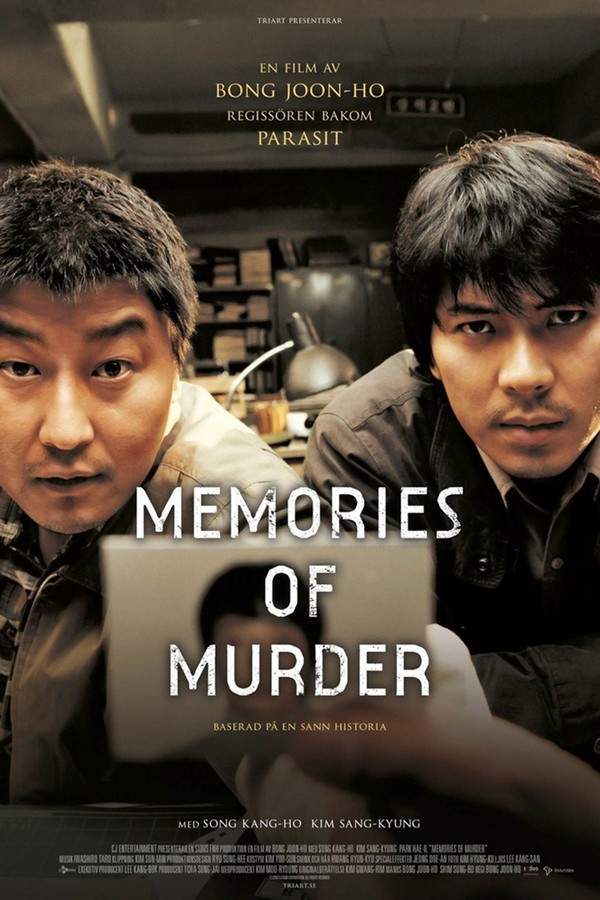
Memories of Murder (2005) movie poster

Plot Summary

Memories of Murder (2005) Plot Summary Explained

Release, runtime and language
2005 · 132 min · Korean
Loading streaming availability…
Directed by
Joon-ho Bong

During the 1980s in a small South Korean province, a series of brutal murders and rapes terrorize the community. Three detectives struggle to catch the elusive serial killer, finding themselves in a frustrating cat-and-mouse game. As their investigation continues, the detectives' futile efforts to solve the case lead them to question their own sense of justice and the morality of their actions, ultimately revealing the dark underbelly of society.

On this page (6)
  1. 1 Where to watch
  2. 2 What happens: full plot
  3. 3 Plot questions answered
  4. 4 Movie threads
  5. 5 Movies like Memories of Murder
  6. 6 Every angle
Loading streaming availability…

Full plot summary · contains spoilers

What Happens in Memories of Murder: Full Plot Summary

The whole story of Memories of Murder (2005) explained, from the opening scene to the final frame: every key event, every twist and what it all adds up to. Read it as a quick recap before the sequel, to check a scene you missed, or to finally understand what really happened.

In October 1986, a grim discovery is made when two women are found brutally raped and murdered in a ditch near a local field. Facing the weight of this unprecedented case, local detective Park Doo-man feels overwhelmed. With the evidence collection being improperly conducted, the police's investigative methods in question, and a lack of forensic technology, the odds seem stacked against him. Park, claiming to rely on a unique ability to gauge suspects by eye contact, learns from his girlfriend about Baek Kwang-ho, a mentally handicapped boy with a noticeable scar, living in the town. Intrigued, he seeks out Baek and employs his eye contact strategy, erroneously suspecting him of the heinous crimes.

As pressure mounts, Park coerces his partner Cho into extracting confessions from Baek, even secretly recording him as he discusses one of the murders. Enter Seo Tae-yoon, a detective from Seoul, who volunteers his assistance but quickly finds himself at odds with Park's dubious methods, leading to a brawl at a social gathering. Seo examines Baek's hands, deeming them too frail to have executed such complex crimes, which subsequently clears the boy's name.

As the investigation progresses, another set of murders occurs under peculiar circumstances—the killer exclusively targets women dressed in red and seeks them out during rainy nights. Notably, a female officer, Kwon Kwi-ok, connects the dots when she observes a pattern: a particular song is played on a local radio station coinciding with the murders. Despite his relentless pursuit, Park turns up empty-handed.

During one tense investigation at a recent crime scene, the team—Park, Cho, and Seo—arrives with differing approaches. A local man disrupts the scene, brandishing women's undergarments and behaving indecently. A twig snaps underfoot, prompting the man to make a hasty escape into the crowd. Park identifies him after noticing the red lingerie peeking from beneath his clothing, all while pretending to use his eye contact method again, compelling Cho to apprehend the suspect.

In a series of shocking missteps, Park and Cho resort to brutal tactics against the man. Meanwhile, Seo uncovers a survivor's account detailing soft hands that could belong to the elusive killer. In a fit of desperation, Park and Seo must reconcile their differences, realizing that they need to pool their resources to catch the perpetrator.

An autopsy reveals unexpected evidence—a trace of peach in the latest victim's body. Through meticulous detective work, Seo follows clues back to Park Hyeon-gyu, a newcomer to the area. Tensions rise as Seo witnesses Hyeon-gyu's reaction to peaches, sparking suspicions that drive Seo closer to the truth. However, before he can delve deeper, Cho loses his composure and intervenes aggressively, resulting in their higher-ups restricting Cho's access to Hyeon-gyu for questioning.

As the investigation intensifies, Seo replays Baek’s recorded confession, realizing that he might have witnessed the crime rather than committed it. Confronting Baek's father in a restaurant leads to chaos, with a drunk Cho sparking a brawl. In the ensuing commotion, Baek tragically runs onto the tracks and is hit by an oncoming train, leaving Park burdened with guilt for dragging his friend into such a dangerous situation.

With the case spiraling out of control, a sample of semen is traced but must be sent abroad for analysis due to the lack of forensic technology. The lead detective's moment of failure manifests one fateful evening when Park's girlfriend walks through the darkened woods, unknowingly shadowed by a figure. In a sudden twist, another young girl falls prey, ultimately discovered the next morning—leaving Seo distraught as he recognizes her as the schoolgirl he had recently befriended.

Overwhelmed by grief, Seo lashes out at Hyeon-gyu, insisting that justice must be served, only to be interrupted by Park's arrival with crucial documents. Tragically, the results confirm that Hyeon-gyu's DNA does not match. Desperation turns into anger when Seo insists that the documents are fabrications, while Park struggles to maintain control of the situation. In the climax of frustration, Seo attempts to shoot Hyeon-gyu, only for Park to intervene and let the supposed killer go free.

As the closing credits roll, the haunting reality of an unsolved case settles heavy in the air. Years later, in 2003, Park Doo-man, now a businessman, revisits the crime scene, where a little girl mentions the recent arrival of a mysterious stranger with a 'normal' face. This revelation sends a chill down Park's spine as she recounts the man's vague reminiscence of something he once did, prompting Park to gaze into the camera, metaphorically employing his eye contact method to discern hints of the killer lurking within the audience.
Last updated: November 08, 2024 at 00:05

Was this helpful?

Plot questions answered

Memories of Murder Plot Explained: Your Questions Answered

The questions people ask most about Memories of Murder (2005): what happens in the confusing scenes, why the characters do what they do, the twists, hidden details and what the ending means. Each answer contains spoilers.

Q1

Why was Baek Kwang-ho wrongly suspected of being the serial killer?

Detective Park Doo-man singled out Baek Kwang-ho, a mentally handicapped boy with a noticeable scar, based on his claimed ability to identify suspects through eye contact. With no forensic evidence and mounting pressure to solve the brutal murders, Park arbitrarily chose Baek as a suspect and coerced his partner Cho into extracting a forced confession. Detective Seo Tae-yoon later examined Baek's hands and concluded they were too frail to have committed the violent crimes, definitively clearing the boy's name.

Foreshadowing: Earlier, Park boasts about his unique eye contact technique, establishing his flawed reasoning that leads to this wrongful accusation.

  • baek kwang-ho
  • false confession
  • park doo-man
  • mentally handicapped
  • serial killer
Q2

What was the pattern connecting the murders in the movie?

All victims were women dressed in red, and they were targeted specifically on rainy nights. Officer Kwon Kwi-ok discovered that a particular song played on a local radio station coincided with each murder, creating a distinctive pattern that the police used to anticipate the killer's next move.

Foreshadowing: The first murders occur in October, but the pattern emerges as additional victims are found under these specific conditions.

  • women in red
  • rainy nights
  • radio song
  • serial killer pattern
Q3

What was the significance of the peach evidence in the investigation?

An autopsy on one of the victims revealed a trace of peach in her body. Detective Seo Tae-yoon used this clue to investigate Park Hyeon-gyu, a newcomer to the area. When Seo observed Hyeon-gyu's unusually strong reaction to peaches, it sparked suspicion that he might be the killer. However, the DNA analysis later proved Hyeon-gyu was not the perpetrator.

Foreshadowing: The peach discovery comes after multiple failed investigative approaches, representing a rare concrete lead.

  • peach evidence
  • park hyeon-gyu
  • dna test
  • autopsy
Q4

How did Baek Kwang-ho die in the movie?

Baek Kwang-ho was accidentally killed when he ran onto train tracks during a chaotic confrontation at a restaurant. Park Doo-man had summoned Baek's father there while replaying Baek's recorded confession, believing the boy may have witnessed the actual killer rather than committed the crimes. During the ensuing chaos caused by the drunk Cho, Baek fled in terror and was struck by an oncoming train. Park felt guilty for dragging his friend into the dangerous investigation.

Foreshadowing: Park's growing doubt about Baek's innocence builds as he replays the confession recording, foreshadowing the tragic consequence.

  • baek kwang-ho death
  • train accident
  • guilt
  • park doo-man
Q5

Why did Detective Seo Tae-yoon try to shoot Park Hyeon-gyu?

After the DNA results confirmed that Park Hyeon-gyu was not the killer despite the circumstantial evidence linking him to peaches, Seo Tae-yoon became consumed with frustration and desperation. The investigation had yielded countless dead ends, and Seo believed justice would never be served. In a moment of emotional breakdown, he attempted to shoot Hyeon-gyu, but Park intervened and let the suspect go free.

Foreshadowing: Seo's earlier confrontation with Hyeon-gyu shows his mounting anger as he insists justice must be served.

  • seo tae-yoon
  • park hyeon-gyu
  • shooting
  • frustration
  • justice
Q6

What does the 2003 ending scene mean in Memories of Murder?

In 2003, now-businessman Park Doo-man returns to the original crime scene. A little girl tells him about a mysterious stranger who recently visited the area and mentioned 'something he once did.' The man had a 'normal' face that the girl describes as unremarkable. This chilling moment implies the real killer may still be free and living among ordinary people, with Park using his eye contact technique on the audience, suggesting we could all be potential suspects.

Foreshadowing: Throughout the film, the killer remains unidentified despite extensive investigation, setting up this haunting open ending.

  • 2003 ending
  • mysterious stranger
  • normal face
  • serial killer
  • unresolved case
Q7

Why did the DNA evidence fail to identify the killer?

In 1986 South Korea, forensic technology was extremely limited. The police had to send the semen sample from one of the victims abroad for DNA analysis, which took significant time. When results finally arrived, they confirmed that Park Hyeon-gyu's DNA did not match the sample, eliminating their primary suspect and leaving the case completely unsolved.

Foreshadowing: Early in the investigation, Park struggles with improperly collected evidence, highlighting the technological limitations from the start.

  • dna test
  • forensic technology
  • semen sample
  • evidence
  • south korea 1986
Q8

What was Detective Park Doo-man's eye contact technique?

Park Doo-man claimed to have a unique ability to identify killers by looking into their eyes. He believed he could gauge whether someone was guilty through eye contact alone. This method leads him to incorrectly suspect Baek Kwang-ho and later, in the film's final moment, Park looks directly into the camera, using this technique on the audience, implying the viewer could potentially be the killer.

Foreshadowing: Park demonstrates this technique early in the film when investigating Baek, and it becomes his signature investigative approach.

  • eye contact
  • park doo-man
  • technique
  • interrogation
  • suspect
Q9

How did the detectives catch the man with women's underwear at the crime scene?

During investigation at a recent crime scene, a local man behaves obscenely with women's undergarments and tries to escape when a twig snaps. Park Doo-man notices red lingerie peeking from beneath the man's clothing and identifies him as suspicious. Park pretends to use his eye contact method again, convincing Cho to apprehend the suspect, who is later brutally interrogated.

Foreshadowing: This scene demonstrates Park's willingness to use manipulative tactics to get results.

  • underwear
  • red lingerie
  • crime scene
  • suspect
  • chase
Q10

How did the detectives' methods change throughout the investigation?

As the case went unsolved for years, the detectives grew increasingly desperate and morally corrupt. Park coerced his partner into extracting forced confessions from an innocent mentally handicapped boy, physically brutalized suspects, and manipulated his colleagues. Seo Tae-yoon eventually attempted murder in his frustration. The film shows how the failure to catch the killer corrupted the investigators themselves, reflecting the dark underbelly of society.

Foreshadowing: The introduction of Seo from Seoul highlights the contrast between proper procedure and Park's dubious methods.

  • moral corruption
  • police brutality
  • desperation
  • investigation
  • justice

Movie threads

More Movies Like Memories of Murder, by Mood & Story

Curated lists built around what makes Memories of Murder tick: the same mood, the same kind of story or the same emotional payoff. Each list explains why these movies belong together.

Thrillers about failed justice like Memories of Murder

Gripping crime stories where the search for truth exposes a broken system. Explore movies like 'Memories of Murder' where a criminal investigation spirals into a bleak commentary on societal failure. If you were captivated by the detectives' desperation and the film's oppressive atmosphere of unsolved mystery, these similar crime stories and police dramas will resonate.

  • frustrating
  • grim
  • oppressive
  • desperate
  • tense
  • melancholic
  • Tone: dark, bleak, cynical
  • Pacing: steady, procedural
Why these movies?

The story pattern: These narratives typically follow a linear investigation that hits constant roadblocks, forcing the protagonists to confront their own limitations and the corruption or inadequacy of the institutions they represent. The journey is one of escalating frustration, often ending without clear resolution, highlighting the theme of an unsolvable problem rooted in a dark society.

Why they belong together: Movies are grouped here based on their shared focus on the futility of the investigative process, a dark and cynical tone regarding authority, and a heavy emotional weight stemming from injustice. The similarity lies in the atmospheric dread and the thematic exploration of failure rather than a conventional 'whodunit' structure.

Slow-burn thrillers with oppressive dread like Memories of Murder

Stories where tension builds relentlessly, creating a suffocating sense of unease. Find more movies like 'Memories of Murder' that excel at building a slow, steady sense of dread. If you appreciated the film's tense, anxious atmosphere and its methodical pacing that led to a feeling of suffocating frustration, these similar psychological thrillers and atmospheric dramas are for you.

  • slow burn
  • tense
  • anxious
  • oppressive
  • grim
  • uneasy
  • Tone: tense, anxious, dark
  • Pacing: steady, slow burn
Why these movies?

The story pattern: The narrative pattern involves a gradual accumulation of small details, setbacks, and mounting pressure, rather than sharp plot twists. The pacing is controlled and steady, allowing the viewer to sit with the characters' growing desperation and the inescapable grimness of the situation. The emotional journey is a slow descent into anxiety.

Why they belong together: These films are connected by their masterful control of pacing and mood. They share a high-tension, anxious vibe achieved through a steady narrative rhythm and a focus on creating an oppressive atmosphere. The similarity is in the visceral feeling of dread they instill in the viewer throughout the runtime.

If you liked this

Movies Like Memories of Murder

Similar movies to Memories of Murder: the same genre, themes or kind of story. Each one comes with its own plot summary, timeline and ending explained.

Browse all movie summaries

Every angle

Memories of Murder (2005) Explained: Plot, Timeline & Characters

Everything about Memories of Murder in one place: what happens in the plot summary, the timeline in chronological order, the characters and meaning and a spoiler-free summary. What's After the Movie adds the cast, box office and post-credit scenes.

Coming soon on iOS and Android

The Plot Explained Movie Summary App

Plot summaries, endings explained and timelines on your phone. Catch up on any movie in minutes, save your favorites and never miss a twist again.

Be the first to know when we launch. Your email stays private, always.

Learn more about the app