Plot Explained Spoilers guaranteed!
Plot Explained

Browse by genre

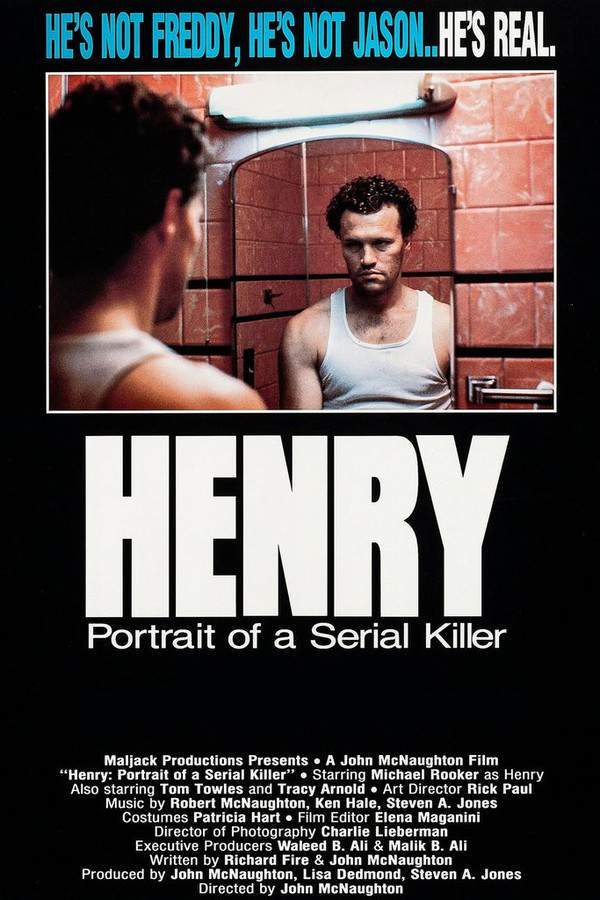
Henry: Portrait of a Serial Killer (1990) movie poster

Plot Summary

Henry: Portrait of a Serial Killer (1990) Plot Summary Explained

Release, runtime and language
1990 · 83 min · English
JustWatch #2,818 17
Directed by
John McNaughton
Starring
Michael Rooker, Tom Towles, Tracy Arnold

A disturbing look into the mind of a serial killer follows Henry, a drifter who leaves a trail of violence across Chicago. He partners with his former prison acquaintance Otis, and together they indulge in brutal acts. Unbeknownst to Becky, seeking escape from an abusive relationship, Henry's troubled history has transformed him into a cold and ruthless killer. The film explores the unsettling banality of evil through Henry's detached perspective.

On this page (5)
  1. 1 Where to watch
  2. 2 What happens: full plot
  3. 3 Plot questions answered
  4. 4 Movie threads
  5. 5 Every angle

Where to watch

Where to Watch Henry: Portrait of a Serial Killer (1990)

Where can you watch Henry: Portrait of a Serial Killer? Stream, rent or buy it in the US, including on Amazon Prime Video, Amazon MX Player and Amazon Prime Video Free: current JustWatch availability with up-to-date prices.

Streaming availability powered by JustWatch

Full plot summary · contains spoilers

What Happens in Henry: Portrait of a Serial Killer: Full Plot Summary

The whole story of Henry: Portrait of a Serial Killer (1990) explained, from the opening scene to the final frame: every key event, every twist and what it all adds up to. Read it as a quick recap before the sequel, to check a scene you missed, or to finally understand what really happened.

Henry is a deeply disturbed drifter, roaming across America and committing indiscriminate acts of murder against men, women, and even children. Settling in Chicago, he makes a brief stop at a diner before he escalates his violent behavior, leading to the brutal killings of elderly shopkeepers and several women at a liquor store.

His prison associate, Otis, picks up his sister, Becky, at O'Hare International Airport and takes her to their shared apartment. That night, curiosity leads Becky to ask Henry about his mother's death—the catalyst for his imprisonment. Henry recounts a disturbing tale where he claims to have stabbed her, a detail that contradicts his earlier assertions of shooting her or killing her with a bat. He shares that her abusive behavior and humiliating acts during his childhood deeply scarred him. In a moment of shared trauma, Becky reveals her own dark past of being raped by her father. This prompts Henry to express a peculiar protection over Becky, as he claims to be disturbed by any form of violence against women. When Otis makes an inappropriate advance toward Becky, Henry's protective nature surfaces violently as he threatens Otis, demanding he never repeat such actions. Despite Becky's evident romantic interest in Henry, he appears to be put off by her advances.

Becky soon finds employment at a salon, completely unaware of the sinister activities that surround her. That very night, Henry and Otis pick up two prostitutes whom Henry stalks and subsequently murders by brutally breaking their necks. Utterly shocked, Otis confronts Henry about his grim lifestyle. In a chilling discussion, Henry tries to convince Otis to embrace his philosophy of murder, claiming there is a relative nature to killing; despite Otis’s concern of being caught, Henry remains confident that everything will eventually work itself out.

Henry introduces Otis to the underground world when Otis destroys their old TV out of frustration. They visit a fence to buy a new TV, but when the rude man ridicules them, it serves as the perfect excuse for Henry to indulge his violent tendencies. He stabs the man with a soldering iron, and in a brutal turn of events, Otis joins in, effectively killing him. Filled with a thrill from their first murder, they steal a high-end TV and a camcorder, leaving without detection.

Soon after, Otis laments a confrontation with a teenager he tried to assault while selling him marijuana. Filled with vengeful desires, he contemplates murder but is advised by Henry to let it go, worried about the repercussions of his actions. Spurred on by the adrenaline of their earlier crimes, the duo embarks on a new killing spree, luring their victims under false pretenses. Henry instructs Otis to mix up their methods to confuse police investigations, explaining that keeping on the move is paramount for a serial killer’s survival. As they watch footage of their previous crime against a suburban family, Otis’s depravity escalates in a grotesque display as he begins to molest the mother’s corpse, but Henry swiftly puts a stop to it.

Becky eventually decides to leave her job and return to her daughter after hearing about her ex-husband being imprisoned for murder. Tensions between Otis and Henry rise after a camera incident involving Otis filming women from the apartment window. Following an evening out where Becky tries to rekindle romance with Henry, their plans are interrupted by Otis. After stepping out to buy cigarettes, Henry is tempted to kill a passerby but saves himself from the impulse. Upon returning home, however, he is horrified to witness Otis attacking Becky. In a brutal struggle, Henry fights Otis, but Otis gains the upper hand until Becky unexpectedly stabs him in the eye with a comb. Seizing the moment, Henry brutally kills Otis and dismembers the body in the bathtub.

In the wake of their violent resolve, Henry and Becky dispose of Otis's remains in trash bags, throwing them into the river as they flee the city. With the promise of escape, Henry suggests they drive to his sister's ranch in San Bernardino, California, reassuring Becky that they will send for her daughter when they settle. As they travel together, Becky professes her love for Henry, who reciprocates in a chilling, detached manner with, “I guess I love you too.” They rent a motel for the night, but the following morning, Henry departs alone, callously driving away without Becky before unloading her blood-stained suitcase into a ditch.
Last updated: November 16, 2024 at 15:11

Was this helpful?

Plot questions answered

Henry: Portrait of a Serial Killer Plot Explained: Your Questions Answered

The questions people ask most about Henry: Portrait of a Serial Killer (1990): what happens in the confusing scenes, why the characters do what they do, the twists, hidden details and what the ending means. Each answer contains spoilers.

Q1

Why does Henry protect Becky from Otis?

Henry claims to be disturbed by violence against women, a sentiment rooted in his traumatic childhood with his abusive mother. When Otis makes an inappropriate advance toward Becky, Henry violently confronts him, insisting he never repeat such actions. This protection appears genuine within Henry's twisted moral framework, where he distinguishes between his own victims and those he considers off-limits.

Foreshadowing: Earlier, Henry reveals his mother humiliated him during childhood, establishing his intense reaction to any perceived abuse of women.

  • henry
  • becky
  • otis
  • protection
  • violence against women
Q2

What contradiction exists in Henry's story about his mother's death?

Henry tells Becky that he stabbed his mother to death, but this contradicts his earlier assertions that he shot her or killed her with a bat. This inconsistency suggests Henry may be lying, embellishing his criminal history, or deliberately maintaining ambiguity about his past, a pattern consistent with his manipulative nature.

  • henry
  • mother
  • death
  • contradiction
  • backstory
Q3

Why does Henry kill the TV shop owner over a minor insult?

Henry uses the fence's rude behavior as justification for violence he was already inclined to commit. When the man ridicules them, Henry stabs him with a soldering iron, a weapon of opportunity. This murder represents Henry's pattern of using trivial provocations as excuses to satisfy his killing urges rather than genuine anger.

  • henry
  • tv shop owner
  • fence
  • murder
  • insult
Q4

What is Henry's philosophy on killing?

Henry believes killing has a relative nature, there is no moral difference between killing a person or an animal, and he sees it as a natural impulse. He tells Otis that everything will work itself out eventually, reflecting a fatalistic worldview where consequences are irrelevant and murder is simply a matter of opportunity and desire.

  • henry
  • philosophy
  • killing
  • morality
  • serial killer
Q5

Why does Henry advise Otis to vary their killing methods?

Henry instructs Otis to mix up their methods to confuse police investigations. He explains that keeping on the move is essential for a serial killer's survival. This demonstrates Henry's awareness of law enforcement procedures and his calculated approach to avoiding detection, contrasting with Otis's more impulsive nature.

  • henry
  • otis
  • police
  • investigation
  • methods
  • serial killer
Q6

Why does Henry spare the passerby but kill others?

Henry manages to suppress his urge to kill the passerby when he steps out to buy cigarettes, demonstrating that he can control his impulses when he chooses. However, this restraint is temporary and situational, his decision not to kill appears to be based on convenience or mood rather than any moral principle, as he continues killing throughout the film.

  • henry
  • passerby
  • restraint
  • impulse
  • killing
Q7

Why does Henry kill Otis?

Henry kills Otis primarily to protect Becky after witnessing him attack her. However, the murder also serves Henry's self-interest, Otis had become a liability due to his escalating recklessness, particularly filming women from the window. Henry seizes the opportunity to eliminate both a potential threat and a burdensome companion while maintaining his protective image with Becky.

  • henry
  • otis
  • murder
  • becky
  • fight
Q8

What prompts Becky to stab Otis?

Becky stabs Otis in the eye with a comb during the struggle when Henry fights Otis. This act represents Becky crossing a moral threshold, transforming from a naive victim seeking escape from an abusive relationship into an active participant in murder. The violence she witnesses and experiences fundamentally changes her character.

  • becky
  • otis
  • stabbing
  • comb
  • self-defense
Q9

Why does Henry abandon Becky at the motel?

Henry leaves Becky behind because his attachment to her was purely instrumental. He uses her as a companion and helper in disposing of Otis's body, but feels no genuine emotional connection. His chilling acknowledgment of her love with "I guess I love you too" reveals his profound emotional detachment and ability to mimic human affection without experiencing it.

  • henry
  • becky
  • abandonment
  • motel
  • ending
Q10

Why doesn't Henry reciprocate Becky's romantic interest?

Henry appears put off by Becky's romantic advances throughout the film. His emotional detachment prevents genuine connection, and his claimed protection of women exists alongside an inability to form real relationships with them. Any affection he shows is performative, he can mimic care but cannot feel it.

  • henry
  • becky
  • romance
  • detachment
  • emotional
Q11

Why does Becky decide to return to her daughter?

Becky decides to leave her job at the salon and return to her daughter after learning her ex-husband is imprisoned for murder. This decision shows her underlying maternal instinct and desire for a normal life, contrasting sharply with the violence surrounding her. It also provides context for her ultimate willingness to flee with Henry, hoping to eventually bring her daughter to a safer life.

  • becky
  • daughter
  • job
  • ex-husband
  • mother
Q12

Why does Henry stop Otis from molesting the victim's corpse?

When Otis begins to molest the mother's corpse while watching their crime footage, Henry swiftly stops him. This moment reveals the boundary in Henry's twisted morality, he views murder as acceptable but sexual violence as crossing a line. It also demonstrates Henry's need for control and his distinction between killing and what he considers degrading behavior.

  • henry
  • otis
  • corpse
  • abuse
  • victim's body

Movie threads

More Movies Like Henry: Portrait of a Serial Killer, by Mood & Story

Curated lists built around what makes Henry: Portrait of a Serial Killer tick: the same mood, the same kind of story or the same emotional payoff. Each list explains why these movies belong together.

Disturbing Realistic Crime Dramas like Henry: Portrait of a Serial Killer

Movies that strip away glamour to examine the chilling reality of violence. If you were captivated by the grim realism of Henry: Portrait of a Serial Killer, this selection features movies with a similar unflinching gaze at criminal acts. These films prioritize a cold, detached perspective and disturbing authenticity over conventional thriller plots, offering a challenging and thought-provoking viewing experience.

  • disturbing
  • gritty
  • cold
  • clinical
  • oppressive
  • unsettling
  • Tone: dark, bleak, detached
  • Pacing: steady, methodical
Why these movies?

The story pattern: Narratives in this thread often unfold in a linear, almost documentarian fashion. They follow perpetrators of violence, focusing on their methods, mindset, and the stark consequences of their actions. The journey is not one of redemption or cat-and-mouse chase, but a steady descent or exploration of a morally vacant existence.

Why they belong together: These films are grouped by their shared commitment to a dark, realistic tone and a high-intensity, heavy emotional weight. They connect through a bleak worldview, a steady, methodical pacing that mirrors the relentlessness of their subject matter, and a focus on the psychological rather than the sensational.

Movies About Toxic Criminal Partnerships like Henry: Portrait of a Serial Killer

Stories of dangerous duos where loyalty is tested and morality decays. If you appreciated the toxic dynamic between Henry and Otis, explore these movies about dangerous partnerships that fuel a descent into violence. This selection focuses on stories where criminal collaboration leads to moral decay, betrayal, and ultimately, a bleak and devastating outcome for all involved.

  • gritty
  • tense
  • brutal
  • claustrophobic
  • manipulative
  • unsettling
  • Tone: dark, tense, bleak
  • Pacing: steady, character-driven
Why these movies?

The story pattern: The narrative pattern follows two characters, often with contrasting personalities, who become enmeshed in a criminal enterprise. The story charts the evolution of their partnership, the escalating violence they commit together, and the inevitable point of fracture—whether through betrayal, moral crisis, or external pressure—that leads to a tragic end.

Why they belong together: Movies in this thread share a dark tone and heavy emotional weight, driven by the intense, often dysfunctional relationship at their core. The pacing is typically steady, building tension through the characters' interactions, and the endings are almost universally bleak, reflecting the ultimate cost of their alliance.

Every angle

Henry: Portrait of a Serial Killer (1990) Explained: Plot, Timeline & Characters

Everything about Henry: Portrait of a Serial Killer in one place: what happens in the plot summary, the timeline in chronological order, the characters and meaning and a spoiler-free summary. What's After the Movie adds the cast, box office and post-credit scenes.

Coming soon on iOS and Android

The Plot Explained Movie Summary App

Plot summaries, endings explained and timelines on your phone. Catch up on any movie in minutes, save your favorites and never miss a twist again.

Be the first to know when we launch. Your email stays private, always.

Learn more about the app