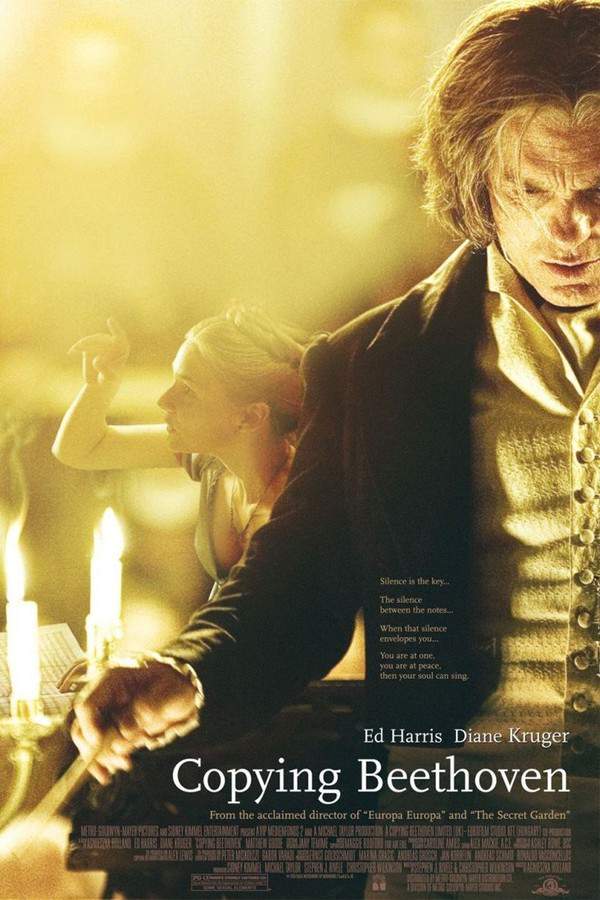
Vienna, 9 June 1804 marks the private premiere of Beethoven's groundbreaking third symphony, the Eroica, staged at the opulent palace of Prince Lobkowitz Jack Davenport. The film centers on the intense musical moment as Beethoven Ian Hart leads the ensemble through the long, revelatory work, the room filled with anticipation, power, and the weight of a composer redefining his art.
In a personal thread that runs alongside the music, Beethoven attempts to secure a future with his lover, the widow Josephine von Deym Claire Skinner. She is bound by noble status and strict custody laws—paradoxically loving him yet unable to marry a commoner without risking custody of her children. The scene unfolds with a quiet ache, highlighting the tension between personal desire and social constraints that shadows Beethoven’s public triumph.
Midway through the performance, the arrival of the aging composer Josef Haydn Frank Finlay brings a ripple of memory and credibility. He arrives just in time to hear the last movement, his presence underscoring the passage of generations and the weight of tradition as the new work pushes at the edges of convention.
The narrative then shifts to a dinner with Beethoven’s pupil Ferdinand Ries Leo Bill. There, Ries delivers the stark news that Napoleon has proclaimed himself Emperor of France, a revelation that cinematically reframes Beethoven’s ambitions and the political meaning of the music he so fiercely crafted. The moment sharpens the film’s sense of betrayal and disillusion, as Beethoven’s earlier idealism collides with the harsh reality of power and ambition.
Earlier drafts of the symphony bore a different intent, and the film notes how Beethoven’s title page was ultimately altered in response to Napoleon’s ascent; the work’s identity shifts in the viewer’s mind from a republican ideal to a symbol of upheaval and change. In one of the film’s most remembered exchanges, Haydn offers a restrained verdict on the piece, calling it “quite new,” and the moment also carries the prophecy that would reverberate through music: >From this day forward, everything in music is changed.
As the curtain falls on the Eroica, the camera lingers on Beethoven’s face as the triumph and turmoil collide. He leaves the hall with a foreboding stillness, and, in a final, haunting image, looks out at the audience and seems briefly unable to hear any natural sounds—an ominous prelude to the deafness that would increasingly shape his life.
The film’s endurance lies in its patient, evocative portrayal of a genius poised between transformative art and personal hardship. It crafts a portrait of a man who channels upheaval into music, inviting viewers to feel the weight of every decision, every refusal, and every unspoken consent that shaped a landmark in classical music.