

























Plot Explained Spoilers guaranteed!
Plot Explained

Browse by genre

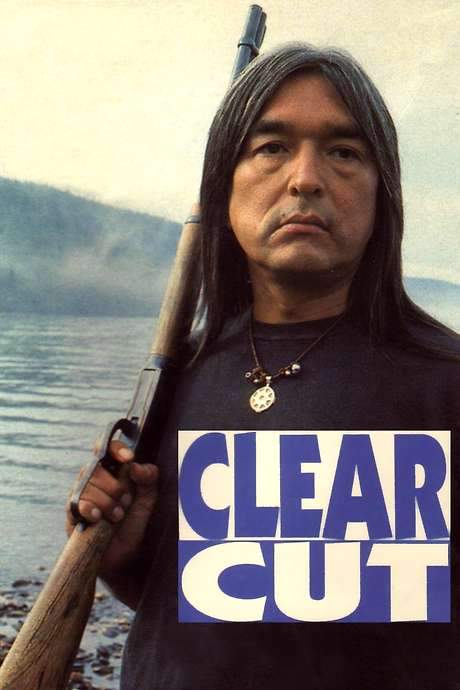
Clearcut (1991) movie poster

Timeline

Clearcut (1991) Timeline Explained – Every Event in Order

Release, runtime and language
1991 · 98 mins · English
JustWatch #9,086 30
Directed by
Ryszard Bugajski
Starring
Graham Greene, Phil Harris, Rebecca Jenkins, Michael J. Reynolds, Ron Lea, Tom Jackson

When the violence erupts, a well‑to‑do white lawyer's complacent worldview is challenged by an enraged Indigenous activist. The activist forces him into a desperate plan to abduct the head of a logging corporation, hoping to make him feel the true cost of the forest’s destruction. Their uneasy alliance tests loyalty, justice, and survival.

On this page (6)
  1. 1 Where to watch
  2. 2 Events in order (15)
  3. 3 Timeline questions answered
  4. 4 Movie threads
  5. 5 Movies like Clearcut
  6. 6 Every angle

Where to watch

Where to Watch Clearcut (1991)

Where can you watch Clearcut? Stream, rent or buy it in the US, including on Amazon Prime Video, Bloodstream and Chilling: current JustWatch availability with up-to-date prices.

Streaming availability powered by JustWatch

15 events in order · contains spoilers

Clearcut Timeline: Events in Chronological Order

Every key event of Clearcut (1991) in order, scene by scene, with when and where it takes place. Use it to untangle flashbacks, time jumps and parallel storylines, to refresh your memory before the sequel or to find the exact scene you are thinking of.

  1. Maguire arrives at the reserve amid protest

    A seaplane delivers Peter Maguire to the First Nations reserve as protesters block a road to stop clearcutting. He informs the band that they have lost the court case and that the logging company will begin building the road. The atmosphere is tense as activists anticipate the impact on their land.

    When
    Day 1
    Where
    First Nations reserve, rural Canada
  2. Polly guides Maguire to the protest scene

    Polly, a young guide, leads Maguire to a chaotic scene where police brutalize protesters while trees are ripped down. Maguire witnesses the confrontation and begins to grasp the scale of the fight. The scene foreshadows the moral complexities ahead.

    When
    Same day, daytime
    Where
    Protest site on Indian land
  3. Wilf Redwing commits to a long struggle

    Elder Wilf Redwing refuses to celebrate the defeat and frames the battle as a long, ongoing struggle. He cautions Maguire about the limits of legal remedies and urges perseverance. Maguire weighs the future of his involvement.

    When
    Evening
    Where
    Camp clearing on reserve
  4. Sweat lodge offers purification and doubt

    Wilf invites Maguire to a sweat lodge ceremony to seek clarity. The ritual unsettles Maguire as he experiences dark visions of cave paintings and blood, blurring the line between reality and prophecy. The ceremony deepens Maguire's internal conflict.

    When
    Night
    Where
    Sweat lodge on reserve
  5. Arthur is introduced and destabilizes Maguire

    Arthur, a militant Indigenous activist with a star pendant, is introduced and forms an uneasy rapport with Maguire. They share a grim, dark humor about drastic methods, signaling a radical departure from Maguire's approach. Tension mounts as Maguire considers his loyalties.

    When
    Late night
    Where
    Camp area
  6. A plan to kidnap the plant manager takes shape

    Arthur recruits Maguire to kidnap Bud, the logging company's plant manager, and the four—including Wilf—head into the woods. Arthur frames the mission as teaching them to listen to Mother Earth. The group crosses a line into illegal and dangerous territory.

    When
    Late night
    Where
    Wilderness path from reserve
  7. Tensions flare as the journey deepens

    As they travel deeper into the woods, Arthur's behavior grows erratic and violent. Maguire is torn between loyalty to the natives and faith in white colonial institutions, while Bud and Arthur challenge Maguire's neutrality. The trip becomes a moral crucible.

    When
    Next day
    Where
    Wilderness
  8. Bud's leg is cauterized in a brutal act

    Arthur wounds Bud and performs a cauterization on his leg, escalating the brutality of the mission. The violent act underscores how quickly control and humanity erode during the escape. A manhunt by Mounties soon closes in on the group.

    When
    Morning
    Where
    Wilderness camp
  9. Two Mounties are killed, escalating danger

    Two Mounties stumble upon the camp and Arthur kills them both. The killings intensify Maguire's inner conflict and push the group further toward a collapse. The immediate threat to their safety becomes paramount.

    When
    Same day
    Where
    Woods/camp area
  10. Wilf hints that Arthur may be Wisakedjak

    Wilf warns that Arthur could be Wisakedjak, the trickster spirit, adding a layer of supernatural danger to the conflict. The line between ally and deceiver blurs as the group struggles to discern truth. The tension deepens with looming poetic dread.

    When
    After killings
    Where
    Camp clearance
  11. Second sweat ceremony and renewed tension

    In another sweat ceremony, Bud recites the Lord's Prayer while Arthur chants his own prayer. Maguire tries to interrupt but is chastised by both sides and is forced to endure the rite. The ceremony cements the clash of belief systems.

    When
    Following the warning
    Where
    Ceremony site
  12. Climb to the mountaintop and confront loss

    Arthur orders Bud and Maguire to climb a mountain to view a valley of trees. He asks Bud if he can see what will be lost, but Bud cannot answer, illustrating a refusal to fully acknowledge the consequences. The moment foreshadows irreversible choices.

    When
    Post-sweat
    Where
    Mountain overlook
  13. Maguire and Arthur's climactic confrontation

    Maguire corners Arthur and stabs him with his own knife. He then attempts to shoot, only to find the gun is empty. Arthur smiles enigmatically and sinks into the water, suggesting a mysterious end to his interference.

    When
    Climax
    Where
    Near a mountain overlook and water
  14. Survivors return and are detained

    All three remaining men return to civilization and are detained by police, indicating the unresolved nature of their actions. The arrest underscores the cost of taking extreme measures in this conflict. The outcome remains morally ambiguous.

    When
    Immediately after
    Where
    Civilization; police custody
  15. Polly's pendant signals lingering influence

    Nearby, Polly, the young guide from the beginning, is seen wearing Arthur's pendant. The image suggests that Arthur's influence lingers beyond the immediate events. The ending hints at ongoing tensions and unresolved loyalties.

    When
    After detainment
    Where
    Near civilization

Last updated: October 10, 2025 at 16:04

Was this helpful?

Timeline questions answered

Clearcut Timeline Explained: Your Questions Answered

When does it happen, and why in that order? The questions people ask about the chronology of Clearcut (1991): time jumps, flashbacks, cause and effect between scenes and the correct order of events, each answered with spoilers.

Q1

Why does Arthur recruit Maguire to help kidnap the plant manager?

Arthur recruits Maguire because he needs someone with legal knowledge and credibility to pull off the kidnapping. As the band's lawyer, Maguire has access to information about the logging company's operations and can navigate the legal implications. More importantly, Arthur wants to force Maguire to take concrete action rather than just offering empty legal support, he explicitly states they need to teach Peter and Bud to "listen to Mother Earth" through direct confrontation with the destruction they enable.

Foreshadowing: Earlier, Arthur jokes about blowing up the mill and skinning the plant manager alive, establishing his willingness to escalate from protest to violence.

  • arthur
  • maguire
  • kidnap
  • bud
  • plant manager
  • recruitment
Q2

Why does Arthur kill the two Mounties who find their camp?

Arthur kills the Mounties because they represent the colonial law enforcement that has consistently sided with the logging company against Indigenous rights. The Mounties are actively hunting the group as part of a manhunt, and Arthur views their arrival as an existential threat, not just to his mission, but to the entire resistance. The killings also serve as a turning point that forces Maguire further into moral ambiguity, binding him to Arthur's cause through shared culpability.

Foreshadowing: Wilf's earlier warning about the long struggle against those who destroy the land hints at Arthur's view of law enforcement as enemies.

  • mounties
  • killings
  • murder
  • arthur
  • hunt
Q3

What does Wilf mean when he suggests Arthur might be Wisakedjak?

Wilf suggests Arthur could be Wisakedjak, the Indigenous trickster spirit known as "the Deceiver," to explain Arthur's unpredictable and seemingly superhuman behavior. This hints that Arthur may not be a ordinary man but a mythological figure embodying the spirit of resistance, one who can move faster than natural, seem to survive fatal wounds, and operate outside normal moral boundaries. The ambiguity serves the film's themes of blending Indigenous mythology with the brutal reality of colonial conflict.

Foreshadowing: Arthur's ability to outpace Maguire during his escape attempt, nearly by magic, foreshadows this revelation.

  • wisakedjak
  • trickster
  • spirit
  • wilf
  • arthur
  • mythology
Q4

What happens when Arthur sinks into the water at the end?

When Maguire stabs Arthur and he sinks underwater, the film leaves deliberately ambiguous whether Arthur dies, escapes, or transforms. The fact that he smiles enigmatically before sinking suggests he accepts this outcome or was never fully human to begin with. Combined with Wilf's earlier hint about Arthur being Wisakedjak, the sinking implies the trickster spirit either returns to the spirit world or allows himself to be absorbed back into nature, completing whatever metaphysical purpose his presence served.

Foreshadowing: Arthur's earlier ability to seemingly move by magic and his knowledge of the wilderness as if it were home foreshadow his otherworldly nature.

  • arthur
  • water
  • sink
  • death
  • ending
  • trickster
Q5

Why is the gun unloaded when Maguire tries to shoot Arthur?

The gun being unloaded is deliberately ambiguous but suggests Arthur either knew this moment would come and chose not to arm himself, or that he exists beyond normal physical rules. Some interpretations view it as Arthur testing Maguire, giving him the opportunity to kill him but removing the certainty of death. The empty gun also symbolizes the futility of Maguire's attempts to use colonial tools (violence, firearms) against someone who operates outside conventional reality.

Foreshadowing: Arthur's earlier mysterious abilities and Wilf's warning about him being a trickster suggest he operates by different rules.

  • gun
  • unloaded
  • maguire
  • arthur
  • shooting
  • knife
Q6

Why does Maguire stab Arthur despite being his ally?

Maguire stabs Arthur during the confrontation on the mountain because he sees no other escape option after his own attempt to flee fails. When Arthur chases him down, seemingly supernaturally, and corners him, Maguire panics and uses Arthur's own knife. The stabbing represents Maguire's fundamental inability to fully commit to either side: he cannot embrace Arthur's violent resistance, but he also cannot return to being a passive lawyer serving a system he knows is unjust. His violent act contrasts with Arthur's seeming acceptance, highlighting their different relationships to resistance and consequence.

Foreshadowing: Throughout the journey, Maguire constantly wavers between loyalty to the native cause and faith in colonial systems, foreshadowing his inability to resolve this tension peacefully.

  • maguire
  • arthur
  • stabbing
  • confrontation
  • mountain
  • escape
Q7

What does the ending mean when Polly is wearing Arthur's pendant?

Polly wearing Arthur's star-shaped pendant at the end suggests his influence and spirit persist beyond his physical disappearance. As the young girl who guided Maguire to the protest at the beginning, Polly represents the next generation of Indigenous resistance. The pendant's transfer to her implies the struggle continues through younger voices, and Arthur's mythological essence may have been passed to those who will carry on fighting for the land. It leaves the conflict unresolved, suggesting colonial exploitation and Indigenous resistance remain ongoing.

Foreshadowing: Polly's role as a guide at the beginning, showing Maguire the reality of the protest, establishes her as someone aware of and connected to the resistance.

  • polly
  • pendant
  • ending
  • arthur
  • star
  • passing
Q8

Why does Arthur force Bud and Maguire to climb the mountain to see the valley?

Arthur forces Bud and Maguire up the mountain to visually confront the scope of what clearcutting will destroy. He asks Bud if he can "see what will be lost," but Bud cannot answer, this symbolizes the blindness of those profiting from environmental destruction. For Arthur, making them witness the valley personally connects abstract political resistance to concrete, visible loss. The climb also serves as a spiritual journey, taking them deep into Mother Earth before any resolution occurs.

Foreshadowing: Earlier, Arthur frames their mission as teaching them to "listen to Mother Earth," establishing his belief in experiential understanding over intellectual argument.

  • mountain
  • valley
  • trees
  • arthur
  • bud
  • clearcutting
  • vision
Q9

What is the significance of Maguire's sweat lodge visions?

Maguire's sweat lodge visions of cave paintings, fallen trees, and blood represent his subconscious grappling with the magnitude of the conflict between Indigenous people and colonial exploitation. The visions blur the line between spiritual purification and prophecy, showing him the historical and ongoing violence against the land. This ceremony is meant to clarify his next move, but instead it destabilizes his comfortable worldview by forcing him to experience the trauma and urgency felt by those fighting to protect their territory.

Foreshadowing: Wilf invites Maguire to the sweat lodge specifically to "purify and clarify his next move," but the visions are darker than expected.

  • sweat lodge
  • visions
  • cave paintings
  • blood
  • maguire
  • prophecy
Q10

Why does Arthur wound and then cauterize Bud's leg?

Arthur wounds Bud's leg, then cauterizes the wound with a heated implement, seemingly as a form of brutal野外 first aid. This act demonstrates the harsh reality of their situation, they are deep in the wilderness with no proper medical supplies, and Arthur takes extreme measures to prevent Bud from bleeding out. The cauterization also serves as a power play, showing Arthur's total control over the group and his willingness to inflict pain as a form of survival. It further isolates Maguire, forcing him to witness violence against someone he was supposed to be rescuing.

Foreshadowing: Arthur's erratic and violent behavior has been escalating since they entered the woods, and this act represents his complete departure from civilized norms.

  • bud
  • leg
  • wound
  • cauterize
  • arthur
  • violence
  • wilderness

Movie threads

More Movies Like Clearcut, by Mood & Story

Curated lists built around what makes Clearcut tick: the same mood, the same kind of story or the same emotional payoff. Each list explains why these movies belong together.

Wilderness psychological torment movies like Clearcut

Characters are pushed to their breaking point in isolated, hostile natural settings. If you liked the intense pressure of Clearcut, explore more movies where the wilderness becomes a stage for psychological torment. These films feature characters pushed to their limits in remote, natural settings, blending survival drama with deep psychological unease and moral collapse.

  • oppressive
  • claustrophobic
  • desperate
  • unsettling
  • grim
  • primal
  • Tone: dark, unsettling, grim
  • Pacing: steady, relentless
Why these movies?

The story pattern: Stories in this thread typically follow characters who venture into or are trapped in a wild, remote location. The isolation and inherent danger of the environment strip away their social veneer, leading to paranoia, desperation, and a confrontation with their own moral code or sanity. The plot is a steady descent into a primal state.

Why they belong together: Movies are grouped here for their shared oppressive atmosphere generated by the wilderness setting, their focus on psychological disintegration under pressure, and their high-intensity, emotionally heavy viewing experience.

Movies about radical activism and moral ambiguity like Clearcut

Stories where extreme idealism leads to violence and profound moral ambiguity. For viewers who appreciated the challenging themes in Clearcut, this thread gathers films about radical activism that descends into violence. These stories explore the gritty, morally complex realities of fighting for a cause, often featuring ambiguous endings and heavy emotional impact.

  • angry
  • unsettling
  • desperate
  • grim
  • tense
  • morally complex
  • Tone: dark, angry, ambiguous
  • Pacing: steady, tense
Why these movies?

The story pattern: The narrative pattern involves a protagonist, often an outsider or a reluctant participant, being drawn into a radical plan by a fervent activist. The plot follows the escalation of their actions from protest to violence, creating an uneasy alliance and testing loyalties. The journey is one of increasing tension and moral conflict, culminating in an ending that is often bleak or ambiguous, reflecting the irresolvable nature of the central dilemma.

Why they belong together: These films are grouped by their shared focus on the theme of radical action for a cause, their exploration of moral gray areas, their dark tone, and their tendency to leave the audience with unsettling questions rather than clear resolutions.

If you liked this

Movies Like Clearcut

Similar movies to Clearcut: the same genre, themes or kind of story. Each one comes with its own plot summary, timeline and ending explained.

Browse all movie summaries

Every angle

Clearcut (1991) Explained: Plot, Timeline & Characters

Everything about Clearcut in one place: what happens in the plot summary, the timeline in chronological order, the characters and meaning and a spoiler-free summary. What's After the Movie adds the cast, box office and post-credit scenes.

Coming soon on iOS and Android

The Plot Explained Movie Summary App

Plot summaries, endings explained and timelines on your phone. Catch up on any movie in minutes, save your favorites and never miss a twist again.

Be the first to know when we launch. Your email stays private, always.

Learn more about the app