Plot Explained Spoilers guaranteed!
Plot Explained

Browse by genre

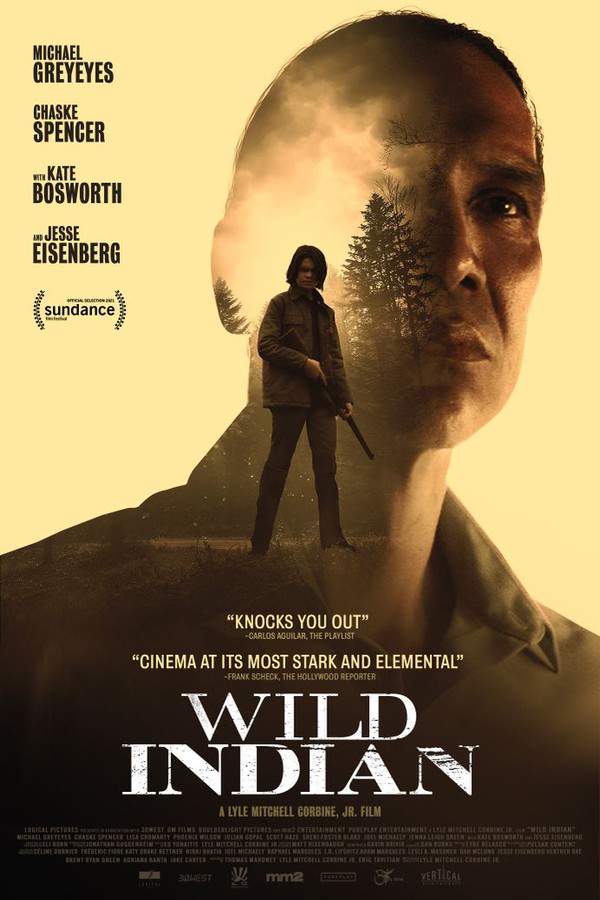
Wild Indian (2021) movie poster

Plot Summary

Wild Indian (2021) Plot Summary Explained

Release, runtime and language
2021 · 90 min · English
Echo score 58
JustWatch #24,372 4
Directed by
Lyle Mitchell Corbine Jr.
Starring
Bruce Davis, Kate Bosworth, Adam Budron, Bryce Camp, Evan Assante, Kirstyn Anderson
Budget
$20M

Years after a traumatic event, Michael, a Native American man, struggles to outrun his past. When an old acquaintance reappears seeking retribution, he's forced to confront a deeply buried secret that threatens his hard-earned peace. He must protect his marriage and his position at work while dealing with the resurfacing consequences of a decades-old tragedy and the fracturing of his own identity.

On this page (6)
  1. 1 Where to watch
  2. 2 What happens: full plot
  3. 3 Plot questions answered
  4. 4 Movie threads
  5. 5 Movies like Wild Indian
  6. 6 Every angle

Where to watch

Where to Watch Wild Indian (2021)

Where can you watch Wild Indian? Stream, rent or buy it in the US, including on Amazon Prime Video, Kanopy and Amazon Video: current JustWatch availability with up-to-date prices.

Streaming availability powered by JustWatch

Full plot summary · contains spoilers

What Happens in Wild Indian: Full Plot Summary

The whole story of Wild Indian (2021) explained, from the opening scene to the final frame: every key event, every twist and what it all adds up to. Read it as a quick recap before the sequel, to check a scene you missed, or to finally understand what really happened.

In a powerful opening sequence, a Native American man grapples with the brutal realities of life, as he hunts in the woods while his wife succumbs to smallpox. Makwa Gi-Zheg, a young Ojibwe boy living in Wisconsin during 1988, faces not only the torment inflicted by his father but also the bullying that occurs at school. His sole source of comfort is his cousin Teddo, who stands by him as they navigate the complexities of childhood. As Makwa begins to develop feelings for a girl, he finds himself envious of James, who effortlessly captures her attention.

In a poignant moment, Makwa's teacher, a priest, delivers a sermon that resonates deeply, stating that a tortured spirit must be free before God, and that one’s refusal to take accountability invites suffering that can spread like a plague. Under Teddo's guidance, Makwa learns how to shoot a rifle, a lesson shaded by the darker impulses building within him. As tensions erupt, he holds a kitchen knife ominously above his father before witnessing James walking through the woods, where he calmly takes aim and shoots him. Together with Teddo, he buries James and grapples with the chilling reality of his actions.

Fast forward to 2019, Makwa has reinvented himself as Michael Peterson, a businessman in California with a baby son and a white wife, Greta. He takes pride in his braided hair, seeing it as an essential part of his identity. Despite his efforts to appear unfazed by his wife’s pregnancy announcement, a darker side of him emerges at a club where, during a disturbing encounter with a stripper, he succumbs to his inner turmoil while reciting Hail Marys.

Meanwhile, Teddo is released from a decade-long prison stint for drug offenses and moves in with his sister Cammy, who has her own young son, Daniel. He feels the weight of missed family connections over the years, realizing Makwa has not been around for significant events. His past is still haunting him, prompting him to confront Lisa, James' mother, in a moment fraught with emotional desperation.

Eventually, Makwa and Teddo meet unexpectedly. Tensions escalate as Teddo reveals he has confessed to various sins and, in a tragic turn, attempts to turn the gun on himself but fails to go through with it. In the heat of the moment, triggered by unnamed resentments, Makwa ends up shooting Teddo in an act of self-defense.

The legal consequences of that fateful encounter loom over Makwa as he faces a Wisconsin investigator regarding James' long-ago disappearance. Tension builds as he visits a bedridden Lisa in the hospital, where he attempts to sway her opinion by portraying Teddo as mentally unstable and unreliable. Despite Makwa's assurances of innocence, Lisa, grounded in her loss, is inclined to believe Teddo's claims, igniting a clash of truths.

As the story unfolds, Makwa finds himself trapped in a web of guilt and fear, exacerbated by the prosecutor's investigation that leaves him feeling increasingly vulnerable. The prosecutor's dismissive attitude toward James’ death as another missing case within the Native American community adds to Makwa's turmoil.

In the culmination of his dual life, Makwa is faced with personal and professional crises, worsened by the unearthing of his past actions. While he receives a promotion, he cannot escape the weight of his bullet wound nor the terrifying memories that return to haunt him. The narrative closes with a stark parallel, returning to the Native American man with smallpox beside his deceased wife as Makwa collapses onto a beach, embodying a profound sense of loss and the cycle of violence that echoes through generations.
Last updated: November 08, 2024 at 00:39

Was this helpful?

Plot questions answered

Wild Indian Plot Explained: Your Questions Answered

The questions people ask most about Wild Indian (2021): what happens in the confusing scenes, why the characters do what they do, the twists, hidden details and what the ending means. Each answer contains spoilers.

Q1

Why does Makwa kill James in the movie?

Makwa kills James after developing feelings for a girl at school who only shows interest in James. Combined with the abuse he suffers at home and the bullying at school, Makwa's jealousy and repressed rage explode when he sees James walking alone in the woods. Teddo has just taught him to shoot a rifle, giving him the means to act on his darkest impulses.

Foreshadowing: Teddo's rifle lesson and the priest's sermon about tortured spirits foreshadow Makwa's violent release of inner turmoil.

  • makwa
  • james
  • murder
  • jealousy
  • woods
  • shooting
Q2

Why does Michael kill Teddo in Wild Indian?

Michael kills Teddo during an unexpected reunion in 2019. Teddo, recently released from prison, reveals he has confessed to various sins and attempts to turn a gun on himself but cannot go through with it. When Teddo points the gun at Michael, Michael shoots him in what he claims is self-defense, though underlying resentments from years of guilt and fear clearly motivate his actions.

Foreshadowing: The childhood scene where Makwa holds a knife above his abusive father demonstrates his capacity for violence when cornered.

  • michael
  • teddo
  • shooting
  • self-defense
  • confrontation
Q3

How does Makwa reinvent himself as Michael Peterson?

After killing James in 1988, Makwa presumably leaves Wisconsin and creates a new identity. By 2019, he has become Michael Peterson, a businessman in California with a white wife named Greta and a young son. He maintains his Native American identity through his braided hair, which he takes pride in, but the psychological burden of his crime haunts him.

  • makwa
  • michael peterson
  • identity
  • california
  • new life
Q4

What is the priest's sermon about in Wild Indian?

Makwa's teacher, a priest, delivers a sermon about accountability and spiritual freedom. He states that a tortured spirit must be free before God, and that refusing to take accountability invites suffering that spreads like a plague. This message deeply resonates with Makwa, who is dealing with abuse, guilt, and internal conflict, but he ultimately fails to find the freedom the priest describes.

Foreshadowing: The sermon's themes of guilt and spreading suffering foreshadow both James' murder and the later consequences that affect multiple characters.

  • priest
  • sermon
  • accountability
  • guilt
  • torture spirit
Q5

Why does Lisa believe Teddo's claims over Michael's innocence?

Lisa, James' mother, is visited by Michael who tries to convince her that Teddo is mentally unstable and unreliable. However, Lisa has lived with the loss of her son for decades. When Teddo confesses to his sins and confronts her earlier, she sees his remorse as genuine. Her grief and instinct lead her to believe Teddo over Michael, who she perceives as slick and untrustworthy despite his assurances.

  • lisa
  • teddo
  • michael
  • james mother
  • belief
Q6

What does the opening and closing scene mean in Wild Indian?

The film opens and closes with a parallel: a Native American man hunts in the woods while his wife dies from smallpox. This cyclical framing suggests a generational pattern of trauma, loss, and violence within Native American communities. The closing shows Makwa (as Michael) collapsing on a beach, overwhelmed by his past, embodying the same despair and hopelessness as the opening figure.

  • opening
  • closing
  • smallpox
  • cyclical trauma
  • native american
Q7

How does Makwa get away with James' murder for so long?

Makwa and Teddo bury James' body in the woods together, keeping the murder hidden for decades. In 2019, when a Wisconsin investigator questions Michael about James' disappearance, the prosecutor dismisses it as another missing Native American case, showing the systemic neglect that allows the crime to remain unsolved. Michael's new identity and geographic distance from Wisconsin also help him evade detection.

  • james
  • murder
  • cover up
  • investigation
  • missing
Q8

What happens to Michael at the club in Wild Indian?

During a visit to a club, Michael's carefully constructed facade crumbles. During a disturbing encounter with a stripper, he succumbs to his inner turmoil and begins reciting Hail Marys, showing the psychological conflict between his Catholic upbringing and his violent impulses. This scene reveals that his repression is failing as his past resurfaces.

Foreshadowing: The priest's earlier sermon about accountability and the torture of unconfessed sin echoes in his desperate prayer.

  • michael
  • club
  • hail mary
  • psychological break
  • stripper
Q9

What drives Makwa's behavior in childhood in Wild Indian?

Makwa's childhood is shaped by severe abuse from his father and relentless bullying at school. His only source of support is his cousin Teddo. His jealousy of James stems from James effortlessly winning the affection of the girl Makwa likes. These accumulated pressures, combined with the priest's sermons about accountability and freedom, create a troubled boy on the verge of violence.

  • makwa
  • childhood
  • abuse
  • bullying
  • teddo
  • father
Q10

What happens to Teddo after he leaves prison in Wild Indian?

After serving a decade for drug offenses, Teddo moves in with his sister Cammy and her son Daniel. He feels the weight of missed family connections and realizes Makwa has been absent from his life. Confronted by his past, he seeks out Lisa (James' mother) in an emotionally desperate moment. Eventually, his reunion with Michael leads to the shooting that kills him.

  • teddo
  • prison
  • release
  • cammy
  • sister
  • consequences
Q11

What happens to Michael at the end of Wild Indian?

Michael receives a promotion at work despite his bullet wound and psychological unraveling. However, he cannot escape the past as the investigator probes James' disappearance and Lisa rejects his attempts to discredit Teddo. The film ends with Michael collapsing on a beach, haunted by guilt and trauma, paralleling the opening scene of loss and despair.

  • michael
  • promotion
  • ending
  • beach
  • collapse
Q12

What happened between Michael and Teddo over the years?

After burying James together in 1988, Michael/Teddo's paths diverged. Teddo went to prison for a decade while Michael reinvented himself in California. Teddo missed significant family events and Michael was absent. When they reunite, the weight of their shared secret and years of separation creates explosive tension that ends in violence.

  • michael
  • teddo
  • relationship
  • separation
  • reunion

Movie threads

More Movies Like Wild Indian, by Mood & Story

Curated lists built around what makes Wild Indian tick: the same mood, the same kind of story or the same emotional payoff. Each list explains why these movies belong together.

Movies where the past returns like Wild Indian

Characters are forced to confront a long-hidden secret that threatens their present. If you liked the tense unraveling of a hidden past in Wild Indian, this thread collects similar thrillers and dramas. Discover movies about characters whose long-buried secrets, often involving trauma or crime, violently re-emerge to threaten their relationships, careers, and sanity.

  • tense
  • guilt-ridden
  • anxious
  • unraveling
  • psychological
  • traumatic
  • Tone: tense, dark, guilt-ridden
  • Pacing: variable, deliberate build
Why these movies?

The story pattern: The narrative often uses a dual-timeline structure, revealing the origin of the trauma and then cutting to the present-day consequences. The plot revolves around the secret's emergence and the protagonist's desperate attempts to contain it, leading to a climax where the truth can no longer be suppressed.

Why they belong together: These films are grouped by a shared narrative engine: a traumatic past that violently intrudes on the present. They create a specific kind of psychological tension centered on guilt, fear of exposure, and the fracturing of a fragile identity built on lies.

Bleak stories of moral collapse like Wild Indian

Stories of personal downfall driven by guilt, trauma, and irreversible actions. For viewers who appreciated the uncompromising bleakness and heavy emotional weight of Wild Indian. This selection features movies with similar themes of guilt, trauma, and cycles of violence, often ending without hope or redemption, focusing on the crushing consequences of past actions.

  • bleak
  • oppressive
  • melancholic
  • traumatic
  • guilt
  • downfall
  • Tone: dark, bleak, melancholic
  • Pacing: variable, atmospheric
Why these movies?

The story pattern: The journey is one of inevitable decline. A protagonist, haunted by a foundational sin (often from youth), attempts to outrun their guilt but is consumed by it. The narrative structure leads to an ending that reinforces the inescapable nature of their trauma and the cycle of violence it perpetuates.

Why they belong together: These films share a profoundly dark and pessimistic worldview. They are united by a heavy, oppressive mood, a focus on the psychological toll of guilt, and a narrative commitment to a bleak, often hopeless, conclusion that offers no easy answers or catharsis.

If you liked this

Movies Like Wild Indian

Similar movies to Wild Indian: the same genre, themes or kind of story. Each one comes with its own plot summary, timeline and ending explained.

Browse all movie summaries

Every angle

Wild Indian (2021) Explained: Plot, Timeline & Characters

Everything about Wild Indian in one place: what happens in the plot summary, the timeline in chronological order, the characters and meaning and a spoiler-free summary. What's After the Movie adds the cast, box office and post-credit scenes.

Coming soon on iOS and Android

The Plot Explained Movie Summary App

Plot summaries, endings explained and timelines on your phone. Catch up on any movie in minutes, save your favorites and never miss a twist again.

Be the first to know when we launch. Your email stays private, always.

Learn more about the app