Plot Explained Spoilers guaranteed!
Plot Explained

Browse by genre

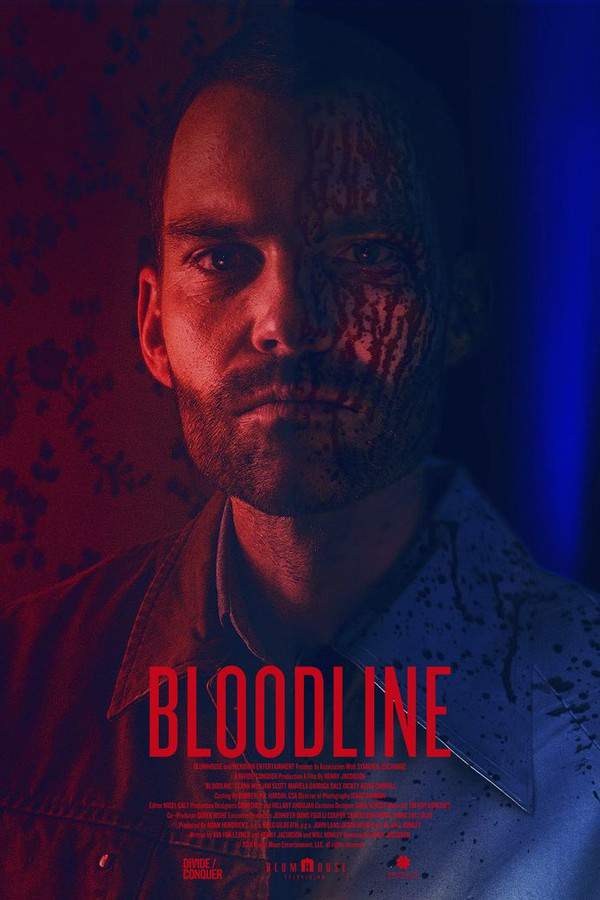
Bloodline (2019) movie poster

Plot Summary

Bloodline (2019) Plot Summary & Ending Explained

Release, runtime and language
2019 · 97 min · English
Echo score 50
JustWatch #1,021
Directed by
Henry Jacobson
Starring
Dale Dickey, Seann William Scott, Kevin Carroll, Nick Boraine, Christie Herring, Dusty Sorg

Haunted by a difficult past, Evan, a dedicated social worker, grapples with reconciling his experiences with his new role as a father. He strives to balance his commitment to justice and his desire to safeguard the people he cares about, facing complex challenges as he navigates his personal and professional life.

On this page (7)
  1. 1 Where to watch
  2. 2 What happens: full plot
  3. 3 Plot questions answered
  4. 4 How it ends
  5. 5 Movie threads
  6. 6 Movies like Bloodline
  7. 7 Every angle

Where to watch

Where to Watch Bloodline (2019)

Where can you watch Bloodline? Stream, rent or buy it in the US, including on Bloodstream, Tubi TV and Apple TV Store: current JustWatch availability with up-to-date prices.

Streaming availability powered by JustWatch

Full plot summary · contains spoilers

What Happens in Bloodline: Full Plot Summary

The whole story of Bloodline (2019) explained, from the opening scene to the final frame: every key event, every twist and what it all adds up to. Read it as a quick recap before the sequel, to check a scene you missed, or to finally understand what really happened.

A nurse finishing her shift heads to the staff changing room for a shower, only to be stalked and killed by an unseen assailant, leaving the hospital in uneasy silence and the night unsettled by a chilling sense of doom.

Three months earlier, social worker Evan, Seann William Scott, devotes his days to helping abused and troubled teens. His wife Lauren, Mariela Garriga, has just given birth to a son named Andrew, a moment of joy shadowed by the heavier work of healing that follows. Evan’s mother Marie, Dale Dickey, visits the hospital as Lauren struggles with breastfeeding, and a brusque nurse makes the moment more tense by brushing off Marie’s gentle request for care. The scene sets a pattern of tension and quiet volatility that threads through the entire story.

Evan sits with one of his teens who endured brutal abuse at the hands of his father, offering counsel and a steady presence. After the session, he spots that boy’s father being tossed from a bar and, in a stark display of control, offers the man a ride home. They arrive at an abandoned mansion where the man is squatting, and Evan binds him to a chair, disregarding the man’s pleas as he calmly ends the threat. The act, chilling in its calm inevitability, reveals a darker motors of Evan’s work—killing those who harm the vulnerable, even when it robs the act of its moral veneer.

Not long after, Evan is counseling a girl who describes her own uncle’s alleged rape. That night, he abducts the uncle, drives him to the same desolate mansion, and murders him in the same cold, procedural manner. The pattern deepens the mystery and foreshadows the old sins that still haunt the present.

Meanwhile, Evan receives a call from Chris, another student, whose drug-addicted father has returned home and struck him during an argument. The next night, Evan goes to the hospital again, where the rude nurse’s demand for pain meds is met with a cool detachment. The same nurse is later found dead, and a disturbing link emerges: in a twist, it becomes clear that the nurse was murdered by Marie—the same mother who once sheltered and protected Evan. The revelation sharpens the sense that the web of violence is both personal and generational, stretching through the family and into the hospital corridors.

Evan then takes Chris’s father to the abandoned mansion and ends him as he did the others. The next morning, a news broadcast reports that the bodies he buried have resurfaced, pulling the investigation toward Evan and away from any other suspect. A flashback reveals the deeper trauma: Evan’s father attacked him and his mother, and a teenage Evan killed his father in the same way he repeats with his future victims. Marie covered up the murder, burying his father in the garden and pledging to protect him, a secret kept at the center of the family’s fragile balance.

A detective arrives at the house, sensing a connection between Evan and the victims, and Lauren grows increasingly suspicious too. That night, Chris shows up at Evan’s door, gun in hand, ready to confront him about his father. Evan manages to calm the situation and sends the boy away without escalation, a moment that underscores the dangerous control Evan holds over the narrative and the people around him.

Lauren, now convinced there is more to the story, rummages through Evan’s garage and finds audio recordings corroborating what she heard in hushed conversations about his killings. She phones someone she trusts to meet, and Marie reminds Evan that Lauren is becoming a liability. He follows her, convinced that he can keep the truth contained.

Lauren finally meets with Chris at a remote location and reveals she found proof that Evan murdered his own father. She forces a gun into Chris’s hand and pushes him to shoot himself in the head, a shocking act that leaves Evan smiling with a grim appreciation for how far she’s willing to go to protect him, just as his mother once did. The moment crystallizes the tragedy: damage begetting more damage, love warped into protection in the most dangerous way.

When the detective returns to Evan’s house to close the case, a social media post emerges from Chris’s phone claiming responsibility for all the murders and that Chris killed himself after taking revenge on his abusers. Evan explains that he often left Chris alone in his office, a quiet routine that likely gave him access to information about other abused kids. The detective leaves, and the family stands together, watching their sleeping child while the night outside remains heavy with secrets and an uneasy sense of justice served, yet not redeemed.
Last updated: January 28, 2026 at 12:44

Was this helpful?

Plot questions answered

Bloodline Plot Explained: Your Questions Answered

The questions people ask most about Bloodline (2019): what happens in the confusing scenes, why the characters do what they do, the twists, hidden details and what the ending means. Each answer contains spoilers.

Q1

Why does Evan kill the abusers he works with as a social worker?

Evan kills abusers because of a traumatic past event. A flashback reveals that when Evan was a teenager, his own father attacked him and his mother, forcing teenage Evan to kill his father in self-defense using the same method he later uses on other abusers. His mother Marie covered up the murder and pledged to protect him, which created a twisted sense of justice in Evan, he believes eliminating abusers prevents further harm to vulnerable children, even though his method is illegal and morally complex.

Foreshadowing: Early scenes show Evan counseling abused teens and displaying unusual interest in their attackers' whereabouts.

  • evan kills abusers
  • motive
  • self-defense
  • teenage murder
  • father
Q2

What happened in Evan's past that started his killing pattern?

The flashback shows teenage Evan witnessing his father attack his mother. During the struggle, Evan killed his father by binding him to a chair, just as he would later kill other abusers. His mother Marie buried the body in the garden and promised to protect him, keeping this secret for years. This traumatic event created Evan's warped belief that killing is a necessary form of protection for vulnerable people.

Foreshadowing: Evan's calm, procedural approach to killing mirrors the exact method described in the flashback.

  • flashback
  • father murder
  • childhood trauma
  • covered up murder
Q3

Why did Marie kill the nurse at the hospital?

Marie killed the nurse because the nurse was rude and dismissive toward her when she asked for gentle care for Lauren during breastfeeding. The nurse dismissed a junkie (later revealed to be Chris' father) seeking pain meds, and when Marie made a request for the baby, the nurse brushed her off coldly. This triggered Marie's protective instincts, leading her to murder the nurse in the same hospital where her family works, a chilling parallel to Evan's own violent protection of vulnerable people.

Foreshadowing: The nurse's rudeness to Marie at the hospital is shown before her murder, establishing tension.

  • marie kills nurse
  • hospital murder
  • chris father
  • drug addict
Q4

Why did Lauren help Evan by manipulating Chris?

Lauren discovered audio recordings in the garage proving Evan murdered his own father. Rather than expose Evan, she met Chris at a remote location and revealed this proof. She then forced Chris to put a gun to his own head to protect Evan, mirroring the family's pattern of protecting each other through dangerous loyalty. Lauren essentially replicated Marie's role in the family: covering up murders to protect someone she loves, demonstrating how the family's toxic loyalty corrupts everyone involved.

Foreshadowing: Lauren's suspicion grows throughout the film as she searches for answers, culminating in her choice to protect Evan.

  • lauren manipulates chris
  • cover up
  • family loyalty
  • audio recordings
Q5

How did the detective connect Evan to the murders?

The detective arrived at Evan's home suspecting a connection between Evan and the victims, all of whom were abusers connected to cases Evan worked on as a social worker. The bodies that Evan buried at the abandoned mansion were discovered, pulling the investigation toward him. However, the case was ultimately closed when Chris' phone posted a message taking responsibility for all the murders and claiming he committed suicide after revenge, a fabricated narrative that Evan allowed to stand.

Foreshadowing: Timeline events show the detective progressively narrowing the investigation toward Evan.

  • detective investigation
  • bodies discovered
  • connection to cases
Q6

What did Lauren find in the garage that changed everything?

Lauren discovered audio recordings Evan made while killing his victims, likely recordings of the murders themselves or his victims' final moments. These recordings served as concrete proof of Evan's killings, including evidence that he murdered his own father. The discovery terrified Lauren, but instead of going to police, she sought to protect Evan, demonstrating how deeply entangled she became in the family's secrets.

Foreshadowing: Evan is shown calmly recording or documenting his activities, hinting at this evidence.

  • audio recordings
  • evidence
  • garage discovery
  • proof of murder
Q7

Why does Chris confront Evan with a gun?

Chris confronts Evan because he suspects Evan killed his drug-addicted father, who had previously hit Chris during an argument. Chris shows up at Evan's house with a gun intending revenge for his father's death. However, Evan manages to defuse the situation through some method (likely reminding Chris of the abuse he suffered from his father), and Chris leaves without escalating. This confrontation reveals the dangerous web of relationships Evan has created through his vigilante work.

Foreshadowing: Chris previously told Evan about his father hitting him, establishing motive for revenge.

  • chris confronts evan
  • revenge
  • gun
  • father abuse
Q8

How does the family avoid legal consequences despite the murders?

The family escapes legal consequences because Chris' phone posted a social media message claiming responsibility for all the murders and that he killed himself after taking revenge on his abusers. This fabricated confession aligns with the victims' profiles (all were abusers) and the available evidence, allowing the detective to close the case. Evan explains that he often left Chris alone in his office, giving him access to information about abused children, implying Chris may have been aware of or even assisted with some of Evan's activities, though the full truth remains obscured.

Foreshadowing: Evan's habit of leaving Chris alone in his office is established earlier in the film.

  • escape justice
  • chris confession
  • case closed
  • family safe
Q9

What does the ending imply about the cycle of violence in the family?

The ending suggests the family has perpetuated a dangerous cycle of protection through violence. Marie protected Evan by covering up his father's murder, Evan continued killing to 'protect' vulnerable teens, and Lauren protected Evan by manipulating Chris into self-destruction. The final scene shows the family standing together around their sleeping child, but the implication is ominous, their 'happy' outcome is built on multiple murders and manipulation. The cycle appears to continue as the family remains united in their secrets, with no moral redemption achieved.

Foreshadowing: The entire narrative traces how one cover-up leads to another, creating generational patterns.

  • cycle of violence
  • generational trauma
  • family protection
  • moral ambiguity
  • ending interpretation
Q10

Why does Evan use the abandoned mansion as his killing site?

Evan uses the abandoned mansion as his killing location because it's the same place where he killed his father years earlier, the same desolate, isolated setting where the original traumatic act occurred. Returning to this location repeatedly reinforces his pattern and connects his present killings to that formative event. The mansion serves as both a practical location (remote, private) and a symbolic space where his personal cycle of vigilante justice began.

Foreshadowing: The flashback reveals the mansion as the site of Evan's first killing.

  • abandoned mansion
  • killing site
  • location significance
  • same as father murder

Ending explained

What Happens at the End of Bloodline?

How Bloodline (2019) ends, in short: the final scene, the last twist and what it means for the characters. The full ending explained, with every spoiler, lives on its own page.

Read the full ending explained

The ending of Bloodline brings the series full circle, returning to the whispered promise that opened the show: "We're not bad people, but we did a bad thing." By the time the finale cuts to black, that statement has been thoroughly dismantled, revealing itself as the ultimate Rayburn self-deception. The finale, titled "Part 31," forces John Rayburn to finally confront the weight of his lies and the collateral damage of his choices. The central tragedy hinges on John's relationship with his brother, Danny, whom he killed in the first season. In a hallucinatory sequence, John is confronted by the ghost of his brother, leading to a pivotal confession: Danny never wanted revenge or money, but simply an apology. Danny's lifelong resentment stemmed from a single moment in their youth when John lied to cover for their father, Robert, who had beaten Danny and broken his arm following the accidental drowning of their sister, Sarah. By denying Danny that apology for thirty years, John allowed guilt to fester into the family's destruction.

The series conclusion centers on the meeting between John and Nolan, Danny’s teenage son. Nolan stands at the end of the dock, waiting for answers about his father's death. John is torn between two visions of his brother: the older Danny, who demands John finally speak the truth, and the younger Danny, who urges John to lie and let Nolan maintain his innocence. John's monologue plays over the scene, revealing his intent to confess. He admits that being born a Rayburn was not a blessing, but a "lie that bonded us," and declares that nothing matters more to him than the truth. He knows the police might not believe him, but Nolan would. Telling the truth would serve as the posthumous apology Danny always wanted, breaking the cycle of deceit that has poisoned the family. However, the act is not purely altruistic. As the creator notes, a confession would unburden John's conscience but transfer that heavy burden directly onto Nolan's shoulders. The scene echoes The Sopranos in its abruptness. Just as John begins to speak, the screen cuts to black, leaving the audience without a definitive answer.

Continue reading the ending (1 more paragraphs)

This ambiguity is precisely the point. The finale highlights a "no-win scenario" for the family. We see what happens when characters escape the Rayburn sphere versus when they stay. Meg, who moved away and erased her family ties, finds peace and freedom. In contrast, Kevin, who remained entangled in the family's darkness, ends up in prison. Beth Mackey, Robert's illegitimate daughter, thrives because she exists outside the family's toxic legacy. The final shot shows the Rayburn House Inn literally sinking into the ocean behind them, a blunt metaphor for a legacy built on unstable ground. John is trapped between damning Nolan with the truth or protecting him with yet another lie. Regardless of what John chooses in that silence, the show suggests the damage is done. One of them will ultimately sink under the weight of the family curse, proving that for the Rayburns, the sins of the past are inescapable.

Bloodline ending explained in full

Movie threads

More Movies Like Bloodline, by Mood & Story

Curated lists built around what makes Bloodline tick: the same mood, the same kind of story or the same emotional payoff. Each list explains why these movies belong together.

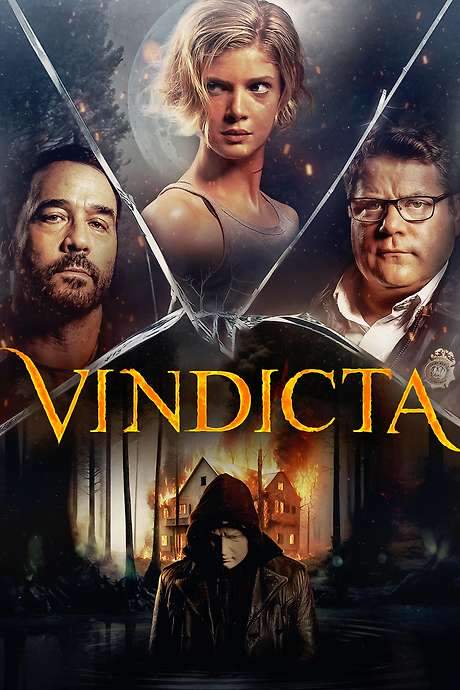
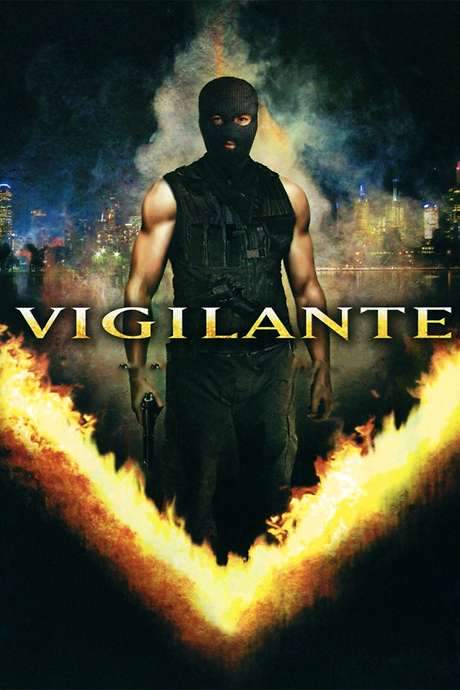
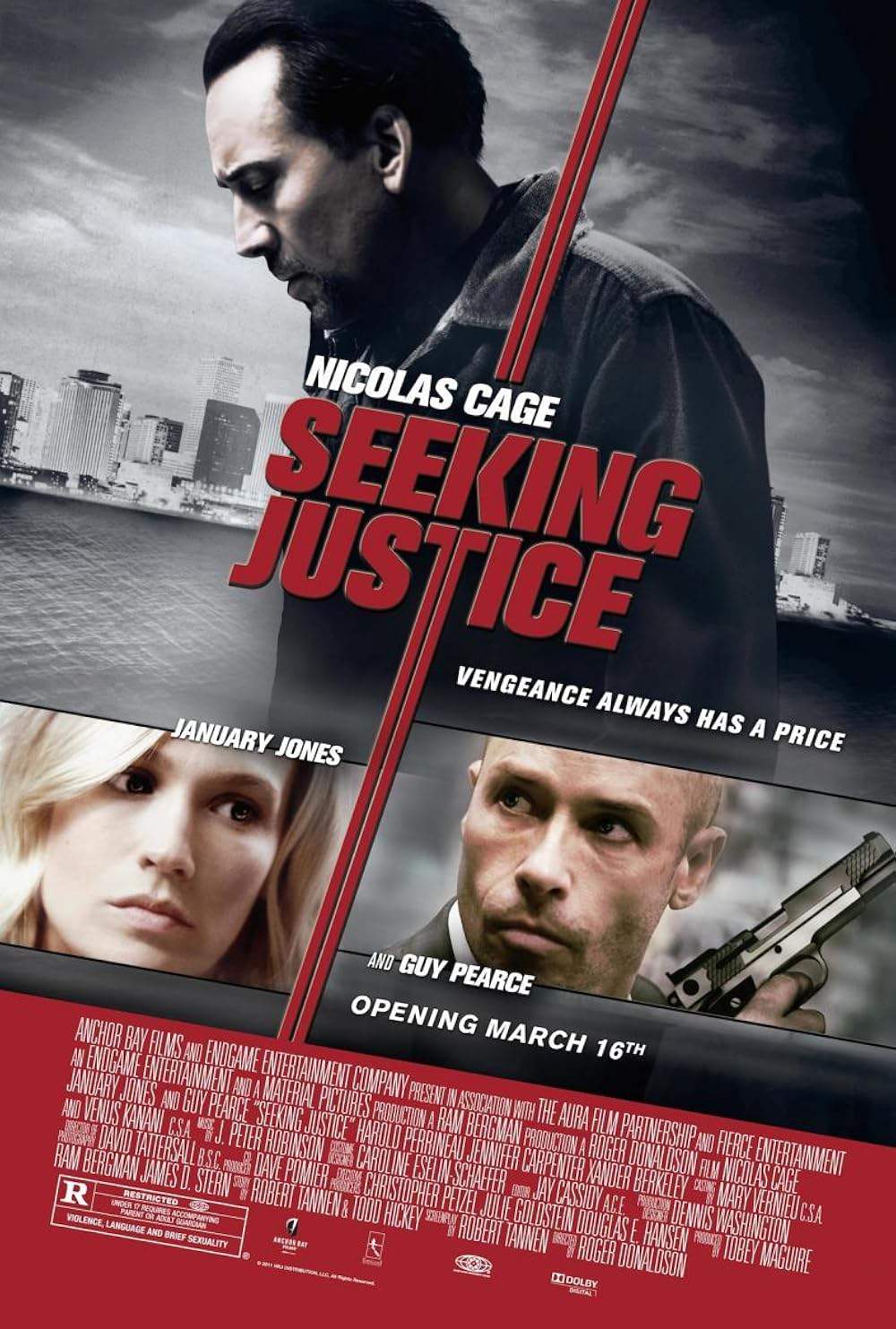
Movies about a descent into vigilantism like Bloodline

Ordinary lives shattered by a brutal, self-appointed justice. If you liked Bloodline's portrayal of a social worker turning killer, you'll find these movies compelling. They explore similar themes of trauma-fueled vigilantism, moral decay, and the violent spiral that follows when someone decides to become judge, jury, and executioner.

  • vigilante
  • revenge
  • grim
  • tense
  • violent
  • moral decay
  • Tone: dark, grim, tense
  • Pacing: steady, methodical
Why these movies?

The story pattern: The narrative typically begins with a catalyst—a deep personal loss or exposure to profound injustice—that breaks the protagonist's faith in the system. This sparks a journey from law-abiding citizen to cold-blooded avenger, often depicted through methodical planning and escalating violence, while grappling with the psychological toll.

Why they belong together: Movies are grouped here because they share a core narrative of a protagonist's moral collapse into vigilantism. They create a similar tone of grim inevitability and psychological tension, focusing on the dark satisfaction and heavy consequences of extrajudicial violence.

Grim psychological thrillers with a heavy tone like Bloodline

Tense, bleak stories where psychology twists into violence. For viewers who appreciated the grim, unsettling atmosphere of Bloodline, this collection features similar psychological thrillers. These films share a dark tone, steady pacing, and a focus on heavy themes like trauma, moral corruption, and the violence that simmers beneath the surface of everyday life.

  • psychological
  • grim
  • unsettling
  • tense
  • paranoid
  • dark
  • Tone: dark, tense, bleak
  • Pacing: steady, unsettling
Why these movies?

The story pattern: Stories in this thread often unfold in a world stained by past events, where characters are haunted by trauma or dark secrets. The plot revolves around the psychological unraveling of characters, leading to violent outbursts or a chilling acceptance of a grim reality, typically culminating in an ambiguous or bleak resolution.

Why they belong together: These movies are united by their consistently dark and tense atmosphere, their focus on psychological damage, and their willingness to sit with heavy, uncomfortable themes. They offer a similar viewing experience of sustained unease and moral complexity.

If you liked this

Movies Like Bloodline

Similar movies to Bloodline: the same genre, themes or kind of story. Each one comes with its own plot summary, timeline and ending explained.

Browse all movie summaries

Every angle

Bloodline (2019) Explained: Plot, Ending, Timeline & Characters

Everything about Bloodline in one place: what happens in the plot summary, the timeline in chronological order, the characters and meaning, the ending explained and a spoiler-free summary. What's After the Movie adds the cast, box office and post-credit scenes.

Coming soon on iOS and Android

The Plot Explained Movie Summary App

Plot summaries, endings explained and timelines on your phone. Catch up on any movie in minutes, save your favorites and never miss a twist again.

Be the first to know when we launch. Your email stays private, always.

Learn more about the app