Plot Explained Spoilers guaranteed!
Plot Explained

Browse by genre

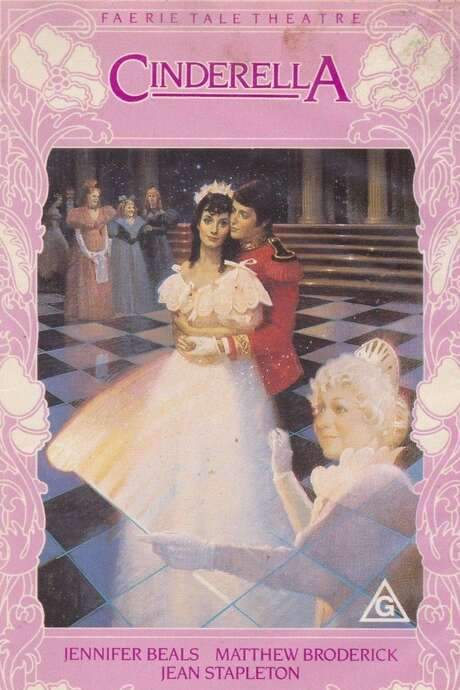
Cinderella (1996) movie poster

Plot Summary

Cinderella (1996) Plot Summary Explained

Release, runtime and language
1996 · 50 mins · English
Directed by
Ryszard Słapczyński
Starring
Lee Perry, Caz Adams, Robbie McGregor, Clair Crowther, Sally Patience, Paula Morrell

The magical tale follows Cinderella, who endures a harsh life with her cold stepmother, the Dame, and two unkind stepsisters. Forced to sleep among cinders near the hearth, she longs for escape. When the prince announces a gala ball for all, the Dame hopes to marry a daughter, seeing a chance to improve fortunes and giving Cinderella an opportunity.

On this page (6)
  1. 1 What happens: full plot
  2. 2 Plot questions answered
  3. 3 The book behind the movie
  4. 4 Movie threads
  5. 5 Movies like Cinderella
  6. 6 Every angle

Full plot summary · contains spoilers

What Happens in Cinderella: Full Plot Summary

The whole story of Cinderella (1996) explained, from the opening scene to the final frame: every key event, every twist and what it all adds up to. Read it as a quick recap before the sequel, to check a scene you missed, or to finally understand what really happened.

Orphaned at a young age, Cinderella leads a quiet life under the stern watch of her stepmother and two stepsisters, trudging through the hustle of the marketplace while secretly dreaming of something beyond her sheltered existence. In this world of chores and curfews, she meets a charming young man who seems to share her longing for freedom. The connection blooms as they discover a shared weariness with their confined routines, but their budding bond is interrupted when Cinderella is scolded for speaking to a stranger. She returns to help her stepfamily, unaware that the mysterious suitor she met is actually Prince Christopher.

Prince Christopher, visiting the kingdom incognito as a commoner, finds himself drawn to Cinderella’s warmth and honesty. His loyal valet, Lionel, catches wind of the prince’s disguise and keeps watch on his secret excursions. Back home, the royal parents, Queen Constantina and King Maximillian, conspire to host a ball to secure a suitable bride for their son, though Christopher is reluctant—he longs to choose a partner for love, not by decree. Lionel suggests a compromise: if Christopher cannot find someone fitting at the ball, the prince will be free to seek love on his own terms afterward.

Meanwhile, Cinderella longs to attend the ball herself, dreaming of something more than the endless duties at home. Her stepmother scoffs at the notion, telling her she could never attract a prince and should be grateful for her current life. But hope arrives in the form of a Fairy Godmother, who speaks softly of courage and change. With a wave of magic, a pumpkin becomes a carriage, rats turn into footmen and a coachman, mice become horses, and Cinderella’s tattered clothes transform into a radiant ballgown, complete with glistening glass slippers. The Fairy Godmother warns that the spell will end at midnight, yet she urges Cinderella to seize the night.

At the ball, Prince Christopher is not immediately impressed by any of the guests, but the arrival of the mysterious princess captivates him. The pair share an undeniable connection as they dance, much to the dismay of Cinderella’s stepfamily, who sense a familiar spark yet cannot quite place it. The King and Queen inquire about Cinderella’s background, challenging the princess-to-be to reveal who she is. The Fairy Godmother nudges Cinderella to stay, but as the night unfolds and the clock inches toward midnight, a sense of urgency grows. When the clock strikes, the magic fades, they share a secret kiss, and Cinderella flees the palace in haste, leaving behind a single glass slipper that will decide their fate.

Upon return to their home, the stepfamily regales themselves with embellished retellings of the evening, while Cinderella’s memory lingers on the magic and the possibility of true connection. The Stepmother remains resentful, determined that Cinderella will never rise above her “common” status. Yet, with a final push from the Fairy Godmother, Cinderella gains the resolve to pursue a life beyond their narrow ambitions and to claim her own happiness.

The arrival of the Prince and Lionel at Cinderella’s home sets the stage for a dramatic confrontation. The Stepmother locks Cinderella in the kitchen, hoping to keep her hidden away from the truth of who she is. The stepfamily tries on the slipper one by one, pushing their luck but meeting with only partial success. Lionel demands that the kitchen be opened and the truth be found. In the courtyard, the Prince recognizes the girl from the marketplace, and when he fits the glass slipper on Cinderella’s foot, it slides on perfectly, sealing their connection.

In the end, Cinderella and Prince Christopher marry in a grand ceremony that marks a new beginning for them both, while the palace gates close behind the uninvited stepfamily, who can only watch as the couple’s joy becomes a lasting testament to perseverance, love, and the courage to pursue one’s own path.
Last updated: October 05, 2025 at 12:33

Was this helpful?

Plot questions answered

Cinderella Plot Explained: Your Questions Answered

The questions people ask most about Cinderella (1996): what happens in the confusing scenes, why the characters do what they do, the twists, hidden details and what the ending means. Each answer contains spoilers.

Q1

Why does Prince Christopher go undercover as a commoner?

Prince Christopher disguises himself as a commoner because he wants to experience the kingdom beyond palace walls and meet potential partners based on genuine connection rather than royal obligation. He is reluctant to marry simply for status, which is why he objects to the ball being arranged solely for finding a suitable bride. This disguise allows him to interact authentically with people like Cinderella before societal expectations take over.

Foreshadowing: Earlier, the King and Queen pressure Christopher to marry for political reasons, explaining his desire to find love on his own terms.

  • prince christopher
  • disguise
  • commoner
  • kingdom
  • ball
  • motivation
Q2

Why does the Fairy Godmother appear to Cinderella?

The Fairy Godmother appears after Cinderella's stepfamily leaves for the ball, leaving her alone with her dreams and despair. This timing is deliberate, the moment Cinderella is most hopeless and stuck is when magic intervenes. The Fairy Godmother speaks of courage and change, suggesting she recognizes Cinderella's inner strength and readiness for transformation.

Foreshadowing: Cinderella's longing for something beyond her current life and her kindness toward others plant the seeds for magical intervention.

  • fairy godmother
  • magic
  • pumpkin
  • transformation
  • hope
Q3

Why does the Fairy Godmother's spell end at midnight?

The midnight deadline creates urgency that drives the narrative forward. Without a time limit, Cinderella would have no reason to flee, and the glass slipper plot device would not exist. The magic represents a temporary opportunity, Cinderella must act within the window given to her, symbolizing how true change requires seizing the moment despite fear and uncertainty.

Foreshadowing: The Fairy Godmother explicitly warns Cinderella that the spell will break at midnight, establishing the ticking clock before the ball even begins.

  • midnight
  • spell
  • magic
  • glass slipper
  • deadline
Q4

Why does Cinderella run away from the ball?

Cinderella flees because the Fairy Godmother's spell begins to fade at midnight, and she fears being exposed in front of the court. Her tattered clothes would reveal her true identity as a servant, potentially shaming both herself and the prince. Running preserves the magical memory of the evening and gives the prince a reason to search for her using the glass slipper as evidence.

Foreshadowing: The Fairy Godmother warned that the magic would not last, and the clock striking midnight signals the spell's expiration.

  • cinderella
  • ball
  • midnight
  • flee
  • magic expires
Q5

Why does Cinderella leave only one glass slipper behind?

Cinderella loses the slipper accidentally while fleeing the palace as her gown transforms back into rags. She is panicked and running quickly, so she doesn't have time to retrieve it. The single slipper becomes the crucial clue that allows Prince Christopher to identify her, serving as the only physical evidence of her identity.

Foreshadowing: Her hasty departure during the magical transition ensures she cannot grab everything in her rush to escape.

  • glass slipper
  • ball
  • flee
  • single slipper
  • clue
Q6

Why can't the stepsisters fit into the glass slipper?

The glass slipper fits only Cinderella because it was specifically crafted for her foot during the magical transformation. No other person in the kingdom has the exact same foot size. The stepfamily's attempts to force the slipper on fail not because of any trick, but simply because the slipper was made to fit Cinderella's unique foot.

Foreshadowing: The Fairy Godmother created the slippers specifically for Cinderella during her magical transformation, making them uniquely suited to her.

  • stepsisters
  • glass slipper
  • fit
  • cinderella
  • foot size
Q7

How does Prince Christopher recognize Cinderella at her home?

Prince Christopher recognizes Cinderella through two key details: her face from the marketplace meeting and her voice. Earlier in the marketplace, Christopher and Cinderella had already met and connected despite his disguise. When he sees her in person at the cottage and hears her speak, the memory resurfaces, confirming she is the mysterious woman from the ball.

Foreshadowing: Their earlier conversation in the marketplace establishes a personal connection that transcends the ball's magical atmosphere.

  • prince christopher
  • recognize
  • cinderella
  • marketplace
  • voice
Q8

What happens to Cinderella's stepmother and stepsisters at the end?

Cinderella's stepmother and stepsisters are left outside the palace gates when the wedding concludes. They are not punished severely but are symbolically excluded from Cinderella's new life as princess. The palace gates close on them, representing their removal from her life and the end of their control over her.

Foreshadowing: Throughout the story, the stepfamily's cruelty and attempts to stand in Cinderella's way build toward this final separation.

  • stepmother
  • stepsisters
  • palace
  • exiled
  • ending
Q9

Why does the stepmother lock Cinderella in the kitchen?

The stepmother locks Cinderella in the kitchen because she knows the prince is searching for the mysterious girl from the ball and fears that Cinderella's true identity will be revealed. Keeping Cinderella hidden prevents the prince from finding her and maintains the stepfamily's false hope that one of them might marry into royalty.

Foreshadowing: The stepmother's jealousy and desire to control Cinderella's fate drive her to extreme measures to prevent her stepdaughter's success.

  • stepmother
  • locked
  • kitchen
  • cinderella
  • hiding
Q10

Why does Lionel, the valet, help Prince Christopher find love?

Lionel serves as Christopher's loyal friend and confidant, not just a servant. He understands the prince's desire to marry for love rather than political convenience. His compromise suggestion at the ball plan, that Christopher can seek love on his own terms if he finds no match, shows his genuine investment in the prince's happiness. He also actively helps search for the mystery woman, demonstrating his commitment beyond mere duty.

Foreshadowing: Lionel already knows about Christopher's marketplace excursions and chooses to support rather than expose the prince's secret missions.

  • lionel
  • valet
  • prince
  • help
  • support
  • loyal

Movie threads

More Movies Like Cinderella, by Mood & Story

Curated lists built around what makes Cinderella tick: the same mood, the same kind of story or the same emotional payoff. Each list explains why these movies belong together.

Whimsical Fairy Tale Escapism like in Cinderella

Hopeful stories where magic and kindness triumph over hardship. If you enjoyed the magical transformation and hopeful spirit of Cinderella, you'll love these movies. This collection features gentle, uplifting stories where dreams come true through kindness and a touch of enchantment, perfect for viewers seeking feel-good fairy tale experiences.

  • whimsical
  • hopeful
  • magical
  • dreamlike
  • uplifting
  • gentle
  • Tone: whimsical, hopeful
  • Pacing: steady, logical
Why these movies?

The story pattern: The narrative pattern follows a kind-hearted protagonist facing modest adversity, often in a domestic or humble setting. A magical event or character provides an opportunity for escape and transformation, leading to a grand, romantic, and unambiguous happy ending that resolves all conflict.

Why they belong together: These movies share a core identity of being whimsical, hopeful, and gentle. They prioritize a light emotional weight and a steady, predictable pace, ensuring the viewing experience is consistently uplifting and free from intense distress, focusing on the triumph of wonder over worry.

Rags to Riches Romantic Journeys like in Cinderella

Stories of underdogs finding love and a better life against the odds. For fans of Cinderella's journey from cinders to the castle, this section highlights movies with similar uplifting arcs. Discover stories where perseverance and inner kindness lead characters from difficult circumstances to find true love and a dramatically improved fate.

  • hopeful
  • romantic
  • uplifting
  • satisfying
  • triumphant
  • dreamlike
  • Tone: hopeful, romantic
  • Pacing: steady, uplifting
Why these movies?

The story pattern: The journey centers on a protagonist of humble means or low social status who endures unfair treatment. Their inherent virtue—often kindness or resilience—catches the attention of a benefactor or love interest from a higher station, leading to a transformative event that validates their worth and grants them a new, joyous life.

Why they belong together: These films are united by the powerful and satisfying narrative of deserved elevation. They blend light adversity with a strong romantic core and an unwavering belief in poetic justice, resulting in a straightforward, emotionally rewarding experience that leaves the viewer feeling hopeful and satisfied.

If you liked this

Movies Like Cinderella

Similar movies to Cinderella: the same genre, themes or kind of story. Each one comes with its own plot summary, timeline and ending explained.

Browse all movie summaries

Every angle

Cinderella (1996) Explained: Plot, Timeline & Characters

Everything about Cinderella in one place: what happens in the plot summary, the timeline in chronological order, the characters and meaning and a spoiler-free summary. What's After the Movie adds the cast, box office and post-credit scenes.

Coming soon on iOS and Android

The Plot Explained Movie Summary App

Plot summaries, endings explained and timelines on your phone. Catch up on any movie in minutes, save your favorites and never miss a twist again.

Be the first to know when we launch. Your email stays private, always.

Learn more about the app