Plot Explained Spoilers guaranteed!
Plot Explained

Browse by genre

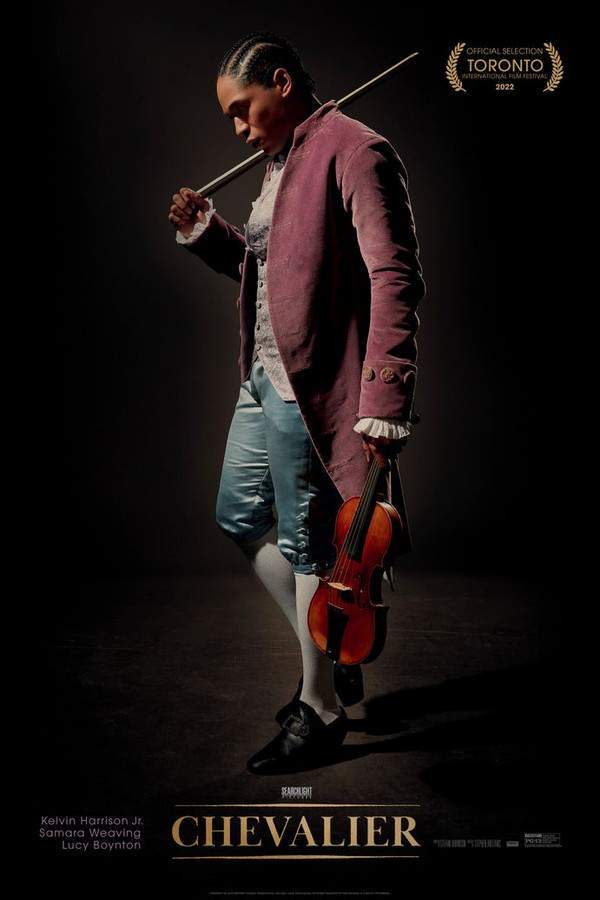
Chevalier (2023) movie poster

Characters & Themes

Chevalier (2023) Characters, Setting & Themes Explained

Release, runtime and language
2023 · 107 min · English
Echo score 64
Loading streaming availability…
Directed by
Stephen Williams
Starring
Mezi Atwood, Alec Newman, Kelvin Harrison Jr., Sian Clifford, Jim High, Samara Weaving
Budget
$35M

This is the story of Joseph Bologne, Chevalier de Saint-Georges, a man who shattered societal barriers in 18th-century France. Born to an African slave and a French plantation owner, Bologne rose to become a celebrated violinist, composer, and fencing master. His extraordinary talents led him to the court of Marie Antoinette, where he navigated a complex web of romance and rivalries, ultimately facing challenges that threatened his place in a world defined by privilege and prejudice.

On this page (8)
  1. 1 Where to watch
  2. 2 Characters explained (8)
  3. 3 Where & when it takes place
  4. 4 Themes & meaning (4)
  5. 5 Character & meaning questions
  6. 6 Movie threads
  7. 7 Movies like Chevalier
  8. 8 Every angle
Loading streaming availability…

8 main characters · contains spoilers

Chevalier Characters Explained: Who Is Who

The main characters of Chevalier (2023), heroes and villains: what drives them, how they change over the course of the story and what each of them reveals about the film's bigger ideas.

  • Joseph Bologne (Kelvin Harrison Jr.)

    A prodigiously gifted violinist, composer, dancer, and fencer who rises from a Guadeloupe-born background to the Paris court. He endures constant harassment from white peers and teachers but channels his talent into a powerful, uncompromising artistic voice. His journey centers on balancing public triumph with private reconciliation to his heritage.

    • 🎼 Talent
    • 🌍 Identity
    • ⚖️ Racism
  • Marie-Joséphine Saint-Georges (Samara Weaving)

    A leading soprano who becomes involved with Saint-Georges as the project of an opera unfolds. She navigates the constraints of marriage and courtly life while pursuing artistic opportunity, and she becomes entangled in a dangerous, intimate bond with the composer. Her choices illuminate the costs of ambition within the aristocratic world.

    • 🎭 Performer
    • 💔 Affair
    • 👑 Status
  • Marie Antoinette (Lucy Boynton)

    The Queen who first admires Saint-Georges after a fencing victory and grants him prestige, yet ultimately embodies the limits of patronage within a rigid court. She wields power to influence careers but cannot fully shield him from the social tide that marginalizes him. Her role exposes the fragility of privilege when faced with change.

    • 👑 Royalty
    • 🕊️ Patronage
    • 🗣️ Power
  • Nanon (Ronke Adekoluejo)

    Saint-Georges’s mother, a formerly enslaved woman who is freed after the father’s death and joins him in Paris. She represents memory, resilience, and the pull of heritage while watching her son navigate a world that simultaneously prizes and threats his brilliance. Her presence grounds the film’s exploration of freedom and identity.

    • 🌿 Motherhood
    • 🕊️ Freedom
    • 🧵 Slavery
  • Madame De Genlis (Sian Clifford)

    A noble patron who helps to stage an opera to showcase Saint-Georges’s talent. She maneuver through social and political currents to expand opportunities for him, illustrating how patronage can be both enabling and entangled with power. Her involvement highlights gendered dynamics in cultural advancement.

    • 🎭 Patronage
    • 🎼 Opera
    • 🧭 Influence
  • Marquis De Montalembert (Marton Csokas)

    Marie-Joséphine’s husband, a controlling aristocrat who blocks her performance and uses authority to police behavior. He embodies the oppressive social order Saint-Georges confronts and becomes a source of conflict that drives the tragedy and resistance within the court. His actions catalyze key turning points in the narrative.

    • ⚔️ Control
    • 💔 Jealousy
    • 🧭 Authority
  • George Bologne (Jim High)

    Joseph’s white plantation-owner father who represents the colonial power structure. He recognizes his son’s talent and facilitates his path to Paris, while his death alters the family dynamic and the social landscape. His legacy underpins the film’s meditation on race, lineage, and power.

    • 🌴 Wealth
    • 🧭 Power
    • 🗡️ Oppression
  • La Guimard (Minnie Driver)

    Marie-Madeleine Guimard, a prominent dancer and court social figure who embodies salon culture and influence. She navigates the currents of fashion, art, and status, shaping how Saint-Georges is perceived in aristocratic circles. Her presence reveals how social networks shape artistic opportunity.

    • 💃 Socialite
    • 🎨 Patronage
    • 🗣️ Influence

Last updated: October 03, 2025 at 19:43

Was this helpful?

Setting

Where and When Does Chevalier Take Place?

The setting of Chevalier (2023): the year and time period, the places and locations, and how they shape the characters, the mood and the tension of the story.

Time period

Late 1770s

The story unfolds in the late 1770s France, a society ripe with court ceremony, artistic ambition, and growing social tensions. It chronicles the pre-revolutionary atmosphere where race and privilege shape access to power. The epilogue situates the era in 1802, noting Napoleon’s policies that affect music and slavery and signaling the longer arc of change beyond the film’s immediate events.

Location

Paris, Guadeloupe

The action centers on Paris, with the royal court and the Paris Opera as key settings. Flashbacks reveal Joseph Bologne’s origins on a Guadeloupe plantation, framing his rise from colonial roots to courtly acclaim. The city’s salons, theatres, and aristocratic corridors serve as the arena where talent confronts race, class, and ambition in the late 1770s.

  • 🗺️ Paris
  • 🏝️ Guadeloupe
  • 🕰️ 18th Century
  • 🎶 Arts & Court

Last updated: October 03, 2025 at 19:43

Was this helpful?

4 major themes

Chevalier Meaning: Themes & Message Explained

What is Chevalier (2023) really about? The emotional, social and philosophical themes the film keeps returning to, its symbolism and the message beneath the surface.

  • Racial Identity

    Joseph Bologne navigates a world that admires his talent while constraining his social acceptance because of his race. The narrative traces his dual heritage—Caribbean roots and Parisian upbringing—and how it informs his sense of self and belonging. Race becomes both a source of conflict and a catalyst for his artistic resolve.

  • Art Power

    Music and performance become vehicles for challenging the status quo. Saint-Georges uses composition and virtuosity to demand recognition beyond color and class, provoking resistance from conservative factions. The arts are depicted as a political force capable of reshaping social power structures.

  • Revolution

    Discontent accelerates the push for change, placing Saint-Georges at the intersection of culture and political upheaval. He stages a concert linked to anti-royalist causes, testing the limits of safety and fame within an authoritarian system. The narrative ties personal courage to collective transformation ahead of the revolution.

  • Heritage

    Family lineage and personal history anchor the drama, especially through Nanon and the revelation of Saint-Georges’s lineage. The story probes how ancestry, motherhood, and memory shape identity and choices under pressure from a rigid society. Embracing heritage becomes a form of resistance to a world that seeks to erase it.

Last updated: October 03, 2025 at 19:43

Was this helpful?

Character & theme questions

Chevalier Characters & Meaning: Your Questions Answered

The questions people ask about Chevalier (2023): who the characters really are, their relationships, what the symbols mean, where it takes place and what the movie is really about. Each answer contains spoilers.

Q1

Where does the movie take place?

Chevalier is set primarily in 18th-century Paris, with key scenes at the royal court and the Paris Opera. The film also includes flashbacks to Guadeloupe, showing Joseph Bologne's origins on a plantation before his rise to the French court.

  • paris
  • guadeloupe
  • settings
  • locations
  • royal court
Q2

What time period is the movie set in?

The film takes place in late 1770s France, during the pre-revolutionary period. The epilogue briefly jumps to 1802, referencing Napoleon's policies on slavery and music.

  • 1770s
  • french revolution
  • historical period
  • 18th century
Q3

Who was Joseph Bologne in real life?

Joseph Bologne, Chevalier de Saint-Georges, was a real historical figure born in Guadeloupe to an African slave mother and a French plantation owner father. He became a renowned violinist, composer, and fencing master in 18th-century France.

  • joseph bologne
  • chevalier saint-georges
  • real person
  • historical figure
Q4

What are the main themes in the movie?

Chevalier explores several interconnected themes: racial identity and heritage, as Joseph navigates his mixed background; art as a political force capable of challenging social hierarchies; the revolutionary spirit brewing in pre-revolutionary France; and the importance of family lineage and embracing one's roots.

  • themes
  • racial identity
  • heritage
  • revolution
  • art power
Q5

Who is Nanon in the film?

Nanon is Joseph Bologne's mother, a formerly enslaved woman from Guadeloupe who is freed after her husband's death and joins her son in Paris. Played by Ronke Adekoluejo, she represents memory, resilience, and the importance of heritage throughout the film.

  • nanon
  • mother
  • guadeloupe
  • enslaved
  • heritage
Q6

What role does Marie Antoinette play in the film?

Marie Antoinette appears as the Queen of France who admires Joseph Bologne after a fencing victory and grants him prestige at court. She represents both the power of patronage and its limitations, unable to fully protect him from the racial prejudice of aristocratic society.

  • marie antoinette
  • queen
  • patronage
  • royal court
Q7

How does the film address racial identity and prejudice?

Chevalier directly confronts racial prejudice by showing Joseph Bologne enduring harassment from white peers and teachers despite his extraordinary talents. His dual heritage, Caribbean roots and Parisian upbringing, creates an ongoing tension between admiration for his talent and rejection of his race.

  • racial prejudice
  • racial identity
  • discrimination
  • heritage
  • mixed heritage
Q8

Who is Marie-Joséphine Saint-Georges in the movie?

Marie-Joséphine Saint-Georges is a leading soprano portrayed by Samara Weaving who becomes romantically involved with Joseph Bologne as an opera project unfolds. She navigates the constraints of marriage to the controlling Marquis De Montalembert while pursuing her own artistic ambitions.

  • marie-joséphine
  • soprano
  • opera
  • romance
  • ambition
Q9

How does Chevalier portray music as a form of power?

The film depicts music and performance as vehicles for challenging the status quo. Joseph uses his virtuosity and compositions to demand recognition beyond color and class, with the arts shown as capable of reshaping social power structures despite resistance from conservative factions.

  • music
  • art
  • power
  • composition
  • violin
  • opera
Q10

What historical events surround the film's story?

Chevalier is set against the backdrop of late 18th-century France, capturing the pre-revolutionary atmosphere where social tensions rise. The film references the growing revolutionary spirit, with Joseph staging a concert linked to anti-royalist causes, all while race and privilege shape access to power.

  • french revolution
  • historical context
  • pre-revolutionary
  • politics
  • social tensions
Q11

Who is Madame De Genlis in the film?

Madame De Genlis is a noble patron portrayed by Sian Clifford who helps stage an opera to showcase Joseph Bologne's talent. She illustrates how patronage can enable artistic opportunity while being entangled with political and social power dynamics.

  • madame de genlis
  • patron
  • opera
  • noble
  • support

Movie threads

More Movies Like Chevalier, by Mood & Story

Curated lists built around what makes Chevalier tick: the same mood, the same kind of story or the same emotional payoff. Each list explains why these movies belong together.

Movies about triumphant underdog artists like Chevalier

Biographical dramas about brilliant creators overcoming prejudice and systemic barriers. If you were inspired by the story of Joseph Bologne in Chevalier, you'll find similar powerful stories here. This list features biographical dramas about brilliant creators who shattered barriers, navigating worlds of privilege and prejudice through their artistic expression.

  • triumphant
  • oppressive
  • defiant
  • resilient
  • grand
  • melancholic
  • Tone: bittersweet, defiant
  • Pacing: steady, chronological
Why these movies?

The story pattern: These stories typically follow a chronological biographical arc, tracing the protagonist's rise from obscurity to acclaim. The central conflict arises from societal prejudice—be it racism, classism, or sexism—that constantly threatens to undermine their achievements. The emotional journey is one of defiant resilience, punctuated by moments of artistic triumph and profound personal injustice.

Why they belong together: Movies in this thread share a focus on the bittersweet intersection of extraordinary talent and systemic oppression. They deliver a heavy emotional weight through themes of historical injustice, while also providing catharsis through the protagonist's resilient spirit and world-changing accomplishments.
Bittersweet historical justice stories like Chevalier

Stories where personal victories are set against unresolved historical injustices. For viewers who appreciated the complex historical context of Chevalier, this collection features movies like it. These dramas blend personal triumph with broader societal struggles, often ending on a bittersweet note that acknowledges both individual resilience and persistent historical injustice.

  • melancholic
  • resilient
  • grand
  • reflective
  • sobering
  • tense
  • Tone: bittersweet, melancholic
  • Pacing: steady, reflective
Why these movies?

The story pattern: The narrative pattern involves a protagonist challenging an unjust system and achieving a measure of personal success or authenticity. However, the story's conclusion often references or is overshadowed by subsequent historical events that reversed or undermined that progress. This creates a layered ending that celebrates the character's journey while soberly acknowledging the limitations of their victory.

Why they belong together: These films are grouped by their unique ability to balance a compelling personal story with a sobering historical epilogue. They share a steady, character-driven pacing and a melancholic yet defiant mood, making them deeply thoughtful and emotionally impactful viewing experiences.

If you liked this

Movies Like Chevalier

Similar movies to Chevalier: the same genre, themes or kind of story. Each one comes with its own plot summary, timeline and ending explained.

Browse all movie summaries

Every angle

Chevalier (2023) Explained: Plot, Ending, Timeline & Characters

Everything about Chevalier in one place: what happens in the plot summary, the timeline in chronological order, the characters and meaning, the ending explained and a spoiler-free summary. What's After the Movie adds the cast, box office and post-credit scenes.

Coming soon on iOS and Android

The Plot Explained Movie Summary App

Plot summaries, endings explained and timelines on your phone. Catch up on any movie in minutes, save your favorites and never miss a twist again.

Be the first to know when we launch. Your email stays private, always.

Learn more about the app