







Plot Explained Spoilers guaranteed!
Plot Explained

Browse by genre

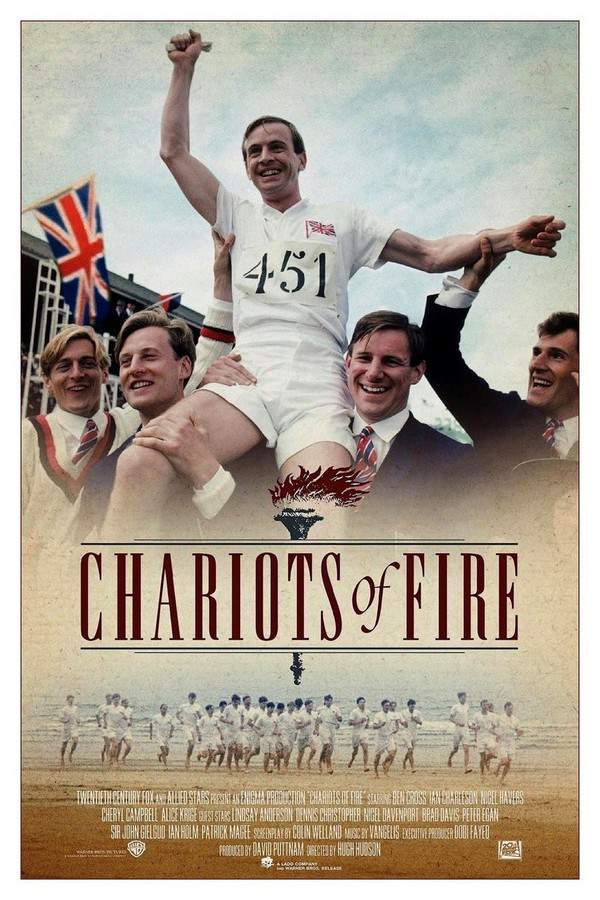
Chariots of Fire (1982) movie poster

Timeline

Chariots of Fire (1982) Timeline Explained – Every Event in Order

Release, runtime and language
1982 · 125 min · English
JustWatch #11,636 3
Directed by
Hugh Hudson
Starring
John Gielgud, Ian Holm, Nicholas Farrell, Ben Cross, Ian Charleson, Nigel Havers

In 1920s Britain, two athletes with differing beliefs and backgrounds find their paths intertwined as they prepare for the 1924 Paris Olympics. Eric Liddell, a devout Scottish missionary's son, faces a conflict between his religious faith and his passion for running, choosing not to compete on Sundays. Simultaneously, Harold Abrahams is driven by a fierce determination to overcome prejudice and achieve athletic glory, often at a personal cost, sacrificing relationships and a sense of self in his relentless pursuit of victory.

On this page (6)
  1. 1 Where to watch
  2. 2 Events in order (15)
  3. 3 Timeline questions answered
  4. 4 Movie threads
  5. 5 Movies like Chariots of Fire
  6. 6 Every angle

Where to watch

Where to Watch Chariots of Fire (1982)

Where can you watch Chariots of Fire? Stream, rent or buy it in the US, including on Amazon Video, Apple TV Store and Fandango At Home: current JustWatch availability with up-to-date prices.

Streaming availability powered by JustWatch

15 events in order · contains spoilers

Chariots of Fire Timeline: Events in Chronological Order

Every key event of Chariots of Fire (1982) in order, scene by scene, with when and where it takes place. Use it to untangle flashbacks, time jumps and parallel storylines, to refresh your memory before the sequel or to find the exact scene you are thinking of.

  1. Harold Abrahams' Funeral

    In 1978, a memorable funeral service is held in London to honor Harold Abrahams, a celebrated athlete. The service is led by his former colleague, Lord Andrew Lindsay, marking a significant moment reflecting on Abrahams' impactful life.

    When
    1978
    Where
    London
  2. Flashback to Youthful Days

    The narrative shifts to a flashback of Harold Abrahams' youthful days where he is seen running joyously along the beach with fellow athletes. This scene captures the beginning of Abrahams' deep connection to running and athletics.

  3. University of Cambridge

    In 1919, Harold Abrahams begins his academic journey at the University of Cambridge. Here he faces significant antisemitism from faculty members, yet finds joy in the Gilbert and Sullivan club, showcasing his resilience.

    When
    1919
    Where
    University of Cambridge
  4. The Trinity Great Court Run

    Abrahams achieves a remarkable milestone by completing the Trinity Great Court Run, timing his sprint perfectly with the clock striking noon. This historic feat establishes him as a formidable athlete among his peers.

    Where
    Trinity College, Cambridge
  5. Romance with Sybil Gordon

    Amidst his athletic achievements, Harold Abrahams begins to cultivate a romance with Sybil Gordon, a leading soprano in the Gilbert and Sullivan performances. Their relationship flourishes as they share a passion for the arts.

  6. Introduction of Eric Liddell

    Eric Liddell, born to Scottish missionaries in China, currently resides in Scotland, where his ambitions as a competitive runner conflict with his sister Jennie's disapproval. She fears that his running dreams might overshadow his devotion to God.

    Where
    Scotland
  7. Liddell's First Race Against Abrahams

    During their first race, Eric Liddell bests Harold Abrahams, leaving Abrahams struggling to accept the defeat. This pivotal moment stirs a competitive spirit in Abrahams, driving him to improve his techniques.

  8. Seeking Coaching from Sam Mussabini

    In his pursuit to enhance his running technique, Harold Abrahams turns to professional trainer Sam Mussabini. This decision sparks outrage among the college masters at Cambridge, who view it as a breach of amateur ethics.

    Where
    University of Cambridge
  9. Olympic Selection

    After years of dedicated training and fierce competition, both Abrahams and Liddell earn their spots on the British team for the 1924 Paris Olympics. They are joined by Abrahams' friends from Cambridge, marking a significant achievement in their athletic careers.

    When
    1924
    Where
    Paris
  10. Liddell's Dilemma

    As the team boards the ship to France, Liddell discovers that his 100-meter race is scheduled for a Sunday. Firmly committed to his Christian beliefs, he faces immense pressure to participate but ultimately decides to withdraw.

    Where
    Ship to France
  11. Lindsay's Generosity

    To allow Liddell to compete, Andrew Lindsay selflessly offers his spot in the 400-meter race. This act of friendship highlights the camaraderie among the athletes and showcases Lindsay’s support for Liddell's convictions.

  12. Liddell's Sermon

    On the day of his intended race, Liddell delivers a heartfelt sermon at the Paris Church of Scotland, sharing his beliefs and quoting from Isaiah 40. His actions resonate with fans and serve to underscore the strength of his convictions.

    Where
    Paris Church of Scotland
  13. Abrahams' Olympic Triumph

    Despite setbacks in the 200-meter race, Harold Abrahams finds redemption in the 100-meter event. Through sheer determination, he secures the gold medal, fulfilling his career’s ambition and thrilling his coach Mussabini.

    Where
    1924 Paris Olympics
  14. Liddell Wins Gold

    Against the odds, Eric Liddell competes in the 400-meter race, inspired by a note of encouragement from American runner Jackson Scholz. Liddell overcomes challenges to capture the gold medal, solidifying his place in Olympic history.

    Where
    1924 Paris Olympics
  15. The Legacy of Abrahams and Liddell

    In the epilogue, it is revealed that Harold Abrahams marries Sybil and becomes a revered figure in British athletics. Meanwhile, Eric Liddell dedicates his life to missionary work, leaving a cherished legacy in Scotland after his passing in Japan.

Last updated: November 15, 2024 at 15:38

Was this helpful?

Timeline questions answered

Chariots of Fire Timeline Explained: Your Questions Answered

When does it happen, and why in that order? The questions people ask about the chronology of Chariots of Fire (1982): time jumps, flashbacks, cause and effect between scenes and the correct order of events, each answered with spoilers.

Q1

Why does Eric Liddell refuse to run on Sunday?

Eric Liddell refuses to run on Sunday because of his deep Christian convictions. As a devout believer and the son of Scottish missionaries, he views Sunday as a sacred day dedicated to worship. When he discovers his 100-meter heat is scheduled for a Sunday at the Paris Olympics, he refuses to compete despite enormous pressure from the Prince of Wales and the British Olympic Committee. He believes that not running would dishonor his faith, explaining to his sister Jennie that running feels like a divine calling.

Foreshadowing: Earlier in the film, Liddell skips a church service to train, and he tells Jennie that running is his way of honoring God.

  • sunday race
  • religious belief
  • paris 1924
  • 100 meters
Q2

How does Eric Liddell get to compete in the 400-meter race?

Liddell gets to compete in the 400-meter race because his teammate Andrew Lindsay generously gives up his spot in that event. When Liddell refuses to run the 100-meter on Sunday, it appears he will not compete at all. Lindsay, one of Abrahams' Cambridge friends, offers to surrender his place in the 400-meter so Liddell can have an opportunity to race. This selfless act allows Liddell to compete in the event where he ultimately wins the gold medal.

Foreshadowing: The film establishes Lindsay as one of Abrahams' supportive Cambridge friends during the Olympic selection.

  • andrew lindsay
  • 400 meters
  • paris olympics
  • sacrifice
Q3

Why does Harold Abrahams hire Sam Mussabini as his coach?

Harold Abrahams hires Sam Mussabini because he wants to improve his running technique after being defeated by Eric Liddell in their first race together. Abrahams seeks out the professional trainer to gain a competitive edge. However, this decision sparks controversy because the college masters at Cambridge view it as improper for an amateur athlete to receive professional coaching. Abrahams perceives their objections as thinly veiled antisemitism and class prejudice, since he is Jewish and from a different social background than the traditional Cambridge athletes.

Foreshadowing: After losing to Liddell, Abrahams is shown struggling to accept the defeat and becomes determined to improve.

  • sam mussabini
  • professional coach
  • antisemitism
  • cambridge
Q4

What is the Trinity Great Court Run?

The Trinity Great Court Run is a famous achievement Harold Abrahams accomplishes at Cambridge University. It requires running around the entire courtyard of Trinity College while timing the sprint to coincide exactly with the clock striking noon. Abrahams completes this remarkable feat, establishing himself as an exceptionally talented runner among his peers and earning victories in national competitions.

Foreshadowing: The film opens with Abrahams running joyously along the beach in his youth, hinting at his exceptional running ability.

  • trinity college
  • cambridge
  • world record
  • achievement
Q5

What note does Jackson Scholz give Eric Liddell before the 400-meter race?

Before the 400-meter final, American runner Jackson Scholz passes Eric Liddell a note of encouragement quoting 1 Samuel 2:30, which reads: 'Those who honor me I will honor.' This gesture from his American competitor provides Liddell with spiritual encouragement and reassurance that his religious convictions will be rewarded. Inspired by this message, Liddell goes on to win the gold medal in the 400-meter race.

Foreshadowing: Earlier, an American coach expresses skepticism about Liddell's chances, setting up this moment of cross-athlete respect.

  • jackson scholz
  • 1 samuel 2:30
  • 400 meters
  • inspiration
Q6

Why does Harold Abrahams face antisemitism at Cambridge?

Harold Abrahams faces antisemitism at Cambridge simply because he is Jewish. The film shows faculty members discriminating against him due to his religion. This prejudice motivates much of his determination to succeed as an athlete, as he feels he must prove himself even more than other athletes to overcome the discrimination. His decision to hire a professional coach is also met with resistance that Abrahams believes is rooted in this same antisemitic prejudice.

Foreshadowing: The film establishes early that Abrahams must overcome barriers as a Jewish athlete in early 20th-century Britain.

  • jewish
  • discrimination
  • cambridge
  • prejudice
Q7

What happens to Eric Liddell after the Olympics?

After winning gold at the 1924 Paris Olympics, Eric Liddell fulfills his lifelong ambition of becoming a missionary. He returns to China, where he was born to Scottish missionary parents, to dedicate his life to missionary work. Liddell eventually dies in Japanese-occupied China, leaving a lasting legacy cherished by all of Scotland. His story ends as a poignant blend of Olympic triumph and spiritual service.

Foreshadowing: Throughout the film, Liddell repeatedly states that he views running as a way to honor God before returning to missionary work in China.

  • missionary
  • china
  • legacy
  • scotland
  • death
Q8

Why is Sam Mussabini banned from entering the Olympic stadium?

Sam Mussabini, Harold Abrahams' professional coach, is banned from entering the Olympic stadium because of the strict amateurism rules governing the 1924 Olympics. The authorities view his presence as improper since he is a professional trainer coaching an amateur athlete. Despite this setback, Abrahams competes brilliantly and wins the gold medal in the 100-meter race, with Mussabini watching from outside. The scene highlights the irony of the amateurism rules that prevented the coach from witnessing his athlete's triumph firsthand.

Foreshadowing: Earlier, Cambridge masters criticize Abrahams for seeking professional coaching, establishing the controversy around Mussabini's involvement.

  • amateur rules
  • stadium ban
  • 100 meters
  • coach
Q9

Why does Harold Abrahams sacrifice his relationship with Sybil Gordon?

Harold Abrahams sacrifices his relationship with Sybil Gordon because he becomes consumed by his relentless pursuit of Olympic glory. Throughout the film, Abrahams prioritizes his training and athletic ambitions over romance, setting aside his love for Sybil to focus entirely on winning. Only after achieving his goal of winning the gold medal does he shift his attention back to her. The film suggests his drive to overcome antisemitism and prove himself as an athlete comes at the personal cost of delaying his relationship.

Foreshadowing: The romance with Sybil is established early but consistently takes a backseat to Abrahams' training and competitions.

  • sybil gordon
  • romance
  • sacrifice
  • gold medal
  • priority
Q10

What drives Harold Abrahams to become an Olympic athlete?

Harold Abrahams is driven to become an Olympic athlete primarily by his desire to overcome the antisemitism he faces and prove himself despite prejudice. He wants to achieve athletic glory as a way to demonstrate his worth and succeed in a society that discriminates against him. This fierce determination often comes at a personal cost, including sacrificing relationships and his sense of self, as he pursues victory with relentless dedication.

Foreshadowing: The film opens with Abrahams' funeral in 1978, then flashes back to show the origins of his athletic ambitions.

  • motivation
  • antisemitism
  • victory
  • proof
  • determination

Movie threads

More Movies Like Chariots of Fire, by Mood & Story

Curated lists built around what makes Chariots of Fire tick: the same mood, the same kind of story or the same emotional payoff. Each list explains why these movies belong together.

Dignified biographical triumphs like Chariots of Fire

Honest portraits of driven individuals achieving greatness against societal odds. Find movies like Chariots of Fire that depict inspiring true stories with a steady, dignified pace. These similar historical dramas and biographical films focus on personal conviction, legacy, and overcoming prejudice to achieve greatness.

  • aspirational
  • dignified
  • triumphant
  • determined
  • nostalgic
  • contemplative
  • Tone: hopeful, dignified
  • Pacing: steady, deliberate
Why these movies?

The story pattern: Stories in this thread typically follow a linear, fact-based structure centered on a protagonist's key period of achievement. The central conflict often pits the individual's strong personal beliefs—be it faith, ambition, or a sense of justice—against societal expectations or systemic barriers, culminating in a hard-won triumph that carries a poignant legacy.

Why they belong together: Movies are grouped here for their shared focus on true, aspirational stories told with a sense of gravitas. They share a hopeful tone, steady pacing, and a medium emotional weight derived from the real sacrifices and pressures their subjects faced, creating a resonant and inspiring viewing experience.

Bittersweet journeys of principle like in Chariots of Fire

Stories where achieving a profound goal comes at a poignant personal cost. Discover movies similar to Chariots of Fire about characters guided by strong convictions. These films explore the cost of ambition and faith, leading to bittersweet endings where triumph is intertwined with personal sacrifice.

  • bittersweet
  • devotional
  • contemplative
  • determined
  • sacrificial
  • legacy
  • Tone: bittersweet, hopeful
  • Pacing: steady, character-focused
Why these movies?

The story pattern: The narrative pattern follows a protagonist or dual protagonists whose core identity is tied to a powerful belief or goal. The central drama arises from the conflict between this driving purpose and personal relationships or comfort. The climax is a success defined by that purpose, but the resolution acknowledges what was lost or set aside, creating a complex emotional payoff.

Why they belong together: These films share a specific emotional arc: a blend of triumphant achievement and poignant reflection. The tone is ultimately hopeful but grounded in real sacrifice, with a straightforward narrative complexity that focuses on character-driven choices, resulting in a universally relatable bittersweet ending feel.

If you liked this

Movies Like Chariots of Fire

Similar movies to Chariots of Fire: the same genre, themes or kind of story. Each one comes with its own plot summary, timeline and ending explained.

Browse all movie summaries

Every angle

Chariots of Fire (1982) Explained: Plot, Timeline & Characters

Everything about Chariots of Fire in one place: what happens in the plot summary, the timeline in chronological order, the characters and meaning and a spoiler-free summary. What's After the Movie adds the cast, box office and post-credit scenes.

Coming soon on iOS and Android

The Plot Explained Movie Summary App

Plot summaries, endings explained and timelines on your phone. Catch up on any movie in minutes, save your favorites and never miss a twist again.

Be the first to know when we launch. Your email stays private, always.

Learn more about the app