Plot Explained Spoilers guaranteed!
Plot Explained

Browse by genre

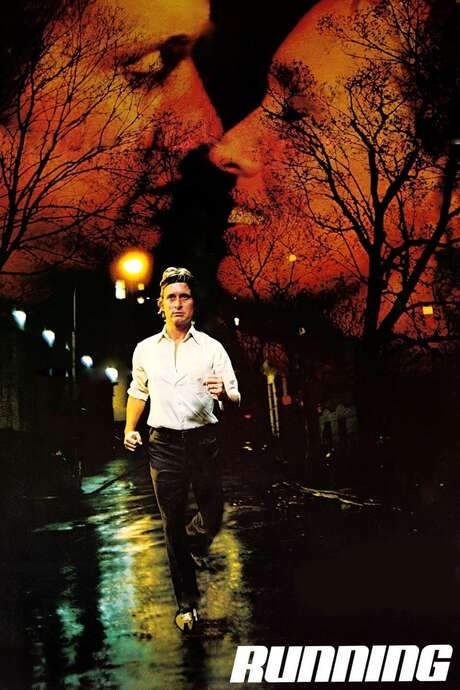
Running (1979) movie poster

Plot Summary

Running (1979) Plot Summary Explained

Release, runtime and language
1979 · 102 mins · English
Directed by
Steven Hilliard Stern
Starring
Michael Douglas, Susan Anspach, Giancarlo Esposito, Eugene Levy, Lawrence Dane, Gordon Clapp

An Olympic‑hopeful marathon runner believes that winning will heal his troubled marriage and resolve personal issues. As he trains for the big race, he must find the courage to stay true to himself, confronting the pressures of competition and the strain on his relationships, learning that true success lies in authenticity.

On this page (5)
  1. 1 What happens: full plot
  2. 2 Plot questions answered
  3. 3 Movie threads
  4. 4 Movies like Running
  5. 5 Every angle

Full plot summary · contains spoilers

What Happens in Running: Full Plot Summary

The whole story of Running (1979) explained, from the opening scene to the final frame: every key event, every twist and what it all adds up to. Read it as a quick recap before the sequel, to check a scene you missed, or to finally understand what really happened.

Michael Andropolis Michael Douglas is a US hopeful for the 1976 Montreal Summer Olympics, a marathon runner whose life is tangled with personal and professional trouble. His marriage has fallen apart and his wife Susan Anspach is pushing for a divorce, while he battles unemployment and the cold, relentless pressure of a bureaucratic unemployment office. On top of that, his coach—Lawrence Dane in the role of Coach Walker—is wary about endorsing him for the Games. Andropolis is a fighter by nature, but his own temperament keeps tripping him up: his tendency to push with ferocious speed at the start drains the stamina he’ll need in the final minutes, leaving him to dwell in the shadow of early leads rather than seal a victory. He battles not just opponents on the track, but a system that seems to be weighing him down just as much as his competitors weigh him down.

What makes his path to Montreal even more improbable is how he earns a spot in the Games. Andropolis manages to qualify by finishing fourth in the trials, a result driven in part by misfortune befalling one of the top three finishers, granting him a ticket that surprises many. He arrives with a plan that looks almost counterintuitive: start more cautiously, pace himself, and strike later in the race. The decision marks a stark shift from his usual impulsive drives, a calculated gamble that aims to conserve energy for the grueling final stretch. The crowd and coaches anticipate a dramatic finish—and for a moment, it seems his plan might pay off.

The race in Montreal becomes a test of endurance, nerve, and will. Midway through, Andropolis appears to be solidly in contention, gaining ground as the field breathes together in a tense rhythm. But fate intervenes when he slips on wet leaves while rounding a turn, a fall that cripples his shoulder and leg and allows others to pass. The scene grows heavy with urgency as darkness begins to fall and paramedics rush to the fallen runner. Yet in a testament to sheer resolve, Andropolis rises again. He clings to the rule that the race isn’t over until the finish line, and he threads his way through reopened roads, continuing to push with gritted teeth even as the rest of the pack seems to have long since crossed the mark. His effort is not just about crossing a line; it is about finishing a task that had already claimed a finish time.

The culmination is met with a chorus of support rather than silence. Exhausted, battered, and nearly spent, Andropolis pushes toward the finish with the stadium lights shimmering above him. The cheers of the crowd rise as the official finish line is crossed under improbable circumstances, marking a moment of personal triumph in the eyes of everyone who believed in him. His wife travels to Montreal to witness the moment and promises to bring him home no matter what happens, underscoring the emotional weight of his journey. The coach who doubted him watches with a proud smile, recognizing the grit it took to reach this point. And his two young daughters, watching from home, see their father’s perseverance live on television, a reminder that sometimes the longest races are the ones you run inside yourself.
Last updated: October 05, 2025 at 11:16

Was this helpful?

Plot questions answered

Running Plot Explained: Your Questions Answered

The questions people ask most about Running (1979): what happens in the confusing scenes, why the characters do what they do, the twists, hidden details and what the ending means. Each answer contains spoilers.

Q1

Why does Michael Andropolis qualify for the Olympics despite finishing fourth?

Andropolis qualifies for the Montreal Olympics by finishing fourth in the trials, but he gets the spot because three runners who finished ahead of him suffer injuries that prevent them from competing. This grants him a surprise Olympic berth that many consider unlikely, especially given his personal struggles and his coach's doubts about his consistency.

Foreshadowing: Earlier scenes establish his coach's skepticism about his stamina, making this qualification feel like an unexpected opportunity.

  • Olympic qualification
  • trials
  • fourth place
  • injuries
  • marathon
Q2

Why does Michael change his racing strategy from his usual approach?

Michael abandons his typical aggressive start because his tendency to push with ferocious speed at the beginning consistently drains the stamina he needs for the final minutes of the race. For Montreal, he decides to start more cautiously, pace himself, and conserve energy for a strong finish, a calculated gamble that represents a shift from his impulsive nature.

Foreshadowing: The summary explicitly mentions his tendency to lead early but fade, setting up this strategic change.

  • pacing strategy
  • marathon race
  • energy conservation
  • racing strategy
Q3

Why does Michael continue running after his fall on wet leaves?

Michael refuses to quit because he clings to the belief that the race is not over until the finish line is crossed. Despite suffering shoulder and leg injuries when he slips on wet leaves while others surge past him, his determination to complete the race overrides the pain. He gets up, limps back onto the course, and pushes forward even when all other competitors have finished.

Foreshadowing: The earlier description of him as a fighter by nature establishes his stubborn resolve.

  • wet leaves fall
  • injuries
  • marathon finish
  • perseverance
  • refusal to quit
Q4

Why does Susan travel to Montreal to watch the race?

Susan travels to Montreal to witness Michael's finish because she wants to support him during this pivotal moment and to reaffirm their commitment to each other. After the race, she promises to bring him home no matter what happens, signifying their reconciliation and her belief in his personal triumph regardless of the athletic outcome.

Foreshadowing: Their marriage strain runs throughout the film, building to this moment of mutual understanding.

  • wife
  • support
  • Montreal
  • reconciliation
  • marriage
Q5

Why does Coach Walker doubt Michael's Olympic potential?

Coach Walker is reluctant to fully endorse Michael for the Olympics because he questions his consistency and stamina. The coach has witnessed Michael's pattern of starting fast but fading in previous races, and he worries that Michael's temperament and lack of steady employment might undermine his performance on the biggest stage.

Foreshadowing: The timeline notes the coach's skepticism as a looming obstacle throughout Michael's preparation.

  • coach
  • doubt
  • endorsement
  • training
  • Olympic bid
Q6

What causes Michael to fall during the marathon?

Michael falls while rounding a turn on the Montreal course when he slips on wet leaves. The slip injures his shoulder and leg, causing significant pain and nearly eliminating his chances of winning. This moment represents pure bad luck rather than any strategic or physical failing on his part.

Foreshadowing: No explicit foreshadowing exists, this is presented as a random accident that tests his resolve.

  • wet leaves
  • fall
  • injury
  • marathon accident
Q7

Why does Michael finish the race so late compared to other runners?

Michael finishes long after the other competitors because the fall on wet leaves causes serious injuries that require him to stop and receive medical attention from paramedics. He must recuperate before he can limp back onto the course, and he completes the race on roads that have already reopened. By the time he reaches the Olympic Stadium, the final competitor has long since crossed the finish line.

Foreshadowing: The earlier mention of darkness falling and paramedics attending to him foreshadows the extended delay.

  • last place
  • finish time
  • injuries
  • delayed finish
Q8

Does Michael win the marathon in the end?

Michael does not win the race in athletic terms, he finishes last after his injury and delay. However, he achieves a profound personal victory by completing the marathon against all odds, demonstrating perseverance and authenticity. The crowd cheers, his wife supports him, and his coach smiles with pride, indicating that his triumph is emotional rather than medal-based.

Foreshadowing: The narrative builds toward this bittersweet ending where personal growth outweighs athletic achievement.

  • win
  • finish
  • personal victory
  • emotional triumph
  • marathon result
Q9

What is the significance of the unemployment office scene?

The unemployment office meltdown demonstrates the bureaucratic obstacles Michael faces in his daily life, showing how external systems weigh him down just as much as his competitors. This scene establishes his frustration and sense of being trapped, foreshadowing the internal and external obstacles he must overcome to reach the Olympics.

Foreshadowing: The meta notes explicitly identify this as foreshadowing his internal obstacles.

  • unemployment office
  • frustration
  • bureaucracy
  • obstacles
Q10

What is Michael's main weakness as a runner?

Michael's primary weakness is his temperament, he tends to push with ferocious speed at the start of races, which drains the stamina he would need in the final minutes. This pattern leaves him leading early but unable to seal a victory, causing him to dwell in the shadow of early leads rather than finishing strong.

Foreshadowing: This weakness is directly stated in the opening summary as his key character flaw.

  • temperament
  • stamina
  • early lead
  • racing weakness

Movie threads

More Movies Like Running, by Mood & Story

Curated lists built around what makes Running tick: the same mood, the same kind of story or the same emotional payoff. Each list explains why these movies belong together.

Bittersweet Sports Triumphs like in Running

Stories where the real victory isn't the win, but the personal growth. Explore more movies like Running, where athletes face intense personal struggles alongside their professional ambitions. If you liked the story of a marathon runner finding himself through adversity, you'll appreciate these similar dramas about perseverance, resilience, and the bittersweet nature of victory in sports.

  • determined
  • gritty
  • triumphant
  • resilient
  • hopeful
  • strained
  • Tone: hopeful, bittersweet
  • Pacing: steady, linear
Why these movies?

The story pattern: The narrative typically follows a linear training-to-competition arc, where external pressure and internal doubt are the primary antagonists. The climax is often a physical test that serves as a metaphor for the character's emotional journey, culminating in an outcome that values personal achievement over conventional victory.

Why they belong together: These movies are grouped by their shared focus on the athlete's internal journey. They blend the grit of sports competition with heartfelt human drama, resulting in a hopeful yet grounded tone that finds beauty in the struggle itself.

Character-Driven Redemption Stories like Running

Hopeful dramas about ordinary people rebuilding their lives step by step. Find movies similar to Running that focus on a protagonist's steady journey of personal redemption. If you enjoyed watching a character confront their flaws and rebuild their life with resilience, these dramas offer the same compelling mix of hopeful tone, steady pacing, and emotionally satisfying character arcs.

  • hopeful
  • resilient
  • strained
  • introspective
  • determined
  • tense
  • Tone: hopeful, resilient
  • Pacing: steady, character-driven
Why these movies?

The story pattern: These narratives are straightforward and character-centric, often built around a single protagonist overcoming a defining crisis. The conflict is both internal and external, with the story unfolding at a consistent pace that mirrors the character's gradual process of learning, adapting, and ultimately finding a more authentic version of themselves.

Why they belong together: They share a coherent mix of medium intensity, steady pacing, and a hopeful tone, creating a reliably engaging and emotionally substantive viewing experience. The focus is on the relatable process of personal transformation, making the journey feel genuine and earned.

If you liked this

Movies Like Running

Similar movies to Running: the same genre, themes or kind of story. Each one comes with its own plot summary, timeline and ending explained.

Browse all movie summaries

Every angle

Running (1979) Explained: Plot, Timeline & Characters

Everything about Running in one place: what happens in the plot summary, the timeline in chronological order, the characters and meaning and a spoiler-free summary. What's After the Movie adds the cast, box office and post-credit scenes.

Coming soon on iOS and Android

The Plot Explained Movie Summary App

Plot summaries, endings explained and timelines on your phone. Catch up on any movie in minutes, save your favorites and never miss a twist again.

Be the first to know when we launch. Your email stays private, always.

Learn more about the app