Year: 2004
Runtime: 120 min
Language: English
Director: Rowdy Herrington
Budget: $20M
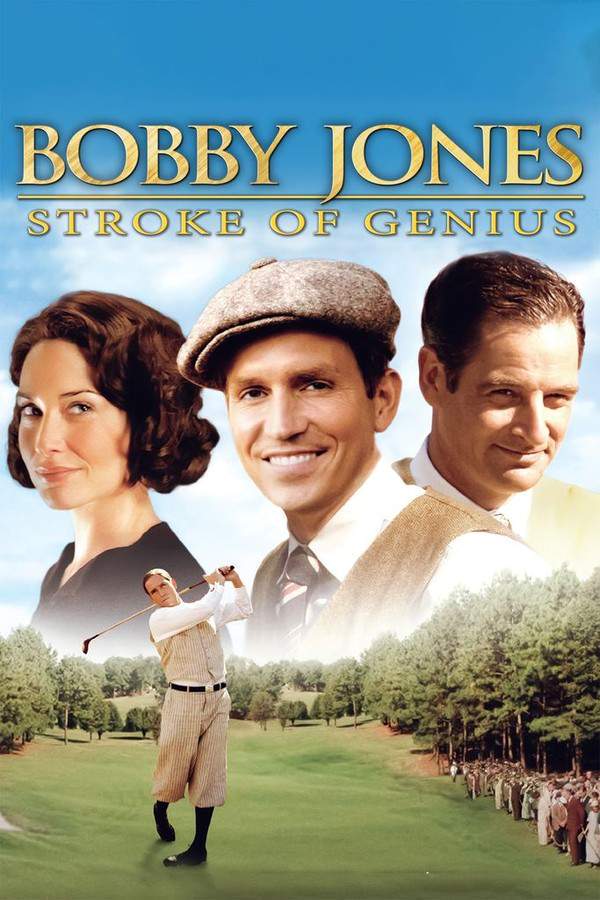
This is the story of Bobby Jones, a young man who achieved unparalleled success in the world of golf during the 1920s. His extraordinary talent and dedication to the sport quickly propelled him to the top, earning him a legendary status. Beyond his remarkable skill, Jones was admired for his captivating charm, strong moral compass, and unrelenting drive to succeed, qualities that solidified his place as one of the most iconic figures in sports history.
Find where to stream, rent, or buy Bobby Jones: Stroke of Genius (2004) in the US with current JustWatch availability, up-to-date pricing, and platform listings for subscription, rental, and digital purchase options.
Warning: spoilers below!
Haven’t seen Bobby Jones: Stroke of Genius yet? This summary contains major spoilers. Bookmark the page, watch the movie, and come back for the full breakdown. If you're ready, scroll on and relive the story!
Read the complete plot breakdown of Bobby Jones: Stroke of Genius (2004), including all key story events, major twists, and the ending explained in detail. Discover what really happened, and what it all means.
As Bobby Jones (Jeremy Northam) set foot on the legendary greens of St. Andrews in 1936, he was greeted by enthusiastic supporters from across Scotland, all eager to witness the skills of the iconic golfer in action, despite his unannounced arrival. This moment marked not just a return to a sacred course he had revered for years, but also an homage to the sport that shaped his life.
The journey of Jones began in his early years in Atlanta, Georgia, where he first felt the allure of golf. Observing his father, Colonel Jones (James Caviezel), struggle on the course, young Bobby found himself captivated by the poise and finesse exhibited by golfing professionals such as Stewart Maiden, the Scottish club pro who would later become a mentor to him. By the tender age of fourteen, Jones demonstrated extraordinary talent, clinching the Georgia State Amateur Championship in 1916 and making a remarkable run to the quarterfinals of the U.S. Amateur that same year. His burgeoning reputation caught the eye of prominent sportswriters like O.B. Keeler and Grantland Rice, who documented his rapid ascent in the golfing world.
Post-World War I, Jones participated in a series of charity golf matches, often engaging with colorful personalities, including Walter Hagen (James Caviezel), who would eventually turn into a formidable rival. Despite his rising fame, Jones was also pursuing an education at Georgia Tech, where he met the love of his life, Mary Malone. However, his fiery temper often overshadowed his remarkable golfing abilities, causing friction on and off the course.
His initial experience at St. Andrews in 1921 was less than ideal; after just 11 holes in the third round, Jones stormed off in frustration, criticizing the revered links. This prompted a critical warning from his idol, Harry Vardon (James Caviezel), a six-time Open champion, who advised him never to give up, especially at a venue as storied as St. Andrews.
After navigating his emotional struggles, Jones eventually triumphed at the 1923 U.S. Open, defeating Bobby Cruickshank in a nail-biting playoff that marked the beginning of his domination in golf. Over the next several years, he would win two additional U.S. Opens, four U.S. Amateur titles, and two Open Championships by 1929, solidifying his legacy as a golfing legend. Alongside these achievements, he pursued academic goals at Harvard College and the Emory University School of Law, much to his grandfather’s delight. However, his passion for golf remained unparalleled.
By 1930, his fierce competitiveness started to fade. He confided in Mary about his dreams—to achieve the elusive calendar Grand Slam and exit the sport with dignity. In a historic turn of events, he accomplished this feat in 1930, becoming the first golfer to triumph in all four majors in a single calendar year. As promised, he retired from competitive golf at the young age of 28, leaving both fans and peers in disbelief.
Even as the limelight dimmed, Jones continued to influence the game he cherished. He co-founded the Augusta National Golf Club and established The Masters, creating a lasting legacy. His dedication to service was also evident as he served in the United States Air Force during World War II. However, in 1948, a diagnosis of syringomyelia gradually diminished his physical abilities, culminating in his passing in 1971. Yet, despite the obstacles he faced, Jones’ impact on golf remains an essential part of its narrative, inspiring countless generations that continue to follow in his footsteps.
Last updated: November 19, 2024 at 12:34
Explore frequently asked questions about Bobby Jones: Stroke of Genius (2004) with spoiler-rich answers covering the full plot summary, major story beats, character motivations, hidden details, and ending meaning. This movie summary FAQ helps explain confusing scenes, plot twists, and narrative decisions in clear, searchable detail.
Bobby Jones retired at age 28 in 1930 immediately after achieving the Grand Slam, winning all four major championships in a single calendar year. He chose to exit the sport at the peak of his career to preserve his legacy and dignity, wanting to leave while still at the top rather than risk declining performance. Jones had confided in his wife Mary about his desire to achieve this feat and then retire gracefully, viewing the Grand Slam as the perfect culminating moment.
Earlier in the film, Jones expresses his dreams to Mary about achieving the Grand Slam before leaving the sport.
The Grand Slam refers to winning all four major golf championships in a single calendar year: the U.S. Open, the U.S. Amateur, the British Open (Open Championship), and the British Amateur. In 1930, Bobby Jones became the first and only golfer to achieve this feat in a single year, making him the first player to win the Grand Slam in golf history. This unprecedented accomplishment solidified his status as one of the greatest golfers ever.
Jones confides in Mary about his ambition to achieve the calendar Grand Slam before retiring, setting up the historic 1930 season.
During his first visit to St. Andrews in 1921, Jones became frustrated after just 11 holes in the third round and stormed off the course, criticizing the revered Scottish links. This incident occurred early in his career when he was still struggling with his emotions and temper on the course. His idol, Harry Vardon, subsequently warned him never to give up, especially at a venue as storied as St. Andrews, which became a pivotal moment in Jones's development as both a player and a person.
The film establishes Jones's fiery temper early on, which sets up this confrontation at one of golf's most sacred venues.
After retiring from competitive golf in 1930, Bobby Jones co-founded the Augusta National Golf Club alongside Clifford Roberts. Together, they also established The Masters tournament, which became one of golf's four major championships. Jones's vision for the club and tournament created a lasting legacy that continues today, transforming how professional golf is played and watched. His contributions to the sport extended far beyond his playing career, shaping modern golf for generations.
Jones's retirement from competition in 1930 opens the door to his executive role in golf's future.
Syringomyelia is a rare neurological condition where a fluid-filled cyst forms within the spinal cord. In 1948, Bobby Jones was diagnosed with this disease, which gradually diminished his physical abilities over time. Despite his remarkable athletic prowess, the condition progressively weakened him until his death in 1971. This tragic health challenge added a bittersweet element to his legacy, showing that even the greatest athletes face limits beyond their control.
The film's tone suggests a bittersweet ending, hinting at challenges Jones would face after his competitive years.
Bobby Jones struggled with a fiery temper throughout his golfing career, which often caused friction both on and off the course. His explosive reactions to poor shots and frustrating situations sometimes overshadowed his extraordinary golfing abilities. This personal struggle was a significant part of his character arc in the film, representing an internal challenge he had to overcome to achieve greatness. The warning from Harry Vardon after his St. Andrews incident specifically addressed this weakness.
The timeline notes Jones's struggles with temperament at Georgia Tech and his reactions to competitive pressure.
Bobby Jones met Mary Malone while pursuing his education at Georgia Tech, where his academic pursuits intertwined with his burgeoning romance. Their relationship developed during his early golfing career, and Mary became his confidante and support system throughout his rise to fame. She was present when Jones confided his dreams of achieving the Grand Slam before retiring, showing the depth of their partnership.
Jones's time at Georgia Tech is noted in the timeline as where his romance with Mary began.
Harry Vardon was a legendary golfer who won the Open Championship six times, making him one of the most successful golfers in history. He became a mentor and idol to Bobby Jones, who looked up to him as a role model. When Jones walked off the course at St. Andrews in 1921, Vardon personally warned him never to give up, especially at such a prestigious venue. This mentorship had a profound impact on Jones's development as a player and helped shape his approach to the sport.
Vardon appears as a respected figure whose advice Jones initially dismisses before learning from his wisdom.
Bobby Jones is considered one of golf's greatest figures because he was the first player to achieve the Grand Slam in 1930, winning all four major championships in a single calendar year. Beyond this unprecedented feat, he won a total of 13 major championships throughout his career, including two U.S. Opens, four U.S. Amateurs, and two Open Championships. His combination of remarkable skill,Captivating charm, and strong moral compass made him a beloved icon who transcended the sport.
The film establishes Jones's extraordinary talent from age 14, showing his rapid ascent to dominance.
During World War II, Bobby Jones served in the United States Air Force, demonstrating his commitment to service beyond his athletic career. This period represented another dimension of his character, showing patriotism and dedication to his country. His military service added another layer to his extraordinary life story, complementing his achievements in golf and academics.
The film establishes Jones's strong moral character and sense of duty throughout his narrative.
Bobby Jones pursued higher education at Georgia Tech, Harvard College, and Emory University School of Law, balancing academics with his burgeoning golf career. His grandfather delighted in his academic pursuits, and Jones valued education as an important part of his identity beyond golf. This combination of athletic excellence and intellectual achievement made him a rare figure in sports, demonstrating that he could excel in multiple domains simultaneously.
The timeline notes Jones's academic pursuits alongside his golfing achievements, showing his well-rounded ambitions.
In 1923, Bobby Jones won the U.S. Open in a dramatic playoff against Bobby Cruickshank, marking a turning point in his career. This victory represented his first major championship win and the beginning of his dominance in golf. The win came after he learned to manage his emotional struggles and temper, transforming his mental approach to the game. The 1923 U.S. Open victory set the stage for his subsequent success and eventual Grand Slam.
Jones's earlier struggles with temperament and the warning from Harry Vardon铺垫了 his emotional growth.
Discover curated groups of movies connected by mood, themes, and story style. Browse collections built around emotion, atmosphere, and narrative focus to easily find films that match what you feel like watching right now.
Hopeful journeys celebrating the dedication and legacy of real-life icons.If you enjoyed the steady pacing and hopeful tone of Bobby Jones: Stroke of Genius, you'll appreciate these movies like it. This collection features similar biographical dramas about legendary figures who achieved greatness through dedication, overcoming personal challenges to build a lasting legacy.
Stories in this thread typically follow a straightforward chronological path, tracing the subject's early passion, their ascent to the top of their field, the internal and external obstacles they face, and the bittersweet or triumphant culmination of their efforts. The journey is as much about character as it is about achievement.
Movies are grouped here for their shared structure as earnest biographical narratives, their medium-intensity emotional weight derived from ambition and pressure, and their ultimately hopeful tone that finds inspiration in real-world accomplishments and moral strength.
Stories of great success that are touched by personal cost and reflection.Fans of the bittersweet ending and reflective mood in Bobby Jones: Stroke of Genius will find similar stories here. These films explore the complex emotional landscape of success, where legendary accomplishments are intertwined with personal struggle, sacrifice, or a nostalgic look back.
The narrative pattern involves a character reaching the pinnacle of their ambitions, but the climax is tinged with melancholy. The source can be a personal cost paid for the success, a physical decline, the loneliness of the top, or simply the passage of time, leading to a contemplative finale that celebrates the legacy while acknowledging what was lost.
These films share a specific emotional mix: the uplifting feeling of triumph is consistently tempered by a reflective, sometimes melancholic, perspective. They balance high achievement with the very human realities of struggle, sacrifice, or the simple weight of a life fully lived.
Don't stop at just watching - explore Bobby Jones: Stroke of Genius in full detail. From the complete plot summary and scene-by-scene timeline to character breakdowns, thematic analysis, and a deep dive into the ending - every page helps you truly understand what Bobby Jones: Stroke of Genius is all about. Plus, discover what's next after the movie.
Track the full timeline of Bobby Jones: Stroke of Genius with every major event arranged chronologically. Perfect for decoding non-linear storytelling, flashbacks, or parallel narratives with a clear scene-by-scene breakdown.
Discover the characters, locations, and core themes that shape Bobby Jones: Stroke of Genius. Get insights into symbolic elements, setting significance, and deeper narrative meaning - ideal for thematic analysis and movie breakdowns.
Discover movies like Bobby Jones: Stroke of Genius that share similar genres, themes, and storytelling elements. Whether you’re drawn to the atmosphere, character arcs, or plot structure, these curated recommendations will help you explore more films you’ll love.
Bobby Jones: Stroke of Genius (2004) Scene-by-Scene Movie Timeline
Bobby Jones: Stroke of Genius (2004) Movie Characters, Themes & Settings
Bobby Jones: Stroke of Genius (2004) Spoiler-Free Summary & Key Flow
Movies Like Bobby Jones: Stroke of Genius – Similar Titles You’ll Enjoy
Happy Gilmore (1996) Film Overview & Timeline
Bobby Fischer Against the World (2011) Detailed Story Recap
Borg vs. McEnroe (2018) Plot Summary & Ending Explained
The Legend of Bagger Vance (2000) Full Movie Breakdown
Searching for Bobby Fischer (1993) Detailed Story Recap
The Short Game (2013) Detailed Story Recap
The Greatest Game Ever Played (2005) Plot Summary & Ending Explained
Bobby (2006) Plot Summary & Ending Explained
Winning (1969) Ending Explained & Film Insights
Tommy's Honour (2017) Detailed Story Recap
Bobby Deerfield (1977) Movie Recap & Themes
U.S. Open Epics: Tiger Woods: Perfection at Pebble Beach (2019) Full Summary & Key Details
How I Play Golf, by Bobby Jones No. 11: ‘Practice Shots’ (1931) Plot Summary & Ending Explained
The Tiger Woods Story (1998) Film Overview & Timeline
Follow the Sun (1951) Spoiler-Packed Plot Recap